Seasonal depression is episodes of depression that recur in the same season every year and then recede on their own with the change of season. Its best-known form is the winter pattern linked to short days, and there is a less common summer pattern that may be closer to the reality of some who live in Egypt and the Gulf. The disorder is linked to disturbance of the body clock and the timing of melatonin secretion, and it responds to light therapy, cognitive behavioral therapy and medicines the doctor decides on. Here we explain how to distinguish it from passing low mood, why it happens, and what really helps.
What is seasonal depression?
Doctors don’t consider it a separate disorder, but a particular pattern of major depression or of depressive episodes in bipolar disorder. The doctor adds to the diagnosis the description “with seasonal pattern” when episodes start in a specific season and end in a specific season, for about two consecutive years, and the seasonal episodes are far more numerous than any other episodes in the person’s life. It is required that there be no other clear explanation, such as an exam season or work pressure that recurs every year at the same time. The place of seasonal depression among the other types is explained in the article on types of depression.
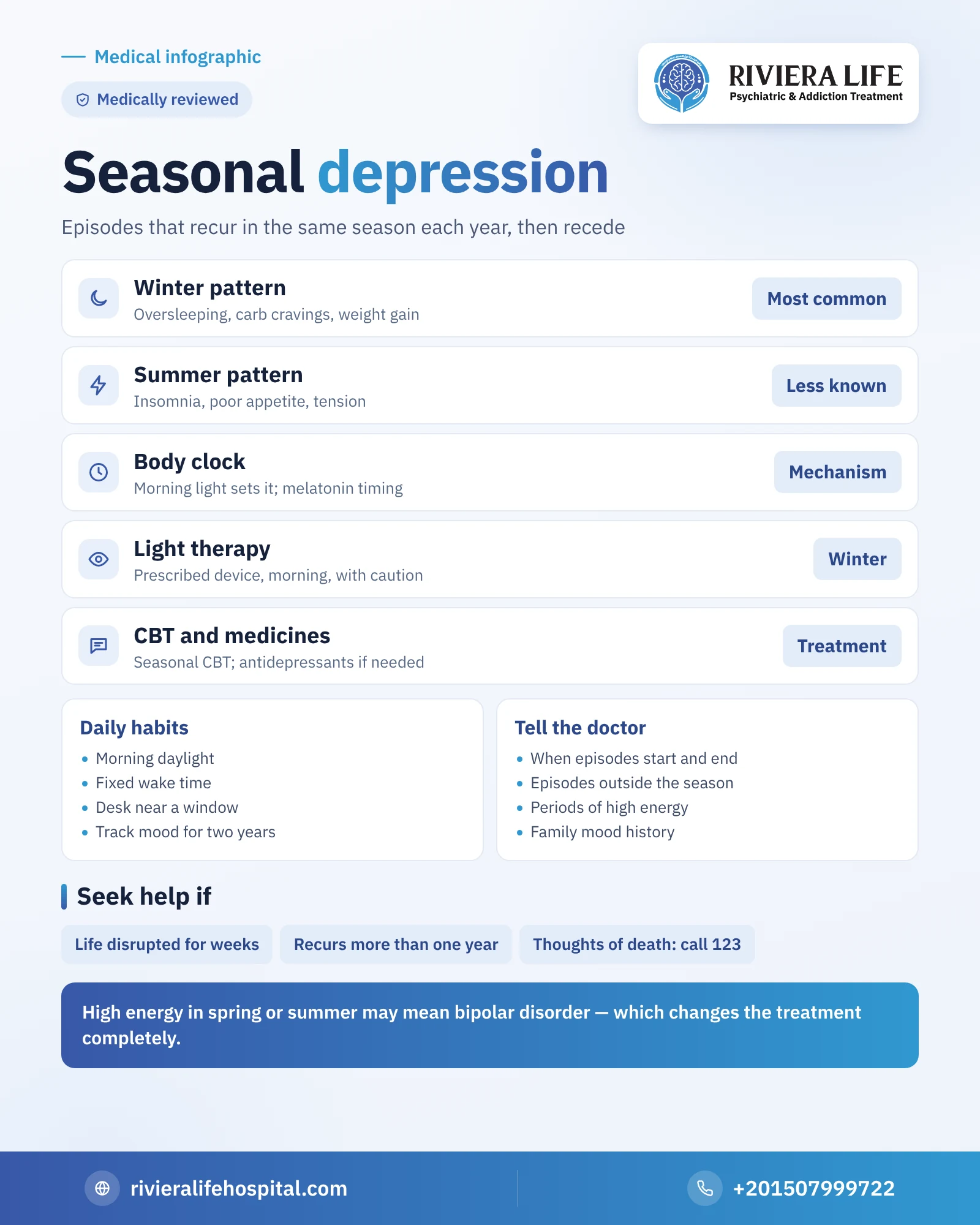
The winter pattern: the best-known picture
It usually begins in autumn, intensifies in winter and eases in spring. The person doesn’t necessarily look sad so much as “switched off”: they sleep longer hours and wake up tired, crave bread, sweets and starches, gain weight, and their body feels heavy as if in hibernation. Their desire to go out and mix decreases, and their concentration at work or study declines. This pattern is more widespread in countries far from the equator, where the day becomes very short in winter, and more common among women and young people.
The summer pattern: the less well-known
Here the picture is reversed; the episode starts in late spring and summer and recedes in autumn. The symptoms are closer to “anxious” depression: insomnia and difficulty sleeping, loss of appetite and weight loss, and tension, irritability and restlessness. Researchers suggest that heat, humidity, long days and sleep disturbance play a role in it, but research on it is much less than on the winter pattern, and its causes are still unsettled.
Seasonal depression in Egypt and the Gulf
The sun in our region is strong most of the year, so many think seasonal depression is “a disease of cold countries”. The reality is that the winter pattern is probably less widespread in Egypt, but it exists, and there are no accurate local data that settle its rate. There are observations doctors mention without them being proven by large studies:
- The hot summer in the Gulf and southern Egypt pushes people to stay inside closed, air-conditioned places most of the day, so their actual exposure to sunlight decreases despite its abundance.
- Staying up late on summer nights and holidays, and delayed sleep times in Ramadan when it falls in summer, may confuse the body clock in those predisposed.
- Some people notice that their mood worsens every summer in particular, which matches the description of the summer pattern.
What matters is that the diagnosis isn’t rejected just because we live in a sunny country, and that, on the other hand, it isn’t stuck on everyone who feels down in the heat.
The body clock and melatonin: what happens inside the body?
The brain has an internal clock that regulates sleep and wakefulness, temperature and appetite on a cycle of about twenty-four hours, and the strongest thing that sets it is morning light. When light decreases or its timing changes, this clock may drift from the actual schedule of life. Melatonin is secreted in the dark to prepare the body for sleep; in some winter-pattern patients the period of its secretion lengthens or its timing is delayed, so they feel sleepy and sluggish by day. A relative lack of light is also linked to changes in the activity of serotonin, one of the transmitters linked to mood. These explanations are supported by research, but they don’t explain all cases, and the picture remains multifactorial.
Symptoms of seasonal depression
It brings together the known symptoms of depression, such as low mood, loss of pleasure, a feeling of hopelessness and poor concentration, with features that distinguish each pattern:
| Symptom | Winter pattern | Summer pattern |
|---|---|---|
| Sleep | Excessive sleep and difficulty waking | Insomnia and little sleep |
| Appetite | Craving starches and sweets | Loss of appetite |
| Weight | Increase | Decrease |
| Energy | Sluggishness and heaviness in the body | Tension and restlessness |
| Dominant mood | Switched off and withdrawn | Anxiety and irritability |
Ordinary winter lethargy or a seasonal disorder?
Many people feel a greater desire to sleep or a calmer mood on short days, and this is normal. The difference is in severity and impact: the disorder disrupts work and relationships, recurs in the same pattern every year, and lasts weeks, not days. And note an important point: if the person goes through periods of excessive activity and reduced need for sleep in spring or summer, the seasonal pattern may be part of bipolar disorder, and this changes the treatment completely.
How does the doctor diagnose the seasonal pattern?
There is no blood test or scan that reveals it. The doctor relies on a detailed history: when did the episodes start each year? When did they end? Did episodes happen outside this season? They ask about sleep, appetite and weight, about any periods of excessive activity, and about family history of mood disorders. They may request tests to rule out an underactive thyroid, a deficiency of some vitamins or anemia, because they cause sluggishness that resembles depression. That is why it helps a lot to come with written notes about previous years, or for a family member who noticed the change to come with you.
Light therapy
This is the treatment most linked to the winter pattern. The patient sits in the morning in front of a device that emits bright light designed for this purpose, without looking at it directly, and it helps reset the body clock. Many notice improvement within a few weeks. But it isn’t an ordinary lamp or a random sun session: the intensity of the light, its duration and timing are determined by the doctor. It needs special caution in bipolar patients because it may push toward a manic episode, and in those who have eye diseases or take medicines that increase the skin’s sensitivity to light. In the summer pattern it isn’t used in the same way, and treatment relies more on the other options.
Cognitive behavioral therapy and medicines
A version of cognitive behavioral therapy has been developed specifically for seasonal depression, working on negative thoughts linked to the season, such as “winter will destroy me as usual”, and on scheduling enjoyable, regular activities that resist withdrawal. Some studies indicate that its effect may last into the following seasons better than light alone.
As for medicines, the doctor prescribes antidepressants when episodes are moderate or severe, and sometimes starts them a while before the expected season for prevention. The details of the classes and how the doctor chooses between them are in the article on the best medicine for depression and anxiety. Many ask about melatonin tablets; the evidence of their benefit in seasonal depression is limited, and their timing may help or harm, so they aren’t taken without consultation. You can read more in the article on melatonin and sleep.
Daily habits that ease the season
- Go out in daylight in the morning even for a short time, and in summer choose the first hours before the heat intensifies.
- Fix your wake-up time even on holidays, as it is more important than bedtime in setting the body clock.
- Put your workplace or study space near a window.
- Do regular physical activity, inside an air-conditioned place if the weather is hot.
- In the summer pattern keep the bedroom cool and dark, and reduce screens at night.
- Record your mood and sleep monthly for two years, as this record helps the doctor a lot.
These habits are supportive, and don’t replace treatment when episodes are severe.
When do you seek help?
Seek an assessment if your life has been disrupted for weeks in a particular season, or if that has recurred for more than a year, or if you have started relying on overeating, sleeping pills or any substance to get through the season. And if thoughts of death or self-harm appear, seek help immediately from the ambulance on 123 or the nearest emergency department. At Riviera Life the psychiatry consultants assess the seasonal pattern and rule out bipolar disorder, then set a plan that starts before the next season, and the first consultation is free via +201507999722.
More from the depression guide
- Depression: the complete guide
- Types of depression and medical classifications
- Depression treatment and the steps of recovery
- Melatonin and sleep in recovery
Questions many people ask
Yes, the summer pattern is less common than the winter one, and insomnia, loss of appetite and tension dominate it. It needs assessment like any depressive episode.
Natural morning light is useful as a daily habit, but light therapy is a device of specified intensity that the doctor prescribes and times, and it needs caution in bipolar patients and some eye diseases.
The evidence for that is limited, and the timing of taking it may improve the body clock or confuse it. That is why it isn't taken without consulting the doctor.
Doctors usually require episodes to recur in the same season for about two consecutive years, with no other clear explanation such as seasonal work pressure.
Yes in many cases, with a plan that starts before the season including organizing sleep, light exposure and psychotherapy, and sometimes a preventive medicine the doctor decides on.