
VIP addiction treatment means a private therapeutic residence: a single room, greater privacy, and more flexible arrangements for the family. But it doesn’t mean a lighter or shorter treatment program. The patient in the private suite goes through the same assessment, the same detox and the same sessions as any other patient. This article explains what private residence really adds, who usually chooses it, and the questions that reveal to you the difference between a real service and an advertising offer.
What is meant by VIP addiction treatment?
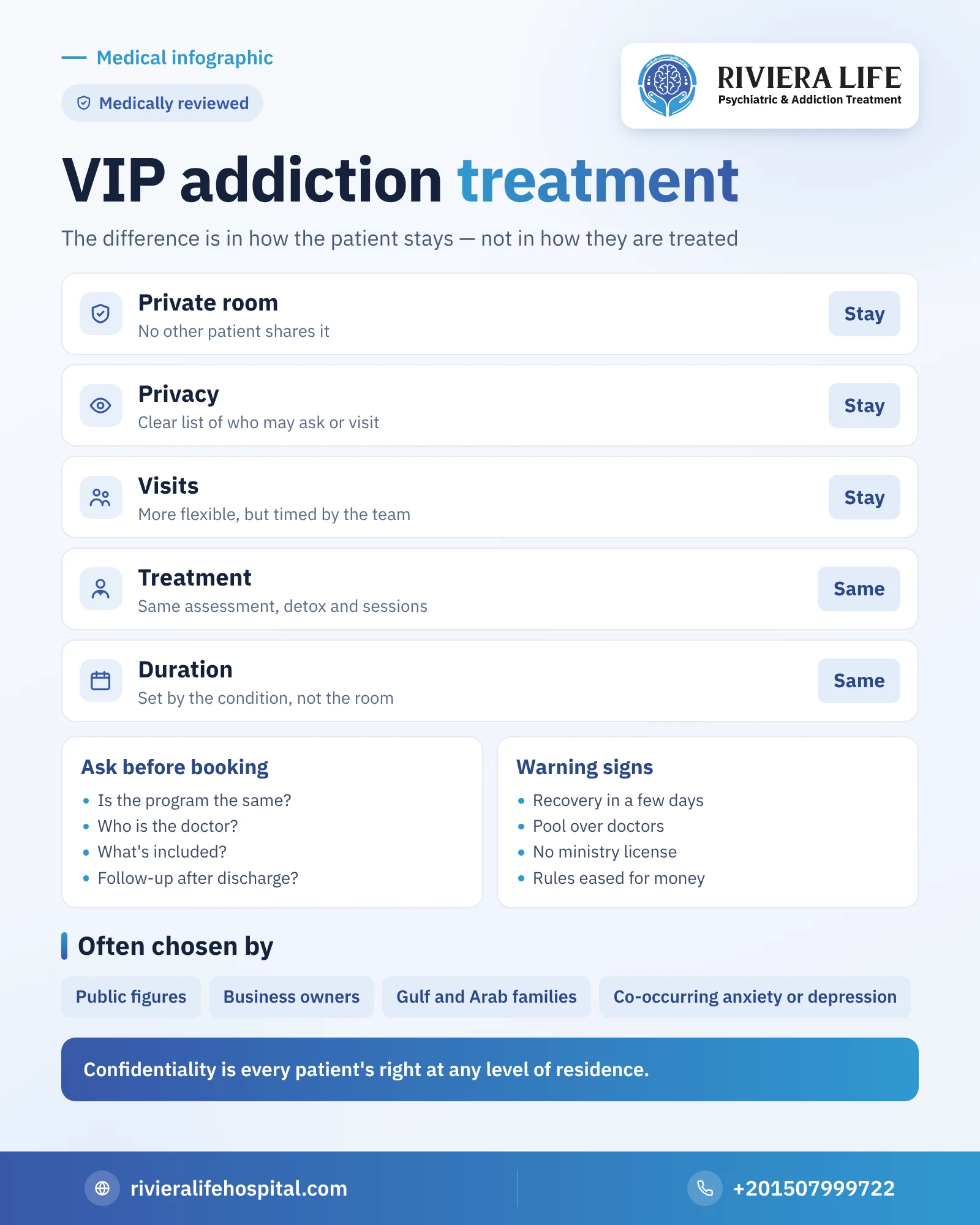
The term is widespread in advertisements, and is sometimes used without a specific meaning. Its precise meaning is that the patient receives the usual addiction treatment program inside the hospital, but in different residence conditions: a space of their own, reduced contact with others outside therapeutic activities, and careful organization of who knows they are there and who visits them. That is, the difference is in “how they stay”, not in “how they are treated”.
That is why the right conversation about private residence begins with a medical question first: does the case need full residence at all? And if the answer is yes, the question of comfort and privacy comes after it. The daily details of full residence itself are explained in the residential addiction treatment program.
Privacy: the core of private residence
Many families aren’t looking for luxury, but for reassurance that no one will find out. A businessman who fears for his company’s reputation, a well-known artist, or a mother who fears the news reaching her children’s school. These people postpone treatment for months out of fear of exposure, and this postponement itself is more dangerous than anything else.
Privacy in the private suite has practical aspects:
- A single room that no other patient shares.
- A clear list of who has the right to ask about the patient or visit them.
- No information given by phone except to those the patient or their family have specified.
- The possibility of arranging admission and visit times away from busy periods.
The treatment itself doesn’t change
This is the most important point in the whole article. A comfortable room doesn’t draw the drug out of the body, and high-end service doesn’t teach the patient how to refuse the next dose. That is why the private residence patient must receive:
- A full medical and psychological assessment on admission, with the necessary tests.
- Detox under round-the-clock medical supervision, with the same safety standards.
- Individual psychotherapy sessions to deal with the causes and triggers of use.
- Participation in group sessions whenever the team sees them as suitable, as complete isolation inside the room may weaken treatment.
- A plan for the family and aftercare after discharge.
And if you find a place offering a “shortened program” for those in private rooms, or exempting them from sessions, this is a sign that comfort has become a substitute for treatment.
Family visits: flexibility within the limits of the program
Among the things families ask about most: can we visit them whenever we want? The honest answer is that private residence may allow greater flexibility in the time and place of visits, but the treatment team is the one that decides their timing. In the first days of detox the patient may be tired or moody, and a visit may turn into pressure on them to leave. Later, family meetings become part of the treatment itself, especially within the family rehabilitation program.
Who usually chooses private residence?
- Public figures: such as media people, athletes and officials, for whom exposure represents real harm.
- Business owners and managers: those who need a period of treatment away from view, with advance arrangement of their absence from work.
- Gulf and Arab families: who come from outside Egypt and want a calm, organized residence for their son or relative. The details of planning travel and residence are in addiction treatment in Egypt for Gulf patients.
- Those with a co-occurring psychological condition: such as severe anxiety or depression, who need a calmer place with close psychological follow-up. And if the problem is psychological without addiction, the psychiatric wing is separate and has private rooms, as the guide to the psychiatric hospital explains.
Confidentiality: what should you make sure of?
Confidentiality isn’t an extra feature that is bought, but the right of every patient at any level of residence. But private residence adds organizational layers on top of it. Ask about: who sees the medical file? Can booking and communication be done in the name of a family member? How are incoming calls handled? And is the staff required to commit to non-disclosure? Clear answers to these questions matter more than pictures of the rooms.
Questions to ask before booking a private residence
- Is the treatment program in the private suite the same as the regular residence program?
- Who is the doctor responsible for the case, and how often do they follow it?
- What exactly does private residence include, and what doesn’t it include?
- How are visits and calls organized at each stage?
- Is there a psychological assessment if there are symptoms of depression or anxiety?
- How does follow-up continue after discharge, and can it be remote?
For a more comprehensive list for choosing any hospital, see how to choose an addiction treatment hospital.
Warning signs in “luxury” offers
- A promise of recovery in a few days or a guaranteed success rate.
- The advertisement focusing on the pool and the kitchen more than the doctors and the program.
- The absence of a clear license from the Ministry of Health.
- Refusing to answer questions about medicines and night supervision.
- An offer to ease the treatment rules in exchange for a higher amount.
How much does private residence cost?
There is no fixed figure that suits all cases; the cost is affected by the length of stay, the severity of the case, the presence of a co-occurring psychological disorder, and the type of residence chosen. That is why the details are agreed in the consultation after assessment, and the family should receive a written explanation of what the amount includes before admission. The general factors that determine the price of treatment are explained in the cost of addiction treatment in Egypt.
After discharge: privacy doesn’t end at the door
The first weeks after discharge are the most sensitive. And the patient who chose private residence often wants their follow-up to continue with the same discretion. That is why you should ask about the shape of the aftercare program: clinic appointments, remote sessions and family support. And someone who lives outside Egypt needs a clear follow-up plan before traveling.
Start with a confidential consultation
At Riviera Life a private (VIP) residence option is available within the addiction treatment program, with the same treatment plan set by the consultants in psychiatry and addiction treatment, round-the-clock medical supervision and complete confidentiality. The details and level of private residence are agreed in the consultation according to the case. The hospital is licensed by the Ministry of Health, has fourteen years of experience, and is located in Sheikh Zayed, Giza. The first consultation is free, and you can speak with the team confidentially on +201507999722.
More from the treatment programs guide
- The residential addiction treatment program
- How to choose an addiction treatment hospital
- Addiction treatment in Egypt for Gulf patients
- Transporting an addiction patient to hospital safely