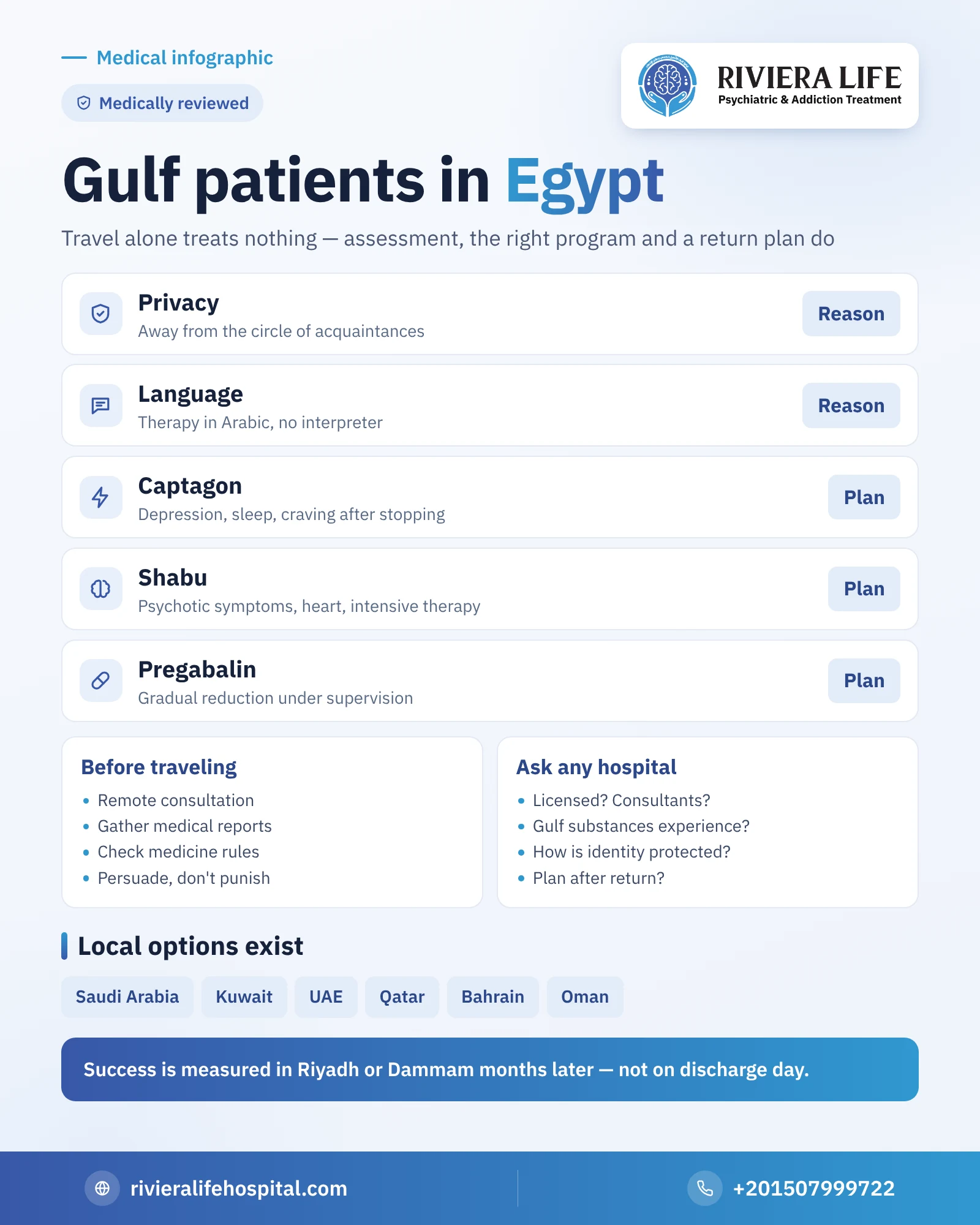
Addiction treatment in Egypt for Gulf patients presents itself to many Saudi and Gulf families for similar reasons: privacy away from the circle of acquaintances, a team that speaks Arabic and understands the dialect and customs, and a new environment that temporarily cuts the patient’s link with the places and companions of use. But travel alone treats nothing; what makes the difference is a careful assessment before the trip, a program suited to the substance the patient uses, and a clear plan for after the return. In this guide we go through the whole road: from the first confidential call from Riyadh, Jeddah, Doha or Abu Dhabi, to planning the stay, the companion’s role, the family program, and follow-up after returning.
Why do some Gulf families consider treatment in Egypt?
There is no single answer; each family has its motives. But the reasons we often hear from families recur:
- Social privacy: in close-knit cities and families, parents may fear the matter will become known, so they postpone treatment for months. Geographical distance eases this embarrassment for some of them.
- Language and culture: the patient talks with their therapist in their own language, without an interpreter, and with vocabulary both sides understand, and this is very important in psychotherapy, which is based on dialogue.
- Changing the environment: away from the friends, calls and places linked to use, the daily triggers that ignite craving calm down.
- Dedication to treatment: the patient takes a defined period they know is for recovery only, away from work pressures and social commitments.
Nevertheless, real privacy doesn’t come from distance, but from the hospital’s policy on protecting the medical file. Ask about this frankly in the first call. The details of the treatment plan itself are explained in the guide to drug addiction treatment.
The local option in the Gulf is also available
It is fair to say that addiction treatment in Saudi Arabia and the Gulf states is available through specialized government services and clinics and doctors in the private sector, and starting locally may be the most suitable for many cases: a cooperative patient, use in its early stages, a supportive home, and a nearby place of treatment where they can continue. What is available inside the Kingdom, and what the system provides regarding voluntary treatment, you will find in the guide to addiction treatment hospitals and centers in Saudi Arabia; for the Sultanate there is the guide to addiction treatment in Oman, and the rest of the Gulf states have separate guides: addiction treatment hospitals and centers in Kuwait, addiction treatment in the UAE, addiction treatment hospitals and centers in Qatar and addiction treatment hospitals and centers in Bahrain. Families from the other Arab countries will find their countries in the guide to addiction treatment in Egypt for Arab patients.
Treatment in Egypt is usually raised when relapses recur after short programs, when the family’s worry about exposure is a real obstacle to starting, or when the patient needs a longer stay away from their surroundings. The decision in the end is the family’s and the patient’s, and our role is to clarify the options, not to impose one of them.
The most widespread substances in the Gulf and what they mean for the plan
The plan differs greatly according to the substance, which is why the assessment always begins with a detailed question about everything the patient uses, including medicines and mixing:
| Substance | What the plan usually focuses on |
|---|---|
| Captagon | Depression and exhaustion after stopping, sleep, craving, and sometimes suspicious or aggressive thoughts |
| Shabu (methamphetamine) | Following psychotic symptoms, assessing the heart, and intensive psychotherapy to prevent relapse |
| Hashish | Anxiety, insomnia and mood swings in the first weeks, and breaking a deep-rooted daily habit |
| Pregabalin (Lyrica) | Gradual reduction under medical supervision, because stopping suddenly may be dangerous |
| Alcohol | Safe withdrawal with close medical follow-up, because its severe withdrawal may cause seizures or delirium |
And if the family hears strange names from their son and doesn’t know what they mean, the guide to drug names circulating among young people in Saudi Arabia helps understand them before talking with the doctor.
The first step: a confidential remote consultation
There’s no need to book a flight before you know what the case needs. The family usually starts with a phone call or video call, and the father or brother may call alone at first without the patient. In this consultation the doctor asks about:
- The substances used, the duration and method of use, and whether there is mixing.
- Previous treatment attempts and what happened after them.
- Psychological symptoms: sleep, mood, suspicion and irritability.
- Physical illnesses and medicines currently prescribed.
- The patient’s own position: do they know about the call? Do they accept treatment?
After that the doctor suggests the initial level of care: full residence, or whether it is possible to start with outpatient follow-up close to home, with an estimated duration determined precisely after the direct assessment. The first consultation is free.
How does the family plan the stay before traveling?
Good planning saves the family a lot of tension in the first days:
- Medical reports: gather the previous reports and tests you have and a list of current medicines, as they shorten the assessment time.
- Prescribed medicines: if the patient takes psychiatric or sedative medicines by prescription, check the requirements for carrying them when traveling with the official authorities in your country and Egypt, and don’t stop them suddenly before the trip.
- Timing: choose a period when the pressure of study or work is as low as possible, without postponing the start for the sake of perfect timing.
- Travel procedures: the family checks them itself through the official channels of its country, and this differs from one country to another.
- Persuading the patient: presenting the trip as an opportunity for a new beginning is usually more successful than imposing it as punishment. The guide to how to help an addict and persuade them to get treatment helps you here.
Does the patient need a family companion?
Having the father, brother or wife present in the first days reassures the patient, makes it easier to convey the medical history accurately, and ensures the family understands the plan from the start rather than over the phone. But the companion doesn’t stay with the patient inside the ward all the time, as treatment needs a space in which the patient commits to the program and builds a relationship with their team.
Many families prefer the companion to attend the assessment and the first week, then return home and continue regular communication with the treating team.
The family program: the party often forgotten
Addiction exhausts the whole household, and someone returning to a home where nothing has changed faces the same pressures that preceded use. That is why treatment includes the family rehabilitation program, which helps families understand the illness, set clear limits without harshness, and distinguish between support and covering up behavior.
The way the other family members living in the Gulf take part can be discussed with the treating team, so that no one remains outside the picture.
What matters to a Saudi family when treatment is in Egypt?
When a Saudi family looks for an addiction rehab outside the Kingdom, almost the same questions recur: who will know? Will the therapist understand the nature of our life? What will happen when our son returns to his old friends? These are legitimate questions that should find specific answers, not general reassuring phrases.
Ask about how data is kept and who has the right to see it, about the agreed way of communicating with the family without embarrassing the patient, and about the plan for dealing with their surroundings after returning: sometimes changing the phone number, staying away from using friends, and finding an activity to fill the void. The success of treatment for a Saudi patient is measured in Riyadh or Dammam months later, not on discharge day.
Returning home: aftercare
The first weeks after returning are the most vulnerable to relapse, because the patient returns to the same old triggers. That is why the patient leaves with a written plan that includes medicines if any, early warning signs, and how to contact the team. Remote follow-up can continue in the first months, with a psychiatrist in their country if the family wishes. The details of this stage are in the aftercare program.
For Kuwaiti families who start with the question of choosing the doctor themselves, we have dedicated the guide to addiction treatment in Kuwait and choosing the doctor.
The right hospital for Gulf patients in Egypt: how to choose
The right hospital for a Gulf patient is one that combines integrated medical and psychological treatment, real confidentiality, and a plan that thinks about the day of return from the first day. Ask before you decide:
- Is the hospital licensed by the Ministry of Health, and is treatment in it led by consultants in psychiatry and addiction treatment?
- Does it have experience with the substances widespread in the Gulf, such as captagon, shabu and pregabalin?
- Does it offer an initial remote assessment before the family bears the trouble of travel?
- How does it protect the patient’s identity and file, and who communicates with the family?
- Does it involve the family in a structured program, even from afar?
- What is the follow-up plan after returning to Saudi Arabia or the patient’s country?
And stay away from any provider that promises you a guaranteed recovery or final treatment in a few days.
How Riviera Life meets these standards for Gulf patients
At Riviera Life these criteria take the following form:
- Official license: a hospital licensed by the Egyptian Ministry of Health.
- A specialized team: consultants in psychiatry and addiction treatment who speak the patient’s language and understand their environment.
- Long experience: fourteen years and thousands of recovered cases.
- Round-the-clock supervision: continuous medical follow-up, especially in the withdrawal stage.
- Complete confidentiality: the data of the patient and their family is fully protected.
- A start without travel: a free first consultation that can take place remotely.
- A family program and aftercare: preparing the home for the return and follow-up after returning.
Request your free consultation from any Gulf city around the clock via +201507999722. Our location is in Sheikh Zayed, Giza.
In the guide to addiction treatment centers in Cairo we answer the questions of families choosing between more than one place in and around the capital.
Read also
- Captagon addiction treatment: stages, medicines and relapse prevention
- Ice addiction treatment (shabu / crystal)
- The residential addiction treatment program
- The cost of addiction treatment in Egypt and what you pay for
Questions many people ask
Yes, the first step usually begins with a confidential consultation by phone or video call, after which the doctor determines the initial level of care and whether residence is necessary.
It depends on the case. Starting locally suits many early and cooperative cases, while travel is usually raised with repeated relapse or the need for greater privacy or a longer stay, and the decision is the family's.
It is preferable to have a companion during the assessment and the first days to convey the medical history and understand the plan, then communication with the team continues after they return.
They leave with a written plan including warning signs and how to contact the team, and remote follow-up can continue in the first months with a local doctor if the family wishes.
Look for a Ministry of Health license, consultants experienced with captagon, shabu and pregabalin, a remote initial assessment, real confidentiality and follow-up after returning. Riviera Life in Sheikh Zayed meets these criteria, with a free remote first consultation.