The short answer
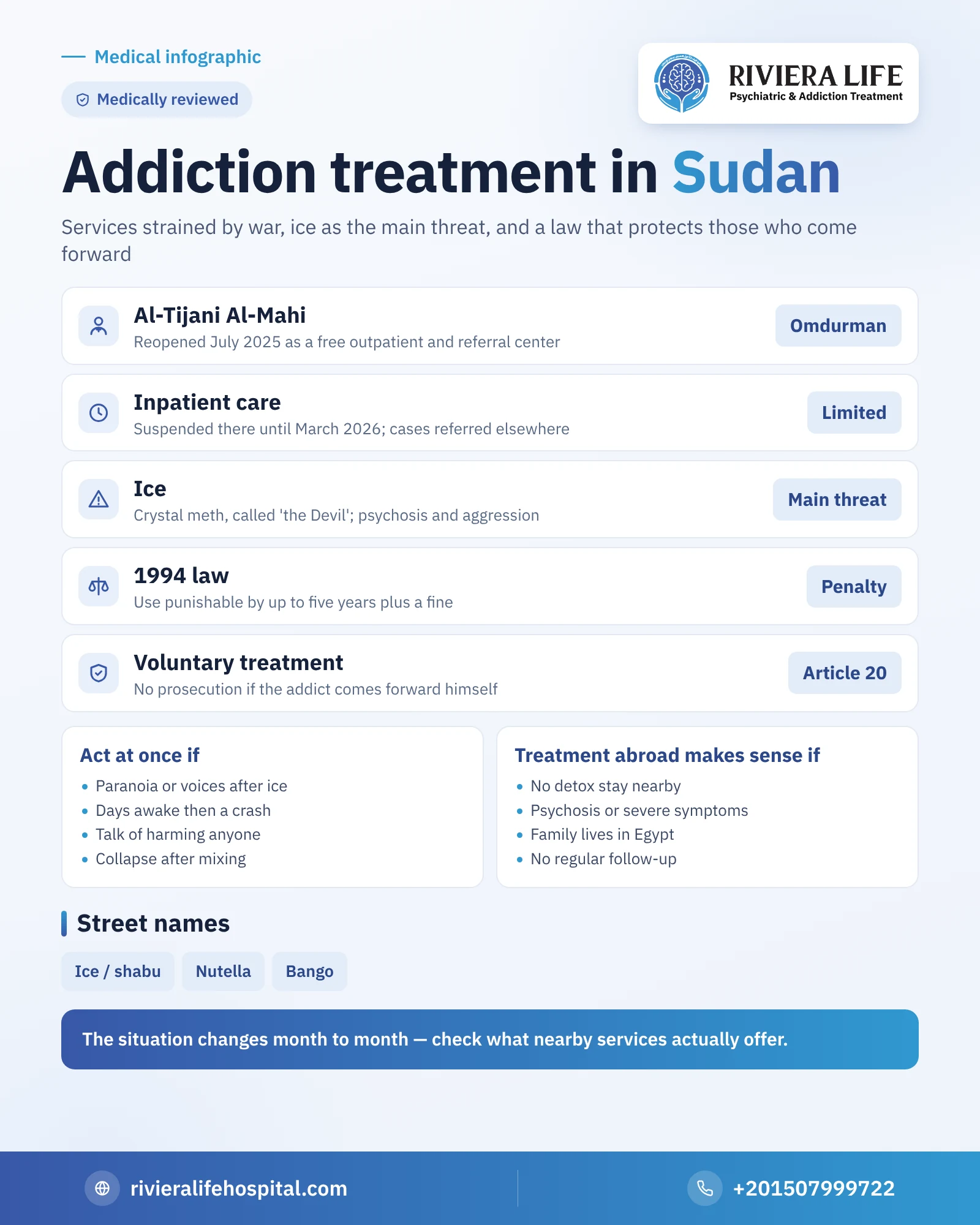
Addiction treatment services in Sudan have been badly affected by the war. Al-Tijani Al-Mahi Hospital in Omdurman, the oldest psychiatric hospital in the country and the main reference for addiction treatment, was looted and then reopened in July 2025 as an outpatient clinic and referral center offering free treatment, with inpatient treatment suspended until March 2026, and most of its cases are linked to the drug ice. The 1994 Narcotics Act punishes use with up to five years in prison plus a fine, but criminal proceedings aren’t brought against an addict who comes forward of his own accord seeking treatment before being brought to trial.
- Government referenceAl-Tijani Al-Mahi Hospital in Omdurman
- Voluntary treatmentNo proceedings against those who come forward for treatment
- Most prominent substanceIce, or shabu
Sudanese families today, inside the country and in countries of displacement, face addiction in the hardest conditions: health services exhausted by war, enormous psychological pressure on young people, and new drugs that are cheaper and more dangerous. This guide tries to be practical: what is available now, what the law says, how the family deals with “ice” specifically, and when treatment in a nearby country is an option worth considering.
What is available for addiction treatment in Sudan now?
Al-Tijani Al-Mahi Hospital in Omdurman, founded in 1971, has remained the first reference for psychiatry and addiction treatment in Sudan. During the war it was looted and destroyed, then volunteers and doctors reopened it in July 2025 as an outpatient clinic and referral center, offering addiction treatment free of charge, while inpatient treatment was suspended until March 2026. Its staff report that most cases are linked to ice.
Because the situation changes from month to month, the first step is to contact the nearest functioning hospital or psychiatric clinic in your state to find out what it actually offers. And if the family is in a country of displacement, starting with mental health services in that country or with remote consultation is better than waiting.
Psychiatric services operating as of early 2026
- Al-Tijani Al-Mahi Hospital: its outpatient clinic receives about 60 to 70 patients a day, and refers cases needing admission to Al-Nau Hospital or the military medical facility in Omdurman.
- The psychiatric unit at Al-Nau Teaching Hospital in Omdurman: operating since October 2023.
- The mental health hospital in Wad Madani: opened a new psychiatric ward receiving about 15 to 20 patients a week.
- Taha Ba’ashar Psychiatric Hospital in Bahri: the Khartoum State Ministry of Health announced a plan in February 2026 to bring it back into operation.
- Port Sudan: a psychiatric hospital operates there with federal support, and in late 2025 it was one of the few psychiatric facilities operating in the country.
No government center dedicated to addiction alone has been announced so far, and there is no national line for seeking treatment.
Ice, Nutella and bango: what do they mean?
- Ice: one of the names for crystal methamphetamine, which some in Sudan call “the Devil”, and it is currently the most dangerous substance because it may cause psychosis, aggression and severe suspicion. Read ice and shabu addiction treatment.
- Nutella: a name in circulation for a type of Afghan hashish.
- Bango: an old local name for cannabis, grown and consumed inside Sudan. Read our bango guide.
What does Sudanese law say?
The matter is governed by the Narcotic Drugs and Psychotropic Substances Act of 1994. Its Article 20 provides for:
- Punishing anyone who uses drugs, or buys, possesses or grows them for the purpose of use, with imprisonment for a period not exceeding five years plus a fine determined by the court.
- Not bringing criminal proceedings against any drug addict if he comes forward of his own accord seeking treatment, or requests it before being brought to trial.
The text doesn’t mention the family’s right to request treatment on the patient’s behalf, so persuading the patient to come forward himself is the path that protects him legally. You will find practical ways of persuading in how to help a drug addict.
Danger signs that call for immediate action
- Severe suspicion of family or neighbors, hearing voices, or aggression after using ice.
- Staying awake for days on end, then long sleep and a mood crash.
- Talk of harming oneself or others.
- Loss of consciousness or difficulty breathing after mixing substances.
These are emergencies that need the nearest emergency department, and they shouldn’t be handled at home alone.
When is treatment outside Sudan a sensible option?
- When there is no inpatient stay for detox or regular psychiatric follow-up nearby.
- When the condition is accompanied by psychosis or severe psychiatric symptoms.
- When the family itself lives in Egypt or a country close to it.
If you decide on treatment in Egypt
Many Sudanese families now live in Egypt, which makes starting easier. The family begins with a confidential consultation in which the doctor assesses the condition and determines the level of care, then a program is set combining detox, psychological rehabilitation and family participation, with a follow-up plan after discharge. The journey guide is in addiction treatment in Egypt for Arab patients.
How can Riviera Life help you?
Riviera Life offers Sudanese families, inside Sudan or in Egypt, a confidential consultation to assess the condition, and receives patients in programs for safe withdrawal, treatment of stimulant-related psychosis and rehabilitation, with follow-up after discharge. The first consultation is free and confidential on +201507999722.
Read also
- Addiction treatment in Yemen
- Addiction treatment in Libya
- Addiction treatment in Egypt for Arab patients
- Online addiction treatment
Questions many people ask
The main reference is Al-Tijani Al-Mahi Hospital in Omdurman, which reopened in July 2025 as an outpatient clinic and referral center after being damaged in the war, with inpatient treatment suspended until March 2026.
Criminal proceedings aren't brought against an addict who comes forward of his own accord seeking treatment, or requests it before being brought to trial, under Article 20 of the 1994 law.