Psychogenic breathlessness is a feeling that the air isn’t enough or isn’t reaching the bottom of the chest, with an urge to sigh or take a deep breath, while the lungs and heart are sound on examination. It appears with anxiety, panic attacks and stress, and can be so frightening that the person thinks they will suffocate. But the first rule here is clear: shortness of breath is only attributed to nerves after physical causes are ruled out, because some of them are serious. This article explains how to tell the difference, what happens in the body, what eases the feeling, and when to call an ambulance without hesitation.
First: rule out medical causes — this isn’t optional
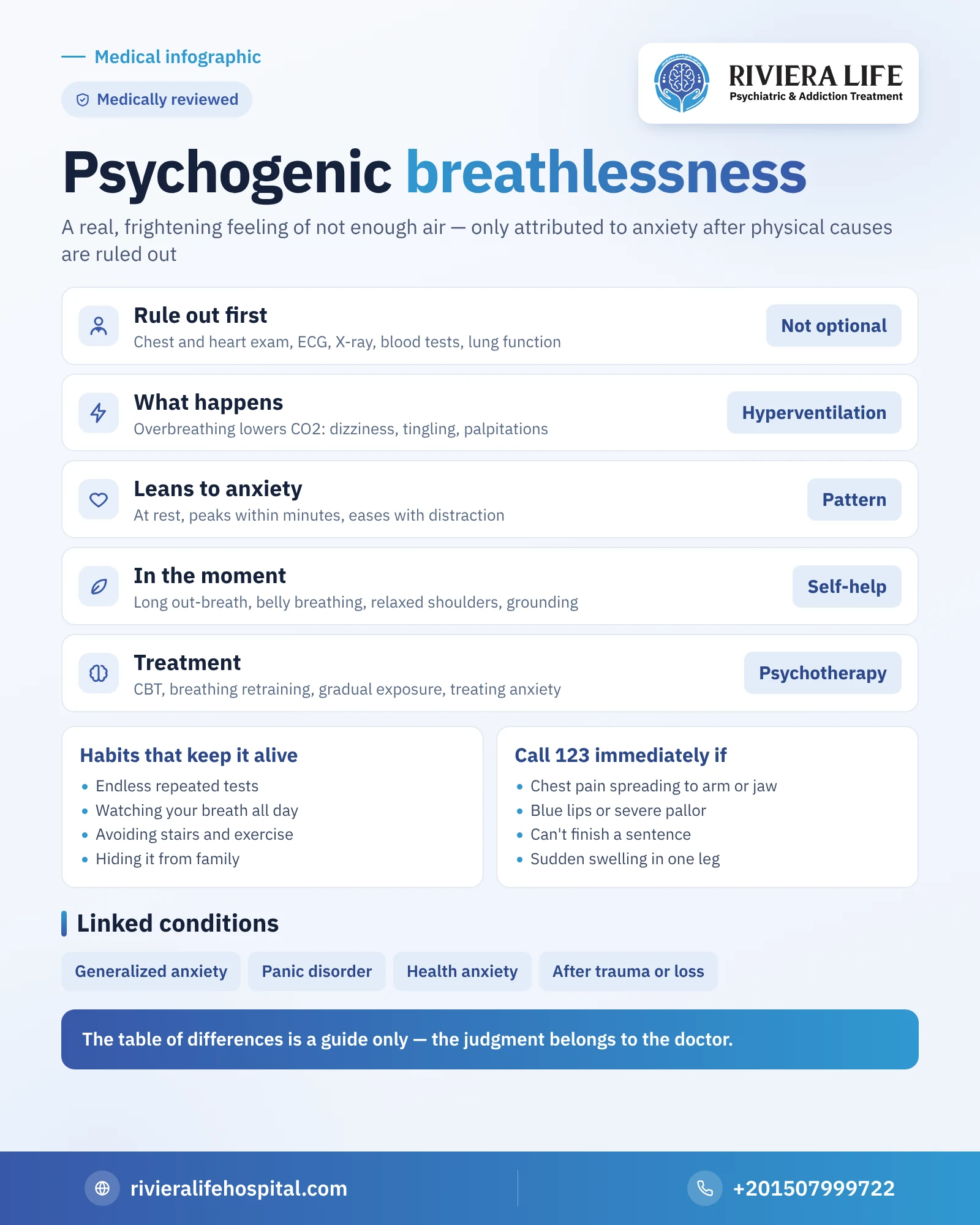
Shortness of breath is a symptom that accompanies many diseases: asthma, lung infections, blockage of the lung vessels, heart disease, anemia, thyroid disorders, obesity and poor fitness. That is why the first step with new or unexplained shortness of breath is a medical examination: examining the chest and heart, an ECG, a chest X-ray, blood tests, and lung function tests when needed. Once the results come back normal and the picture is consistent with anxiety, talking about the psychological side becomes more accurate and more reassuring.
Call an ambulance on 123 immediately if shortness of breath comes with
Don't try to explain it as anxiety before a doctor has examined you.
- Pain or pressure in the chest spreading to the arm, jaw or back
- Bluish lips or limbs, or severe pallor
- Inability to finish a sentence because of breathing
- Severe wheezing in the chest, or coughing up blood
- Sudden swelling in one leg, or after surgery or a long journey
- Fainting, clouded consciousness or a high fever
- Sudden shortness of breath after a sting, a medicine or a food, with swelling of the face
What happens in the body when the cause is psychological?
With anxiety, the body activates in preparation for danger, so the rate and depth of breathing increase without any real need. This is called hyperventilation. When we breathe out more carbon dioxide than necessary, the chemistry of the blood changes slightly, so dizziness, tingling around the mouth and fingers, palpitations and a feeling of suffocation appear. The sad paradox is that the feeling of not enough air pushes toward more rapid breathing, so the feeling increases. Oxygen in the blood, meanwhile, is usually normal, which the doctor can confirm with a simple device.
There is another factor: tense chest and shoulder muscles limit the movement of the ribs, and the habit of upper-chest breathing instead of belly breathing makes the breath shallow, so the person feels they “can’t complete the breath”. There is no danger to life from this, but the feeling is real and distressing.
What does the picture that leans toward anxiety look like?
| What leans toward physical causes | What leans toward anxiety and panic |
|---|---|
| Increases with exertion and eases with rest | Appears at rest or while thinking about a problem |
| Accompanied by cough, wheezing or fever | Accompanied by palpitations, tingling, trembling and fear of dying |
| Persists and gradually worsens | Peaks within minutes, then calms down |
| Changes with position, such as lying down | Sometimes improves with distraction or talking to someone |
| A known disease or risk factor is present | Anxiety attacks repeat or stress escalates |
The table is a guide only, as heart and lung patients may also have anxiety. The judgment belongs to the doctor, not the table.
Shortness of breath, panic attacks and repeated sighing
In a panic attack, shortness of breath peaks along with palpitations and intense fear, and the person thinks they are dying. We explained the difference between an attack and a heart attack, and what to do during one, in our article on panic attacks. There is a calmer but distressing picture: “repeated sighing”, in which the person feels they must sigh to complete the breath; it may last for weeks and is linked to excessive preoccupation with breathing itself. Someone who watches their breathing anxiously pays more attention to the feeling, so it seems more intense.
What can you do in the moment?
- Slow the out-breath: breathe in calmly through the nose, then a longer out-breath through slightly pursed lips. Focusing on the out-breath reduces hyperventilation.
- Put a hand on your belly: let the belly rise with the in-breath, so breathing shifts from the chest to the diaphragm.
- Sit relaxed: lower your shoulders and straighten your back, as slouching presses on the rib cage.
- Anchor your senses: name to yourself five things you see, four you touch and three you hear, to move from watching your chest to your surroundings.
- Remind yourself: this is a painful feeling, but it passes; something like it has passed before without harm.
Many people find these methods work better when they practice them daily while calm, not for the first time at the peak of fear. If the condition doesn’t improve, its nature changes, or the danger signs above appear with it, seek medical help.
Common mistakes that keep the feeling alive
- Endless repeated tests: after a normal comprehensive examination, each new visit gives brief reassurance then the doubt returns, and reassurance itself becomes a habit that feeds anxiety.
- Watching your breathing all day: someone who counts their breaths and tries to control them turns automatic breathing into something conscious and tiring.
- Avoidance: giving up stairs, exercise or closed spaces weakens fitness, and as it weakens, real breathlessness increases with the slightest effort.
- Silence: hiding it from the family so as not to be accused of exaggerating, so the person bears the fear alone.
Who has this complaint more often?
This feeling is common in people going through long periods of work or study stress, those who have lost a loved one or been through a traumatic experience, those with a tendency toward anxiety since childhood, and those who had a respiratory infection and were left with exaggerated attention to their chest after recovering. It may also coincide with hormonal changes, pregnancy or poor sleep. Treatment here doesn’t start by doubting the symptoms, but by explaining them: the body is behaving as if danger is present, and the task is to teach it that the alarm was excessive.
The psychological side: when does it become a disorder?
Repeated shortness of breath with anxiety may be part of the symptoms of anxiety in general, of panic disorder, or of health anxiety that drives successive tests, which our article on illness anxiety disorder explains. It may come after trauma or loss, and with depression too. When it limits life, so the person avoids climbing, going out or working for fear of suffocating, this indicates a need for psychological treatment, not more tests.
Psychological treatment for breathlessness linked to anxiety
- Cognitive behavioral therapy: corrects catastrophic thoughts about the feeling and trains the person to face it gradually.
- Breathing retraining: provided by a specialist therapist or a respiratory physiotherapist.
- Gradual exposure: the patient faces the activities they have avoided until they return to them with confidence.
- Treating the anxiety itself: the psychiatrist may prescribe suitable medicines when needed, and no one should change the doses or stop them without supervision.
For the general options for treating anxiety, see anxiety treatment. And note that some stimulants and substances raise breathing and palpitations, such as too much caffeine or stimulants, and that stopping some sedatives may cause similar symptoms.
How can Riviera Life help you?
After the treating doctor has ruled out physical causes, Riviera Life’s consultant psychiatrists assess the anxiety and panic and set a plan of psychotherapy and medication when needed. The first consultation is free and confidential on +201507999722.
More from our anxiety guide
Questions many people ask
Yes. Anxiety speeds up breathing and tightens the chest muscles, creating a feeling of not getting enough air even though oxygen is usually normal.
With a medical examination that includes the chest and heart, an ECG, an X-ray and tests as needed. Don't assume it is psychological before that.
With chest pain that spreads, bluish color, inability to finish a sentence, sudden swelling in a leg, or fainting, call 123 immediately.
Lengthening the out-breath, breathing from the belly, relaxing the shoulders and anchoring the senses on your surroundings; these work better with daily practice.
Yes. Cognitive behavioral therapy and breathing retraining ease the feeling for many people, and the doctor may add treatment for anxiety if needed.