Propranolol, whose brand names include Inderal, belongs to the older class of beta-blockers originally prescribed for high blood pressure, heart disease and migraine. It has become known among the public because it eases the physical symptoms of anxiety: palpitations, tremor and sweating, especially before a specific situation such as an exam or a presentation in front of an audience. This use is by prescription and at the doctor’s discretion, and it doesn’t suit everyone: people with asthma, people with diabetes, and those with a slow heart rate or low blood pressure usually aren’t suited to it. Here we explain what the medicine does and doesn’t do and when it is dangerous, without doses.
What is propranolol?
When you are anxious or afraid, the body releases adrenaline, so the heart speeds up, the hands sweat and the tremor begins. Propranolol works by closing off the beta receptors that adrenaline acts on, in the heart, blood vessels and lungs, so the physical response is reduced without changing thinking. It is “non-selective”, meaning it affects both beta-1 and beta-2 types, which is the reason for caution in asthma. It is available as regular tablets, extended-release tablets and, in some markets, a syrup. To understand the mechanism from the root, read adrenaline and anxiety.
Its medical uses
- High blood pressure: no longer the first choice for many patients, but still used.
- Angina and heart rhythm disturbances: especially a fast pulse.
- Migraine prevention.
- Essential tremor: hand tremor with no other known medical cause.
- Symptoms of an overactive thyroid: such as palpitations and tremor, until the cause is treated.
- Physical and performance anxiety: a common use at the doctor’s discretion, not an approved indication in every country.
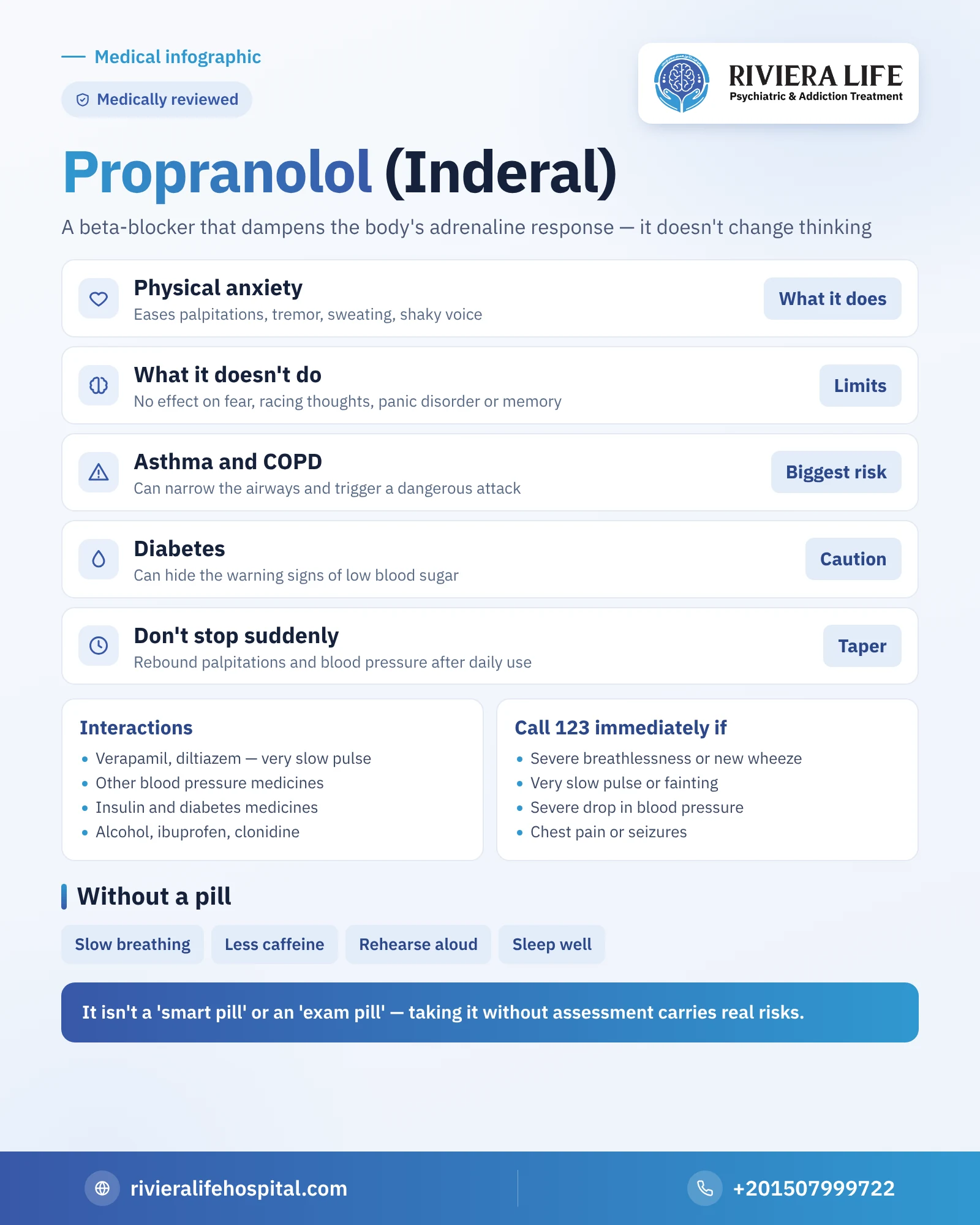
Performance nerves: what exactly does it ease?
A medical student preparing for an oral exam knows the material well, but their hand trembles, their heart pounds and their voice shakes. This is the pattern of “physical anxiety”, which benefits most from propranolol: palpitations, tremor, sweating and a shaky voice ease, so the person feels more in control. But it doesn’t treat the fear itself, negative thoughts or avoidance.
Someone with a constant fear of social situations needs more than a pill before the occasion, as in our article on social anxiety treatment. Learning calming techniques and gradual exposure helps more in the long run than any tablet. The doctor decides in the first place whether a trial suits you, and how to try it the first time away from the day of the event, because your reaction to the medicine isn’t known in advance.
What doesn’t it do?
- It doesn’t calm thinking or remove anxiety from racing thoughts.
- It doesn’t treat full panic attacks, although some of their physical symptoms ease.
- It doesn’t improve memory, concentration or academic performance.
- It isn’t a treatment for generalized anxiety disorder or depression.
- It doesn’t replace psychotherapy in chronic anxiety; read anxiety treatment.
It isn’t a “smart pill” or an “exam pill”. Using it without medical assessment among students and workers under performance pressure carries real risks, including those mentioned for the lungs and heart.
Who isn’t suited to propranolol?
- People with asthma and chronic obstructive pulmonary disease: because the medicine can narrow the airways and trigger a dangerous attack. This is the medicine’s most serious risk.
- A slow heart rate and some types of heart block: it may slow the heart further.
- Low blood pressure and recurrent dizziness: because it lowers blood pressure.
- People with diabetes using insulin or medicines that cause low blood sugar: because it can mask the symptoms of low sugar, such as palpitations and tremor, so the patient doesn’t notice the drop in time.
- Circulation problems in the limbs.
- Acute, unstable heart failure.
That is why it isn’t taken on a friend’s advice or because “it worked for my colleague”.
Side effects
- Tiredness and reduced capacity for exertion.
- Cold hands and feet.
- Dizziness and low blood pressure, especially on standing suddenly.
- A slow heart rate.
- Disturbed sleep and vivid dreams in some people.
- Digestive upset or nausea.
- Sexual weakness in some men, which should be reported to the doctor.
Many people attribute depression to beta-blockers, but recent studies don’t support a strong link between them. Even so, tell the doctor if you notice a change in mood after starting.
Drug interactions
- Verapamil and diltiazem (heart and blood pressure medicines): may lower the pulse and blood pressure severely when combined.
- Other blood pressure medicines: the effects add up, so the doctor monitors blood pressure.
- Clonidine: stopping one of them the wrong way may raise blood pressure; the medicine has its own article, clonidine.
- Insulin and diabetes medicines: low blood sugar may be masked.
- Alcohol: increases dizziness and drops in blood pressure.
- Anti-inflammatories such as ibuprofen: may weaken its effect on blood pressure.
Don’t stop it suddenly after regular use
In someone who takes propranolol daily for a long time, stopping suddenly can cause a rebound: severe palpitations and raised blood pressure, and angina may worsen in heart patients or more serious complications may occur. That is why the doctor reduces it gradually. For someone who uses it for occasional events on the doctor’s instructions, it is different, but the doctor decides in every case.
Misuse and hidden risks
Propranolol isn’t one of the medicines that cause addiction, but some people use it without a prescription before exams or presentations, or to hide tremor and palpitations caused by other substances such as stimulants or too much caffeine. This is dangerous because it hides the body’s warnings without treating the cause. Someone who uses stimulants and takes it to calm the symptoms may put their heart at greater risk. When substance use is suspected, the right path is a frank medical assessment.
Practical steps for physical anxiety without medicine
Before any pill, there are tools that ease palpitations and tremor and stay with you. Slow breathing with a longer out-breath calms the nervous system within minutes. Cutting down on coffee and stimulant drinks before an important event reduces palpitations. Rehearsing the presentation or answers aloud several times reduces surprise. And enough sleep the night before matters more than any medicine. If physical anxiety recurs even in ordinary situations, there may be an anxiety disorder behind it that deserves assessment, not just fear of an event.
Questions to ask the doctor before starting
- Do my chest, lungs or heart allow beta-blockers?
- Will I use it daily or for occasional events, and how should I try it the first time?
- Does it interact with my current medicines, especially blood pressure and diabetes medicines?
- What should I do if I feel dizzy or my pulse is slow?
- Do I need psychotherapy because the anxiety keeps coming back?
Pregnancy and breastfeeding
Doctors sometimes use it in pregnancy for specific medical reasons, but data suggest a possible effect on the baby’s growth and weight with long use, so the doctor weighs the balance. Don’t take it without advice if you are pregnant or breastfeeding.
Call an ambulance on 123 immediately if you see
After taking propranolol, especially with too much of it, lung disease or diabetes:
- Severe difficulty breathing or a new wheeze
- A very slow pulse or fainting
- A sharp drop in blood pressure with pallor and coldness
- Seizures or severe confusion
- Chest pain
- Signs of low blood sugar with sweating and confusion in a person with diabetes
How can Riviera Life help you?
If anxiety shows up in your body and you take medicines without assessment, or use sedatives and stimulants to get through your days, we offer a psychological assessment by consultants in psychiatry and addiction treatment, in complete confidentiality. The first consultation is free on +201507999722.
More from our anxiety guide
Questions many people ask
It eases the physical symptoms such as palpitations, tremor and sweating, but it doesn't treat fear or anxious thoughts. Chronic anxiety needs psychotherapy.
Because it blocks beta receptors in the lungs, so it can narrow the airways and cause a dangerous attack.
Not advised: it may not suit your health and you don't know how you'll react to it. The decision and the first trial should be with the doctor.
It isn't addictive, but stopping suddenly after long daily use can cause a rebound in pulse and blood pressure.
It can mask the signs of low blood sugar such as palpitations and tremor, so a person with diabetes needs the doctor's supervision and closer monitoring.