The symptoms of amphetamine addiction often begin in a way that doesn’t raise concern: a son who has started staying up until dawn “to study”, or a husband who works two back-to-back shifts without seeming tired. Then the full picture appears gradually: sleep becomes disturbed, weight drops, and mood swings between exaggerated enthusiasm and collapse and irritability. In this article we organize the signs the family can see, physical, behavioral and psychological, and explain how the doctor distinguishes between passing use and addiction, and when some signs become an emergency.
Why is amphetamine addiction hard to detect early?
Stimulants at first seem to “improve” the person. They are more active, talkative and productive, and may have lost some weight that bothered them. And because many young people start them in exam season or in exhausting work, the family explains the late nights and enthusiasm as hard work. Add to that the pills being small, easy to hide and odorless, and not leaving noticeable equipment as other substances do. That is why a long time usually passes before the family notices that this activity is always followed by a collapse.
Physical signs
These are signs the eye can see, the clearest appearing during the effect or hours after it:
- Dilated pupils even in normal light.
- A clear loss of appetite, then weight loss within weeks.
- A dry mouth, cracked lips, and drinking a lot of water or chewing gum.
- Jaw clenching and teeth grinding, and later they may complain of jaw pain or worn teeth.
- Sweating, raised temperature and palpitations that they notice themselves.
- A slight tremor in the hands and restless movement: shaking a leg, constantly moving around the room.
- A runny or repeatedly inflamed nose if they snort the powder.
- Spots or scratches on the skin from repeated scratching and picking.
Behavioral signs
Behavior reveals addiction more than the body does, because the whole of life begins to revolve around the pills:
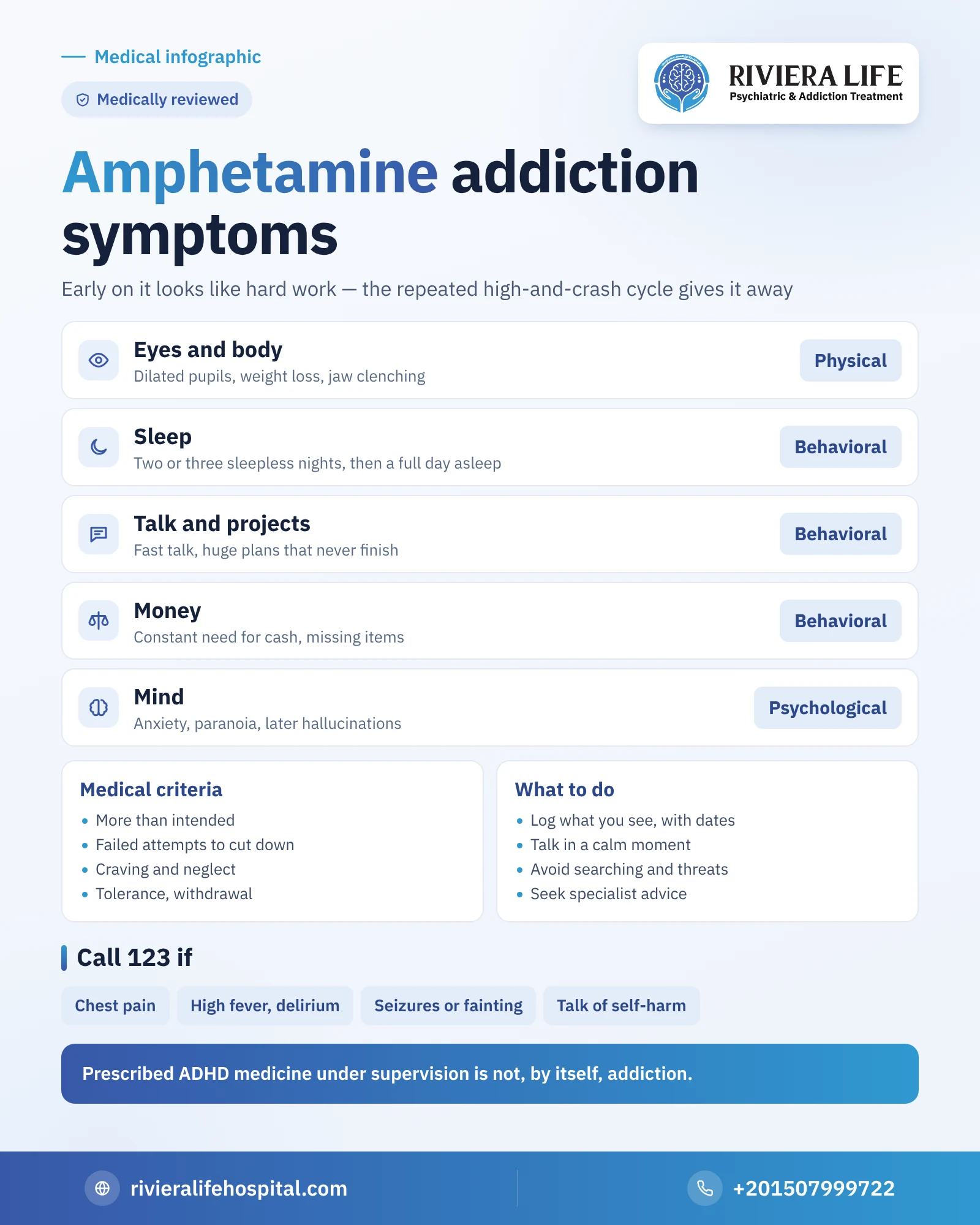
- An inverted sleep pattern: two or three nights with almost no sleep, then continuous sleep lasting a whole day.
- A lot of fast talk, jumping from one subject to another, and huge projects that are never completed.
- Being absorbed for hours in repetitive tasks, such as taking devices apart, arranging or cleaning, without a clear purpose.
- A constant need for money, things disappearing from the home, and contradictory stories about where the salary went.
- A sudden decline in study or work after a period of apparent improvement.
- New friends, a phone that is never put down, and going out at odd times.
- Finding strips of pills without a box, pills with a logo, or rolled papers and powder residue.
Psychological and mood signs
What exhausts the family most is the instability. The same person may be confident and enthusiastic in the morning to the point of arrogance, and irritable in the evening, exploding at the slightest thing. Over time, deeper signs appear:
- Constant anxiety and tension, and panic attacks in some.
- Paranoia and suspicion: they think someone is watching them or plotting against them, close the curtains and check the windows.
- Hallucinations in advanced stages, such as hearing voices or feeling insects crawling under the skin.
- Depression, lethargy and loss of pleasure on days without use.
- Aggression or impulsiveness not previously known in them.
This psychological picture usually appears faster and more severely with crystal methamphetamine, and we have detailed its signs in our article on ice addiction symptoms.
The difference between the high and the crash
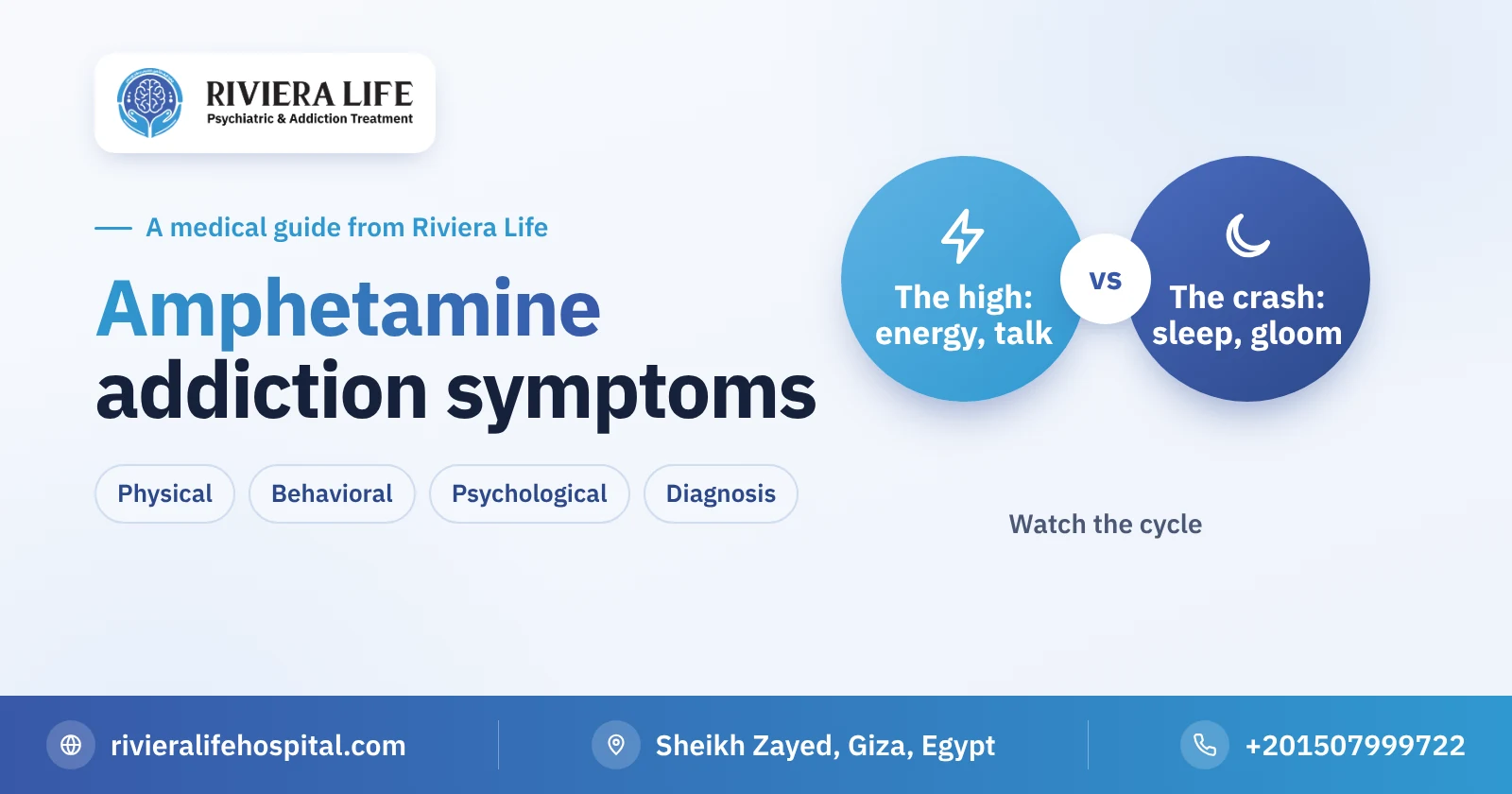
Smart observation doesn’t look for a single sign, but for a repeating cycle. During the effect you see activity, a lot of talk, eating less and dilated pupils. After a day or two you see the opposite: heavy, long sleep, intense hunger, gloom and sadness, and irritability if anyone wakes them. This weekly swing between “up” and “down” is one of the clearest features of stimulant use, and differs from ordinary laziness or depression, which stays relatively constant. You will find details of the days after stopping in our article on amphetamine withdrawal symptoms.
How do the signs develop from experimenting to addiction?
At first use is tied to an occasion: an exam, a long journey, or a party. Then it becomes a way to get any heavy task done. After that the person needs a larger amount to get the same effect, and begins using in continuous binges lasting days. In the final stage the only aim becomes avoiding the crash, so they use to feel normal, not to feel energetic. Anyone who wants to understand why some people go down this road faster than others will find the answer in our article on the causes of amphetamine addiction.
Can a person be using and seem normal?
Yes, especially in the first months or with small regular doses by mouth. Some users keep their jobs and seem more productive than others, and hide the crash with days off or by claiming to be ill. Here indirect signs matter more: chronic exhaustion at weekends, repeated headaches, asking for painkillers or sleeping pills, and a clear reliance on huge amounts of caffeine.
Medical use: when are pills not a sign of addiction?
Not everyone who takes a medicine from the amphetamine family is an addict. A patient diagnosed with ADHD or narcolepsy may take it daily with a prescription and follow-up, and may show mild side effects such as reduced appetite. Concern begins when the family sees the dose increasing without the doctor’s knowledge, the tablets running out before their time, the medicine being crushed or snorted, or being given to friends. It is worth noting that tolerance to a prescribed medicine isn’t counted alone as a sign of addiction in medical criteria as long as it is under supervision.
When is use a medical addiction?
Doctors rely on agreed criteria for what is called “stimulant use disorder”. Among the most prominent things the doctor asks about over the last twelve months:
- Using larger amounts or for longer than intended.
- Failed attempts to cut down or stop.
- Spending long hours looking for amphetamine or recovering from its effect.
- A strong, urgent craving to use.
- Neglecting study, work or home because of it.
- Continuing despite problems in relationships or mental and physical health.
- Tolerance, and withdrawal symptoms appearing on stopping.
The more criteria apply, the greater the severity of the disorder, from mild to moderate to severe.
How is the diagnosis made?
The diagnosis doesn’t rely on a urine test alone. It starts with an interview with the patient and a family member if possible, then a physical examination focusing on blood pressure, the heart, weight and teeth, and a substance test that reveals whether amphetamine or other substances mixed with it are present. The psychiatrist assesses for depression, anxiety, psychosis or undiagnosed ADHD. We have explained the details of the tests and detection windows in our article on how long amphetamine stays in the body.
What do you do if you notice these signs?
Write down your observations with their dates, as they help the doctor more than general impressions. Start the conversation at a calm moment, and focus on what you saw, not on accusation: “I noticed you haven’t slept for two days, and I’m worried about you.” Avoid constant searching and threats, because they push towards hiding. And seek specialist advice even if they refuse at first; the next steps are explained in our article on amphetamine addiction treatment.
Signs that can’t wait
Call an ambulance on 123 immediately if you see
These are signs of possible stimulant poisoning; don't wait for them to calm down on their own.
- Chest pain or a very fast, irregular heartbeat
- Severe body heat with confusion or delirium
- Seizures or fainting
- Violent agitation or hallucinations that make them a danger to themselves or those around them
- Talk of harming themselves during the crash
More from our amphetamines guide
- Amphetamines: the complete guide
- The harms of amphetamine on the heart, brain and body
- Amphetamine withdrawal symptoms
- The causes of amphetamine addiction
Questions many people ask
Usually disturbed sleep: staying up for nights then sleeping very long, with eating less and losing weight. This repeated cycle is clearer than any single sign.
They may be a sign during the effect, but aren't enough on their own, as they have other causes. What counts is several signs together and a clear change in behavior.
No. A patient taking the prescribed dose with medical follow-up isn't an addict. Concern begins when the dose is increased without the doctor's knowledge or the medicine is used in a non-medical way.
Watch for excessive staying up in exam season followed by long sleep and irritability, eating less, asking for money, and finding strips of pills without a box.
No. The test only proves the substance is present, while diagnosis relies on a medical interview, behavioral criteria and a physical and psychological examination.