Amphetamine addiction treatment is possible, but it differs from treating heroin or alcohol in one fundamental point: there is still no internationally approved medicine that replaces the substance or blocks its effect. So successful treatment rests on three pillars: getting through the crash and withdrawal period safely, treating the accompanying depression, insomnia or psychosis with supportive medicines, then a structured behavioral program that changes the habits on which use was built. In this article we explain the stages step by step, the real role of medicines, the expected duration, and how to choose the right place.
What makes treating stimulants different?
A patient who comes after weeks of amphetamine use usually doesn’t suffer severe physical pain as happens with opioids. Their suffering is in mood and energy: heavy exhaustion, an unbearable emptiness, and an intense craving that flares at any reminder of the substance. The brain is often exhausted after consecutive sleepless nights, and remnants of paranoia or hallucinations may remain. This means the center of gravity in treatment is psychological and behavioral, with careful medical care for the heart, sleep, nutrition and mental state.
The stages of amphetamine addiction treatment
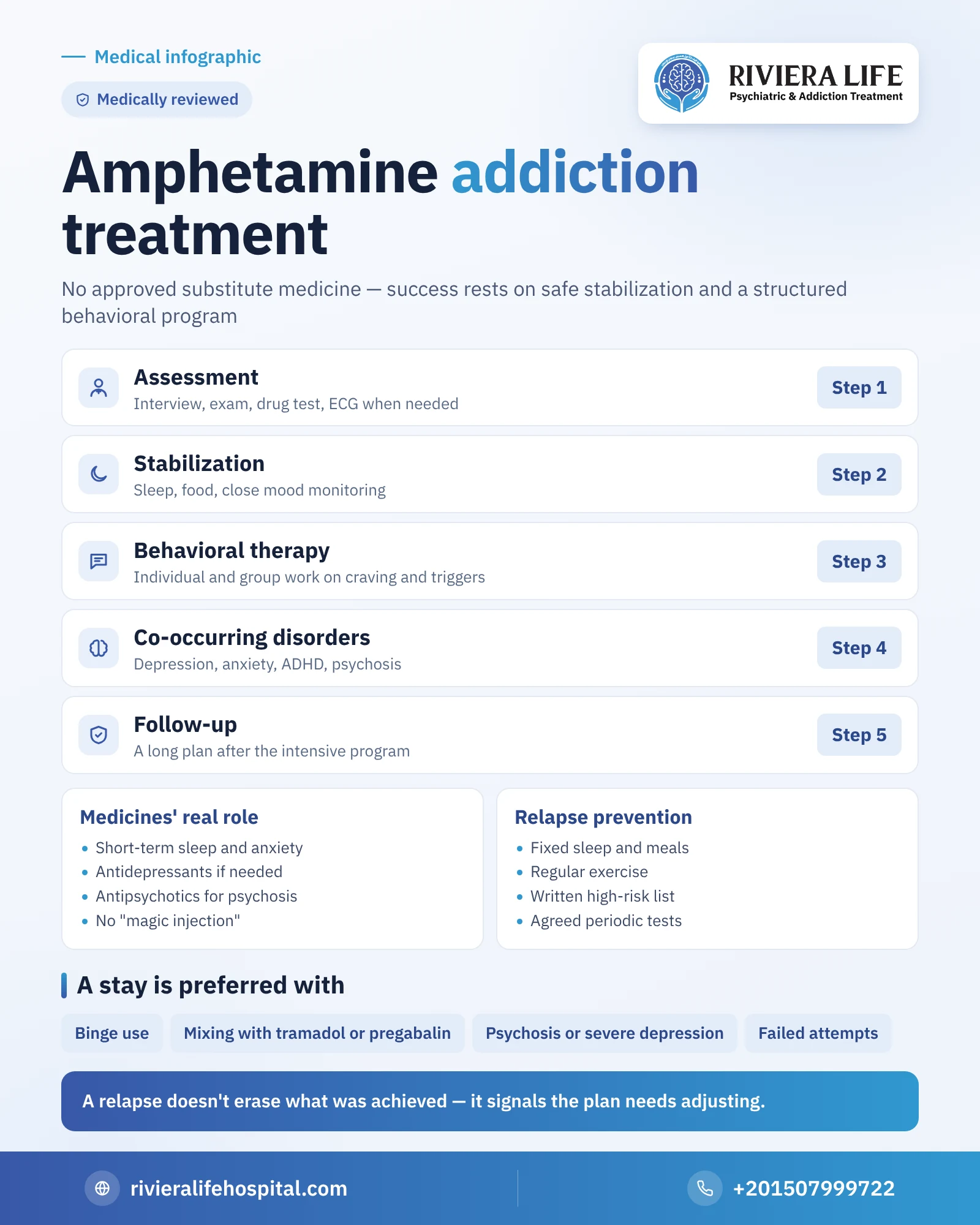
Structured treatment usually proceeds through five stations:
- Assessment: a psychiatric interview, physical examination, drug test and ECG when needed, to know the amount, duration, mixed substances and accompanying illnesses.
- Stabilization and detox: days to a few weeks in which the patient regains sleep and appetite, and their mood is monitored closely.
- Intensive behavioral therapy: individual and group sessions dealing with craving, triggers and lifestyle.
- Treating co-occurring disorders: depression, anxiety, undiagnosed ADHD and psychosis if present.
- Follow-up and relapse prevention: a long plan after the intensive program ends.
The first stage: stabilization and detox
The goal here is for the patient to get through the first days without relapse and without complications. The body needs sleep, fluids and food after a long period of exhaustion, so the patient at first looks lethargic and sleeps a lot. The medical team monitors blood pressure, pulse and temperature, and assesses mood daily, because depression in this period may be deep and sometimes carries thoughts of self-harm. What the patient feels day by day we explained in our article on amphetamine withdrawal symptoms.
Are there medicines to treat amphetamine addiction?
There is no approved medicine that treats amphetamine addiction itself as there is with opioids or alcohol. But medicines play an important role in treating what accompanies it, and the doctor chooses them for each patient according to their condition:
Medicines for sleep and anxiety
They are used for a short, defined period to help the patient regain natural sleep and calm tension in the first days, with caution about medicines that may cause a new dependence.
Antidepressants
Not every patient needs them, but they are important if depression continues after acute withdrawal ends, or was present before use in the first place.
Antipsychotics
They are used when paranoia or hallucinations appear, usually for a short period. In some cases the psychosis continues or recurs, so it needs longer follow-up.
Medicines under study
Many medicines have been tried to reduce craving for stimulants, and some combinations showed encouraging results in studies on methamphetamine, but they haven’t yet become an approved treatment. Anyone who promises you an “injection” or a “magic medicine” that ends the craving for stimulants is making a promise science doesn’t support.
Behavioral therapy: the heart of the program
Behavioral approaches are the most effective in treating stimulant addiction according to the available evidence, and among the most important:
- Contingency management: tangible, graded rewards for each negative test, one of the approaches with the strongest effect in this type of addiction.
- Cognitive behavioral therapy: the patient learns how to recognize the situations and thoughts that lead them to the pill, and how to deal with them.
- The structured intensive model: a program combining education with individual, group and family therapy and periodic tests over months.
- Motivational interviewing: strengthens the patient’s own inner motivation to stop amphetamine, without pressuring them.
- Family therapy: reorganizes communication at home and sets clear limits.
Treating co-occurring disorders
Many start using to escape an undiagnosed problem: anxiety, depression, or attention deficit hyperactivity disorder that makes studying difficult. If the addiction is treated and this problem is left, the patient quickly returns to the pills. That is why the psychiatrist assesses these disorders and sets a separate plan for them, and may choose non-stimulant alternatives or a very tightly controlled plan to treat ADHD. Our article on the causes of amphetamine addiction discusses this relationship in detail.
Inpatient stay or outpatient follow-up?
A stay in hospital is preferred when the patient uses large amounts or in continuous binges for days, mixes amphetamine with tramadol, pregabalin or alcohol, has shown symptoms of psychosis or severe depression, has failed previous attempts, or lives in an environment full of the substance. Milder, stable cases may suit an intensive outpatient program with several sessions a week and regular tests. Often the best is to start with a stay and then move gradually to follow-up.
How long does treatment take?
Initial stabilization usually needs roughly one to three weeks. The intensive behavioral program usually extends for months, and follow-up may continue for a year or more. The reason is that low mood and a weak sense of pleasure may continue for weeks or months after stopping, the period in which most relapses happen. Those who also use methamphetamine may need longer; you will find the specifics of its treatment in our article on methamphetamine addiction treatment.
Preventing relapse after the program
Triggers in stimulant addiction are strong and specific: exam nights, work pressure, late-night friends, and even seeing a strip of pills. A relapse-prevention plan usually includes:
- A fixed sleep schedule and regular meals, because exhaustion and hunger are among the strongest triggers of craving.
- Regular physical activity that helps improve mood and sleep.
- A written list of high-risk situations and what the patient will do in each.
- Agreed periodic tests, treated as a tool of support, not of accusation.
- A clear plan for the family if signs of returning appear, without threats or cutting off.
A relapse, if it happens, doesn’t erase what was achieved, but it is a signal that the plan needs adjusting.
The right hospital for amphetamine addiction treatment: how to choose
The right hospital for amphetamine addiction treatment is one that provides what a stimulant patient specifically needs: close monitoring of mood and the heart in the first days, a psychiatrist who deals with psychosis and depression, and a real behavioral program, not just days of sleep. Ask before you choose:
- Does the place assess depression and the risk of self-harm daily during the crash period?
- Is there a psychiatrist able to treat stimulant-induced psychosis if it appears?
- Is the program based on behavioral treatments with proven effectiveness, such as contingency management and cognitive behavioral therapy?
- Does it deal with the common mixing with tramadol, pregabalin and hash in one plan?
- Does it assess ADHD or anxiety as a possible cause of use?
- Is there follow-up for months after discharge and a program for the family?
And beware of any place that guarantees you a specific recovery rate or promises to rid you of addiction within days.
How Riviera Life meets these standards
Here is how these criteria are met at Riviera Life:
- A licensed facility: Riviera Life holds a Ministry of Health license to provide psychiatric and addiction treatment services.
- Long experience: fourteen years in treating addiction to stimulants and other substances.
- Tangible results: thousands of recovered cases from various types of addiction.
- Specialist consultants: consultants in psychiatry and addiction treatment who deal with crash depression and stimulant psychosis.
- Round-the-clock supervision: 24/7 medical monitoring of the heart, sleep and mood in the first stage.
- Complete confidentiality: the data of the patient and their family is fully protected.
- A family program: sessions that teach relatives how to support without covering up the use.
- Aftercare: extended follow-up after discharge to prevent relapse.
If you want to start, the first consultation is free, and the number +201507999722 is available to call at all times; we are based in Sheikh Zayed, Giza Governorate.
More from our amphetamines guide
- Amphetamines: the complete guide
- Amphetamine addiction symptoms
- Amphetamine withdrawal symptoms
- The harms of amphetamine on the heart, brain and body
- Khat addiction treatment: breaking the daily session habit, treating depression and preventing relapse
Questions many people ask
There is still no approved medicine that treats it directly. Medicines are used to treat accompanying insomnia, depression and psychosis, and the main treatment relies on behavioral programs.
Initial stabilization takes roughly one to three weeks, the intensive program months, and follow-up may extend to a year or more depending on the case.
Mild, stable cases may be treated with a supervised outpatient program. Severe depression, psychosis or mixing substances needs a stay in hospital.
Among the approaches with the strongest effect are contingency management, which rewards negative tests, cognitive behavioral therapy, and structured intensive programs that include the family.
Look for a licensed place that monitors mood and the heart closely in the first days, has a psychiatrist who treats stimulant psychosis and depression, and runs a real behavioral program with family follow-up. Riviera Life in Sheikh Zayed meets these criteria, with 24/7 medical supervision and a free first consultation.