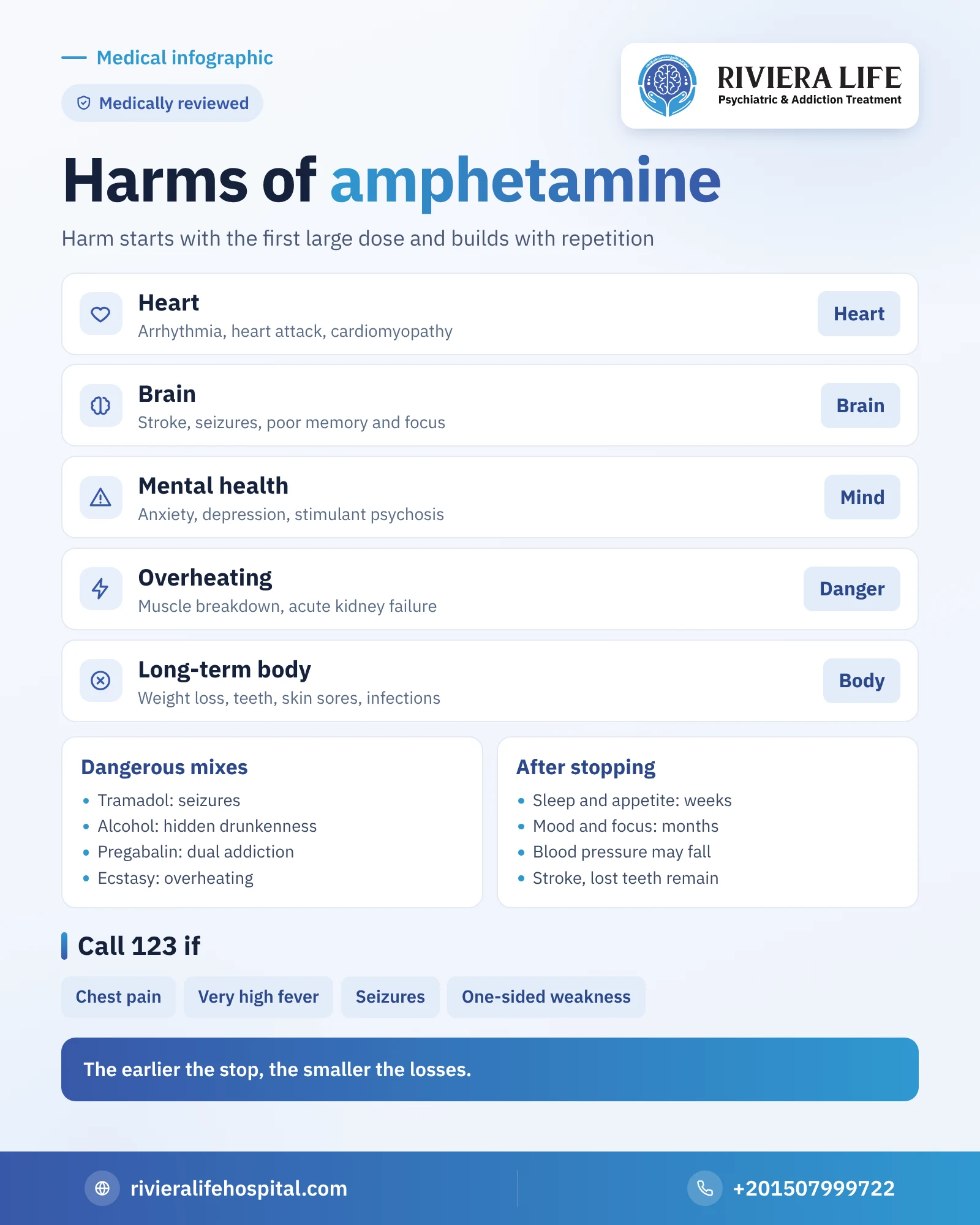
The harms of amphetamine begin with the first large dose and accumulate with repetition. In the short term it raises blood pressure, heart rate and body temperature, and may cause a heart rhythm disturbance, seizures or a stroke even in young people. In the long term it strains the heart, weakens memory and concentration, opens the door to anxiety, depression and psychosis, and leaves its mark on the teeth, skin, weight and social life. This article goes through these harms system by system, explains what makes them more dangerous, what can improve after stopping, and when the situation is an emergency.
Short-term harms of amphetamine
Within hours of the dose, the whole body works under high pressure. The most prominent things that happen include:
- A racing heartbeat and high blood pressure, with palpitations the person clearly feels.
- Raised body temperature and heavy sweating, and a risk of dehydration with staying up and movement.
- Headache, dizziness and tremor, with jaw clenching and teeth grinding.
- Nausea and complete loss of appetite.
- Anxiety, tension and insomnia, and sometimes panic attacks.
- Reckless decisions, including fast driving or unsafe relationships.
These symptoms increase as the dose increases or is repeated during the same day, or combines with hot weather and physical effort.
Harms of amphetamine on the heart and blood vessels
The heart is the organ most harmed by stimulants. Amphetamine narrows blood vessels and at the same time increases the heart muscle’s need for oxygen, a dangerous equation. In the short term it may cause heart rhythm disturbances or pain resembling angina, and in fewer cases a real heart attack. With long-term use blood pressure may rise permanently, and the heart muscle may enlarge or weaken, which is known as cardiomyopathy. The risk rises in those with a heart problem they don’t know about, so the first sign of it is an acute attack during use.
Harms of amphetamine on the brain and nerves
A sudden rise in blood pressure may cause bleeding inside the brain or a stroke, a known complication with stimulants even at young ages. Seizures can happen with large doses. In the long term, many users notice difficulty concentrating, remembering and planning, and slowed thinking. Research indicates that heavy, long-term stimulant use, especially methamphetamine, may affect the brain cells responsible for dopamine, and that part of this effect improves after a long period of abstinence, while another part may remain.
Harms of amphetamine on mental health
The psychological side of amphetamine’s harms is no less dangerous than the physical:
- Chronic anxiety and panic attacks, even on days when the person doesn’t use.
- Depression, especially during periods of crash and abstinence, which may carry thoughts of self-harm.
- Stimulant psychosis: paranoia and a feeling of being watched and pursued, and auditory or visual hallucinations or a sensation of insects under the skin. It usually appears with large doses and staying up for days, and usually passes after stopping, but may recur or persist in some.
- Aggression and impulsiveness, with the problems at home and work that follow.
- Worsening of any previous psychiatric disorder, such as bipolar disorder.
Body heat, muscles and kidneys
One of the most dangerous complications of amphetamine is body temperature rising to very high levels, especially at parties and in crowded places with hours of dancing and too little water. Severe heat may cause muscle breakdown, releasing substances that burden the kidneys and may cause acute kidney failure. Add to that dehydration and not eating for days, and the body becomes less able to bear any additional stress.
Harms to the body with long-term use
- Weight loss, malnutrition and weak immunity because of continuous loss of appetite.
- Dental problems: a dry mouth, teeth grinding and neglected hygiene lead to decay and erosion.
- Skin problems: spots and wounds from scratching and picking, which may become infected.
- Chronic sleep disturbance, with the exhaustion and poor concentration it brings.
- Damage to the nose in those who snort the powder, and infectious diseases in those who inject and share equipment, such as hepatitis C and HIV.
Harms of mixing amphetamine with other substances
Mixing multiplies the danger in ways the user doesn’t expect:
- With tramadol: both raise the likelihood of seizures, so combining them is a doubled danger.
- With alcohol: the stimulant hides the feeling of drunkenness, so the person drinks more than their body can bear.
- With pregabalin or sedatives: some use them to sleep after the stimulant, so a dual addiction forms, and the effects become unpredictable.
- With ecstasy or some antidepressants: increases the risk of overheating and serotonin toxicity.
- With other stimulants or large amounts of caffeine: an extra burden on the heart.
Harms of amphetamine during pregnancy
Using amphetamine outside medical supervision during pregnancy is linked to an increased risk of premature birth, low birth weight and placental complications, in addition to what the mother faces of high blood pressure and malnutrition. And if a woman is taking a prescribed medicine from this family and is planning a pregnancy or has discovered one, she should discuss this with her doctor rather than stopping or continuing it on her own.
Harms of amphetamine on teenagers
The brain in adolescence is still building the areas of control and decision-making, which makes it more sensitive to the effect of stimulants. A teenager who gets used to pills for studying may pay the price in their sleep, growth, studies and relationships, and is more likely for use to turn into addiction compared with someone who starts at an older age. Our article on the causes of amphetamine addiction explains why this use spreads among students in particular.
Social and financial harms
Away from the body, amphetamine leaves its mark on everything around the person: debts and disappearing money, absence from work after crash days, failing after months of “studying” on pills, and family fights because of irritability and lying. The person may face legal problems because of possession, or traffic accidents from driving without sleep. These harms are usually what pushes the family to act, and you will find the signs that come before them in our article on amphetamine addiction symptoms.
Harms of stimulants: amphetamine isn’t alone
Stimulants are a broad family that share raising the activity of the central nervous system, heart rate and blood pressure, and differ in their strength and how quickly they cause addiction. Amphetamine and methamphetamine are among the strongest, then cocaine, and at the lighter end caffeine and nicotine.
A weaker stimulant doesn’t mean it comes without a price: repeated use of large amounts of any of them strains the heart, sleep and mood. The common harms come down to three things:
- The heart: palpitations, rhythm disturbance and high blood pressure, and a heart attack or stroke may happen even in young people.
- The brain and mind: insomnia, anxiety and paranoia, then depression and a crash after the effect wears off, and psychosis with excess.
- Heat and dehydration: raised body temperature with effort, staying up and drinking too little.
The risk doubles when two stimulants are combined, or when a stimulant is used with large amounts of caffeine or energy drinks. To compare this with another substance, read the physical and psychological harms of cocaine and the harms of ice on the heart, brain and body, and for the lighter picture caffeine and energy drink addiction.
Do the harms differ between amphetamine and methamphetamine?
The harms are similar in type, but usually more severe and faster with methamphetamine, because it reaches the brain faster and stays there longer, and is linked to a higher degree of psychosis, tooth damage and nerve harm. You will find its details in our article on the harms of ice on the heart, brain and mind.
Do the harms of amphetamine disappear after stopping?
The good news is that many harms improve. Sleep, appetite and weight return within weeks, mood and concentration improve gradually over months, and blood pressure may fall if it hasn’t settled at a high level. What doesn’t improve easily is what happened suddenly: a stroke, heart muscle damage, or teeth that were lost. That is why the earlier the stop, the smaller the losses. The way to a safe stop is explained in our article on amphetamine addiction treatment.
When do you need emergency care?
Call an ambulance on 123 immediately if you see
These are signs of stimulant poisoning that may threaten life within a short time.
- Chest pressure or pain, or a very fast and irregular heartbeat after amphetamine
- A very high temperature with confusion or muscle spasms
- Seizures or loss of consciousness
- A severe headache that starts suddenly, weakness on one side of the body, or slurred speech
- Severe agitation, hallucinations or paranoia that make them a danger to themselves or others
- Very dark urine with severe muscle pain
More from our amphetamines guide
- Amphetamines: the complete guide
- Amphetamine addiction treatment
- Amphetamine and sex
- How long amphetamine stays in the body
Questions many people ask
Yes, it may cause rhythm disturbances, heart attacks and strokes even in young people, especially with large doses or an unknown heart problem.
It may cause stimulant psychosis with paranoia and hallucinations, especially with large doses and staying up for days. It usually passes after stopping, but may recur in some users.
Both raise the likelihood of seizures, so combining them is a doubled danger, in addition to forming a dual addiction.
Sleep, weight, mood and concentration improve gradually over weeks and months, but sudden harms such as a stroke or heart muscle damage may remain.
Because it stimulates the body and increases heat production, and with dancing, crowds and dehydration the temperature may reach levels that damage the muscles and kidneys.