Amphetamine withdrawal symptoms are mostly psychological: heavy exhaustion, long sleep, hunger and a low mood that may reach deep depression, with a pressing craving to return to the pill. They usually begin within hours to a day of the last dose, peak in the first days, and ease greatly within one to two weeks, while low mood and weak enjoyment may continue for longer weeks. Withdrawal itself doesn’t usually threaten life as happens with alcohol, but its real danger is in depression, suicidal thoughts and relapse. Here we explain the stages and their duration, what prolongs them, and when to act immediately.
Why does withdrawal happen after stopping amphetamine?
Throughout the period of use, amphetamine pushed the brain to pump large amounts of dopamine and noradrenaline. Over time the brain adapts: it secretes less on its own, and its receptors respond more weakly. When the substance suddenly disappears, the brain remains in a state of shortage, so the exact opposite of what the pill did appears: sluggishness instead of activity, a feeling of emptiness instead of confidence, and intense hunger instead of poor appetite. Added to that is the sleep debt accumulated from sleepless nights, so the patient seems like someone paying an overdue bill all at once.
The first stage: the crash (from hours to about three days)
Users call this stage the “come-down” or the “crash”. After a long binge ends, the person feels sudden exhaustion, sleeps very long hours, and may wake to eat greedily then sleep again. His mood is bad and irritable, and he may feel anxiety or sadness without a clear cause. The craving for the substance in these days may be less than the family expects, because tiredness overpowers everything, but it returns strongly as energy is restored.
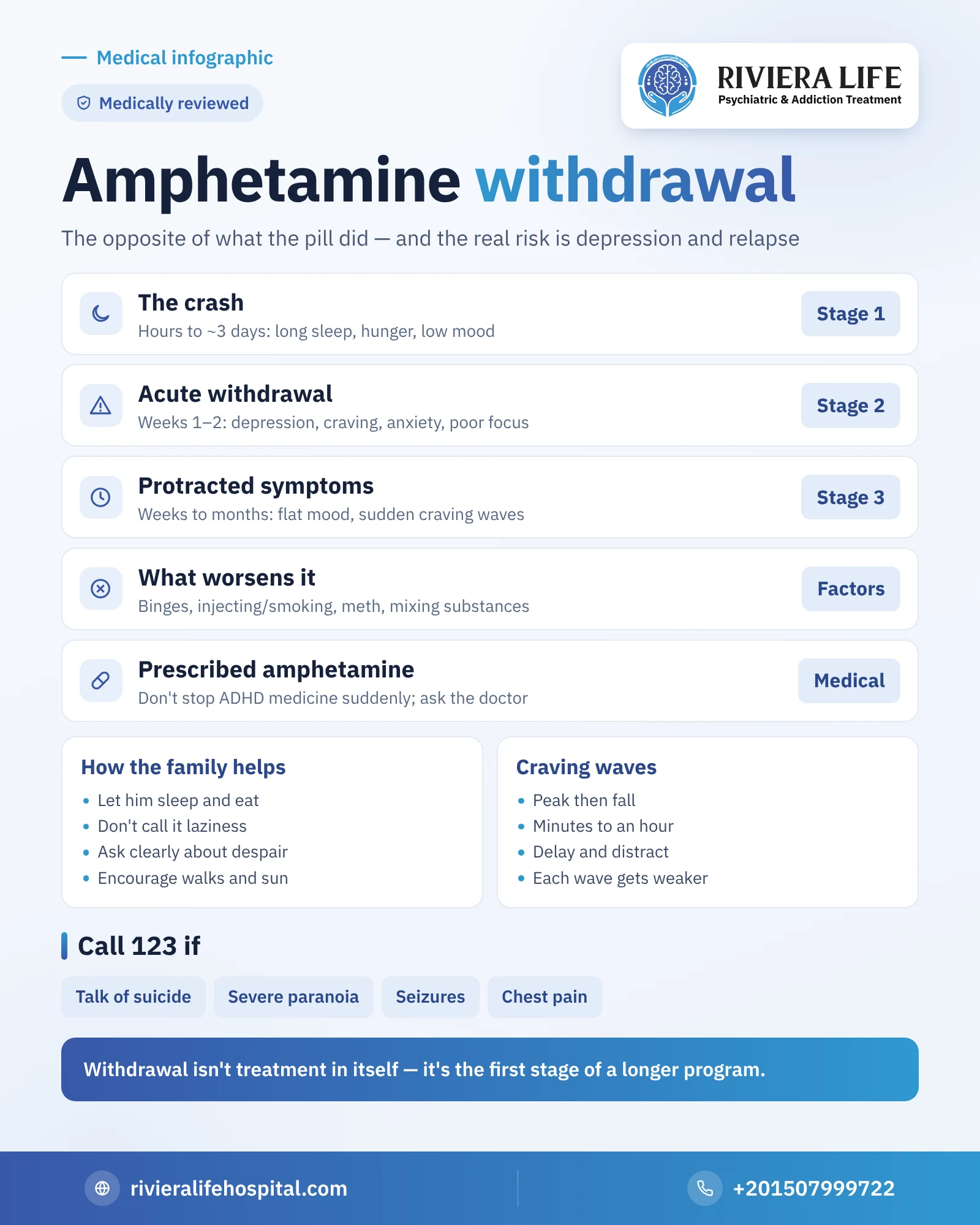
The second stage: acute withdrawal (the first to second week)
Here withdrawal becomes clear in its full form. Among the most prominent signs:
- Depression, sadness and crying, and a feeling that life has no taste.
- A pressing, intermittent craving to use, which intensifies with stress or seeing friends from the nights out.
- Anxiety, tension and irritability, getting worked up over the smallest things.
- Disturbed sleep: either excessive sleep or insomnia with very vivid, disturbing dreams.
- Difficulty concentrating and remembering, and slowed thinking.
- Increased appetite and starting to regain lost weight.
- General aches and muscle fatigue in some.
These symptoms ease gradually in most people by about the end of the second week, but they don’t disappear all at once.
The third stage: protracted symptoms (weeks to months)
After the acute symptoms calm, many notice that something is no longer as it was: a flat mood, little enthusiasm, difficulty enjoying simple things, and sudden waves of craving that come without warning. This stage may last weeks, and sometimes months in those who used large amounts for a long time. It is the most dangerous period for relapse, because the patient thinks he has fully recovered and then is surprised that the craving is still there.
What makes withdrawal longer or more severe?
- The duration of use and the amount, and especially using in continuous binges for days without sleep.
- The route of use: snorting, injecting and smoking are usually linked to harsher withdrawal than swallowing.
- Using methamphetamine alongside amphetamine, as its withdrawal is usually longer; you will find its details in our article on ice withdrawal symptoms.
- Having depression or anxiety before using.
- Mixing the substance with tramadol, pregabalin or sedatives, so withdrawal becomes double and may carry additional physical risks.
- Age, general health and malnutrition.
Is amphetamine withdrawal dangerous?
Withdrawal from amphetamine alone doesn’t usually cause seizures or life-threatening physical complications. But the danger comes through three doors: first, severe depression that may carry thoughts of self-harm, which must be taken completely seriously. Second, the persistence of psychotic symptoms from the period of use such as paranoia and hallucinations. Third, withdrawal from substances mixed with it; stopping large doses of pregabalin, sedatives or alcohol suddenly may cause seizures. That is why the condition isn’t judged to be “just a come-down” before knowing everything the person was using.
The difference between the come-down after a night out and real withdrawal
Someone who uses once may feel exhaustion and low mood the next day that go within a day or two. Real withdrawal appears in someone who has used regularly, lasts days and weeks, and is accompanied by a clear craving to return. Distinguishing between them is important, because withdrawal is a sign of dependence, and it is part of the criteria doctors use in diagnosing addiction, as we explained in our article on amphetamine addiction symptoms.
Pressing craving: how does it come and how does it pass?
The craving for a stimulant isn’t constant all day, but comes in waves. A whole morning may pass calmly, then the craving suddenly flares on seeing an old friend, hearing a song linked to nights out, or just feeling tired before a difficult task.
A single wave usually reaches its peak and then falls within minutes to an hour if the person doesn’t respond to it. Learning this fact helps a lot: instead of fighting the craving as if it will never end, the patient learns to postpone it and occupy himself by walking, talking to someone or taking a shower until it passes. And with each wave that passes without using, the following waves weaken gradually.
If the amphetamine is a prescribed medicine
Some patients take medicines from the amphetamine family to treat ADHD or narcolepsy. They may feel exhaustion, sleepiness, low mood and a return of the original disorder’s symptoms on stopping the medicine suddenly, especially if the dose was high or the duration long. That is why stopping a prescribed medicine on one’s own isn’t advised; instead discuss it with the doctor, who may suggest gradual reduction or an alternative. But if the patient has exceeded the prescribed dose or used the medicine in a non-medical way, then he needs an assessment for possible addiction.
Can you stop at home?
Some mild cases, of a person who used for a short period, lives in a supportive environment and has no history of depression, may get through withdrawal at home under outpatient medical follow-up. But home isn’t suitable if there is severe depression or thoughts of self-harm, psychotic symptoms, mixing with other substances, or previous attempts that failed after days. In these cases direct medical supervision is safer and more successful.
How does the family help someone going through withdrawal?
- Let him sleep and eat without blame, as this is a natural part of recovery.
- Don’t interpret his sluggishness as laziness, and don’t demand that he “go back to how he was” within days.
- Watch his mood calmly, and ask him clearly if you notice talk of despair or death.
- Remove extra money and car keys in the first days if there is a risk.
- Encourage him to walk, get sunlight and regulate sleep times gradually.
- Contact the treating doctor at any worrying change.
How does the doctor deal with withdrawal?
There is no medicine that cancels amphetamine withdrawal, but the doctor treats the symptoms: he helps sleep with short-term medicines, treats anxiety, and assesses the need for an antidepressant or an antipsychotic. Most importantly, withdrawal isn’t considered treatment in itself, but the first stage of a longer program explained on our page on amphetamine addiction treatment.
When should you call the emergency services?
Call an ambulance on 123 immediately if you see
Withdrawal itself rarely threatens life, but these signs can't wait.
- Talk of suicide or self-harm, or an actual attempt at it
- Hallucinations or severe paranoia that make him attack those around him or flee in a dangerous state
- Seizures, especially if he uses pregabalin, sedatives or alcohol with it
- Chest pain or strong palpitations following the last round of use
- Severe confusion or loss of consciousness
At Riviera Life we receive withdrawal cases around the clock, and we start by assessing mood and the risk of self-harm before anything else.
More from our amphetamines guide
- Amphetamines: the complete guide
- Amphetamine addiction treatment
- How long amphetamine stays in the body
- Causes of amphetamine addiction
Questions many people ask
They usually begin within hours to a day of the last dose, with exhaustion, long sleep, hunger and low mood.
The acute symptoms ease in most people within about one to two weeks, while low mood and intermittent craving may continue for weeks or months.
It usually doesn't threaten life physically, but severe depression, thoughts of self-harm, psychosis and withdrawal from substances mixed with it need serious medical follow-up.
Because the brain is repaying the sleep debt accumulated from sleepless nights, and is in a temporary shortage of activating messengers, and this is a natural part of the crash stage.
This isn't advised without consulting the doctor, as it may cause exhaustion, low mood and a return of the disorder's symptoms, and the doctor may suggest gradual reduction.