The short answer
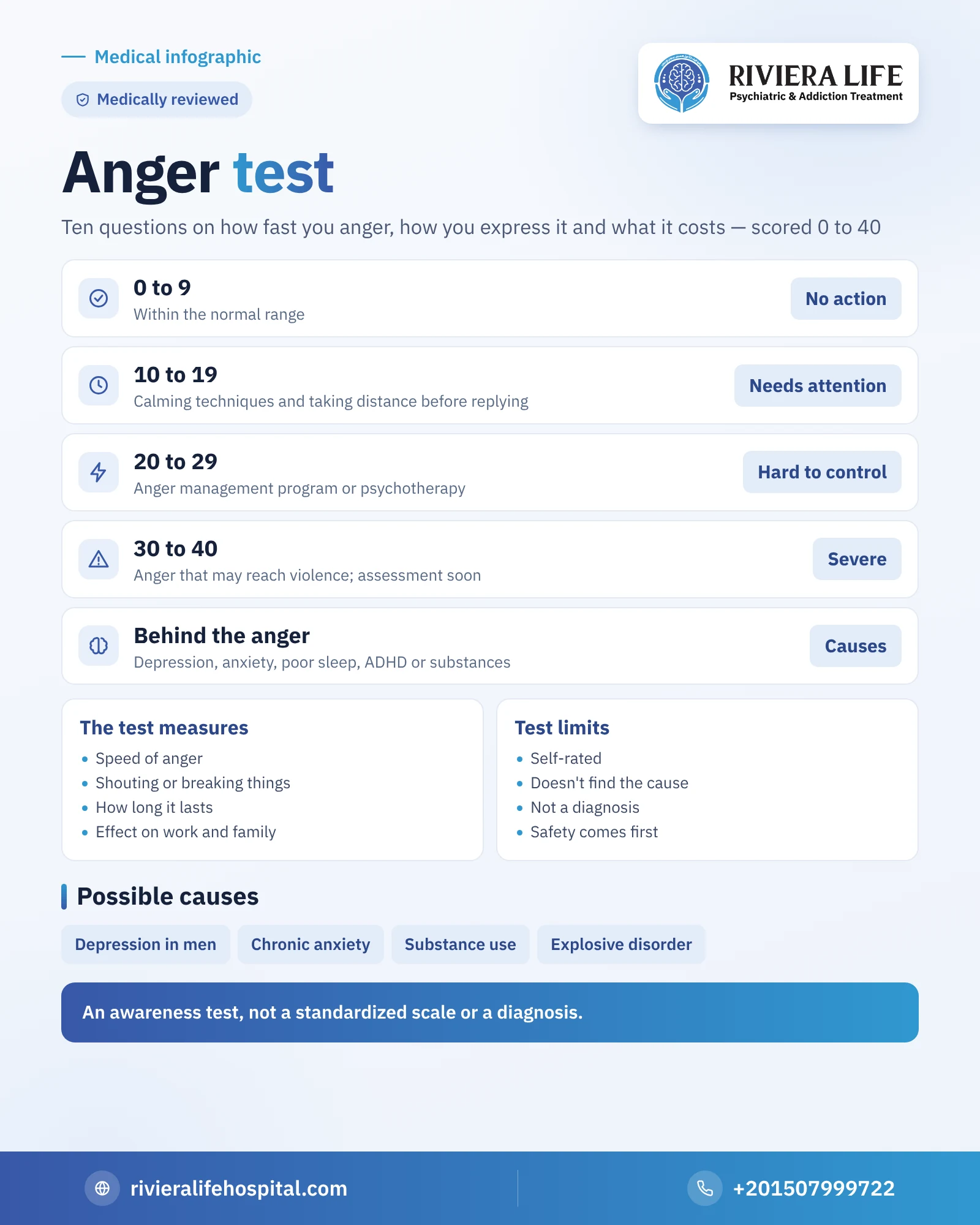
Riviera Life’s anger test is ten questions about recent months, measuring how fast you get angry, how you express it by shouting or breaking things, how long it lasts, the urge to hurt, and its effect on work and relationships. Each answer scores from 0 to 4, and the score runs from 0 to 40: under 10 is anger in the normal range, 10 to 19 needs attention, 20 to 29 is difficulty with control, and 30 or more is severe anger that may reach violence and deserves a psychiatric assessment soon.
- DurationAbout two minutes
- ScoreFrom 0 to 40
- 20 or moreAnger management program or psychotherapy
Anger is a normal, healthy feeling when it alerts us to injustice or a violation. The problem isn’t that you get angry, but how often, how strongly, and what you do then. When anger turns into repeated shouting, breaking things or your family being afraid of you, it has gone beyond its role. These questions help you assess your anger honestly before someone pays its price.
Start the anger test
Anger test
Over the past months, how often has the following happened to you?
To discuss your result with a psychiatrist in confidence, the first consultation is free on +201507999722.
This is an awareness test prepared by the medical team at Riviera Life; it is not a research-standardized scale or a diagnosis. Your answers are not saved or sent to anyone; the calculation happens on your device only.
How is the result read?
| Score | Meaning | The right step |
|---|---|---|
| 0 to 9 | In the normal range | No action |
| 10 to 19 | Needs attention | Calming techniques and taking distance before replying |
| 20 to 29 | Difficulty with control | Anger management program or psychotherapy |
| 30 to 40 | Severe anger | Psychiatric assessment soon |
What sometimes hides behind anger?
Excessive anger may be the visible face of another problem. Depression in men often shows as irritability rather than sadness, as in depression in men. Behind it there may be chronic anxiety, lack of sleep, or undiagnosed attention deficit hyperactivity disorder. Using hashish, stimulants and alcohol, and withdrawing from them, also raises the chance of anger outbursts. And if explosive outbursts are sudden and much bigger than the situation, read about intermittent explosive disorder.
The limits of the test
- It relies on your assessment of yourself, and those around you may see your anger as more severe than you do.
- It doesn’t determine the cause of the anger, which is what the doctor looks into in the interview.
- If there is a current risk of harm to anyone, safety comes before any test.
About this test
Riviera Life’s medical team prepared these questions to cover the three aspects of anger: the feeling, how it is expressed, and its consequences. It is an awareness test, not a research-standardized scale and not a diagnosis.
How can Riviera Life help you?
We look with you for the source of the anger, treat any psychiatric disorder or substance use behind it, and offer sessions teaching calming skills and resolving disagreements without exploding. You will find practical steps in treating excessive irritability. The first consultation is free and confidential on +201507999722.
Read also
Questions many people ask
Anger is a normal feeling, but frequent, intense anger may be a sign of depression, anxiety, substance use or intermittent explosive disorder.
Yes, with anger management programs and psychotherapy, along with treating the cause behind it if there is one.