The short answer
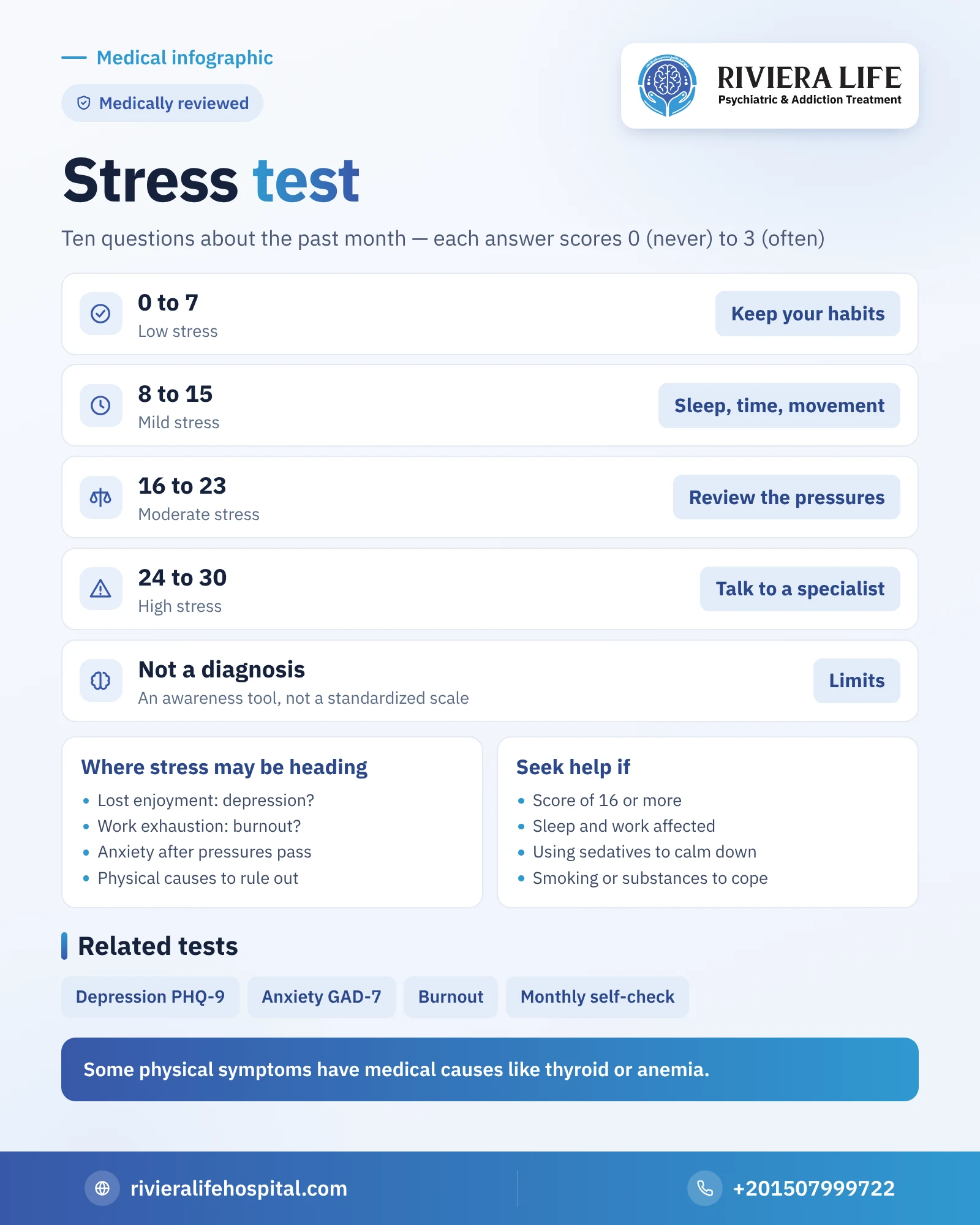
Riviera Life’s stress test is ten questions about the past month, measuring your feeling that pressures are beyond what you can bear, irritability and difficulty relaxing, and the effect of stress on your sleep, body and concentration. Each answer scores from 0 (never) to 3 (often), and the score runs from 0 to 30: 0 to 7 is low stress, 8 to 15 mild, 16 to 23 moderate, and 24 or more high. Persistent high stress may lead to burnout, anxiety or depression, so it deserves a conversation with a specialist.
- TimeAbout two minutes
- ScoreFrom 0 to 30
- 16 or moreReview the sources of pressure and ask for help
Stress isn’t an illness in itself, but the body’s response to what your day demands of it. But when it goes on for a long time it turns from a motivator into a burden: a headache at the end of the day, an upset stomach, sleep that doesn’t refresh, and irritability with those closest to you. This test measures how much stress has taken from your energy over the last month, so you know whether the time has come to change something.
Start the stress test
Psychological stress test
Over the past month, how often have you felt the following?
To discuss your result with a psychiatrist in confidence, the first consultation is free on +201507999722.
This is an awareness test prepared by the medical team at Riviera Life; it is not a research-standardized scale or a diagnosis. Your answers are not saved or sent to anyone; the calculation happens on your device only.
What your score means
| Score | Level | What helps? |
|---|---|---|
| 0 to 7 | Low | Keep your current habits |
| 8 to 15 | Mild | Organizing sleep, time and movement |
| 16 to 23 | Moderate | Reviewing the sources of pressure, with a consultation when needed |
| 24 to 30 | High | Talking to a specialist |
Three questions that reveal where stress is heading
Some of the test’s questions matter more than others because they point to the direction. If you answered “often” about losing enjoyment of things, stress may have started turning into depression, and here the PHQ-9 depression test helps. If the exhaustion is linked to work specifically, with a feeling of not caring, it may be burnout, explained in burnout. And if anxiety is present even after the pressures have gone, it is more likely to be anxiety that deserves assessment.
The test’s limits
- It measures your feeling of pressure, not the size of the pressures themselves; two people may feel the same pressure at two different levels.
- Some of the physical symptoms in the questions have physical causes, such as thyroid disorders and anemia.
- It doesn’t distinguish between stress and anxiety; the difference is in the difference between anxiety and stress.
About this test
These questions were prepared by the medical team at Riviera Life, combining the psychological side of stress with its physical signs common in the clinic, and they are suitable for monthly self-monitoring. It is an awareness test, not a research-standardized scale or a diagnosis.
How can Riviera Life help you?
If your stress is high, or you have started turning to sedatives, smoking or other substances to calm down, our team can help you understand the sources of pressure, learn practical ways of dealing with them, and treat any anxiety or depression that may lie behind it. You will find practical steps in psychological stress. The first consultation is free and confidential on +201507999722.
Read also
Questions many people ask
Stress is a response to a clear pressure and usually eases when it is gone, whereas anxiety may persist without a clear cause or after the pressures have gone.
If your score is high, or stress has started to affect your sleep and work, or you have begun turning to sedatives or substances to calm down.