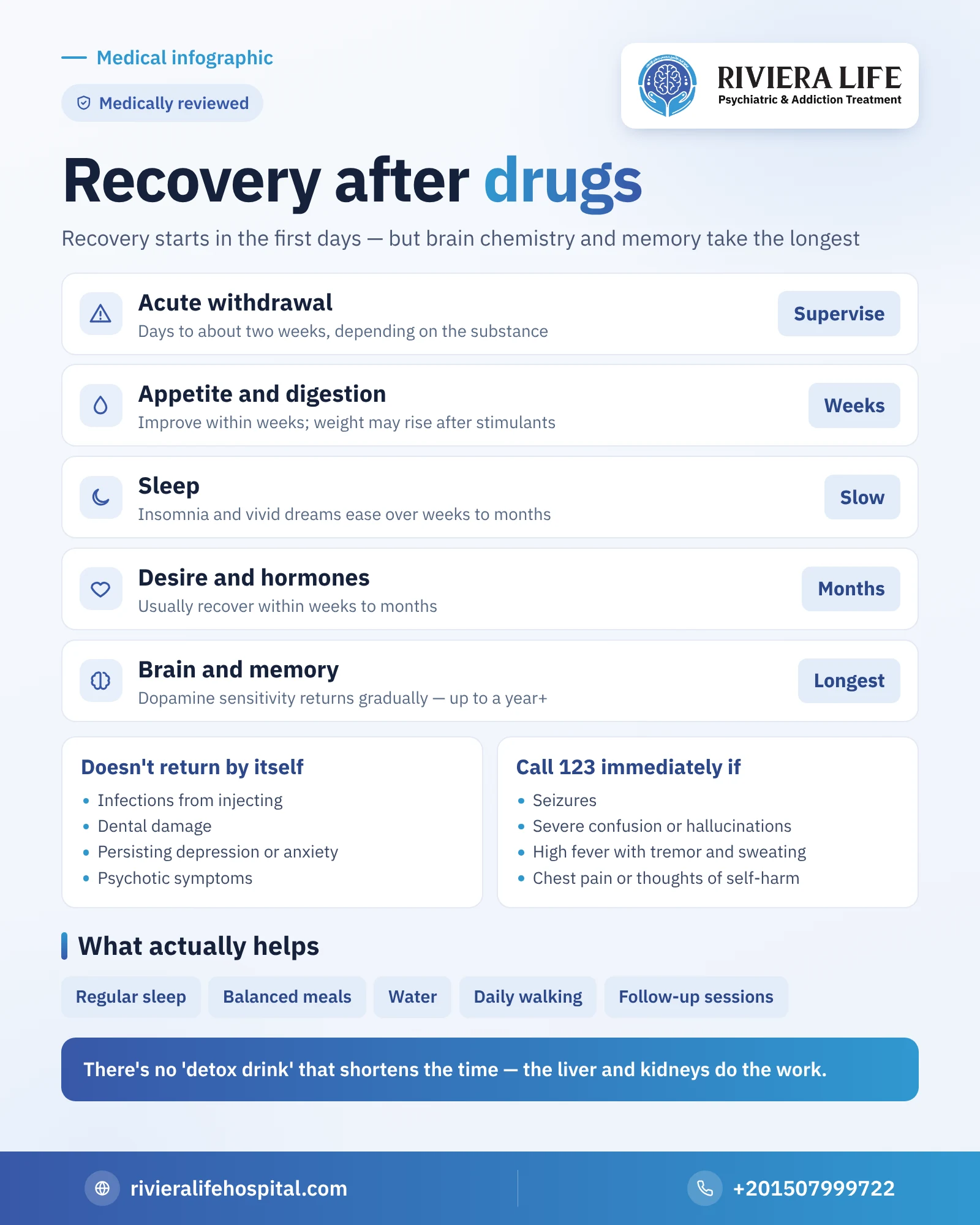
When does the body return to normal after quitting drugs? The body’s return begins in the first days after stopping, but each system recovers at its own speed: acute withdrawal usually settles within days to two weeks, appetite and digestion improve within weeks, while sleep, mood and sexual desire sometimes need months, and brain chemistry, memory and concentration need the longest time, which may reach a year or more after long use. These durations are approximate, and vary with the substance, years of use, age and general health. Here we map the return of the brain and body to normal, system by system, and what doesn’t come back by itself and needs treatment.
When does the body return to normal after quitting drugs? There is no single date
Someone who used hashish for a few months is completely different from someone who used heroin or alcohol for ten years. What most determines the speed of recovery:
- The type of substance: stimulants, opioids, sedatives and alcohol affect different systems.
- The length and amount of use: the longer the years, the longer the recovery usually is.
- The route of use: injecting and smoking leave effects on the vessels and lungs that swallowing doesn’t.
- Mixing more than one substance: common in Egypt, between tramadol, pregabalin, hashish and strox.
- Age, nutrition and accompanying illnesses, and whether there was depression or anxiety before use.
If your question is about hashish alone, our article on when the body returns to normal after quitting hashish covers it in detail.
Does someone addicted return to normal after treatment?
This is the question families ask most, and the honest answer is: in most cases yes, the person returns to a normal life in which they work, love and take responsibility, but the return is gradual, not on the day they leave hospital. The body recovers in weeks to months, and the brain functions linked to control, decision-making and pleasure need longer, which may stretch to months after stopping, with improvement continuing over time. What really changes is that the person remains more sensitive than others to the substance they were addicted to, so recovery is built on a relapse-prevention plan, not on the assumption that “it’s all over”. What may not fully return is severe organ damage after many years with some substances, which the following sections explain.
The first days and weeks: acute withdrawal
The first thing the body goes through is withdrawal — its reaction to the absence of a substance it had grown used to. With short-acting opioids such as heroin and tramadol, symptoms usually begin within a day, peak on the second or third day, and mostly settle within one to two weeks; the details are in our article on opioid withdrawal symptoms. With stimulants comes the “crash”: exhaustion, long sleep, hunger and low mood.
Withdrawal from alcohol and sedatives such as benzodiazepines and pregabalin can carry the risk of seizures and delirium, so none of them is stopped suddenly without a doctor. This stage needs medical supervision, and it isn’t yet the time to judge the “body’s return”.
Call an ambulance immediately on 123 if you see
Some withdrawal states, especially from alcohol and sedatives, can be life-threatening and need urgent medical intervention.
- Seizures or an epileptic fit
- Severe confusion, hallucinations, or not knowing the place and time
- A very high temperature with tremor and heavy sweating
- Chest pain or severe palpitations
- Thoughts of self-harm or ending life
An approximate map by type of substance
The following table is approximate, and differences between people are large:
And because hashish is one of the most asked-about substances, it has its own detailed recovery map: when the body returns to normal after quitting hashish.
| Substance | Acute withdrawal | What may continue after it |
|---|---|---|
| Opioids (heroin, tramadol) | Days to about two weeks | Insomnia, anxiety and craving for weeks or months |
| Stimulants (ice, Captagon, cocaine) | A crash for days to two weeks | Flatness, loss of pleasure and poor concentration for months |
| Sedatives and pregabalin | Days to weeks with gradual reduction | Anxiety and insomnia that may last a long time |
| Alcohol | About two days to a week | Disturbed sleep and mood for weeks |
| Synthetic cannabinoids (strox, voodoo) | Days to two weeks | Anxiety, insomnia and sometimes psychotic symptoms that need follow-up |
The brain: when does it regain its balance?
Drugs flood the brain’s reward circuits with dopamine, so the brain adapts by reducing its sensitivity, including reducing the number or activity of dopamine receptors. That is why a person in recovery at first feels that life has no taste, a phenomenon many describe as “dopamine withdrawal”, which we explain in our article on dopamine withdrawal symptoms.
The reassuring news is that this adaptation can be reversed. Imaging studies of people recovering from methamphetamine, for example, showed partial improvement in dopamine markers after about a year of abstinence, with improvement in some mental functions. Recovery here is slow and gradual and needs patience, but the brain is more flexible than a person in recovery thinks in their first weeks. As sensitivity gradually returns, pleasure in simple things comes back: a meal they love, time with their children, or a small achievement at work. Regular physical activity and enough sleep are among the things that most help this return.
Memory and concentration
Poor concentration, forgetfulness and slowed thinking are among the things that most worry people in recovery. Most of this improves gradually over months, and improvement speeds up with good sleep, physical activity and mental exercise such as reading and learning a new skill. But after long use of alcohol or inhaled solvents, or after overdoses that caused oxygen deprivation, some weakness may remain and need specialist assessment and rehabilitation.
Sleep: sometimes the last thing to settle
Insomnia is very common in the first weeks, and many expect it to disappear when withdrawal ends and are shocked when it continues. Sleep usually improves gradually over weeks to a few months, and vivid dreams about using may appear; they are common and don’t mean relapse. The solution isn’t a sleeping pill a friend recommends, but a fixed sleep routine, fewer stimulants, and, if insomnia persists, a treatment the doctor chooses that doesn’t carry the risk of a new addiction.
Appetite, weight and the digestive system
After stimulants, appetite usually returns strongly and weight increases within weeks — an expected change that needs balanced food, not worry. After opioids, some suffer diarrhea and cramps during withdrawal, then digestion gradually returns and the chronic constipation they caused disappears. After alcohol, stomach inflammation improves and liver function improves within weeks if it hasn’t reached cirrhosis.
Sexual desire and hormones
Opioids in particular lower the male hormone in men and disturb the menstrual cycle in women, and many stimulants and sedatives affect desire and performance. After stopping, there may be a period of coolness or disturbance, then hormones usually improve within weeks to months. If the problem persists after several months, it is better to check hormones rather than turn to random stimulants that may carry a new risk.
The heart, liver and lungs
Blood pressure and heart rate fall in many people recovering from stimulants within weeks, and coughing decreases in those who smoked substances. But damage that has actually happened, such as a weakened heart muscle, cirrhosis of the liver or repeated lung infections, may not disappear, and needs follow-up with a specialist doctor.
What doesn’t return by itself and needs treatment?
- Infections: anyone who injected needs testing for viral hepatitis and HIV, because their treatment is available and effective.
- Teeth: decay and erosion after stimulants and opioids need a dentist.
- Depression and anxiety: if they persist after the first weeks they usually need separate treatment, and may have predated use, which is what our dual diagnosis program treats.
- Psychotic symptoms: suspicion or hallucinations that persist after stopping need a psychiatrist.
- Vitamin deficiency: especially after alcohol, and it can affect the nerves and memory.
How can you help your body recover?
There is no “body cleansing mix” that shortens the time; the liver and kidneys clear the substance themselves. What really makes the difference: regular sleep, three balanced meals, drinking water, a daily walk that gradually increases, avoiding smoking and excess stimulants, and sticking to the follow-up sessions that protect against relapse. Our article on does someone addicted return to normal after treatment explains the psychological and social side of this return.
The stress, insomnia and waves of craving that continue for weeks after stopping have their own article: post-acute withdrawal symptoms.
And food is part of this recovery from the first days; what helps the body during withdrawal and what makes symptoms worse is explained in eating during withdrawal, along with the role of exercise in recovery.
How can Riviera Life help you?
We begin with safe withdrawal under round-the-clock medical supervision, then assess what use has left on the body and mind, and follow sleep, mood and nutrition during rehabilitation and aftercare, under the supervision of consultants in psychiatry and addiction treatment and in complete confidentiality. The first consultation is free; contact us on +201507999722. We are based in Sheikh Zayed, Giza.
Read also
- When does the body return to normal after quitting hashish?
- Does someone addicted return to normal after treatment?
- The stages of recovery from addiction
- Dopamine withdrawal symptoms
Questions many people ask
In most cases the brain regains its balance gradually, which may take months to a year or more after long use, and some effects may need rehabilitation.
Insomnia is a common part of recovery because the brain is resetting a sleep system that relied on the substance, and it usually improves within weeks to months.
There is no evidence for that. The liver and kidneys clear the substance themselves, and food, sleep and water support recovery without shortening the time.
It usually improves within weeks to months as hormones recover, and if the problem lasts a long time it is best to check hormones with a doctor.
Yes, especially after stimulants that suppressed appetite. It is best handled with balanced food and physical activity, without harsh diets.