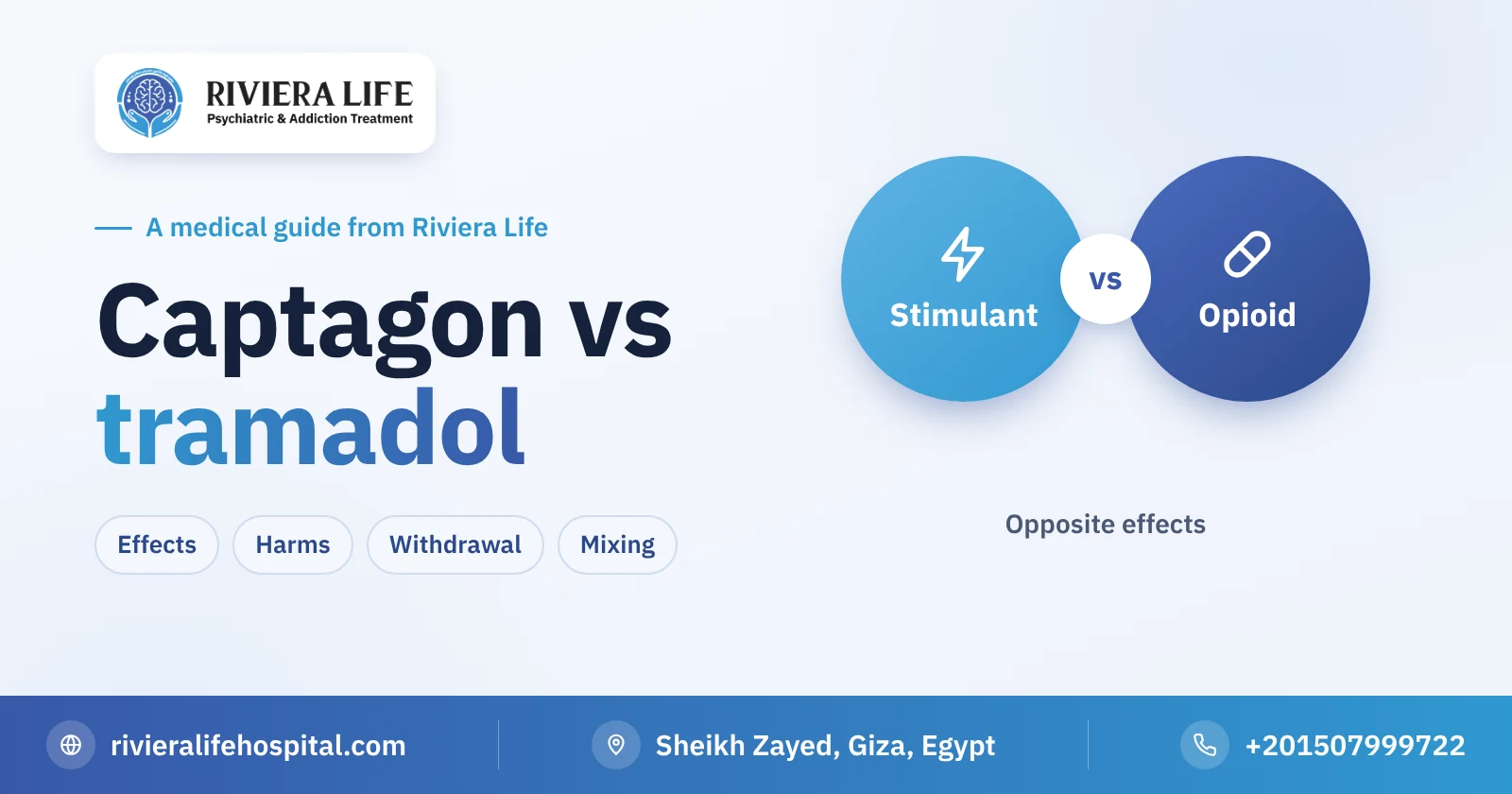
The difference between Captagon and tramadol is that the first is a stimulant from the amphetamine family that speeds up the heart and brain and drives away sleep, and the second is an opioid painkiller that calms pain and slows the nervous system. The Captagon in circulation today is illicit pills, mostly of unknown composition, while tramadol is a licensed medicine widely misused in Egypt. They differ in feeling, signs, harms, the shape of withdrawal and the method of treatment, but agree on one thing: both cause addiction. And combining them, which is common among workers, drivers and students, carries risks that neither carries alone. This is a detailed comparison between them.
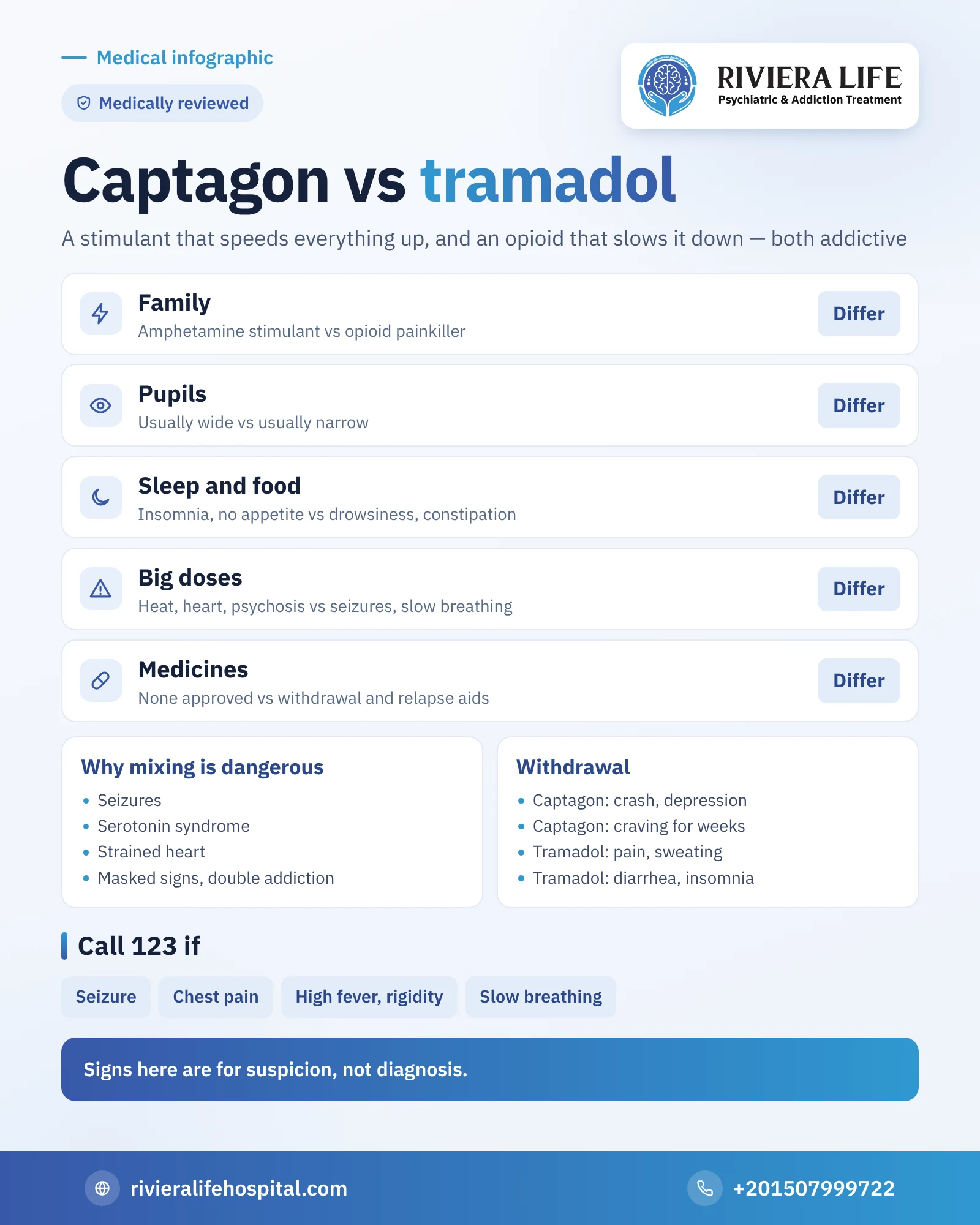
The difference between Captagon and tramadol in brief
| Aspect | Captagon | Tramadol |
|---|---|---|
| Family | Amphetamine stimulant | Opioid painkiller |
| Medical status | No medical use today, and its pills are illicit | A licensed pain medicine that is misused |
| Dominant feeling | Energy, staying up and excess confidence | Calm, pain relief, warmth and sometimes drowsiness |
| Pupils | Usually dilated | Usually constricted |
| Sleep and food | Insomnia and loss of appetite | Intermittent drowsiness and constipation |
| The greatest danger of a large dose | High body temperature, heart rhythm disturbance, psychosis and seizures | Seizures, slow breathing and serotonin syndrome |
| Withdrawal | Crash, exhaustion, depression and craving | Aches, sweating, diarrhea, insomnia and anxiety |
| Addiction treatment medicines | No approved medicine specific to it | Medicines are available to help withdrawal and prevent relapse |
An illicit stimulant and a misused medicine
Captagon was originally a brand name for a stimulant medicine withdrawn from the market decades ago. The pills seized today under this name in the Arab region are made by illicit networks, and usually contain amphetamine with caffeine and other substances, with no control over concentration or purity. To learn more, see the Captagon page.
Tramadol, on the contrary, has a legitimate place in medicine; doctors prescribe it for moderate and severe pain. But its wide spread, and the circulation of smuggled high-strength tablets, have made it one of the substances young people in Egypt are most addicted to. The tramadol page sets out its full picture.
How does each work in the brain?
The amphetamine in Captagon pushes nerve cells to release large amounts of dopamine and noradrenaline, so attention and energy rise, the heart speeds up, and blood pressure and temperature rise. The whole body enters an artificial state of “emergency”.
Tramadol works in two ways: it activates opioid receptors, easing pain and giving a feeling of calm, and raises serotonin and noradrenaline in a way close to some antidepressants. That is why some feel slight energy at first rather than drowsiness, which sometimes makes people confuse its effect with that of stimulants.
What does a person look like under the influence of each?
Signs closer to Captagon
- Long nights awake, excessive activity and fast, non-stop talk.
- Dilated eyes, a clenched jaw, and sweating.
- Loss of appetite and noticeable weight loss.
- Irritability and suspicion of others, then long sleep after the effect wears off.
Signs closer to tramadol
- Exaggerated calm or intermittent drowsiness at odd times.
- Constricted pupils, itching, and chronic constipation.
- Mood swings and irritability when the pill is late.
- Sweating, body aches and repeated yawning if it is missed for days.
These are signs for suspicion, not diagnosis, and the signs of Captagon are detailed in the article on Captagon addiction symptoms.
Physical harms: where does each strike?
Captagon’s harm is concentrated in the heart and blood vessels: a racing pulse and high blood pressure, which may reach heart rhythm disturbance or a clot, especially with staying up, dehydration and smoking. Added to this are raised body temperature, weight loss, tooth erosion and weakened immunity. You will find the details in the article on the harms of Captagon.
Tramadol’s greatest danger is seizures, which may happen even at amounts the person considers usual, and slow breathing at large amounts or when mixed with sedatives. With long use come chronic constipation, low male hormone and the sexual weakness that follows, and liver and kidney problems in some users.
Mind and mood
Captagon is more inclined to cause acute psychiatric disturbances: anxiety and panic attacks, suspicion and paranoia, and continuous staying up and large doses may reach psychosis with hallucinations and delusions of persecution. Tramadol is more linked to depression, emotional blunting and mood swings, with anxiety and irritability clearly appearing between doses and during withdrawal. In both cases memory, concentration and the ability to work are affected.
Addiction: psychological dependence and physical dependence
Both cause addiction, but in different ways. Captagon creates an urgent psychological craving: in the person’s mind it becomes linked to the ability to work, stay up and feel confident, so they find it hard to imagine their day without it. Tramadol adds clear physical dependence to this, so the body needs the substance to avoid pain, sweating and insomnia, and stopping suddenly becomes painful. That is why many tramadol addicts say they no longer take it “for the mood” but to feel normal.
Withdrawal: a crash versus opioid symptoms
Captagon withdrawal is closer to “switching off”: long sleep, hunger and exhaustion in the first days, then low mood and craving that may last weeks, and sometimes severe depression that needs close follow-up because of possible suicidal thoughts. The stages are in the article on Captagon withdrawal symptoms.
Tramadol withdrawal is more physical: muscle and bone aches, sweating and a runny nose, diarrhea, insomnia and anxiety, and some may feel symptoms unusual in opioid withdrawal, such as tingling or panic, because of its effect on serotonin. The article on tramadol withdrawal symptoms explains them.
Why is combining Captagon and tramadol dangerous?
Some young people combine them on the idea that Captagon “switches on” and tramadol “calms down” and prevents the aches of exhaustion. But this combination carries specific risks:
- Seizures: both substances may lower the seizure threshold, and combining them raises the likelihood, especially with pills of unknown strength and staying up.
- Serotonin syndrome: tramadol raises serotonin, and stimulants may increase this effect, so high temperature, rigidity and confusion appear. The article on serotonin syndrome explains it.
- Straining the heart: Captagon raises the pulse and blood pressure, and an exhausted body can’t bear this load for long.
- Masking signs: the stimulant may cover drowsiness and slow breathing, so the person increases the amount, then the full effect of tramadol appears when the stimulant wears off.
- Double addiction: two different withdrawals at the same time make stopping without help much harder.
Call an ambulance on 123 immediately if you see
After Captagon, tramadol or combining them, and don't leave the person alone.
- A seizure or loss of consciousness
- Chest pain or a very fast, irregular heartbeat
- Very high temperature with rigidity, agitation or confusion
- Slow or weak breathing, or difficulty waking them
- Hallucinations or violent behavior that endangers them or others
Which is more dangerous: Captagon or tramadol?
There is no single answer. Captagon is more dangerous in its acute episode for the heart, temperature and mind, and its content is always unknown. Tramadol is more dangerous in sudden seizures and in the strength of physical dependence, and deceives people because it is “a medicine”. What is truly most dangerous is combining them, or combining either with pregabalin, as explained in the articles on pregabalin vs Captagon and pregabalin vs tramadol.
Do they show up in the same test?
Captagon usually shows up on the amphetamine strip in routine drug tests. Tramadol, however, isn’t usually detected by ordinary opioid strips, and needs its own strip or test. The details are in the articles on how long Captagon stays in the body and how long tramadol stays in the body.
Treatment: a different starting point
Treatment of tramadol addiction starts with medical withdrawal using medicines that ease opioid withdrawal symptoms, and a medicine that helps prevent relapse may be used afterwards. Captagon has no specific approved medicine, so treatment relies on medical follow-up of sleep and mood, treating depression or psychosis if they appear, and behavioral psychotherapy. Someone who uses both needs one plan that takes both withdrawals into account. The details are in the article on Captagon addiction treatment, and at Riviera Life this stage is managed under round-the-clock medical supervision and in complete confidentiality, with a free first consultation on +201507999722.
The legal position in Egypt
Captagon is a narcotic substance whose possession and trading are criminalized under Egyptian law. Tramadol is listed among the controlled schedules, and is dispensed only on prescription, and possessing or trading it outside this framework exposes the person to accountability. In both cases, seeking treatment in a licensed hospital remains the patient’s right, in complete confidentiality.
More from the Captagon guide
- Captagon: the complete guide
- The harms of Captagon on the heart and brain
- Pregabalin vs Captagon
- Types of tramadol
Questions many people ask
No, tramadol is an opioid painkiller that calms the nervous system, although some feel slight energy at first because of its effect on serotonin and noradrenaline.
To stay up and work long hours while easing the aches of exhaustion, but combining them raises the risk of seizures and serotonin syndrome, strains the heart and creates a double addiction.
Tramadol withdrawal is more physically severe, with pain, sweating and insomnia, while Captagon withdrawal is dominated by exhaustion, depression and craving, and both need follow-up.
There is no approved medicine specifically for stimulant addiction so far, and treatment relies on medical follow-up and psychotherapy, while medicines are available to help with opioid withdrawal.
No, Captagon shows up on the amphetamine strip, while tramadol usually needs its own dedicated strip or test.