Olanzapine is an atypical, or second-generation, antipsychotic, whose original brand name is Zyprexa. A psychiatrist prescribes it to treat schizophrenia, and to treat manic episodes in bipolar disorder and prevent them returning, which is why it is also treated as a mood stabilizer.
It is an effective medicine that calms relatively quickly, but its known price is a clear effect on weight, sugar and lipids, which makes regular monitoring part of the treatment, not a luxury. In this article we explain what olanzapine does, what the family should watch for, what tests are needed, and when the situation is urgent. You won’t find doses or instructions for use: starting, adjusting and stopping are the psychiatrist’s decision alone.
What is olanzapine?
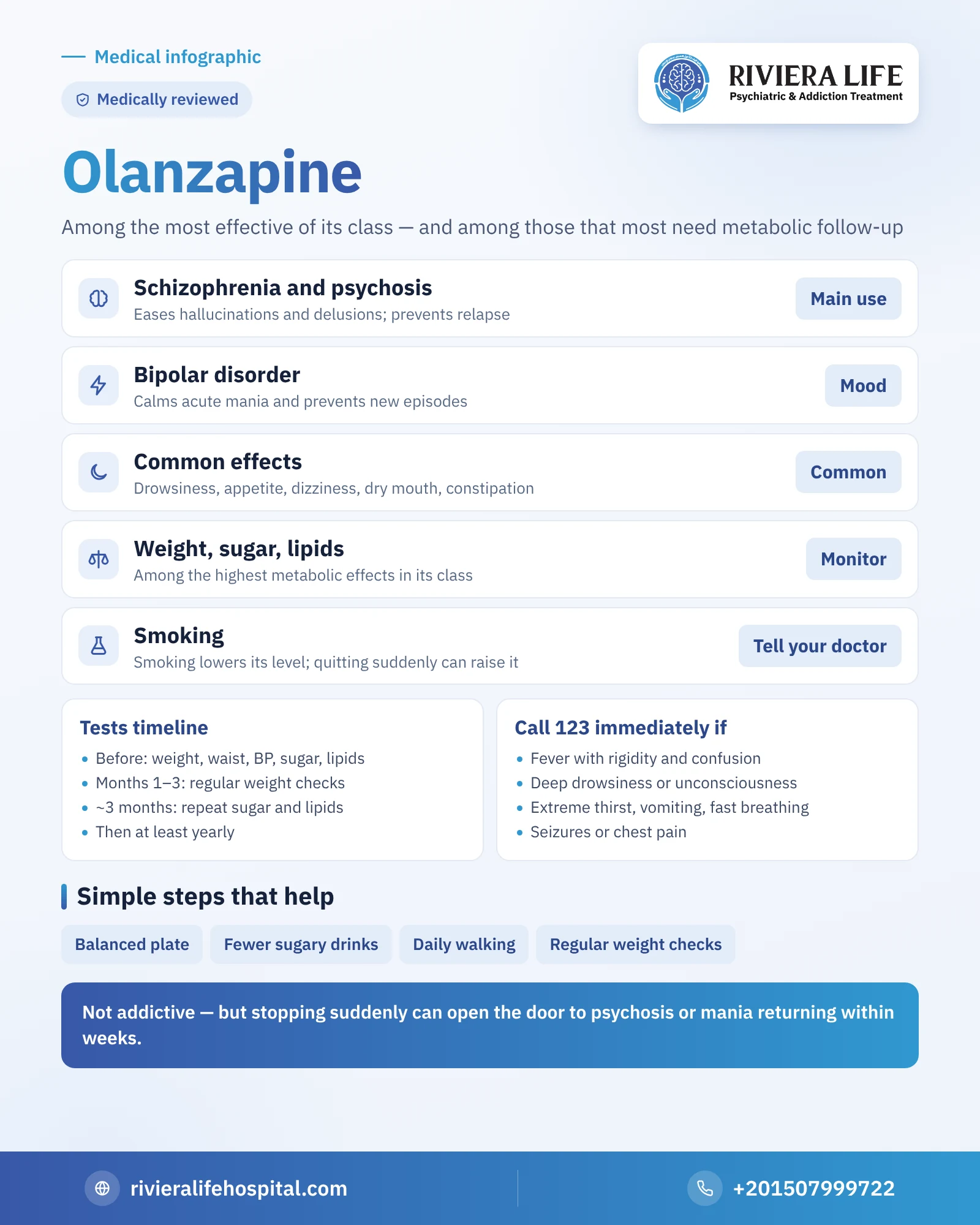
Olanzapine came from a generation of antipsychotics designed to reduce a big problem with the older medicines: stiffness, tremor and involuntary movements. It largely succeeded, as movement effects with it are much less than with traditional medicines. But it traded them for another problem: the metabolic effect, meaning increased appetite and weight and disturbances of sugar and lipids. That is why doctors say it is one of the most effective medicines in its class, and one of those that most needs monitoring. Our article on antipsychotics sets out the differences between members of this family.
Brand names of olanzapine in Egypt
The original name is Zyprexa, and in some countries it comes as tablets that dissolve in the mouth and as injections given in hospital. In Egyptian pharmacies there are many equivalent names from local companies, including Olapex. The active substance is the same, but don’t switch between names or forms without the doctor, especially if the patient is stable on a particular name.
What is olanzapine used for?
Schizophrenia and psychotic disorders
It eases hallucinations, delusions and disordered thinking, and helps prevent relapse when continued. It is part of a wider plan that includes psychotherapy and rehabilitation, as in our article on schizophrenia treatment.
Bipolar disorder
It is used to calm an acute manic episode and to prevent episodes returning, alone or with another mood stabilizer. In some countries it is used with fluoxetine to treat depressive episodes in bipolar disorder. We explain the treatment options for this disorder in our article on bipolar disorder treatment.
Other uses the doctor decides on
Its injectable form may be used in hospital to calm severe agitation, and some doctors use it for severe nausea accompanying chemotherapy. In addiction hospitals it may be prescribed for a period to treat drug-induced psychosis, according to the doctor’s assessment.
How does olanzapine work?
Olanzapine blocks type 2 dopamine receptors, which are responsible for many psychotic symptoms when overactive, and blocks type 2A serotonin receptors, which reduces movement effects. But it also strongly blocks histamine receptors, and acetylcholine receptors, and these are the sources of drowsiness, hunger, dry mouth and constipation. So the same medicine that calms a disturbed mind is the one that opens the appetite, and the two effects can’t be fully separated.
When does olanzapine start to work?
Calming and better sleep may appear within days, and this is what the family notices first. Hallucinations and delusions recede gradually over weeks, and the doctor usually needs several weeks to judge the full response and adjust the plan. In a manic episode, improvement may be faster. Early improvement doesn’t mean treatment is over: stopping the medicine once things calm down is one of the best-known causes of relapse.
Common side effects
- Drowsiness, especially in the first weeks.
- Increased appetite and weight.
- Dizziness on standing quickly because of lowered blood pressure.
- Dry mouth and constipation.
- Restlessness or slight tremor, less than with older medicines.
- Mild swelling of the feet in some people.
Weight, sugar and lipids: the metabolic effect
Weight gain with olanzapine is among the highest of the antipsychotics, and it usually begins in the first months. It isn’t only about appearance: the medicine can raise blood sugar and increase the risk of diabetes, and raise cholesterol and triglycerides — all risk factors for the heart. In rare cases sugar can rise sharply and reach an emergency. And because many people with schizophrenia and bipolar disorder already move little and smoke, the matter becomes even more important.
The good news is that these effects can be detected early and managed. Simple steps help: a balanced plate without doubling portions, fewer sweets and soft drinks, a daily walk, and monitoring weight. If weight increases despite that, the doctor may change the plan or add something to help, but stopping on your own isn’t a solution.
Monitoring and tests during treatment
Medical guidelines recommend regular monitoring for anyone taking olanzapine; the details vary with the case, but usually include:
- Before starting: weight, waist circumference and blood pressure, and sugar and lipid tests.
- During the first months: regular weight checks, and repeating sugar and lipid tests after about three months.
- After stabilizing: tests at least yearly if results are normal, and more often for those with diabetes or risk factors.
- As needed: an ECG, a blood count, or a prolactin test if symptoms call for it.
The family’s role here is big: reminding about appointments, noticing extreme thirst or frequent urination, and encouraging daily movement.
Serious warnings you should know
- Neuroleptic malignant syndrome: rare but serious, showing as a high temperature, severe muscle rigidity, confusion, sweating, and disturbed pulse and blood pressure.
- Older people with dementia: the medicine carries an official warning of an increased risk of death and stroke in them, and it isn’t used to treat behavioral disturbance linked to dementia.
- A rare, serious skin reaction: a rash with fever and swollen glands calls for immediate review.
- Heat and dehydration: it can make it harder for the body to cool itself in hot weather or with intense exertion.
- Late involuntary movements: less than with older medicines, but possible with long use.
- Conditions needing caution: epilepsy, an enlarged prostate, narrow-angle glaucoma, and liver and heart disease.
Call an ambulance immediately on 123 if you see
During treatment with olanzapine, or after taking too much of it:
- A high temperature with severe muscle rigidity, sweating and confusion
- Deep drowsiness, difficulty waking or loss of consciousness
- Extreme thirst and frequent urination with vomiting, rapid breathing or confusion
- A very fast or irregular heartbeat, or fainting
- Seizures
- Chest pain or sudden shortness of breath
Olanzapine, alcohol, smoking and drugs
Alcohol doubles drowsiness, dizziness and the risk of falls, and weakens the effect of treatment. Combining it with sedatives, pregabalin or opioids increases depression of the nervous system. Hashish and stimulants can bring back psychotic symptoms however good the medicine is, as we explain in our guide to psychosis.
Smoking has a story of its own: cigarette smoke speeds up the breakdown of olanzapine in the liver, so its level is lower in smokers. If a patient suddenly stops smoking, as happens on entering hospital or by personal decision, the level of the medicine may rise, increasing drowsiness and side effects. So tell the doctor before quitting smoking or going back to it.
Olanzapine and pregnancy
Leaving schizophrenia or bipolar disorder untreated during pregnancy is a real danger to mother and baby, and the medicine also has considerations, including the possibility of gestational diabetes and weight gain, and passing symptoms that may appear in the newborn if it was used in the final months. The psychiatrist makes the decision in coordination with the obstetrician. And if pregnancy happens during treatment, don’t stop the medicine suddenly: relapse in pregnancy or after birth is extremely dangerous.
Stopping olanzapine — and is it addictive?
Olanzapine doesn’t cause addiction: it gives no high and isn’t sought for a pleasurable effect. But stopping it suddenly can cause insomnia, nausea, sweating and anxiety, and more seriously it can open the door to psychosis or mania returning within weeks. That is why any reduction is gradual, by the doctor’s decision, and with monitoring for signs of relapse. The family can learn these early signs — such as disturbed sleep, withdrawal and suspicion — through the family program.
How can Riviera Life help you?
If your relative takes olanzapine and their weight has increased worryingly, or they refuse the medicine, or have relapsed after stopping it, or combine a mental illness with substance use, book a free first consultation with a consultant psychiatrist at Riviera Life. We review the medication plan and tests, provide round-the-clock medical supervision when needed, with a family program and complete confidentiality.
More from our psychiatric medicines guide
- Psychiatric medicines: the complete guide
- Antipsychotics: types and side effects
- Quetiapine: uses and warnings
- Risperidone: uses and warnings
Questions many people ask
It is an antipsychotic and mood stabilizer, not a sleeping pill, though drowsiness is one of its clearest effects. Using it just for sleep without a psychiatric diagnosis isn't appropriate, because its metabolic effects are significant.
Some patients lose part of the weight after a change of medicine with diet and activity, but this varies from person to person. Changing the medicine is the doctor's decision after weighing the risk of relapse.
Both contain olanzapine; the difference is the manufacturer. Don't switch between them without consulting the doctor or pharmacist.
Yes. Monitoring of weight, sugar and lipids is recommended before starting, after about three months, then at least yearly, and more often for those with risk factors.
It doesn't treat addiction itself, but the doctor may prescribe it for a period to treat psychosis or agitation caused by some drugs, within an integrated treatment plan.