Mirtazapine is an antidepressant that works differently from common medicines such as sertraline and escitalopram; its original brand name is Remeron. It is known for two things the patient notices quickly: sleepiness and increased appetite. These two effects may be a problem for one person and an advantage for another who can’t sleep or eat because of depression, which is why the doctor chooses it according to the patient’s full picture. Here we explain what mirtazapine is, why it is usually taken in the evening, what needs monitoring, and whether it is addictive. You won’t find doses or instructions; starting, adjusting and stopping the medicine is the psychiatrist’s decision alone.
What is mirtazapine?
Mirtazapine belongs to a small group doctors call noradrenergic and specific serotonergic antidepressants, and some classify it with tetracyclic antidepressants because of the shape of its molecule. Practically, what matters is that it isn’t an SSRI, so it doesn’t work by closing the reuptake pump, but in another way we will explain, which gives it a different side-effect personality. Our article on antidepressants places this group in the context of the other classes.
Remeron and the names available in Egypt
The original name is Remeron, available in some countries also as tablets that dissolve in the mouth. Egyptian pharmacies have equivalent names containing the same substance, the best known being Mirtimash, as well as other names from local companies. A different name or company doesn’t change the active substance, but don’t switch between them or combine two of them without consulting your doctor or pharmacist.
What is mirtazapine used for?
Its approved use is treating depression. Many doctors tend to consider it when depression comes with severe insomnia, or with loss of appetite and weight, or in older people whose eating and sleeping have been weakened by depression. It is also sometimes used outside its original indications in some anxiety disorders, or added to another antidepressant when the response isn’t enough. All these choices are made after assessment, as we explain in our article on depression treatment.
Its use as a sleeping pill for someone with insomnia alone, without depression, is more widespread among the public than the evidence justifies. Insomnia has many causes, and its first treatment is usually behavioral, which we cover in our guide to insomnia.
How does mirtazapine work?
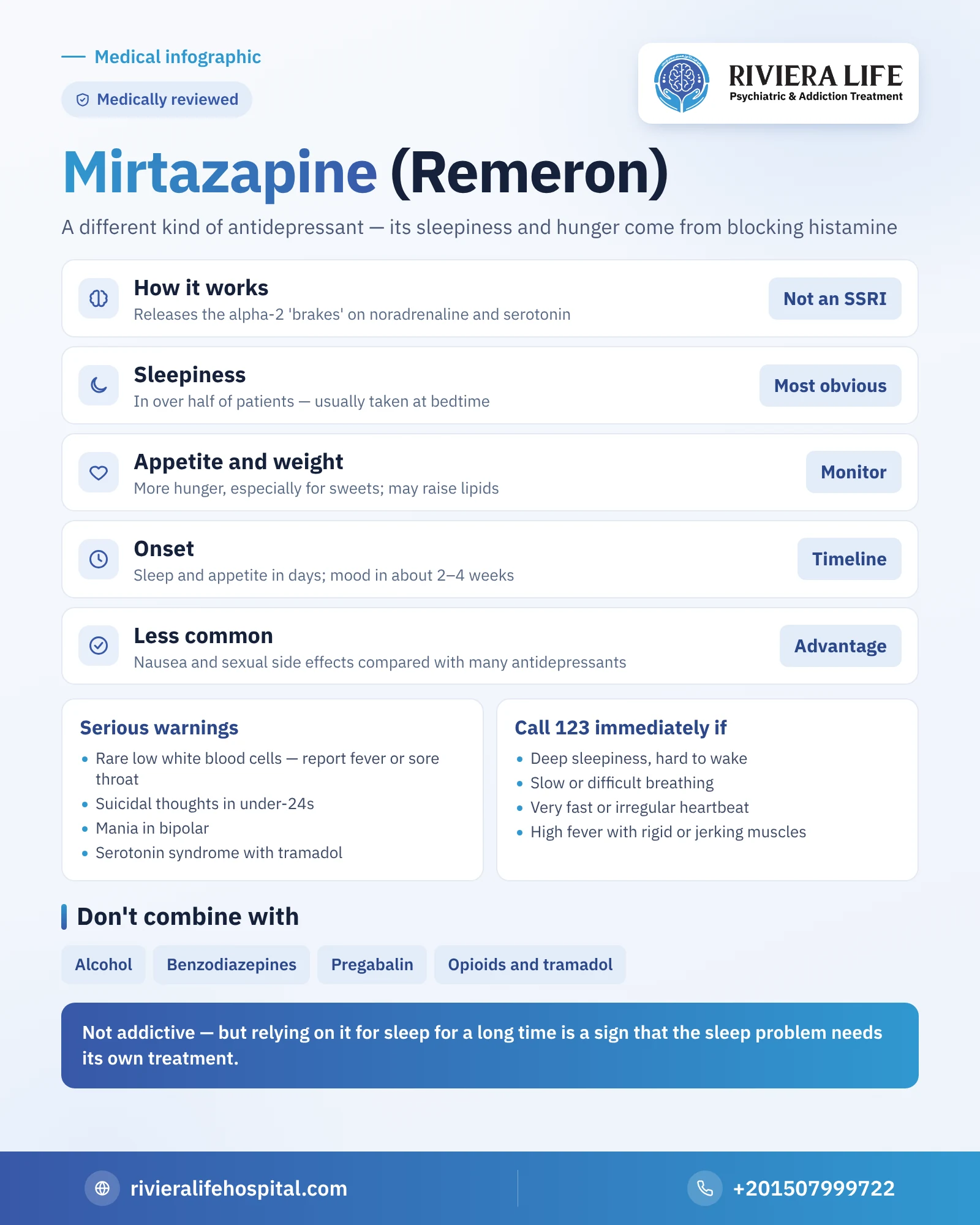
The brain has receptors that act as brakes on the release of noradrenaline and serotonin, known as alpha-2 receptors. Mirtazapine disables these brakes, increasing the release of both neurotransmitters. At the same time, it blocks two types of serotonin receptors linked to nausea, anxiety and sexual dysfunction, which is why these effects are less common with it than with reuptake inhibitors. It also strongly blocks histamine receptors, which is the source of the sleepiness and hunger. Understanding this picture answers a recurring question: why does the patient sleep and eat more, and not complain of the nausea others complain of?
Sleepiness: why is it usually taken in the evening?
Sleepiness is the clearest effect, appearing in roughly more than half of patients. That is why the doctor usually asks for it to be taken before bed. In the first days the patient may wake with a heavy head and slow mornings, which eases with time in many people. A known observation is that the sleep-inducing effect doesn’t necessarily increase as the amount increases, which is another reason to leave any adjustment to the doctor. During the first period, avoid driving and operating machinery until you know how the medicine affects you, and be aware of the risk of falls in older people at night.
Appetite and weight gain
Many patients feel a greater desire to eat, especially sweets and starches, and weight may rise during the first months. This may be wanted for a patient who has lost kilograms because of depression, but it is troublesome for someone with obesity, diabetes or high lipids, and the medicine may raise cholesterol and triglycerides in some patients. A simple plan helps: regular meals, avoiding night-time snacks, daily physical activity and weekly weighing. If the gain continues, that is a frank conversation with your doctor, not a reason to stop the medicine suddenly.
When does mirtazapine start working?
Sleep and appetite usually improve within days to a week or two, which makes the patient feel that something has changed. Improvement in mood itself usually needs about two to four weeks, and may take longer. Improved sleep alone doesn’t mean the depression has been treated, so the doctor bases their judgment on a wider picture.
Other side effects
- Dry mouth and constipation.
- Dizziness, especially on standing quickly.
- Mild swelling of the feet or ankles in some people.
- Vivid or strange dreams.
- Muscle aches or tiredness in the first weeks.
On the other hand, nausea and sexual effects are less common with it than with many antidepressants, a point the doctor takes into account when these effects have stopped a previous treatment.
Serious warnings you should know
- Low white blood cells: a rare but important effect. Any fever, sore throat, mouth sores or signs of infection during treatment call for contacting the doctor and a blood count.
- Suicidal thoughts in young people: the same official warning that covers antidepressants up to about age twenty-four. Any worrying change calls for the doctor immediately, the mental health hotline on 16328, or an ambulance on 123.
- Bipolar disorder: it may trigger a manic episode in those predisposed.
- Serotonin syndrome: less likely than with reuptake inhibitors, but possible when combined with tramadol or other antidepressants.
- Conditions needing caution: liver and kidney disease, epilepsy, narrow-angle glaucoma, and low sodium in older people.
Call an ambulance on 123 immediately if you see
After taking too much mirtazapine, or when combining it with sedatives, alcohol or a medicine that raises serotonin:
- Deep sleepiness or difficulty waking
- Slow or difficult breathing
- A very fast or irregular heartbeat
- A high temperature with sweating and rigid or jerking muscles
- Severe confusion or seizures
Mirtazapine, alcohol, sedatives and drugs
This is the side that deserves the most attention, because mirtazapine is sedating by nature. Alcohol doubles sleepiness and slowed reactions. Combining it with sedatives from the benzodiazepine class, pregabalin, or opioids and tramadol increases suppression of the nervous system, and may reach slowed breathing at high doses or with drug use. Hashish increases both dizziness and hunger. Switching between it and monoamine oxidase inhibitors needs a gap set by the doctor. Someone with an addiction alongside depression needs a plan that treats both together, as in our dual diagnosis program.
Mirtazapine and pregnancy
There is less information on mirtazapine in pregnancy than on some other antidepressants, so there is no general decision. The doctor weighs the risk of untreated depression to mother and baby against what is known about the medicine, and may decide to continue or change. If pregnancy happens during treatment, don’t stop the medicine suddenly; contact your doctor first.
Stopping mirtazapine
Stopping suddenly after weeks of use may cause rebound insomnia, anxiety, nausea, dizziness and irritability. Rebound insomnia in particular frightens patients, so they return to the medicine or to another sleeping pill. That is why the doctor sets a gradual reduction plan, and distinguishes discontinuation symptoms from the return of depression. More in our article on antidepressant withdrawal symptoms.
Is mirtazapine addictive?
Mirtazapine isn’t considered an addictive medicine: it gives no high, causes no compulsive craving, and its amount doesn’t escalate to achieve the same effect as happens with benzodiazepine sleeping pills. But some people become psychologically attached to it as a way to sleep, and fear a night without it. This isn’t addiction, but it is a sign that the sleep problem needs its own treatment.
And if you have been taking mirtazapine for sleep for a long time, or your weight has increased worryingly, or you want to stop without rebound insomnia, book your free first consultation with a consultant psychiatrist at Riviera Life. We review the diagnosis and all the medicines and substances you take, and set a clear plan in complete confidentiality.
More from our psychiatric medicines guide
- Psychiatric medicines: the complete guide
- Antidepressants: the types and how they work
- Tryptizol (amitriptyline): uses and side effects
- Depression treatment: psychotherapy and medication
- Doxepin: sleepiness, depression, overdose risk and warnings
- Trazodone (Trittico): sleep, depression, effects and warnings
Questions many people ask
It is an antidepressant, not a sleeping pill, but sleepiness is one of its clearest effects, which is why it is usually taken before bed. Using it for insomnia alone is a decision for the doctor after assessment.
Not always, but regular meals, avoiding night-time eating, daily activity and weekly weighing reduce the gain. If it continues, discuss alternatives with your doctor.
Sexual effects are less common with it than with many antidepressants, but they are possible. Tell your doctor about any change instead of abandoning the medicine.
Both contain mirtazapine; the difference is the manufacturer. Don't combine them or switch between them without consulting the doctor or pharmacist.
This is a common effect in the first days because of its effect on histamine, and it eases in many people with time. If it continues and affects your work or driving, tell your doctor.