Antidepressants are a group of medicines that modify the action of neurotransmitters such as serotonin and noradrenaline, and the psychiatrist prescribes them for depression and for many anxiety and obsessive disorders. They don’t work from the first dose; improvement usually begins after roughly two to four weeks, and is completed within two months or more. They don’t cause addiction or change personality, but stopping them suddenly may cause unpleasant discontinuation symptoms. In this article we explain their types, how they work, their side effects and warnings, without any doses, as every decision to start, adjust or stop belongs to the psychiatrist.
What are antidepressants? And why does the doctor prescribe them for things other than depression?
The name is a little misleading. It is true that these medicines were discovered and developed to treat depression, but the neural circuits they modify are also responsible for anxiety, fear and intrusive thoughts. So the doctor may write you an “antidepressant” while you complain of panic attacks, obsessions or social phobia, and this doesn’t mean they made a mistake in the diagnosis. Some types are also used for nerve pain and migraine. As for choosing a specific medicine among these options, we have explained it in our article on the best medication for depression and anxiety; here we focus on the family itself: how it works and what to expect from it.
Types of antidepressants
Selective serotonin reuptake inhibitors (SSRIs)
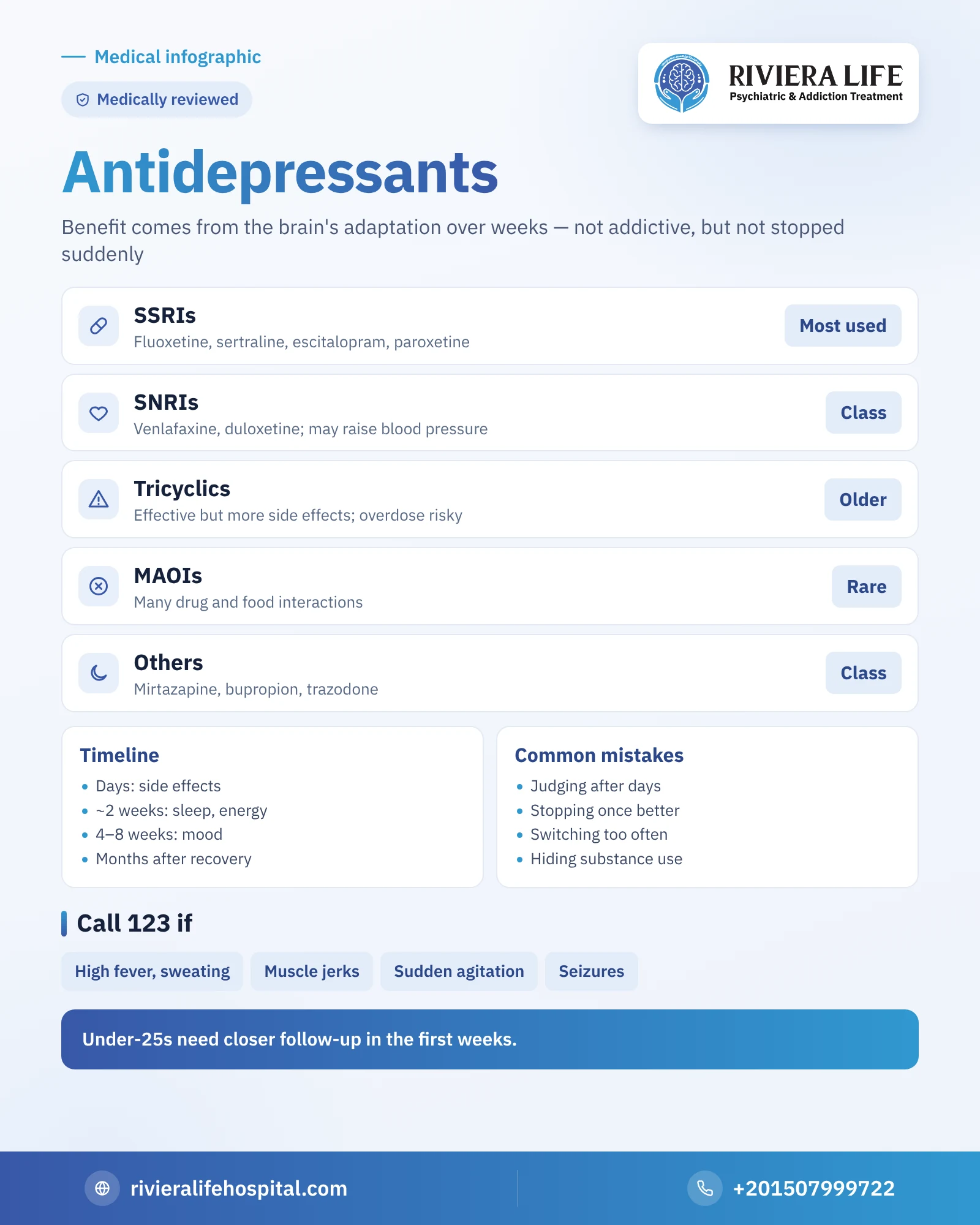
The most prescribed today because they are easier to tolerate and safer in overdose than older generations. They include fluoxetine, sertraline, escitalopram and paroxetine.
Serotonin and noradrenaline reuptake inhibitors (SNRIs)
Such as venlafaxine and duloxetine. They affect two neurotransmitters together, and may raise blood pressure in some patients, which is why the doctor measures it at follow-up.
Tricyclics (TCAs)
The effective older generation, but with more side effects, and an overdose is very dangerous to the heart. They include Anafranil and Tryptizol.
Monoamine oxidase inhibitors (MAOIs)
Rarely used now because of their many interactions with medicines and some foods, and they are never combined with any other antidepressant.
Medicines with different mechanisms
These include mirtazapine, which may improve sleep and appetite, bupropion, which affects dopamine and noradrenaline and usually doesn’t cause sexual side effects, and trazodone, which is often used for its sleep-supporting effect.
How do antidepressants work?
The common explanation is that depression is “a lack of serotonin” and that the medicine “replaces it”. The real picture is more complex. Most antidepressants raise the concentration of neurotransmitters in the space between nerve cells within hours of the first tablet, yet mood doesn’t improve until weeks later.
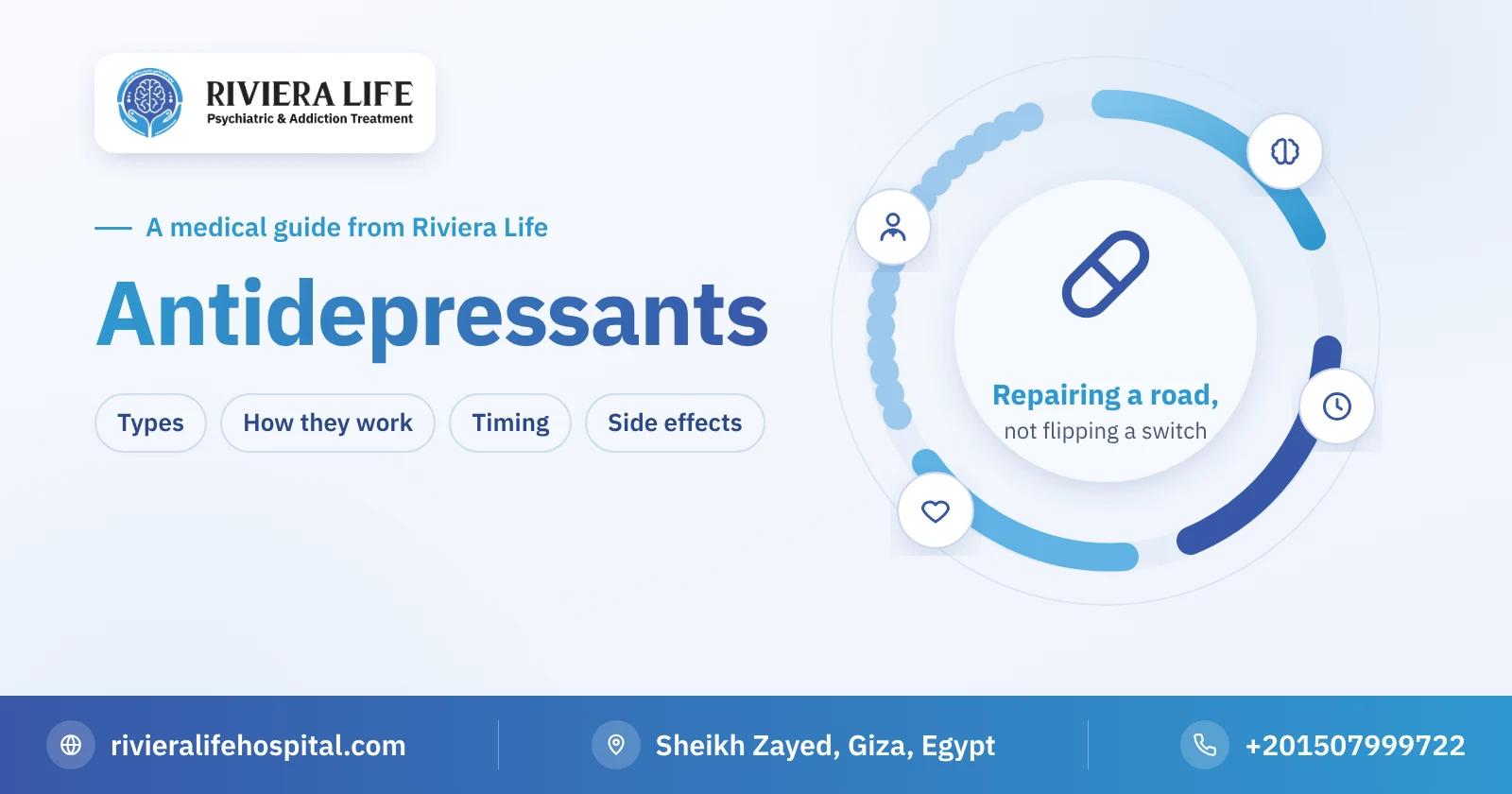
This delay means the benefit doesn’t come from the rise in the neurotransmitter itself, but from the adaptation that happens after it: a change in receptor sensitivity, an improvement in the brain’s ability to build new neural connections, and calming of the body’s excessive stress response. That is why the medicine is more like repairing a road than flipping a light switch. If you want to understand serotonin’s role in mood, you will find it in our article on symptoms of serotonin deficiency.
When do antidepressants take effect?
Many patients leave the medicine in the first week because they felt nothing except side effects. So it is useful to know the usual order, though it differs from person to person:
- The first days: side effects such as nausea, headache or extra anxiety may appear, and usually ease gradually.
- After about two weeks: those around notice an improvement in sleep, energy and appetite before the patient feels their mood improve.
- From four to eight weeks: the improvement in mood and interest becomes clear, and here the doctor judges the extent of the response.
- After improvement: treatment usually continues for several months to prevent relapse, and the duration is set by the doctor according to the number and severity of previous episodes.
Common side effects
The effects differ by class, and most ease in the first weeks:
- Stomach upset and nausea, common with SSRIs at first.
- Headache and excessive sweating.
- Insomnia or drowsiness, depending on the medicine.
- Weakened sexual desire or delayed orgasm, an effect patients hesitate to mention even though it has solutions.
- Changes in appetite and weight, clearer with some medicines such as mirtazapine and tricyclics.
- Dry mouth, constipation and dizziness, especially with tricyclics.
Don’t deal with a side effect by stopping the medicine, but by telling the doctor, who may change the timing or the medicine itself.
An important warning for children, teenagers and young people
All antidepressants carry an official warning of a possible increase in suicidal thoughts and behavior in those under about twenty-five, especially in the first weeks or when the dose is changed. This doesn’t mean the medicine is forbidden for young people, as untreated depression is itself a great danger, but it means that follow-up at the start must be closer. The family should watch for any sudden agitation, severe insomnia, withdrawal or talk of death, and contact the doctor immediately. If suicidal thoughts appear, call the mental health hotline on 16328 or an ambulance on 123.
Serotonin syndrome and drug interactions
Combining an antidepressant with another medicine that raises serotonin may cause serotonin syndrome, a condition that can be dangerous. In Egypt a particular scenario recurs: a patient takes an antidepressant and then uses tramadol, combining the risk of the syndrome with the risk of seizures. Other medicines that need caution include migraine medicines of the triptan class, St John’s wort, and other antidepressants. The details are in our article on serotonin syndrome.
Call an ambulance on 123 immediately if you see
After combining an antidepressant with another medicine that raises serotonin, or after taking an extra amount:
- A very high temperature with heavy sweating
- Muscle stiffness or repeated involuntary jerks
- Sudden agitation or severe confusion
- A very fast heartbeat or fainting
- Seizures
Antidepressants and bipolar disorder
If depression is part of bipolar disorder, an antidepressant alone may push the patient into a manic episode: excessive activity, little sleep without tiredness, and reckless spending. That is why the doctor asks about any previous periods of this kind and about family history before prescribing the medicine. And any sudden shift towards excessive enthusiasm after starting the medicine deserves a call to the doctor; our article on bipolar disorder symptoms explains these signs.
Pregnancy and breastfeeding
The decision to continue an antidepressant during pregnancy balances two risks: the risk of the medicine to the fetus, and the risk of untreated depression to the mother and fetus together. Some medicines have broader safety data than others, and the doctor alone decides. Don’t stop the medicine suddenly on discovering a pregnancy; contact your doctor the same day.
Do antidepressants cause addiction?
No. Addiction means craving the substance, losing control over it, increasing the amount in search of a high, and continuing despite harm. Antidepressants give no high, and no one seeks them on the street. But the body adapts to them, so if you stop suddenly, dizziness, flu-like symptoms and a sensation of mild electric shocks in the head may appear. This is called “discontinuation syndrome”, and it is a reason for gradual reduction, not evidence of addiction. We have explained it in detail in our article on antidepressant withdrawal symptoms, and discussed the difference between psychiatric medicines in terms of dependence in our article are psychiatric medicines addictive.
Do antidepressants change personality?
The right medicine doesn’t create a new person, but removes the weight of the illness that was hiding the real person. But some patients complain of emotional blunting, meaning sadness has eased but joy has eased too. This is a known side effect, not a permanent change in personality, and it usually disappears by adjusting the dose or changing the medicine. Tell your doctor about it clearly.
Common mistakes with antidepressants
- Judging the medicine after a few days.
- Stopping it as soon as you feel better, then relapsing weeks later.
- Moving between many medicines without giving any of them enough time.
- Hiding use of alcohol, hashish or tramadol from the doctor.
- Relying on medicine alone without psychotherapy, as our article on depression treatment explains.
How can Riviera Life help you?
If you have tried more than one antidepressant without benefit, its effects have exhausted you, or you want to stop safely, book your free first consultation with the consultant psychiatrist at Riviera Life. We review the diagnosis first, because a lack of response sometimes means the problem isn’t in the medicine but in the diagnosis, then we set a plan that combines medicine and psychotherapy in complete confidentiality.
More from our psychiatric medicines guide
- Depression: the complete guide
- Psychiatric medicines: types and uses
- Antidepressant withdrawal symptoms
- Sertraline: uses and side effects
- Fluoxetine (Prozac): uses, side effects and interactions
- Citalopram (Cipram): uses, the heart warning and the difference from Cipralex
- Duloxetine (Cymbalta): depression, nerve pain, effects and discontinuation symptoms
- Venlafaxine (Efexor): uses, blood pressure and strong discontinuation symptoms
- Bupropion: depression, quitting smoking and seizure risk
- Trazodone (Trittico): sleep, depression, effects and warnings
- Prozac vs Lustral: how long they last, effects and interactions
- Side effects of psychiatric medicines and how to deal with them
- Fluvoxamine (Faverin): OCD and drug interactions
Questions many people ask
Some are linked to weight gain more than others, such as mirtazapine and tricyclics, and some have a limited effect. Discuss it with your doctor if weight matters to you before choosing the medicine.
No. Antidepressants work through regular use over weeks, and taking them intermittently gives no benefit and may cause repeated discontinuation symptoms.
This is common and doesn't mean the case is intractable. The doctor may review the diagnosis, adjust the dose, change the medicine or add another treatment after a sufficient period.
They may weaken desire or delay orgasm, especially SSRIs. This is a manageable effect, so don't hesitate to tell your doctor about it.
Coffee in moderation usually doesn't block the medicine, but it may increase anxiety or insomnia in some patients at first. Ask your doctor if you notice this.