“Digital drugs” is a provocative name for audio files listened to through earphones that promise a high resembling hashish or cocaine, or even an “out-of-body experience”. The scientific truth is simpler: these files are usually binaural beats, two sounds at slightly different frequencies in each ear, and there is no evidence that they have an effect in the brain resembling real drugs. But that doesn’t mean they are risk-free. In this article we explain how they work, what research says, and the real risks that deserve parents’ attention, especially with an anxious or curious teenager.
What are digital drugs?
The term became popular in the late 2000s with websites and apps selling audio files named after well-known drugs, each file promising a specific effect: relaxation, euphoria or hallucination. A wave of media alarm spread in the Arab world at the time, then interest returned with short-video platforms.
The file itself isn’t a chemical substance, doesn’t enter the body, and doesn’t show up on any test. What is actually sold is a listening experience wrapped in the promise of a drug, and the promise is the most important part of the story.
How do binaural beats work?
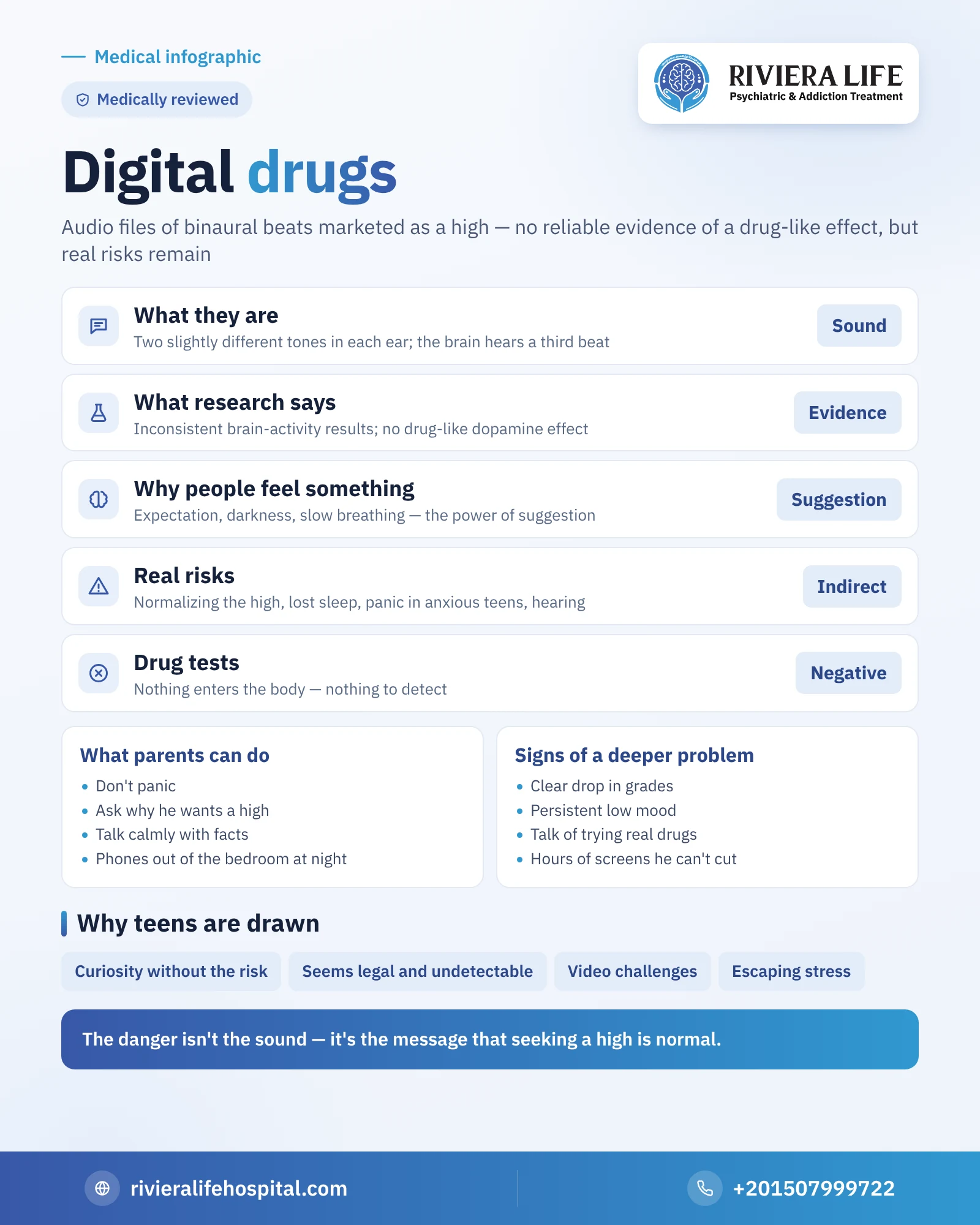
When the right ear hears a tone at a certain frequency and the left hears a tone at a slightly higher or lower frequency, the brain merges the two sounds and perceives a third beat that doesn’t exist in either file, whose speed equals the difference between the two frequencies. This is a real auditory phenomenon, known for a long time in acoustics.
The marketing idea says this beat “forces” brain waves to follow it, carrying the listener into a state of relaxation or euphoria. This is exactly where the gap between the scientific phenomenon and the commercial claim begins.
What does research say? Do they have a drug-like effect?
A systematic review published in 2023 examined studies that measured the effect of these tones on brain activity and found inconsistent results: some detected a change, some detected nothing, and some detected the opposite of what was expected. There is no reliable evidence that these files do in the brain what drugs do in directly changing dopamine or other chemicals.
In a large international survey of drug-use habits whose results were published in 2022, about 5% of participants said they had used these tones, mostly for relaxation or sleep. But about 12% of their users said they had tried to use them to get an effect resembling hallucinogenic drugs. In other words, the desire for a “high” exists in some, even if the actual result is doubtful.
Why do some people actually feel something?
Because the brain is affected by what it expects. When a teenager reads that this file “is like hashish”, then turns off the lights, closes his eyes, breathes slowly and listens for half an hour, it is natural for him to feel some change: relaxation, slight dizziness or mental images. This is the effect of expectation, setting, breathing and sensory isolation, which scientists call the effect of suggestion. Others may feel only a headache or discomfort.
Are digital drugs addictive?
They don’t cause physical dependence or withdrawal symptoms as drugs do, since they don’t enter the body at all. But any activity that gives a quick sense of relief or excitement may turn into a compulsive habit for some people, especially those who use it to escape anxiety or boredom. Here the problem lies in the pattern of use and the need it covers, not in the audio file itself. And of course these files don’t show up on any test, because there is no substance for the test to look for.
The real risks of digital drugs
Marketing that normalizes the idea of drugs
The first risk isn’t in the sound but in the message: that seeking a high is normal and fun, and that there are “doses” and “levels”. A teenager who tries a digital high and feels nothing may decide that the next step is the real experience.
Sleep
Long listening sessions at night, and trying to “reach” the effect, steal hours of sleep at an age when a teenager needs more sleep, not less.
The anxious teenager
Some files promise frightening experiences or “leaving the body”. A teenager who already suffers from anxiety may have a real panic attack, and fear that he has “taken” something that harmed his brain.
Hearing and time
Listening loudly for long periods through earphones may harm hearing over time, and the World Health Organization generally advises lowering the volume and taking breaks. The risk increases with files that deliberately use sharp or broken tones that push the listener to raise the volume to feel the effect. Repeated preoccupation with these files may be part of a wider compulsive use of screens.
Why do they attract teenagers in particular?
- Natural curiosity about drugs combined with fear of trying them for real.
- A feeling that they are safe, legal and don’t show up on tests.
- Challenges between friends on video platforms: who reaches the “highest level”.
- Looking for an escape from study pressure or difficult feelings they don’t talk about.
A scene that repeats in homes
A mother hears her fifteen-year-old son use the word “dose” while talking to his friend, then finds clips in his search history with titles like “audio high”. She panics, searches his room and takes his phone. The son gets angry, denies it and shuts the door. The mother has learned nothing about the reason for his curiosity, and the son has learned nothing about the truth. The better scenario starts with a calm question: what have you heard about these clips? What did you feel? And why did you want to try them? The answer may reveal simple curiosity, pressure from friends, or insomnia and anxiety that need attention.
What do parents need to know?
- Don’t panic: your son hasn’t taken a drug, and an audio file won’t damage his brain.
- Don’t ignore the most important question: why is he looking for a high? Passing curiosity, or escape from distress?
- Talk calmly with correct information: explain that the effect is usually suggestion, without mockery that makes him defend the experience.
- Watch for accompanying signals: searching for real drugs, new friends, insomnia or withdrawal from the family.
- Set rules for screens at night: the phone outside the bedroom after a set time.
To prepare a broader conversation about drugs with your son, our article on teen addiction will help.
When is it a sign of a deeper problem?
Seek a specialist assessment if interest in digital drugs is linked to a clear decline in school performance, persistent low mood, talk of trying real substances, or spending long hours every day in front of a screen that he finds hard to reduce. In the last case our article on internet addiction may help, and if the bigger preoccupation is with social apps, read social media addiction.
Can these tones be used for relaxation?
Some people use them as background sound for meditation or sleep and feel comfortable, and there seems to be no harm in this for most adults if the volume is low. But the evidence for their therapeutic benefit is still limited and conflicting, so they shouldn’t be relied on as a substitute for treating insomnia, anxiety or depression.
How can Riviera Life help you?
If behind the search for a digital high there is anxiety, depression or the beginning of real substance use, Riviera Life’s consultant psychiatrists assess the situation calmly and in complete confidentiality, and involve the family in a plan suited to the teenager’s age. The first consultation is free: +201507999722, Sheikh Zayed, Giza.
Read also
- Internet addiction: types, symptoms and treatment
- Smartphone addiction
- Drug prevention: the family’s role
- Teen addiction and how parents can talk
Questions many people ask
The audio files are real, but there is no reliable evidence that they produce a drug-like effect; what some people feel is usually linked to expectation and relaxation.
No. They are sounds that don't enter the body and leave no substance that can be detected.
There is no evidence that they damage the brain, but their risks lie in staying up late, loud volume, anxiety attacks in some people, and normalizing the idea of seeking a high.
Don't panic. Talk with him calmly about the reason for his curiosity and the scientific truth, and watch for any signs of anxiety or interest in real drugs.
Some people feel relaxed with them, but the scientific evidence is limited and conflicting, and they are no substitute for treating insomnia or anxiety.