Psychological addiction and physical addiction are two faces of one illness: the first is an urgent craving, preoccupation with the substance and a need for it to bear feelings and situations, and the second is that the body has adapted to the substance until it gets sick when it is absent. The difference isn’t only academic: whoever thinks addiction ends when physical withdrawal symptoms end leaves the longest part of the illness untreated, then is surprised by their relapse. In this article we clearly distinguish between the two types, give examples, and explain why treatment needs both together.
What is physical addiction?
It happens when the body gets used to the presence of a particular substance and adjusts its functioning on that basis. When it is suddenly withdrawn a sudden imbalance appears: trembling, sweating, pains, nausea, insomnia and a change in heartbeat, and depending on the substance seizures may occur. This is what is called physical dependence, and it is usually accompanied by tolerance, meaning a need for a larger amount for the same effect.
The symptoms here can be measured and observed, and the doctor can ease them with medicine and supervision. You will find details of the duration and timeline in the withdrawal articles for each substance; here we limit ourselves to the concept.
What is psychological addiction?
It concerns the brain and feelings, not physical symptoms. It is a strong desire for the substance that appears from time to time and intensifies with pressure or seeing the place or friends linked to use. It is accompanied by repeated thinking about the time of the next dose, a feeling that life without the substance is dull or unbearable, and using it to escape anxiety, sadness, boredom and memories.
This side is what remains for months after the physical symptoms go away, and it is the cause of many cases of relapse. To understand how the patient thinks at this stage read how a drug addict thinks.
What do the signs look like?
Signs of physical dependence: a need to increase the amount, symptoms appearing in the morning hours or between doses, immediate improvement on taking the substance, and trembling, sweating or vomiting when it is delayed. Psychological craving is shown by repeated thoughts about the substance, planning the day around getting it, severe tension when that isn’t possible, and the feeling that an occasion or rest is incomplete without it.
Families may see one side and not the other: the first appears in the body, and the second appears in behavior and mood. See how to know there is a drug addict in your home for the signs that appear at home.
A quick comparison
| Aspect | Physical | Psychological |
|---|---|---|
| Its essence | The body adapting to the substance’s presence | Craving and an emotional and behavioral attachment to it |
| Its clearest sign | Withdrawal symptoms on stopping | Urgent desire, constant thinking and returning after stopping |
| When it appears | After repeated use for a period that differs between substances | May appear early and may last long |
| Its duration after stopping | Usually days or weeks | May extend for months and return with triggers |
| Method of treatment | Gradual medical withdrawal and supporting medicine | Psychological and behavioral therapy and training to face triggers |
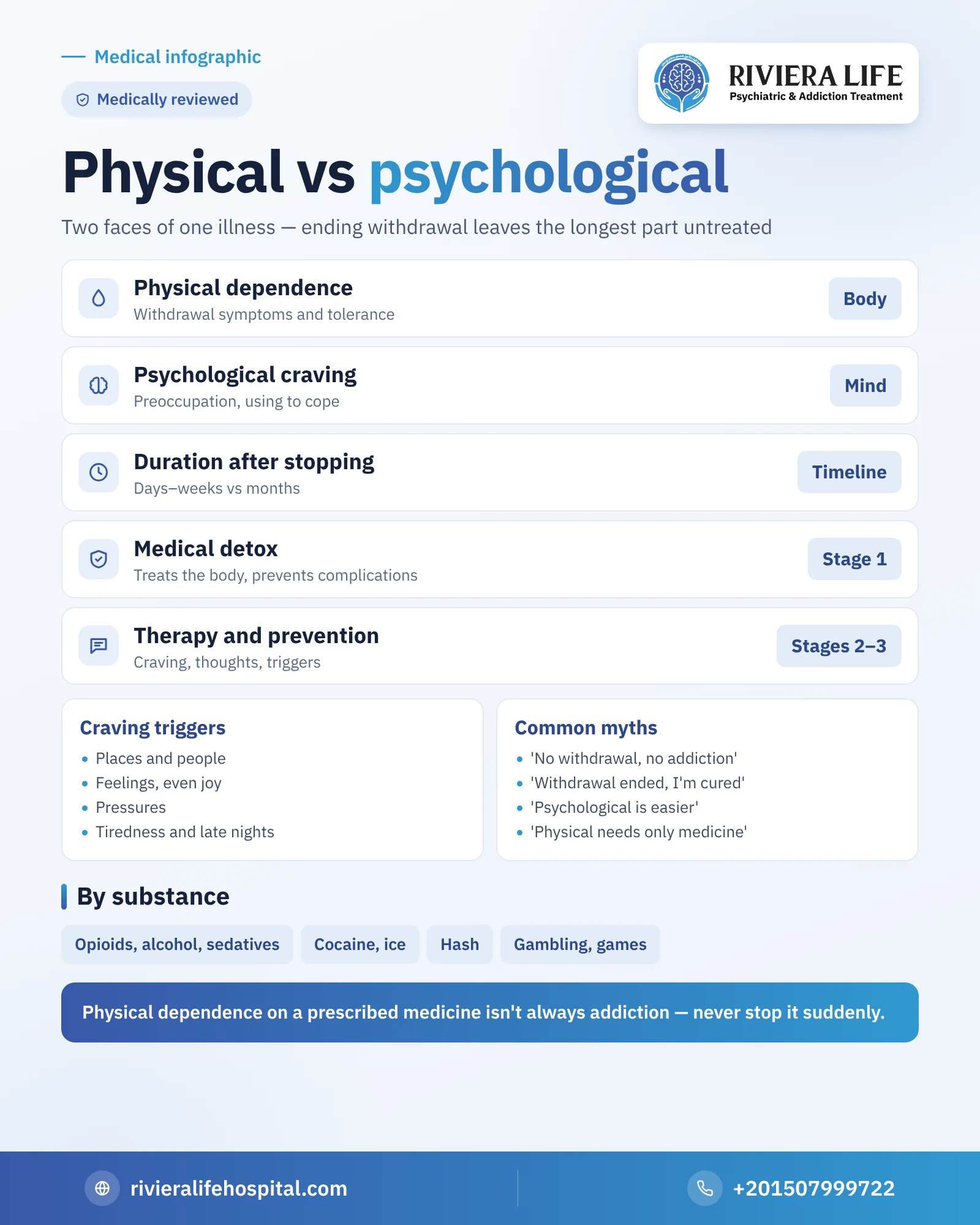
Examples by type of substance
Not all substances fall in one box, and this is a general picture, not a strict rule:
- Opioids, alcohol and sedatives: clear physical dependence, and their withdrawal may be painful or dangerous, with strong psychological craving too.
- Cocaine, ice and amphetamines: physical withdrawal is usually lighter, but depression and psychological craving after stopping may be severe.
- Hash and marijuana: some regular users get insomnia, irritability and poor appetite on stopping, and the psychological dimension remains the clearest.
- Behaviors such as gambling and games: no substance enters the body, but craving and emotional dependence are present.
What wakes craving after the physical symptoms go away?
- Places and people: a road, a café or a friend linked to use.
- Feelings: anger, sadness, loneliness and even joy and celebration.
- Pressures: a family disagreement, a financial crisis or work pressure.
- Tiredness, hunger and late nights: they weaken the brain’s ability to restrain.
- Seeing the substance or its equipment: or hearing talk about it.
In psychotherapy the patient is trained to recognize these triggers early, and to set a plan for each of them, instead of facing them with bare willpower.
Why is the division approximate?
Both arise in the brain itself. Physical dependence passes through the nervous system, and psychological craving results from the reward and memory circuits. That is why contemporary medicine tends to describe the whole condition as a “substance use disorder” and estimate its severity, instead of a sharp separation between psychological and physical. The distinction between the two remains useful for the family and the patient because it explains why the recovering person feels bad after the first week, and why willpower alone isn’t enough.
Physical dependence isn’t always addiction
A patient who takes a painkiller, sedative or epilepsy medicine regularly may become physically dependent on it and feel symptoms if they stop suddenly, yet they aren’t considered an addict, as there is no loss of control and no use for mood. We explained this difference in prescription drug addiction and do psychiatric medicines cause addiction. And the golden rule: don’t stop a prescribed medicine suddenly, as tapering by the doctor’s decision is the safe way.
How does this understanding change the treatment plan?
- Stage one: medical withdrawal. It treats the physical side under supervision, and prevents complications.
- Stage two: psychotherapy. It treats craving, thoughts and triggers, through cognitive behavioral therapy and training in refusal skills and dealing with pressure.
- Stage three: relapse prevention. A long plan that includes the family, the patient’s environment and follow-up, and may include certain medicines depending on the substance and the doctor’s decision.
The most dangerous mistake is for the journey to stop after the first stage. For details of the whole road see the stages of recovery from addiction.
Call an ambulance on 123 immediately if you see
Some types of physical withdrawal are dangerous, especially from alcohol and sedatives.
- Convulsions or fits resembling epilepsy
- Hallucinations or severe confusion and not knowing the place and time
- Severe trembling with high fever and strong palpitations
- Continuous vomiting with inability to drink fluids
An example that clarifies the difference
A young man got used to an opioid painkiller for three years, then entered treatment, completed withdrawal within days and his pains went away. A month later the craving returns to him when he goes through a crisis at work, so he feels he has failed. He hasn’t failed: his body has recovered, and his mind is still learning alternatives. And this is exactly what the second and third stages of treatment prepare for.
Common mistakes in understanding the two types
- “If I didn’t suffer withdrawal, I’m not an addict”: not true, as much addiction is mainly psychological and shows no major physical withdrawal.
- “Withdrawal ended, so I’ve recovered”: only one stage ended, and craving remains for a longer period.
- “Psychological addiction is easier because it’s in the mind”: on the contrary, it may be longer and harder to sustain.
- “Physical addiction needs medicine only”: medicine prepares the ground, but change needs psychotherapy.
It also helps to know that the two sides interact: physical pain in withdrawal increases tension so craving intensifies, and severe craving pushes towards going back to escape the pain. That is why integrated treatment raises the chances of continuing more than treating only one side, and also why it is advised not to leave the patient alone in the first weeks.
When do you ask for help?
Ask for an assessment if you notice that your body hurts or is disturbed when the substance is absent, that you think about it every day, or that you have tried to stop more than once and gone back. The assessment determines which side is more severe in you, and whether you need medical withdrawal, psychotherapy or both. And to understand why some become addicted and others don’t, read the addictive personality.
How does Riviera Life help you?
At Riviera Life the team starts with a psychological and medical assessment that determines the extent of physical and psychological dependence, then the plan is built accordingly with round-the-clock medical supervision during withdrawal, a psychological program, a family program and care after discharge. The first consultation is free and confidentiality is complete, and contact is on +201507999722 from Sheikh Zayed, Giza.
Read also
- Drug addiction: causes, symptoms and treatment
- When the body returns to normal after quitting drugs
- Dopamine and addiction
- Relapse treatment program
Questions many people ask
Physical addiction is the body adapting to the substance and withdrawal symptoms appearing in its absence, and psychological addiction is craving, preoccupation with the substance and using it to bear feelings.
The psychological side may dominate with some substances and behaviors, but the brain is the center of both sides so they aren't completely separated, and the doctor assesses the severity.
Because physical withdrawal goes away faster than psychological craving, and craving returns with pressures and triggers if the patient hasn't been trained to face them.
Not necessarily, as the body may depend on a prescribed medicine without loss of control, but it mustn't be stopped suddenly without the doctor's decision.
Physical by gradual medical withdrawal under supervision, and psychological by cognitive behavioral therapy, skills to face triggers and long follow-up.