The short answer
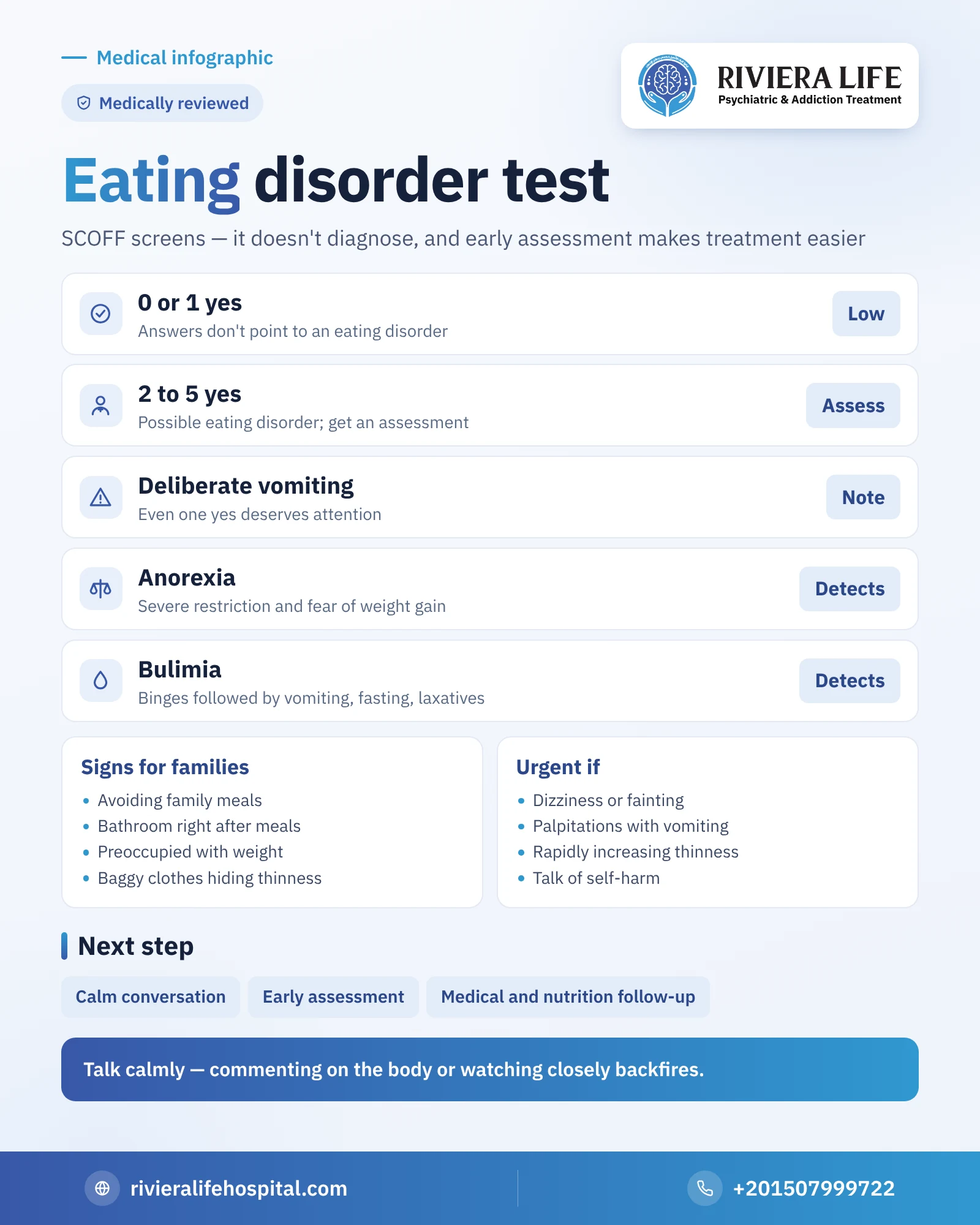
The SCOFF eating disorder test is five yes-or-no questions asking about vomiting after feeling full, worry about losing control over eating, losing a large amount of weight within three months, feeling fat even though others see the person as thin, and feeling that food dominates life. Two or more yes answers point to a possible eating disorder such as anorexia nervosa or bulimia nervosa, and call for an assessment by a specialist. It is a British screening scale published in 1999, and doesn’t replace a diagnosis.
- Questions5 yes-or-no questions
- Two or more yesPossible eating disorder
- Next stepEarly assessment before complications
Eating disorders hide well. The person may seem disciplined about food or an athlete interested in their health, while inside they live a daily struggle with food and their body image, and hide vomiting, long fasting or eating episodes from those closest to them. This short test asks five frank questions that help uncover what may be hidden.
Start the eating disorder test
Eating disorders test (SCOFF)
Answer the following questions honestly:
To discuss your result with a psychiatrist in confidence, the first consultation is free on +201507999722.
This is an initial screening test for awareness, not a diagnosis. Your answers are not saved or sent to anyone; the calculation happens on your device only.
How is the result read?
| Number of yes answers | Meaning |
|---|---|
| 0 or 1 | The answers don’t point to an eating disorder |
| 2 to 5 | A possible eating disorder that calls for assessment |
Even a single yes answer about deliberate vomiting deserves attention, because repeated vomiting causes an imbalance in the body’s salts that may affect the heart.
Which disorders does the test pick up?
- Anorexia nervosa: severe restriction of food and fear of weight gain despite thinness. Read anorexia nervosa.
- Bulimia nervosa: eating episodes followed by vomiting, fasting or laxatives. Read bulimia nervosa.
- Binge eating disorder: large eating episodes accompanied by loss of control and guilt, without compensation. Read food addiction and binge eating disorder.
If you are worried about your daughter or son
Eating disorders often begin in adolescence. If you notice avoiding eating with the family, going to the bathroom straight after meals, excessive preoccupation with weight and calories, or loose clothes hiding increasing thinness, a calm conversation is better than monitoring or commenting on the body. Early assessment makes treatment much easier. Our guide to eating disorders explains the family’s role in detail.
When is it urgent?
- Dizziness, fainting or palpitations, especially with repeated vomiting.
- Severe thinness that is increasing rapidly.
- Any talk of self-harm.
In these cases don’t wait for an ordinary appointment; go to the emergency department or a doctor immediately.
About the SCOFF scale
It was developed by doctors John Morgan, Fiona Reid and Hubert Lacey in Britain, and published in the British Medical Journal in 1999, and its name is taken from the first letters of key words in its questions in English. The version here is a simplified translation for awareness, and we used kilograms instead of the British unit of measurement in the weight question.
How can Riviera Life help you?
The psychiatrist at Riviera Life assesses the person’s relationship with food and their body, rules out physical causes, and sets a psychotherapy plan in coordination with medical and nutritional follow-up when needed. The first consultation is free and confidential on +201507999722.
Read also
- Self-esteem test
- PHQ-9 depression test
- Eating disorders: the complete guide
- Psychological tests: the complete guide
Questions many people ask
Two or more yes answers point to a possible eating disorder and call for an assessment by a specialist.
It was designed mainly for anorexia and bulimia, and may pick up some aspects of binge eating, but a full assessment needs a specialist interview.