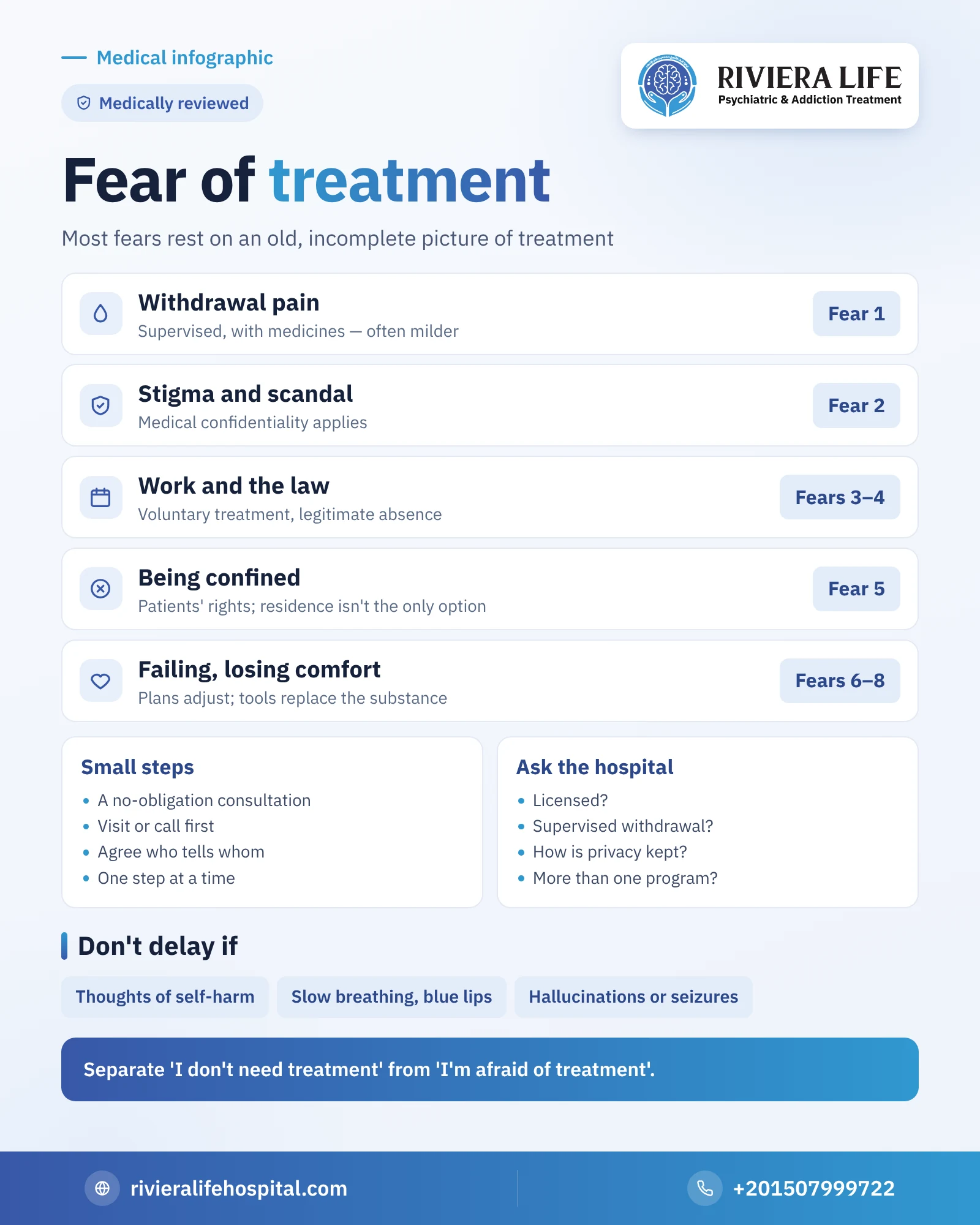
Fear of addiction treatment is a feeling shared by almost everyone who has thought about treatment, and it is among the reasons that most delay asking for help for years. Some fear withdrawal pain, some fear scandal, losing their job or being confined against their will, and some fear failing again. Most of these fears rest on an old and incomplete picture of treatment. Here we go through each fear honestly: what is real in it and what is exaggerated, and what can be done to make it lighter.
Why do we fear treatment in the first place?
Fear is natural because treatment is a big change. The substance has become part of regulating mood, sleep and dealing with pressures, and thinking about doing without it is like thinking about walking without a crutch you depended on. The fear increases because the information circulating among people usually comes from frightening stories or unqualified centers.
And addiction itself feeds fear: when the addict approaches the idea of stopping, anxiety rises, so they find a thousand reasons to postpone the decision. Knowing this helps you distinguish between “I don’t need treatment” and “I’m afraid of treatment”. Much of this fear recedes when the family learns what actually happens in addiction treatment step by step.
The first fear: withdrawal pain
This is the most common fear, and there is some truth in it: withdrawal symptoms may be exhausting, and with some substances such as alcohol and sedatives (benzodiazepines) they may be dangerous if stopping happens suddenly at home without supervision. But this is exactly why withdrawal is done under medical care.
In the hospital the doctor assesses your condition and prescribes medicines that ease the symptoms and protect against complications, and vital signs are monitored. Many say after the experience that what they imagined was worse than what happened. And you aren’t asked to “endure” without pain relief or support, as that isn’t the measure of courage or the measure of treatment. Each substance has different withdrawal symptoms and duration, which you will find in the withdrawal articles for each.
The second fear: stigma and scandal
The fear of society’s view is real, especially in environments that consider addiction a disgrace, not an illness. But discretion in treatment is possible: rules of medical confidentiality apply to patients, and the hospital has no right to disclose your information without your permission. You can choose whom you tell and what you say.
And remember that treatment is the shortest road to ending stigma, as the real scandal usually comes from the addiction continuing and the debts, problems and legal cases it brings, not from entering a hospital.
The third fear: work and the professional future
Many fear losing their jobs if it is known they are being treated. Some procedures differ between employers, but medical treatment is a legitimate health reason for absence in many workplaces. You can talk with the doctor about the suitable way to justify your absence without details you don’t want to share, and consult a lawyer if you have specific legal concerns.
On the other hand, the job may actually be lost because of absence, mistakes and surprise tests if use continues. In the article on the law and addicts in Egypt you will find a general explanation of what concerns voluntary treatment, confidentiality and workplace tests.
The fourth fear: fear of the law and prison
Some think entering hospital means a police report. In Egypt the law generally provides that someone who comes forward for treatment voluntarily isn’t punished for use because of it; for the details and exceptions see the previous article or consult a lawyer. What matters is that fear of the law isn’t a reason to delay asking for help. And if you are looking for a free option, read free addiction treatment in Egypt.
The fifth fear: being confined or treated as mad
This fear is linked to an old picture of asylums. A licensed hospital today provides respectful medical and psychological care, has rules for patients’ rights, and explains to the patient what will happen. And residence isn’t the only treatment; some cases suit half-residency or home treatment programs after the doctor’s assessment.
Among the important questions before admission: what is the nature of the residence? What are the rules for visits and the phone? And who makes the decisions? A good place answers clearly.
The sixth fear: failing again
Someone who tried and relapsed carries an extra fear of repeating the experience. But relapse is common in a chronic illness and doesn’t mean treatment doesn’t work for you; rather it usually means the plan needs adjusting. The article on why addiction treatment fails details these reasons and how to avoid them in the next attempt.
The seventh fear: losing “the one thing” that comforts me
Behind the fear of doing without the substance there is usually a feeling that it was the only friend in distress, sleep and boredom. This is understandable, and it is why treatment includes alternatives: skills for dealing with tension, treatment for insomnia and anxiety if present, and medicines that reduce craving for some substances. You aren’t left empty, but given tools that replace what you used to do with the substance.
The eighth fear: my personality changing or losing the pleasure of life
Some people fear becoming “dull” after treatment. In the first weeks everything may seem grey because the brain’s pleasure circuits haven’t yet regained their balance, but this improves gradually with time and treatment, and simple things regain their flavor. And you will usually discover that your original personality is more present than it was under the substance.
How do I talk with my family about my fear?
Start with an honest sentence: “I’m afraid, but I want to understand the options”. And if you are from the family, listen to the fear without making light of it or mocking it. Among the possible practical steps:
- A first consultation that doesn’t commit you to anything, in which you ask everything that worries you.
- A visit or call from which you learn about the residence, the team and the rules.
- Agreeing on who will call whom and what will be said to others.
- Starting with one small step, as the decision doesn’t all have to be today.
For the family that wants to help without pressure, the article on how to help someone addicted to drugs provides calm conversation methods.
Don't delay if you see
Fear is understandable, but these signs mean waiting is more dangerous than treatment:
- Thoughts of harming oneself or ending life
- Severe drowsiness, slow breathing or blueness after use, and here call an ambulance on 123 immediately
- Hallucinations, severe confusion or a seizure
For urgent psychological support: the mental health hotline 16328.
How do you choose a hospital that reassures you before starting treatment?
The most suitable hospital for someone who is afraid is the one that answers their questions before they enter, and treats them with respect. Ask:
- Is it licensed by the Ministry of Health?
- Is withdrawal done under continuous medical supervision with symptom relief?
- How does it protect the patient’s confidentiality in calls, visits and reports?
- Can I visit the place or talk with the team before deciding?
- Is there more than one type of program, or is residence the only option?
- Is there follow-up after discharge and a program for the family?
Stay away from anyone who guarantees a cure, promises treatment in days, or completely prevents contact with the family.
How does Riviera Life ease your fears of addiction treatment?
Riviera Life opens the door to questions and meets the previous criteria:
- License: licensed by the Ministry of Health.
- Medical supervision: round-the-clock medical oversight during withdrawal to ease the symptoms.
- Experience: fourteen years in addiction treatment and thousands of recovered cases.
- Consultants: consultants in psychiatry and addiction treatment.
- Complete confidentiality: full privacy for you and your family.
- A free first consultation: with no obligation, to ask whatever you want.
- Family and aftercare: a program for the family and follow-up after discharge.
Book your free consultation on +201507999722 around the clock; we are based in Sheikh Zayed, Giza.
Read also
- Why addiction treatment fails
- The law and addicts in Egypt
- How to choose an addiction treatment hospital
- Free addiction treatment in Egypt
Questions many people ask
It differs by substance, but withdrawal under medical supervision includes medicines that ease the symptoms and protect against complications, and many find it lighter than they imagined.
Rules of medical confidentiality apply, the hospital has no right to disclose your information without your permission, and you decide whom you tell.
It depends on the employer, but treatment is often a legitimate health reason for absence. Consult the doctor and a lawyer if you have specific concerns.
Egyptian law generally allows voluntary treatment without punishing those who come forward themselves; for details see the article on the law and addicts or consult a lawyer.
Choose the one that answers your questions clearly and meets the standards of licensing, supervision and confidentiality. Riviera Life in Sheikh Zayed, Giza, meets these criteria and offers a free first consultation without obligation.