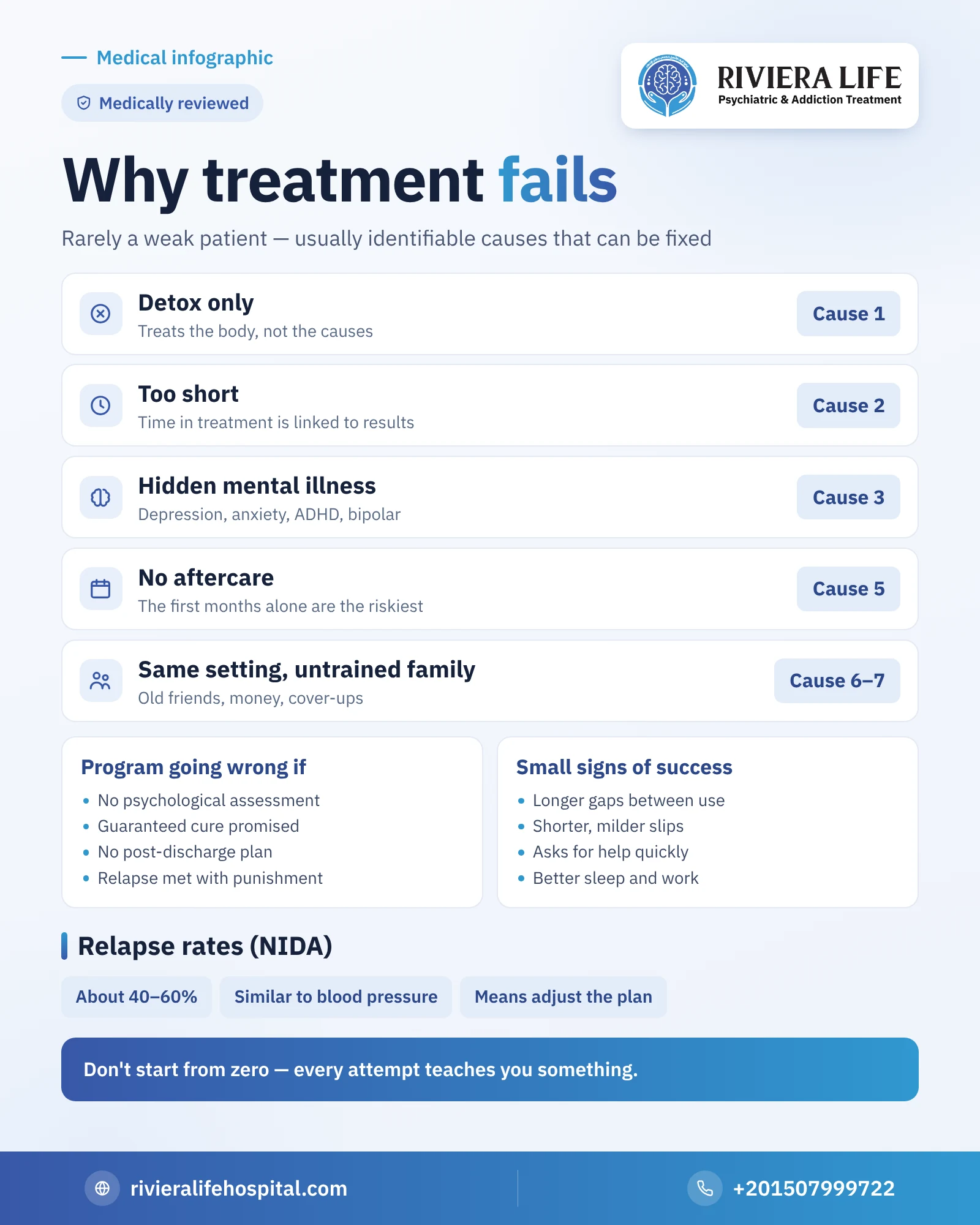
The reasons addiction treatment fails rarely mean the patient is weak or that recovery is impossible. In most cases they are factors that can be identified: short treatment that stops at detox, an undiscovered mental illness, a return to the same environment without a plan, or a family not prepared for after discharge. Here we set out the most important of these reasons, how to know your program is going the wrong way, and what to change next time.
What do we mean by treatment failure?
The word is used for different situations: a patient who left the program in their first week, a patient who completed it and then went back to using after months, or a person who has spent years in a cycle of admission and discharge. Each of these situations has different reasons.
Addiction is a chronic illness in which the person is exposed to relapse as in other chronic illnesses such as blood pressure and diabetes. NIDA estimates that the relapse rate ranges roughly between 40 and 60%, close to these illnesses, which means relapse calls for reviewing the plan, not that treatment is useless. The article on the relapse treatment program details how treatment is built after relapse. And to avoid these reasons from the start, see how drug addiction treatment is built in stages that can’t be cut short.
The first reason: settling for detox
Many families think treatment has ended when withdrawal symptoms disappear after days. But detox treats the body only, and doesn’t touch the psychological and behavioral causes that made the addiction. Someone who leaves after detox alone usually goes back to the substance quickly, and is now less tolerant, so the risk of overdose increases.
The second reason: a short or rushed program
Treatment research indicates that time spent in treatment is linked to its results, and that treatment that falls short of a sufficient period is less beneficial. There is no magic number that suits everyone; the duration is determined by the case. Programs that promise “a cure in days” don’t fit what we know about the illness, and we discussed in the article on the 28-day program how the first period is a beginning, not an end.
The third reason: an undiscovered mental illness
A person may use to ease depression, anxiety, insomnia or the effect of an old trauma, and behind the impulsivity there may be attention-deficit/hyperactivity disorder or bipolar disorder. If the substance alone is treated and this illness stays as it is, the return is a matter of time. That is why a good assessment includes a careful psychological examination, and the dual diagnosis program treats addiction and mental illness together.
The fourth reason: lack of inner motivation
Entering under threat or to please the family may open the door, but lasting recovery needs the patient to have their own reason. That is why good sessions start by working on motivation itself with motivational interviewing, not lecturing. This doesn’t mean treatment without consent is doomed to fail, as some dangerous cases call for it; you will find the details in the article on involuntary addiction treatment.
The fifth reason: no care after discharge
The weeks and months after discharge are the most dangerous. Someone who leaves hospital and returns to their day without sessions, follow-up or a plan for triggers faces everything alone. That is why the aftercare program is part of treatment, not an add-on to it.
The sixth reason: returning to the same environment
Old friends, familiar places, money available without oversight and the dealers’ street are all ready-made triggers. Without a real change in surroundings, even temporarily, the old habit beats the strongest intentions. This may need time in a distant environment or a longer stay, and the residential treatment program explains this option.
The seventh reason: an unprepared family
The family may unintentionally become part of the problem: paying debts, covering up, blaming, and swinging between punishment and pity. If the family doesn’t learn how to deal with the person in recovery, the chances of recovery continuing weaken. The family rehabilitation program provides practical training for this purpose.
The eighth reason: an unqualified center or wrong expectations
Some places are unlicensed and not supervised by doctors, and rely on confinement, coercion or promises that can’t be kept. Some stop medicines early or forbid them without scientific reason. On the other side, the patient or family may expect treatment to be a quick procedure that ends everything, so they count the first slip as complete failure and give up on everything. The article on how to choose an addiction treatment hospital helps you tell the serious from the unserious.
How do I know my program is going the wrong way?
- There is no detailed psychological assessment before the plan starts.
- You are offered a guaranteed cure or a very short duration for all cases.
- There is no plan for after discharge and no specific follow-up.
- The family isn’t involved and its role isn’t explained to it.
- Medicines are given without explanation or all forbidden without reason.
- Relapse is treated with punishment or expulsion, not a review of the plan.
Small signs of success that no one notices
Judging treatment only by “abstained” or “relapsed” is unfair to many cases. There are other indicators that treatment is working even with a passing slip: periods of use have grown further apart, the slip has become shorter and less severe, the patient has gone back to asking for help quickly instead of disappearing, their sleep, work and relationships have improved, and they have come to know their triggers. These are real steps towards recovery, and deserve to be counted and built on in the plan.
What do we do after a program that didn’t work?
Don’t start from zero; every attempt teaches you something. Sit with the therapist and review: when did the relapse happen and what came before it? Were there triggers that weren’t discussed? Did any psychiatric disorder remain untreated? Was aftercare sufficient? Then adjust the plan; the more suitable second program usually differs from the first in two or three points.
And if you are at the stage of relapse now, you will find the place of relapse in the journey in the article on the stages of addiction recovery.
Call an ambulance on 123 immediately if you see
After a relapse following a period of abstinence, the usual dose may be fatal:
- Severe drowsiness, difficulty breathing or blue lips
- Loss of consciousness or a seizure
- Chest pain, severe confusion or hallucinations
How do you choose a hospital that lowers the chances of treatment failure?
The right hospital is the one that treats the reasons that made your previous attempts fail specifically, not the one with the nicest signs. Ask:
- Is it licensed by the Ministry of Health, with specialist psychiatrists working there?
- Does it start with a full psychological and medical assessment before drawing up the plan?
- Is there round-the-clock medical supervision during withdrawal?
- Does the plan include treatment of co-occurring disorders?
- Is there a family program and aftercare after discharge?
- Is the patient’s confidentiality respected and everything that happens explained to them?
Beware of any party that guarantees a cure rate or promises treatment in days.
How does Riviera Life deal with the reasons treatment fails?
Riviera Life meets these criteria, which makes it a suitable option for those whose previous attempts stumbled:
- License: licensed by the Ministry of Health.
- Experience: fourteen years in addiction treatment and thousands of recovered cases.
- Consultants: consultants in psychiatry and addiction treatment assess each case.
- Supervision: round-the-clock medical oversight throughout withdrawal and the stay.
- Family program: training the family to deal with the person in recovery.
- Aftercare: follow-up after discharge to prevent relapse.
- Complete confidentiality: full privacy for the patient and their family.
The first consultation is free; to get in touch around the clock: +201507999722; we are based in Sheikh Zayed, Giza.
Read also
- The relapse treatment program
- Can a drug addict quit alone?
- How to choose an addiction treatment hospital
- The Matrix program for addiction treatment
Questions many people ask
No. Addiction is a chronic illness in which relapse recurs as in other chronic illnesses, and it usually means the plan needs adjusting.
No, it treats the body only, and doesn't treat the psychological and behavioral causes. Someone who settles for it usually goes back quickly and with lower tolerance.
Not necessarily. Inner motivation matters, but some dangerous cases call for intervention, and motivation can be worked on during treatment.
Regular aftercare, a clear plan for triggers, changing the surrounding circle, treating any accompanying mental illness, and a trained family.
Look for a Ministry of Health license, a full psychological and medical assessment, round-the-clock supervision, treatment of co-occurring disorders, a family program, aftercare and confidentiality. Riviera Life in Sheikh Zayed, Giza meets these criteria and offers a free first consultation.