Hashish addiction symptoms don’t resemble the dramatic image people have of an addict. The person doesn’t collapse in the street or disappear for days; they change slowly: red eyes for no reason, reversed sleep, laziness that spreads until it swallows study or work, and irritability that appears whenever the joint is missing. The distinguishing sign between passing experimentation and addiction isn’t the amount, but loss of control: they want to cut down and can’t, and continue even though the harm has become obvious. In this article we organize the signs families see: what appears while high, what appears with addiction, and when an assessment is needed.
The effect of a joint is one thing, addiction is another
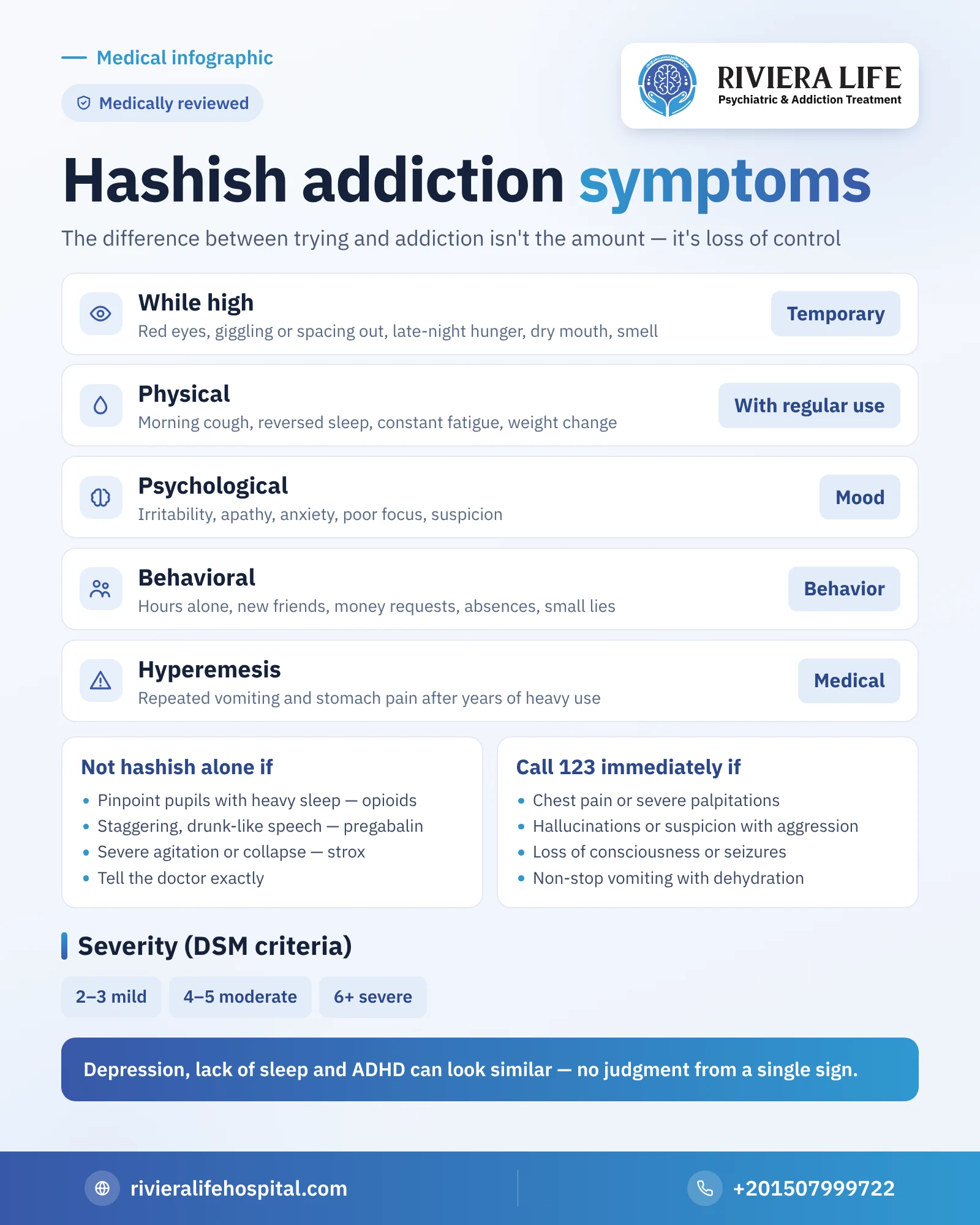
It is important for the family to distinguish between two kinds of signs. The first is the temporary effect of hashish, which appears minutes after smoking, lasts hours, then fades. The second is the symptoms of addiction itself: persistent changes in body, mood and behavior that remain even on days without smoking, or appear specifically when they aren’t smoking. Seeing the temporary effect once means there is use, but isn’t enough to judge that there is addiction. When both kinds occur together and repeat over weeks, it is time to act.
Signs that appear while under the influence of hashish
- Clear redness of the whites of the eyes; the person may resort to eye drops or sunglasses indoors.
- Exaggerated laughter at ordinary things, or on the contrary, unusual calm and absent-mindedness.
- Sudden hunger and a craving for sweets and eating at odd times, especially late at night.
- Slow speech and movement, and forgetting what they said minutes ago.
- A dry mouth and lips, and drinking a lot of water.
- A pungent smell like burnt grass clinging to clothes and hair, which some try to hide with perfume and incense.
Physical symptoms of hashish addiction
With regular use, other signs appear that aren’t tied to the moment of smoking:
- A chronic cough and phlegm in the morning, and breathlessness on exertion, especially as hashish in Egypt is usually mixed with tobacco.
- Disturbed sleep: staying up until dawn and sleeping until the afternoon, or being unable to sleep without a joint.
- Constant tiredness, lethargy and slowness even on ordinary days.
- Weight change, up because of late-night eating or down in periods without it.
- Bouts of repeated vomiting and abdominal pain in some who have used heavily for years, a known medical condition called cannabinoid hyperemesis syndrome.
Psychological symptoms
These are usually what worry the family most, even if they don’t link them to hashish at first:
- Irritability and quick temper, which increase clearly if their joint is late.
- Apathy and loss of enthusiasm for things they used to love, with one answer to everything: “It doesn’t matter.”
- Anxiety or panic attacks, especially with strong types.
- Poor concentration and forgetfulness, and difficulty following a lecture or a series.
- Suspicion of others and a feeling that they are being watched or talked about, a symptom that deserves special attention and has its own article: hashish addiction and suspicion.
- Mood swings between artificial calm and irritation.
Behavioral symptoms
Behavior sometimes reveals use before the body does. The most notable things families notice are: spending long periods in the room or on the roof, new friends nobody knows, repeated requests for money with no convincing explanation, missing school or being late for work, lying about small details, and sharp refusal of any question about where they are. We track these changes in more detail in our article on the behavior of a hashish user.
Things you may find at home
Some items are linked specifically to hashish, and finding them repeatedly deserves a calm question, not an accusation:
- Thin cigarette rolling papers, or cigarettes emptied of tobacco.
- Small pieces of nylon or cellophane that were wrapped around something small.
- Many lighters, and small burn marks on fingers or clothes.
- A goza (water pipe) or parts of one, or unfamiliar smoking equipment.
- Unusual amounts of eye drops, air fresheners and incense.
Using hashish for the first time: what happens, and what should the family do?
Someone trying it for the first time doesn’t show signs of addiction, because addiction needs repetition and a gradual loss of control. But the first experience isn’t necessarily mild. Its effect varies from person to person: some laugh, get hungry and sleep, while others have panic, palpitations, suspicion and vomiting.
What the family may notice after a first try:
- Red eyes, a dry mouth and a distinctive smoke smell.
- Inappropriate laughter or slow speech and movement.
- A big appetite and sleepiness the next day.
- Unusual anxiety or discomfort if the experience was bad.
What matters most is the home’s reaction. Punishment and shouting push a teenager toward hiding and don’t prevent repetition. Better is a calm conversation asking about the motive, the source and the situations they get into, while setting clear limits. The need for a specialist assessment increases if they are young, if the experience is repeated, or if there is a family history of mental illness. To learn what changes in a user’s behavior at home, read the behavior of a hashish user, and for the next steps, hashish addiction treatment.
When does hashish become addiction?
Doctors rely on specific criteria to diagnose cannabis use disorder, which can be simplified into questions the family can ask itself:
- Do they smoke more, or for longer, than they intend?
- Have they tried to cut down or stop and failed?
- Do they spend a lot of time getting it, using it or recovering from its effect?
- Do they feel an intense craving for it?
- Have they neglected study, work or duties because of it?
- Have they continued despite problems at home or with friends?
- Have they given up activities they used to love?
- Do they smoke in dangerous situations such as driving?
- Do they continue despite anxiety or a health problem they know is linked to it?
- Do they need a larger amount for the same effect?
- Do insomnia, irritability and loss of appetite appear when they stop?
Two to three criteria within a year suggest a mild condition, four to five a moderate one, and six or more a severe one. But this is an assessment made by the doctor; the list here is for guidance, not diagnosis.
Hashish symptoms in teenagers
In adolescence the signs hide behind what is considered “normal” for this age, such as isolation, stubbornness and mood swings. What marks hashish is a sudden, not gradual, academic decline, the whole circle of friends changing at once, reversed sleep that doesn’t improve during holidays, and constant evasion of simple questions. A teenager is more likely for experimentation to turn into addiction; you’ll find the explanation in our article on the causes of hashish addiction.
Symptoms that may be confused with other conditions
Not every red eye is hashish, and not every laziness is addiction. Depression causes apathy, isolation and disturbed sleep; lack of sleep alone causes redness and irritability; and attention deficit hyperactivity disorder causes poor concentration and falling grades. Indeed, some of these conditions are a cause of use rather than a result of it. That is why judgment isn’t built on a single sign, and guesswork doesn’t replace a doctor’s assessment.
Signs that hashish isn’t alone
Many hashish users in Egypt mix it with other substances. If you notice very small pupils with heavy sleepiness, there may be tramadol or an opioid. If you see staggering and broken, drunk-like speech, there may be pregabalin or sedatives. And severe agitation or sudden loss of consciousness after a “hashish” joint may mean it was strox or synthetic cannabis, which is far more dangerous. These signs change the treatment plan, so tell the doctor about them precisely.
Symptoms that can’t wait
Call an ambulance on 123 immediately if you see
These signs need urgent medical intervention, not a family conversation.
- Chest pain or severe palpitations after smoking
- Hallucinations or severe suspicion with aggression, or talk of self-harm
- Loss of consciousness or seizures
- Repeated vomiting that won’t stop, with dizziness and dehydration
How does the doctor confirm the diagnosis?
The doctor starts with a calm interview with the person alone, then with their family, asking about the pattern and duration of use and other substances, and assessing mood, anxiety, sleep and any suspicion or hallucinations. They may request a drug test, bearing in mind that hashish stays in urine for a relatively long time, as we explain in our article on how long hashish stays in your system.
A positive result proves use, not addiction; the diagnosis is a clinical decision, not a lab sheet. And if a disorder is confirmed, the next step is explained in our article on hashish addiction treatment. At Riviera Life this assessment is carried out by consultants in psychiatry and addiction treatment in complete confidentiality, and the first consultation is free.
More from our hashish guide
- Hashish: the complete guide
- Hashish withdrawal symptoms
- The harms of hashish
- How to deal with someone addicted to hashish
Questions many people ask
Among the most common signs are red eyes, late-night hunger, a smell clinging to clothes, reversed sleep and falling grades. One sign isn't enough, but several together for weeks deserve a calm conversation and a specialist assessment.
No. Addiction means loss of control, continuing despite harm and symptoms on stopping. But regular use raises the likelihood of reaching that stage.
No. Lack of sleep, allergies and strain also cause redness. Judgment needs the whole picture, and the doctor may ask for a test to confirm.
A condition affecting some people who use cannabis heavily for long periods, with bouts of repeated vomiting and abdominal pain. It usually improves with complete stopping, and may need emergency treatment if it causes dehydration.
Yes. Irritability and quick temper are among the best-known symptoms of addiction, and increase clearly when the joint is late or when trying to stop, because they are withdrawal symptoms.