In films and at parties, cocaine has been linked with the image of a “stimulant” that increases boldness and desire, and many men try it for the first time on that basis. In reality the relationship between cocaine and sex is far more complicated: it may raise desire for an hour, but at the same time it narrows the blood vessels erections depend on, numbs sensation, and with repetition drains the brain’s pleasure system. This article explains what cocaine does to desire, erections, ejaculation and fertility in men and women, why combining it with sexual stimulants becomes dangerous for the heart, and what improves after stopping.
Why do so many people link cocaine with sex?
Cocaine sharply raises dopamine in the brain’s reward centers, so a person feels euphoria and excess confidence, and their shyness and caution fall. This mix makes some users feel in the first minutes that their desire is stronger and that they are more attractive. Reinforcing the idea is the fact that cocaine is often used in settings of late nights, alcohol and meeting people, so the effect of the substance blends with the effect of the place and the company.
But higher desire doesn’t mean better ability. The gap between what the brain wants and what the body can do widens with every use, and this is where the complaint that drives many people to ask begins. This gap isn’t unique to cocaine; it repeats with most substances, as our guide to drugs and sex explains.
What happens in the body under the influence?
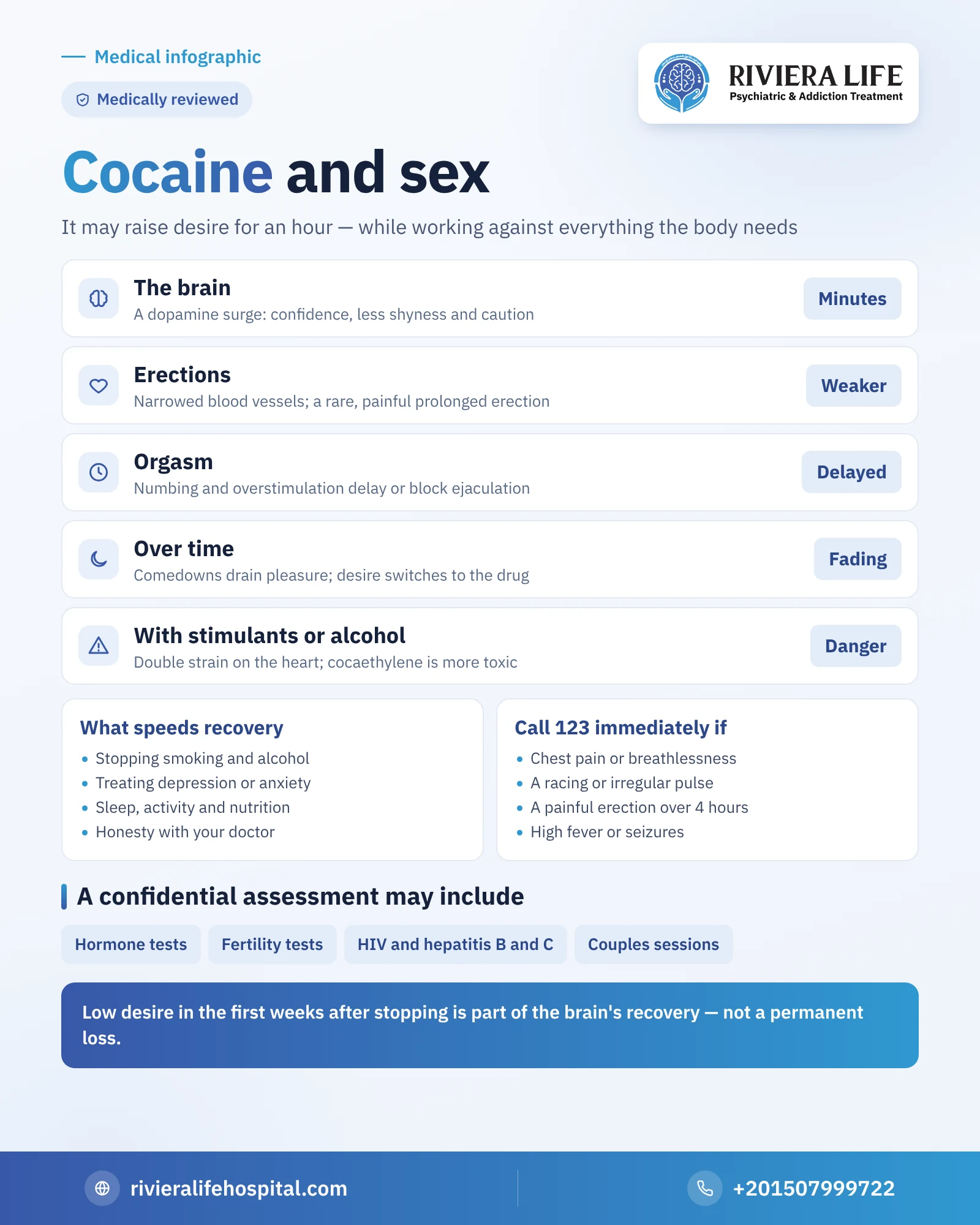
An erection is essentially a matter of blood flow: the arteries of the penis widen and it fills with blood. Cocaine does exactly the opposite in the blood vessels, constricting them and raising blood pressure and heart rate. Cocaine is also originally a local anesthetic, so it reduces sensation in the tissues. The result is high psychological desire with a body that doesn’t respond as it should, less sensation, and more effort for the heart.
Cocaine and erections
Many men discover that the cocaine they thought was a stimulant gives them weak erections, especially with larger amounts or repeated use on the same night. At first the problem is linked only to the times of use, but with continued use it may appear at other times too, because the damage extends to the lining of the blood vessels, and because the anxiety of failing adds a psychological burden. Things get worse with smoking and alcohol, both of which often accompany cocaine.
In rare cases the opposite happens: a painful erection that lasts many hours without desire — an emergency that needs prompt treatment so the tissue of the penis isn’t damaged.
Delayed ejaculation and difficulty reaching orgasm
Because of the local numbing and overstimulation of the nervous system, many people suffer from delayed ejaculation or an inability to reach orgasm despite arousal. At first this may be read as “being able to last”, but in reality it is repeated frustration, and it often pushes the person to take an extra amount hoping for a different result, entering a cycle that increases the harm.
With continued use: why does desire fade?
Every episode of use is followed by a comedown in which dopamine falls below its usual level, so natural things lose their appeal — intimacy among them. With repetition, the brain adapts to this artificial stimulation, so cocaine itself becomes the main source of pleasure and interest in the partner declines. Some studies suggest that chronic use may be linked to a hormonal disturbance such as raised prolactin, a hormone that weakens desire, although the picture varies from person to person.
Cocaine and sex in women
In women, a feeling of boldness may rise at first, then desire and the ability to reach orgasm weaken with continued use, and periods may become irregular. More dangerously, drug use impairs the ability to judge situations, increasing the likelihood of unplanned encounters and unplanned pregnancy. During pregnancy, cocaine raises the risk of placental abruption, premature birth and low birth weight, so a woman who uses it and is thinking about pregnancy needs assessment and treatment beforehand. The details of the other harms are in our article on the physical and psychological harms of cocaine.
Does cocaine affect fertility?
Research suggests that regular use may be linked to a lower sperm count or weaker motility in men, and to disturbed ovulation in women. In most cases this effect isn’t permanent and usually improves some time after stopping. But if a pregnancy is being planned, it is better for it to happen once recovery is stable, with a fertility check if conception is delayed.
Cocaine with sexual stimulants or alcohol: a danger to the heart
When men notice weak erections, many turn to the well-known sexual stimulants sold in pharmacies and take them with cocaine. This combination doubles the burden on the heart and circulation at a time when the heart is already under severe strain, and it can end in chest pain or an irregular pulse. Alcohol adds another danger, because when the two meet, the liver produces a third substance called “cocaethylene”, which is more toxic to the heart than either alone.
Call an ambulance immediately (123 in Egypt) if you see
Stop any activity at once, take no other medicine, and tell the paramedics everything that was taken, even if it is embarrassing.
- Pain or pressure in the chest, or shortness of breath during or after sex
- Severe palpitations, an irregular pulse, dizziness or fainting
- A painful erection lasting more than four hours
- A very high temperature or seizures
Risky sexual behavior and infection
Cocaine use is linked to a higher likelihood of unprotected sex and multiple partners, because the substance weakens caution and drives impulsiveness. This raises the risk of sexually transmitted infections, including HIV and hepatitis B and C, which may then pass to a regular partner without their knowledge. That is why tests for these infections are a normal part of the treatment assessment, and they are carried out in complete confidence.
What happens to the relationship during withdrawal?
In the first weeks after stopping, many people go through a period of reduced desire with fatigue, low mood and disturbed sleep. This doesn’t mean the weakness has become permanent; it is part of the recovery of the brain’s reward system. Knowing this in advance protects against despair and against going back to cocaine to “test” your ability. Our article on cocaine withdrawal symptoms explains the stages and length of this period.
Does sexual ability come back after stopping?
In most cases desire and erections improve gradually within weeks to months of stopping, and normal sensation returns. But the speed of improvement is affected by several things:
- How long and how much someone used, and any damage to the blood vessels.
- Smoking and alcohol, both of which slow the recovery of the blood vessels.
- Depression and anxiety, which are independent causes of weak desire.
- The quality of sleep, physical activity and nutrition.
If the problem persists after recovery has stabilized, the doctor can look for the cause — whether hormonal, vascular or psychological — and treat it in a targeted, safe way.
When do you need a doctor?
Ask for an assessment if weak erections or delayed ejaculation keep happening, if you feel chest pain with any exertion, if you are planning to have children, or if there has been unprotected sex that needs testing. Most importantly, tell the doctor plainly about the cocaine, because prescribing a sexual stimulant without knowing about the drug use can be dangerous. You will find the full plan for stopping in our article on cocaine addiction treatment.
At Riviera Life, consultants in psychiatry and addiction treatment deal with these complaints as a normal part of the treatment plan, in complete confidence, and the partner can take part in family sessions to rebuild trust and closeness. And if it is the other partner looking for a way to cope, our article on how to deal with someone addicted to cocaine offers practical steps.
More from our cocaine guide
- Cocaine: the complete guide
- Cocaine addiction symptoms
- The causes of cocaine addiction
- The difference between cocaine and heroin
- Ketamine and sex: blackouts, consent, bladder damage and recovery
Questions many people ask
It may raise boldness and desire for minutes, but it constricts the blood vessels and numbs sensation, so it often causes weak erections and difficulty reaching orgasm, and desire declines with continued use.
This combination doubles the burden on the heart and can cause chest pain or an irregular pulse, so it is never advisable. It is better to treat the cause with a doctor who knows about the drug use.
It may reduce sperm count and motility and disturb ovulation during regular use, but this effect usually improves after stopping.
It usually improves within weeks to months; the first weeks may bring a period of low desire linked to withdrawal, and then balance returns gradually.
Yes. A painful erection lasting more than four hours is an emergency that needs prompt treatment so the tissue isn't damaged.