Lorazepam is a sedative from the benzodiazepine family, known internationally as Ativan, and doctors use it to calm severe anxiety and some cases of insomnia, seizures and agitation, and it is often given by injection in hospitals. It differs from its relatives in that the body clears it without turning it into active products that accumulate, which is why doctors prefer it in older people and liver patients. But this advantage doesn’t protect it from dependence: someone who uses it for long weeks may find it hard to stop. Here we explain what distinguishes lorazepam, when it is prescribed, its risks, and how dependence on it begins.
What is lorazepam?
Lorazepam is a medicine belonging to the benzodiazepines, the same family that includes diazepam, clonazepam, bromazepam and alprazolam. It is available around the world as tablets and injections, and its best-known brand name is Ativan. In Egypt its availability and brand names may vary from time to time, so ask the pharmacist or doctor about what is available rather than relying on a name you heard from someone.
Like other medicines in this family, it is only dispensed on prescription and is subject to controls on psychoactive medicines.
What distinguishes lorazepam from the rest of the family?
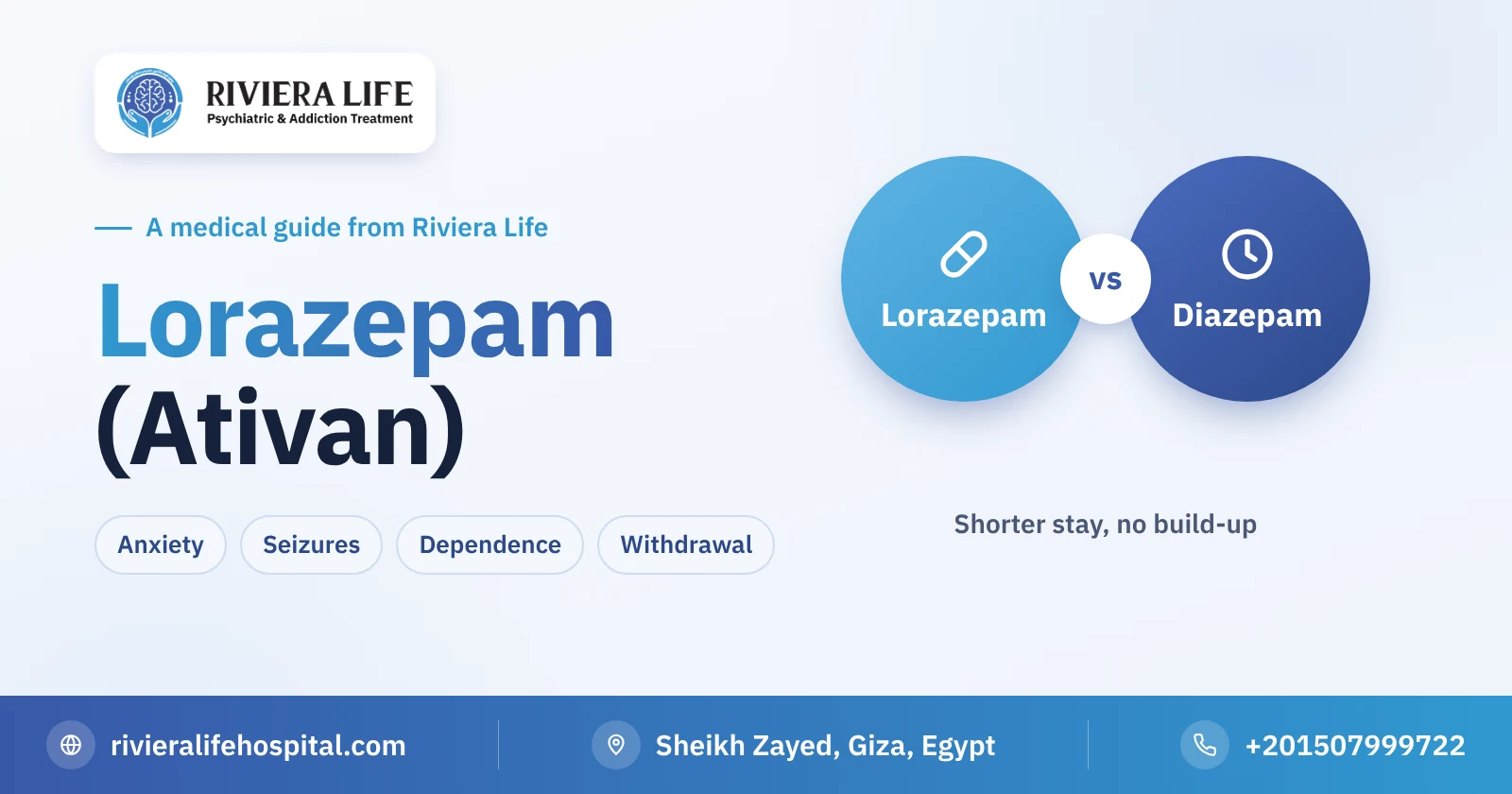
The differences between benzodiazepines lie in the speed of absorption, how long they stay and how the medicine is broken down in the body. Lorazepam falls in the middle in terms of duration: its effect lasts several hours, and it leaves the body within about a day, so it doesn’t accumulate as happens with diazepam, whose products remain for days.
The second difference is the route of breakdown. The body breaks it down in a relatively simple way that doesn’t depend heavily on the liver, producing an inactive substance. So it is less likely to accumulate in older people and those with liver disease compared with other medicines in the family, which is why it is chosen in many medical departments. This doesn’t make it safe without limits, as older people remain more prone to dizziness, falls and confusion with any sedative.
When does the doctor prescribe lorazepam?
Uses vary between the clinic and the hospital:
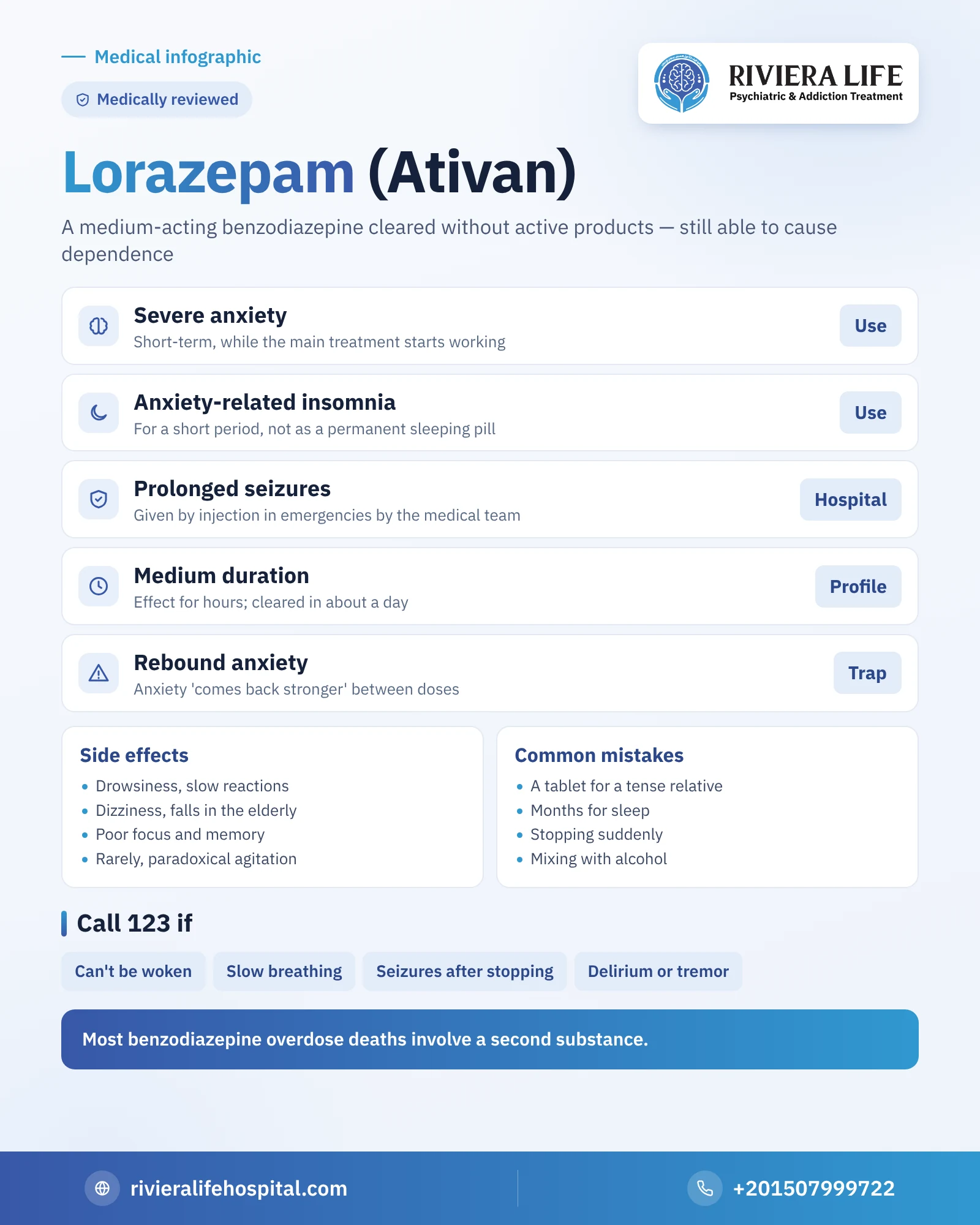
- Short-term severe anxiety: when anxiety disrupts sleep and work, until the main treatment starts to work.
- Anxiety-related insomnia: for a short period, not as a permanent sleeping pill.
- Continuous seizures: given by injection in the emergency department to stop a prolonged seizure, a use managed by the medical team alone.
- Acute agitation: inside the hospital, when the patient needs quick and safe calming.
- Preparing for anesthesia or procedures: to ease tension and memory before operations.
- Alcohol withdrawal: within an organized protocol under medical supervision, because this withdrawal can threaten life.
The established rule is that its use for anxiety and sleep should be for the shortest possible time, for a few weeks, not months.
How does it work, and what does the patient feel?
Lorazepam strengthens the action of GABA, the neurotransmitter that reduces the activity of brain cells. The expected result: racing thoughts calm, muscles relax and there is some drowsiness. Since it starts working a short time after being taken by mouth and much faster by injection, the feeling of relief comes clearly. And for exactly this reason it becomes tempting for someone with chronic anxiety, who seeks the same relief again and again. For more on the family’s mechanism, see GABA and anxiety.
Side effects of lorazepam
- Drowsiness, a heavy head and slowed reactions.
- Dizziness and unsteadiness, and a risk of falls, especially in older people.
- Poor concentration and problems with short-term memory.
- Emotional blunting and reduced sexual desire in some users.
- Muscle weakness and difficulty speaking when the effect is increased.
- A rare paradoxical effect: irritability, agitation and impulsive behavior instead of calm.
And one shouldn’t drive or operate machinery in the first days of treatment or with any drowsiness.
Risks that mustn’t be ignored
The most dangerous thing that happens with sedatives is mixing lorazepam with something that also weakens breathing. Alcohol and opioid painkillers, including tramadol, multiply its suppressing effect on breathing and consciousness. This includes other sedatives such as pregabalin. Public health data indicate that a large proportion of benzodiazepine overdose deaths happen in the presence of a second substance like these.
The risk extends to those with sleep apnea or chronic lung disease, to pregnant and breastfeeding women, and to those with a history of substance use, so prescribing a sedative for them needs special judgment from the doctor.
Call an ambulance on 123 immediately if you see
After using lorazepam, stopping it suddenly, or mixing it with alcohol and painkillers:
- Severe drowsiness that makes waking difficult, or clearly slowed breathing
- Blue lips or fainting
- Seizures after stopping suddenly
- Delirium, severe confusion and hallucinations, or violent tremor
How does dependence on lorazepam form?
Dependence usually begins with a legitimate prescription for weeks. Over time the brain gets used to the medicine’s presence, so its effect weakens and the person needs more of it for the same relief, and without it anxiety and insomnia intensify. And because lorazepam’s duration is medium, the effect wears off within hours, so the patient feels that anxiety “comes back stronger” between doses, and this rebound anxiety drives them to hold on to it. This cycle becomes clearer when it continues for months. You will find the general picture in the harms of benzodiazepines.
Stopping lorazepam: what happens?
Stopping after regular use may cause rebound anxiety, insomnia, nightmares, tremor, sweating, palpitations and sensitivity to light and sound. Because the medicine is medium-acting, symptoms usually begin within a day or two, faster than with diazepam. In severe cases, especially after long use or with alcohol, seizures and delirium needing emergency care may appear. So the medicine isn’t stopped suddenly; the doctor sets a gradual reduction plan. The details of the symptoms and timelines are in benzodiazepine withdrawal symptoms.
Common mistakes
- Giving a tablet to a tense relative: apparent kindness, but it may start a problem in someone no doctor has assessed.
- Staying on it for sleep for months: it doesn’t treat the cause of insomnia and raises the chance of dependence.
- Stopping suddenly after improving: withdrawal symptoms are mistaken for the illness returning.
- Combining it with alcohol “to improve the effect”: a well-known recipe for weak breathing and fainting.
- Raising the amount without consultation: changing the amount or timing is the doctor’s decision alone.
Treating dependence on lorazepam, in brief
The doctor starts by assessing the duration and actual amount of use, the presence of alcohol or other substances, and the original psychological condition. Then they set a gradual reduction plan at a pace that suits the patient, and may switch them to a longer-acting benzodiazepine to make reduction easier if they see fit. At the same time they treat the original anxiety or insomnia with methods that don’t cause dependence, such as cognitive behavioral therapy and some other medicines. Someone with a history of seizures or who mixes with alcohol usually needs a stay under medical supervision. The full details are in benzodiazepine addiction treatment.
Lorazepam in older people, pregnancy and breastfeeding
Although lorazepam is more suitable than others for older people because it leaves the body more easily, caution is needed: with any sedative the risks of falls, hip fractures, confusion and forgetfulness increase, and what happens may be wrongly thought to be the beginning of dementia. So doctors reduce the amount and shorten the duration in the elderly, and review the need for it at every visit.
In pregnancy, the benefit and risk are weighed carefully, and the woman discusses with her doctor before continuing or stopping. Part of the medicine passes into breast milk, so a breastfeeding mother asks her doctor about the most suitable option for her and her infant. In both cases the medicine isn’t stopped suddenly after regular use.
Lorazepam in hospital: a use many don’t know
Many know lorazepam as tablets for anxiety, but its real place in modern medicine is injection. Its ability to stop prolonged seizures and calm acute agitation has made it one of the medicines of emergency departments. This use is completely different from the tablets dispensed for home, as the patient is under monitoring of pulse, breathing and consciousness. So what is given in the emergency department shouldn’t be compared with what someone takes at home, nor should it be thought that a tablet without monitoring carries the same safety.
How can Riviera Life help you?
At Riviera Life, licensed by the Ministry of Health, consultants in psychiatry and addiction treatment assess the condition of someone dependent on lorazepam in complete confidentiality, and set a safe withdrawal plan with round-the-clock medical supervision for those who need a stay, with a family program and follow-up after discharge. The first consultation is free on +201507999722.
More from our benzodiazepines guide
- Benzodiazepines: the complete guide
- Bromazepam
- How long benzodiazepines stay in the body
- Benzodiazepine addiction treatment
Questions many people ask
Yes, Ativan is an international brand name for lorazepam, a sedative from the benzodiazepine family, and the names available may differ from country to country.
Both are benzodiazepines, but lorazepam stays a shorter time and doesn't turn into active products that accumulate, while the effect of diazepam and its products lasts for days.
Yes, it may cause dependence and tolerance when continued for long weeks, and the risk is greater when combined with alcohol or with a history of substance use.
This isn't advisable after regular use, as strong symptoms may appear that can reach seizures; the gradual reduction is set by the doctor.
Because injection works faster, so the medical team uses it to stop prolonged seizures and calm acute agitation while monitoring breathing and consciousness.