The short answer
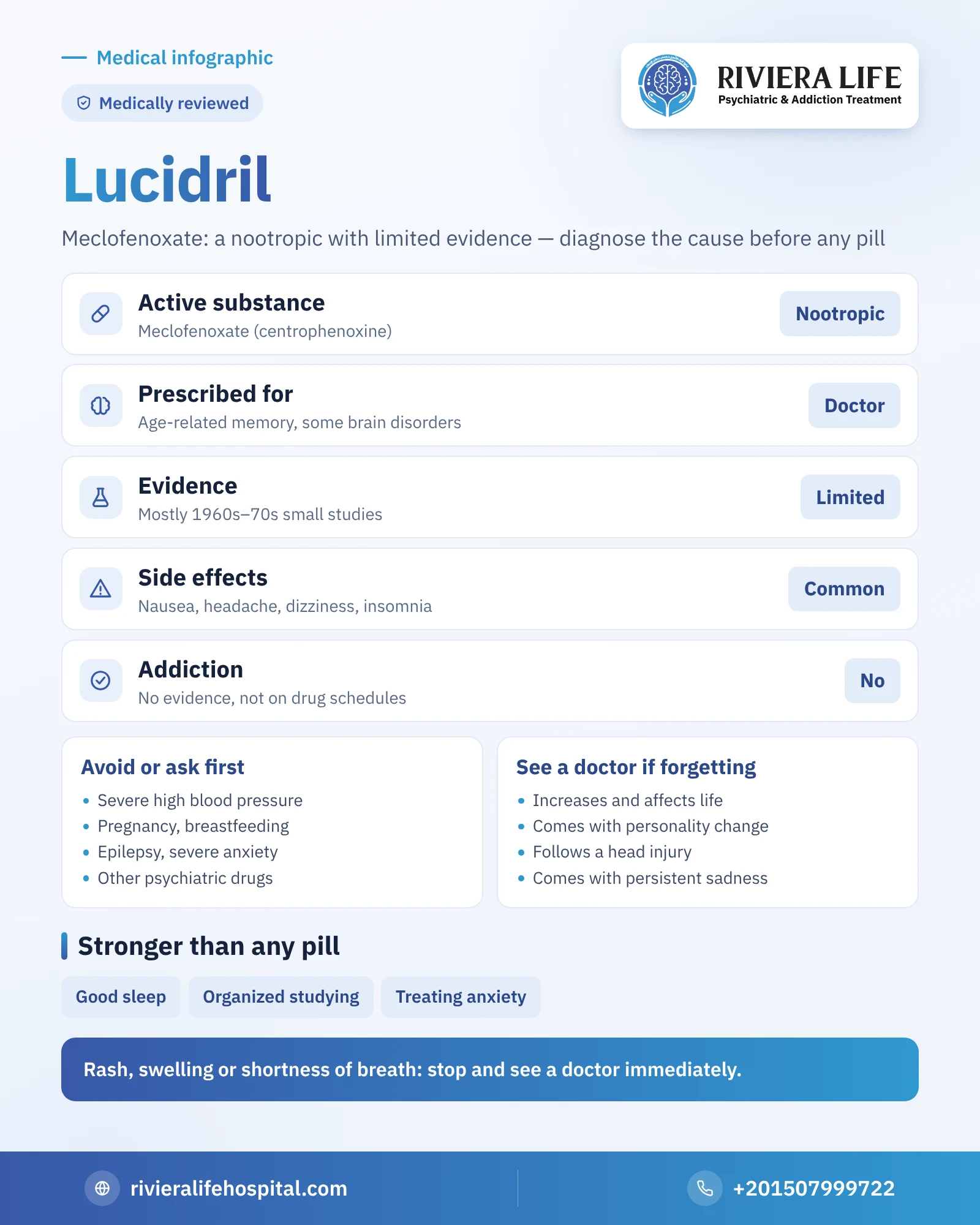
Lucidril is a trade name for the substance meclofenoxate, which belongs to what are known as nootropics, and is sometimes prescribed for weak memory and difficulties concentrating linked to aging or to some brain disorders. The scientific evidence of its benefit is limited, because most studies are old and small. Its most common side effects are nausea, headache, dizziness, stomach upset and insomnia, and it isn’t advised with severe high blood pressure or during pregnancy. It isn’t known to cause addiction in the medical sense, but using it without a diagnosis may delay discovering a real cause of weak memory or concentration.
- Active substanceMeclofenoxate
- Does it cause addiction?No evidence of that
- Most importantDiagnose the cause of weak memory before any medicine
The name Lucidril spreads among secondary school and university students as “a medicine that boosts memory”, and others ask about it because the doctor prescribed it for a father or grandfather suffering from forgetfulness. Between the promises in circulation and worry about side effects, the question remains: what does this medicine really do, who does it suit, and is it safe? This article answers with what the available research says, without alarm or exaggeration.
What is Lucidril?
Lucidril is a trade name for the substance meclofenoxate, also known as centrophenoxine. It consists of a substance close to choline, the raw material from which the brain makes the neurotransmitter acetylcholine linked to memory and attention, bound to a compound that helps its absorption. That is why it was classified among nootropics, that is, substances supposed to support cognitive functions.
Uses of Lucidril
Lucidril is prescribed in some countries, including Egypt, in cases such as:
- Weak memory and concentration linked to aging.
- Some cognitive difficulties after head injuries or problems with blood circulation in the brain.
- As a supporting treatment in some cases of dementia according to the doctor’s judgment.
The doctor determines the duration and method of use according to the case, and the dose shouldn’t be taken from a friend or from the internet.
Is Lucidril really effective?
Here honesty is needed. Most studies on meclofenoxate were carried out in the 1960s and 1970s, were small in size, and some lacked an adequate comparison group. A trial on older adults found improvement in one type of memory test and not others, while the results of studies in dementia cases were inconclusive. There are no large modern trials proving that it improves memory or academic achievement in healthy young people.
In practice this means that someone who takes it before exams is relying on an unproven promise, and that good sleep, organized studying and treating anxiety remain more effective than any pill. The common causes of poor concentration are explained in the article on the causes of poor concentration.
Side effects of Lucidril
- Nausea and stomach upset or heartburn.
- Headache and dizziness.
- Insomnia, especially if taken late in the day, because of its mild stimulating effect.
- Nervousness or tension in some people.
- Less common symptoms mentioned by some studies, such as thirst, blurred vision and diarrhea.
And if a skin rash, swelling or shortness of breath appears, these are signs of allergy that call for stopping and going to the doctor immediately.
Who should avoid Lucidril or consult the doctor first?
- Patients with severe high blood pressure.
- Pregnant and breastfeeding women, due to insufficient safety data, and because animal studies raised concerns about the substance close to it.
- Those with epilepsy, severe anxiety or chronic insomnia, because its stimulating effect may not suit them.
- Those taking other psychiatric or neurological medicines; the drug interactions of meclofenoxate haven’t been studied sufficiently, so the doctor must be told about all medicines.
Does Lucidril cause addiction?
There is no evidence that meclofenoxate causes addiction, physical dependence or withdrawal symptoms, and it isn’t on the drug schedules. But this doesn’t mean that using it without a doctor is free of problems. The real risk lies in two situations: the first is that the person deals with weak memory or concentration with the pill instead of looking for the cause, and the cause may be depression, anxiety, lack of sleep, a thyroid problem or attention deficit hyperactivity disorder. The second is that the student starts with a mild nootropic then moves on to stronger medicines used for studying such as Ritalin and Adderall, which are medicines with real risks as the article on Adderall and modafinil and the risks of using them for studying explains.
When is forgetfulness a sign that deserves a visit to the doctor?
- If the forgetfulness is increasing and affects work, studies or household matters.
- If it is accompanied by a change in personality or mood or getting lost in familiar places.
- If it appeared after a head injury or with a severe headache or weakness in one of the limbs.
- If it comes with persistent sadness and loss of interest, as it may be depression affecting concentration.
How does Riviera Life help you?
At Riviera Life the assessment of weak memory or concentration starts with understanding the cause: sleep, anxiety, depression, hyperactivity, substance use, or an organic cause that needs referral to a neurologist. Treatment is built on the diagnosis, not on the name of a medicine in circulation. The first consultation is free and confidential on +201507999722.
Read also
- Ritalin: uses and side effects
- Acetylcholine and its relationship to memory
- Caring for a dementia patient
- The causes of poor concentration
Questions many people ask
There are no large modern trials proving that it improves memory or academic achievement in healthy young people, and most of its studies are old and small. Good sleep, organized studying and treating anxiety have a stronger effect.
There is no evidence that it causes addiction or withdrawal symptoms, and it isn't on the drug schedules, but using it without a diagnosis may delay discovering a real cause of weak memory or concentration.
Nausea, stomach upset, headache, dizziness, insomnia and nervousness, and it is avoided with severe high blood pressure and during pregnancy and breastfeeding, and the doctor must be told about any other medicines.