Treatment of nalbuphine addiction starts from a point the treatment of many other substances doesn’t start from: checking the body for the effects of injecting before thinking about the substance itself. Someone who has injected nalbuphine for months or years may carry an untreated abscess, inflammation of the veins, or a silent hepatitis virus.
After that comes a carefully planned withdrawal under medical supervision, because nalbuphine’s mixed action on opioid receptors makes choosing medicines and their timing a delicate decision, especially if the patient uses tramadol or heroin with it. Then psychological rehabilitation that deals with the injection ritual itself, and follow-up that prevents relapse. This is the path the article explains.
Why does nalbuphine addiction treatment differ?
Three things make a nalbuphine patient a case with its own particularities. The first is that they inject, and injecting adds a full medical file of infections and complications to the addiction. The second is that nalbuphine activates some opioid receptors and opposes others, so the heroin or tramadol plan can’t be transferred to it as it is. The third is that many patients mix it with other substances, or started it as a substitute for another substance, so withdrawal plans become intertwined.
And if you first want to understand the substance itself, how it works, why it is thought to be safe and what its harms are, read nalbuphine: medical use, addiction and risks.
As for the substance itself, how it works and why it spread, it is explained in the article on nalbuphine, and the general lines for treating the opioid family in the article on opioid addiction treatment.
The stages of nalbuphine addiction treatment
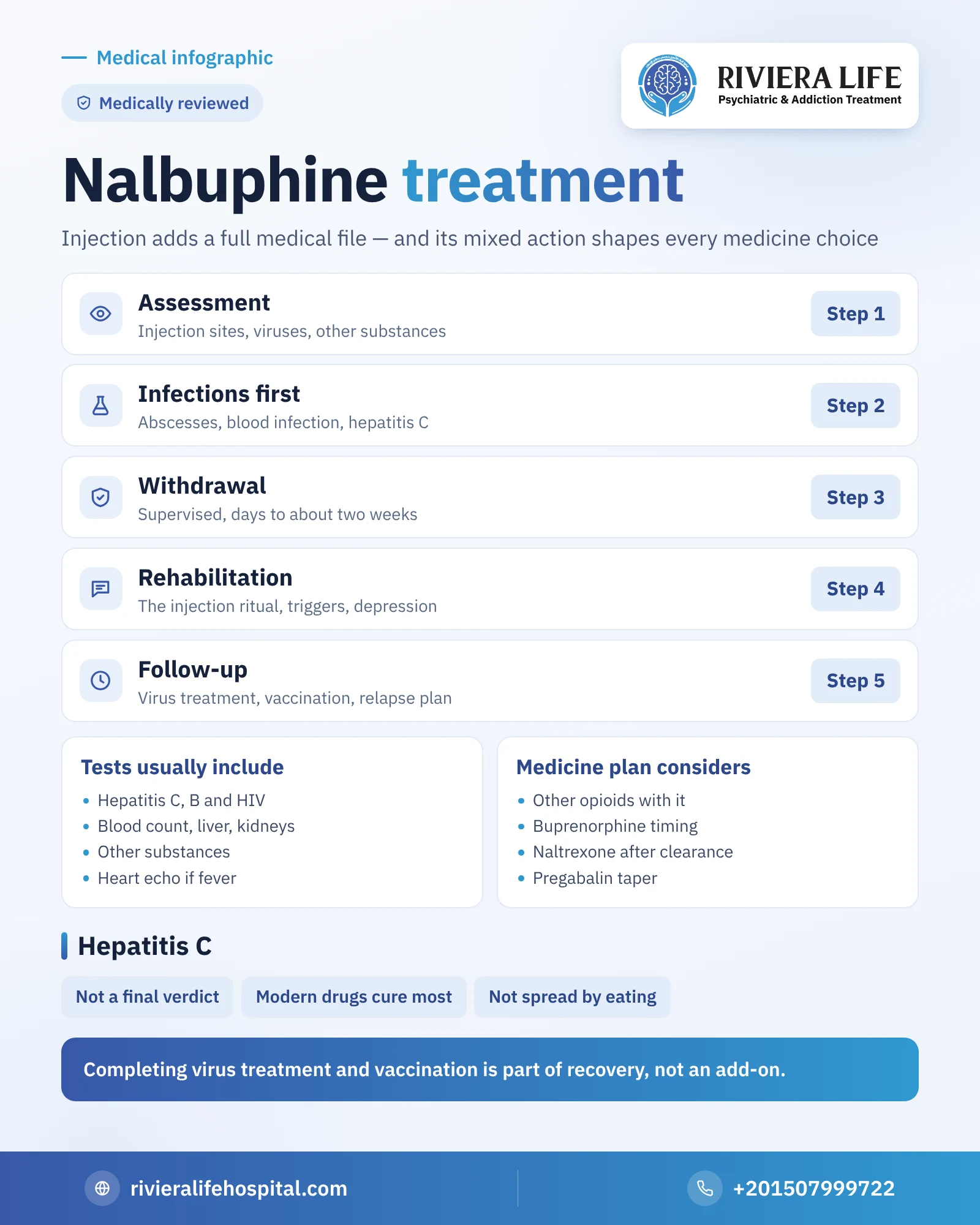
- A comprehensive assessment including a check of injection sites, viruses and other substances.
- Treating any infection or urgent complications before withdrawal or in parallel with it.
- Withdrawal under medical supervision with a medicine plan suited to the nature of nalbuphine.
- Psychological and behavioral rehabilitation that addresses craving, the injection ritual and co-occurring disorders.
- Long follow-up, completing virus treatment if present, and a relapse prevention plan.
The assessment: from injection sites to virus tests
The doctor starts with a frank question about the length of use and the number of injections a day, whether there was shared equipment, and any other substances used with it. Then they examine the arms, legs and any other injection sites for swelling, pus or damaged veins. Tests usually include:
- Testing for hepatitis C and B viruses and HIV, repeating some later if the exposure was recent.
- A blood count, liver and kidney function, and markers of inflammation.
- A substance test to detect tramadol, pregabalin, sedatives and heroin.
- When needed: a blood culture or an ultrasound of the heart if there is unexplained fever or a new heart murmur, to check on the valves.
Mood, sleep and thoughts of self-harm are assessed, as depression and anxiety are common in those who have reached daily injection.
Treating injection complications and infection first
An abscess that needs draining, spreading skin infection, or blood infection doesn’t wait for withdrawal to end. The medical team treats them first or in parallel, and they may require antibiotics for a period, a minor surgical intervention, or referral to a specialized department if the infection has reached the heart or bones.
If tests show hepatitis C, this isn’t a final verdict as many fear; modern antiviral medicines cure the vast majority of patients. Its treatment can be started in coordination with the liver doctor after the patient stabilizes. And those who test negative for hepatitis B are usually advised to be vaccinated against it.
Supervised withdrawal: what happens?
After stopping, symptoms resembling opioid withdrawal appear: anxiety and insomnia, sweating and chills, muscle and bone aches, diarrhea and cramps, and a strong craving to inject. The team follows vital signs, fluids and sleep, and treats each symptom appropriately, with daily psychological support in these difficult days. The acute stage usually lasts from several days to about two weeks, and varies with the amount, duration and accompanying substances. For the features of opioid withdrawal in general, see the article on opioid withdrawal symptoms.
Medicines: why does the doctor plan carefully?
Nalbuphine’s mixed nature affects every medicine decision. It partially opposes mu receptors, and any medicine that works on the same receptors must have its timing chosen precisely so as not to cause sudden withdrawal or lose its effect. That is why the doctor takes into account in their plan matters such as:
- Does the patient use nalbuphine alone, or with another opioid such as tramadol or heroin? Dependence on a full-acting opioid changes the plan.
- When it is possible, if the patient needs it, to start a medicine such as buprenorphine to ease craving, or naltrexone to protect against going back after the body is clear of opioids.
- Suitable symptom medicines for insomnia, anxiety, diarrhea and pain, without relying on sedatives that may create a new problem.
- Withdrawing any accompanying substance such as pregabalin or sedatives with its own taper.
These are entirely individual decisions, and shouldn’t be tried at home. To learn about these medicines in general, see the articles on buprenorphine and naltrexone.
Psychotherapy and rehabilitation
A nalbuphine patient doesn’t long for the substance alone, but for the whole ritual: preparing the injection, the place, and the prick itself. Cognitive behavioral therapy works to expose these triggers and build alternative responses to them, while motivational interviewing strengthens the patient’s inner motivation to continue. Group sessions help break the sense of isolation and shame, and any depression, anxiety or old trauma is treated within the plan, not after it. The patient also learns how to deal with their health fears if they discover they have a virus, so the shock doesn’t turn into a reason to go back.
The family’s role
The family first needs to understand that daily injection is an illness that is treated, not a scandal to be hidden. Then it learns how to support without providing the money nalbuphine is bought with, how to deal with injection equipment if it finds it, and how to talk about virus test results calmly. If the patient is confirmed to have hepatitis, the family’s knowledge of the real routes of infection, and that it isn’t transmitted by eating and shaking hands, protects the home from both fear and rejection.
Preventing relapse after treatment
The most dangerous thing facing the patient after discharge is easy access to injecting and the people linked to it. That is why the plan includes cutting ties with the sources of the substance, changing places and numbers, a daily routine for work, sleep and exercise, a fixed follow-up appointment, and a written plan for what to do with strong craving. The patient needs to know that their tolerance has fallen after stopping, and that going back, especially with sedatives or other opioids, may be more dangerous than they expect. Completing virus treatment and vaccinations is part of recovery, not an add-on to it.
The right hospital for nalbuphine addiction treatment: how to choose
The right hospital for nalbuphine addiction treatment is the one that provides what an injecting patient specifically needs: checks for injection complications and viruses, a medicine plan that takes nalbuphine’s mixed action into account, treatment of accompanying substances, and long follow-up. Ask before you decide:
- Does the hospital check injection sites and do hepatitis and HIV tests from the start?
- Does it treat abscesses and infections or coordinate their treatment with the required specialties?
- Do addiction specialists set a medicine plan that takes into account the nature of nalbuphine and accompanying opioids?
- Does it provide round-the-clock medical supervision during withdrawal?
- Does it treat the rituals and triggers linked to injecting within psychological rehabilitation?
- Is it licensed, and does it include a family program and follow-up after discharge?
And stay away from any place that promises you a guaranteed cure or complete treatment in a few days.
How Riviera Life meets these standards in nalbuphine addiction treatment
Riviera Life applies these criteria as follows:
- Official license: a hospital licensed by the Ministry of Health.
- Extended experience: fourteen years in addiction treatment and thousands of recovered cases.
- A specialist team: consultants in psychiatry and addiction treatment who plan medicines to suit nalbuphine’s mixed action and accompanying substances.
- Continuous supervision: round-the-clock medical follow-up throughout the withdrawal stage.
- Complete confidentiality: the patient’s data and test results are kept in complete confidence.
- A family program: sessions that help the family support and deal consciously with test results.
- Aftercare: extended follow-up to prevent a return to injecting in the first months.
The first consultation is free, and you can get in touch around the clock on +201507999722; the hospital is based in Sheikh Zayed, Giza.
More from the opioids guide
- Opioids: the complete guide
- Nalbuphine: the truth and the risks
- Opioid addiction treatment
- Opioid withdrawal symptoms
- Nalbuphine withdrawal symptoms: the timeline, precipitated withdrawal and when to worry
Questions many people ask
The acute withdrawal stage usually lasts from several days to about two weeks, then rehabilitation extends for weeks to months, and outpatient follow-up for longer. The plan may be longer if there is an infection or other substances that need treatment.
Yes, testing for hepatitis C and B and HIV is advised for everyone who has injected, especially with shared equipment. Early detection allows effective treatment and protects the family and contacts.
Home withdrawal without supervision isn't advised, especially with daily injection, mixing it with other substances or infections. Outpatient follow-up may suit some milder cases after a medical assessment.
The doctor may use it in some cases, but its timing needs careful planning because of nalbuphine's mixed action and the sometimes present other opioids. The decision is individual and it must not be tried without supervision.
Look for checks of injection sites and hepatitis and HIV tests from the start, treatment of infections, a medicine plan suited to nalbuphine's mixed action, round-the-clock supervision, a family program and aftercare. Riviera Life in Sheikh Zayed, Giza meets these criteria.