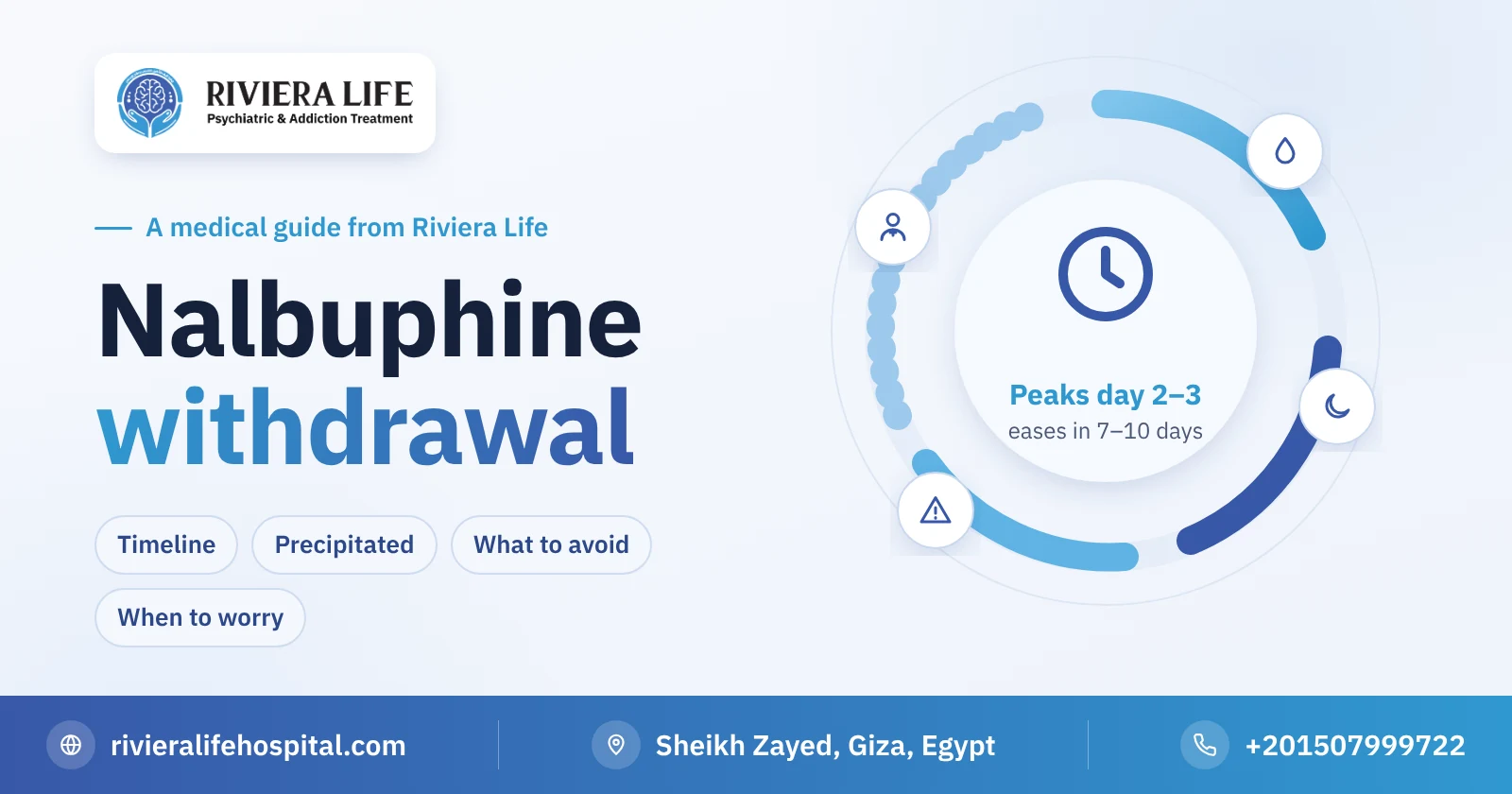
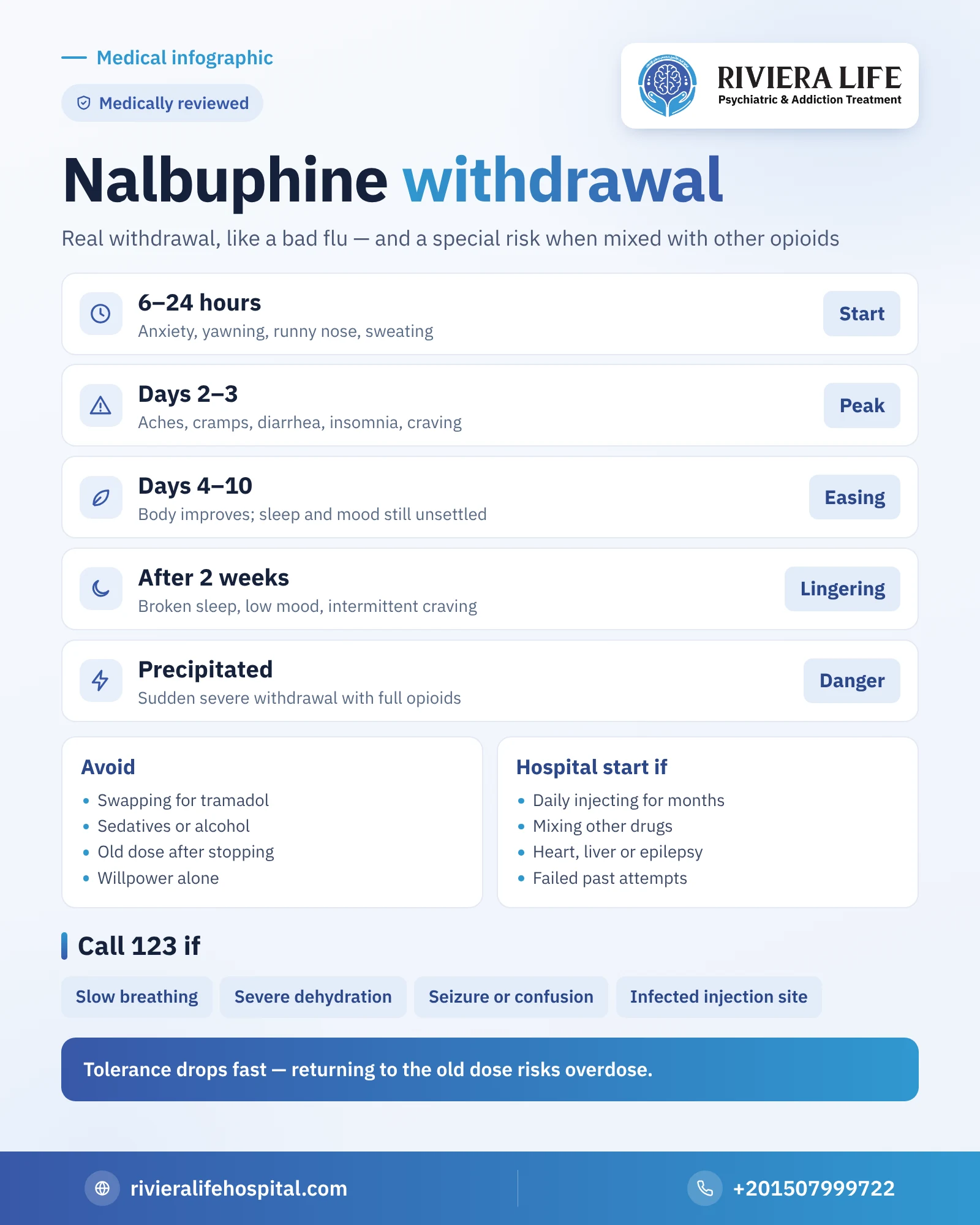
Nalbuphine withdrawal symptoms are real, even if you have heard that “nalbuphine doesn’t cause withdrawal”. They usually begin within hours to a day after the last injection in someone used to taking it daily, because its effect is short, and they resemble a severe cold: sweating, chills, body aches, anxiety, insomnia, cramps and diarrhea. They peak around day two or three, and ease within a week to ten days, with a psychological craving that lasts longer. This article explains an approximate timeline, what sets nalbuphine apart from other opioids in withdrawal, what should be avoided and when a doctor is needed.
Does the body really withdraw from nalbuphine?
Yes. Some users think nalbuphine is lighter than other opioids because it is sold in hospitals and described as a “non-narcotic” painkiller, and that it doesn’t cause dependence. The truth is that it is an opioid medicine that changes how the brain works like the others, and that daily use for weeks or months builds tolerance and physical dependence, which shows up as clear withdrawal when stopping. But it differs in its severity and features, and that is what we detail in this article. To learn about the medicine and its risks in general, you can start with the article on nalbuphine.
What sets nalbuphine apart?
Nalbuphine is a mixed-type opioid medicine: it activates a type of opioid receptor called kappa, which eases pain, and at the same time works as a partial blocker of the mu receptors that carry most of the effect of morphine and heroin. This make-up explains three points related to withdrawal:
- Withdrawal from it resembles other opioids, but it is often described as milder than heroin and morphine withdrawal; this varies with the amount and duration of use, and can’t be relied on to play it down.
- The kappa effect may add a feeling of distress and loss of enjoyment during the first days.
- If someone dependent on a full opioid such as heroin injects nalbuphine, it may bring on severe withdrawal suddenly, which is called precipitated withdrawal.
The nalbuphine withdrawal timeline
The periods differ with the number of daily injections and the length of use, and these figures are approximate:
From 6 to 24 hours
Nalbuphine’s effect is relatively short, so a feeling of emptiness, anxiety, yawning, a runny nose, tears and sweating begins after the last injection wears off. Some people get chills and abdominal tightness.
Days two and three
Usually the peak. Pain in the muscles, joints and back, cramps, diarrhea and vomiting, severe insomnia, nervousness and restless legs, an urgent craving, trembling, and alternating sweating and chills.
Days four to ten
The physical symptoms improve gradually, but sleep stays disturbed and mood unstable, and general fatigue and a loss of energy appear.
After two weeks
In someone who used the medicine for a long time, extended symptoms may remain: broken insomnia, low mood, anxiety and intermittent longing for the medicine. They improve over weeks, and if they last long or weigh heavily they should be shown to a psychiatrist.
Precipitated withdrawal: a risk specific to nalbuphine
This is a point many don’t know. Because of its partial-blocker property, nalbuphine may cause sudden, violent withdrawal in someone dependent on a full-acting opioid, who feels pain, nausea, sweating and agitation within minutes. That is why doctors check for any opioid dependence before giving it in hospitals. Someone who mixes nalbuphine with tramadol, heroin or others may expose themselves to this situation and to an overdose at the same time. There is no safe time to experiment, as any use of more than one opioid needs a doctor.
Psychological and behavioral symptoms
Withdrawal isn’t limited to the body. Some who stop are marked by quick irritability, crying and impatience, some feel deep sadness and emptiness, and many find it hard to concentrate. Repeated thoughts creep in about the injection, the place where it used to be taken and the people linked to it. This link with triggers is what makes returning easy days after stopping even if the physical symptoms have gone. If thoughts of self-harm or despair appear, contact the ambulance or the hotline immediately.
Call an ambulance on 123 immediately if you see
During withdrawal or after returning to injecting. You can also call the mental health hotline on 16328.
- Slow breathing or deep drowsiness the person can’t easily be woken from
- Persistent vomiting or diarrhea with severe dehydration or fainting
- A seizure, severe confusion or hallucinations
- Fever with redness, swelling and pain at the injection site
- Talk of death or self-harm
Risks unrelated to withdrawal itself
In Egypt nalbuphine is mostly used by injection, which gives someone who has stopped it a health file that needs follow-up, such as injection wounds, abscesses and skin infections, and viral hepatitis and HIV in those who shared equipment. The medical assessment after stopping should include the appropriate tests for this. The article on nalbuphine addiction treatment covers the details of the tests and the treatment steps.
How do doctors ease the symptoms?
Medical supervision doesn’t only mean monitoring symptoms. The doctor can prescribe supportive medicines that ease tension, sweating and palpitations, others for cramps, diarrhea, nausea and muscle aches, with temporary treatment for sleep under follow-up and without leaving the door open to a new dependence. They may decide to use medicines for treating opioid dependence such as buprenorphine in cases that suit them. The details of the withdrawal stages for other opioids are in the article on opioid withdrawal symptoms.
What should be avoided during withdrawal?
- Replacing nalbuphine with tramadol, or tramadol with other pills, to ease symptoms, as this moves the dependence and doesn’t end it.
- Taking sedatives, sleeping pills or alcohol to cut through insomnia, as combining them with opioids is dangerous to breathing.
- Stopping suddenly after years of daily injecting without a medical assessment.
- Returning to the usual amount days after stopping, because tolerance drops quickly.
- Relying on willpower alone without a plan, support or follow-up.
How long does nalbuphine show in tests after stopping?
Many ask about this while stopping. The detailed answer is in the article on how long nalbuphine stays in the body, and in short, how long it stays is linked to the type of test and the number of times it was used, and waiting is no substitute for treating the cause.
How can Riviera Life help you?
Stopping nalbuphine is easier and safer when it starts with an assessment that examines the body and sets a plan. At Riviera Life, licensed by the Ministry of Health, consultants in psychiatry and addiction treatment follow every patient around the clock and in complete confidentiality, and set the detox plan, then psychological rehabilitation and follow-up after discharge. The first consultation is free, and you can get in touch on +201507999722.
When is stopping at home enough, and when is a hospital needed?
Some who used nalbuphine for a short time and in small amounts may get through withdrawal with a doctor’s follow-up and a supportive family. But someone who has injected daily for months or years, mixes nalbuphine with tramadol, sedatives or alcohol, has heart disease, liver disease, epilepsy or severe depression, or whose attempts have failed before, is better off starting to stop in a monitored place where intervention is possible at any deterioration. The doctor makes the decision after an assessment that usually takes no more than one session.
How does the family support someone who is stopping?
The first three days are the ones that need presence, not advice. Sit with the person, offer fluids and light food, bear their nervousness without arguing, and tell them that what they feel is temporary and medically known. Avoid accusations and blame and reminding them of the past, as guilt raises craving. Don’t leave them alone with injections or money, and don’t be afraid to call the ambulance if any sign from the red box above appears. Psychological therapy after withdrawal is what prevents relapse, so make sure to book an appointment before the pain ends, not after.
More from the opioids guide
Questions many people ask
Yes. Daily use for weeks or months builds physical dependence, so stopping brings anxiety, sweating, body aches, cramps and insomnia, though severity differs from person to person.
Physical symptoms peak around day two or three and ease within a week to ten days. Psychological symptoms and insomnia may remain for weeks in long-term users.
A sudden, severe withdrawal that may happen when nalbuphine is injected by someone dependent on a full-acting opioid, because nalbuphine partly blocks mu receptors. That is why mixing opioids needs a doctor.
No. That moves dependence from one substance to another and adds the risk of seizures and overdose. Symptoms are eased with a medical plan.
Yes, if it was injected: checks of the skin and abscesses, viral hepatitis and HIV are advised, because injection complications may remain after withdrawal passes.