Opium addiction treatment is possible even after twenty or thirty years of use, but it needs a plan different from that of a young man using heroin or tramadol. The opium patient is usually a man past middle age, who has been used to eating or smoking opium for many years, has blood pressure, diabetes or chronic back pain, and sees what he does as “a habit”, not addiction. That is why treatment rests on a careful physical assessment, calm gradual tapering under medical supervision, medicine the doctor chooses according to the state of the heart and kidneys and other medicines, then rehabilitation that addresses old beliefs and involves the family. This is what the article explains step by step.
Why does an opium addict need a special treatment plan?
All opioids work on the same receptors, but whoever comes to treatment because of raw opium carries features that recur often:
- Age: most are in their fifties and beyond, and the body at this age is less able to bear violent withdrawal and strong medicines.
- Duration of use: long years at a relatively fixed daily amount, with which opium has become part of the rhythm of the day.
- Accompanying illnesses: blood pressure, diabetes and heart disease, chronic bronchitis in those who smoke, and prostate problems and chronic constipation.
- Other medicines: blood pressure and diabetes medicines, painkillers and sleeping pills, some of which interact with treatment medicines.
- An environment supporting use: evenings and gatherings where opium was customary, and lifelong friends who use it.
The general lines of treatment for the whole opioid family you will find in the article on opioid addiction treatment, and here we focus on what changes when the substance is opium and the patient has these features.
“It’s a pleasure, not addiction”: how does the family start the conversation?
The first obstacle is often not medical. The man who has used opium since his youth, and perhaps saw his father or uncle do the same thing, doesn’t see an illness in the matter, and considers his children’s talk about it an overstepping of his position. That is why the approach of sharp confrontation or threats usually fails, and the following succeeds more:
- Starting from health, not from opium: constipation that doesn’t improve, tiredness, shortness of breath, and uncontrolled sugar tests are entry points the father accepts more.
- Choosing who speaks: the elder brother or the doctor he trusts may be more influential than the wife or children.
- Respecting dignity: talking in a calm private session, not in front of the grandchildren or in the middle of a dispute.
- Offering a consultation, not residence: a first visit to a doctor to assess general health is easier to accept than the word “clinic”.
Stages of opium addiction treatment
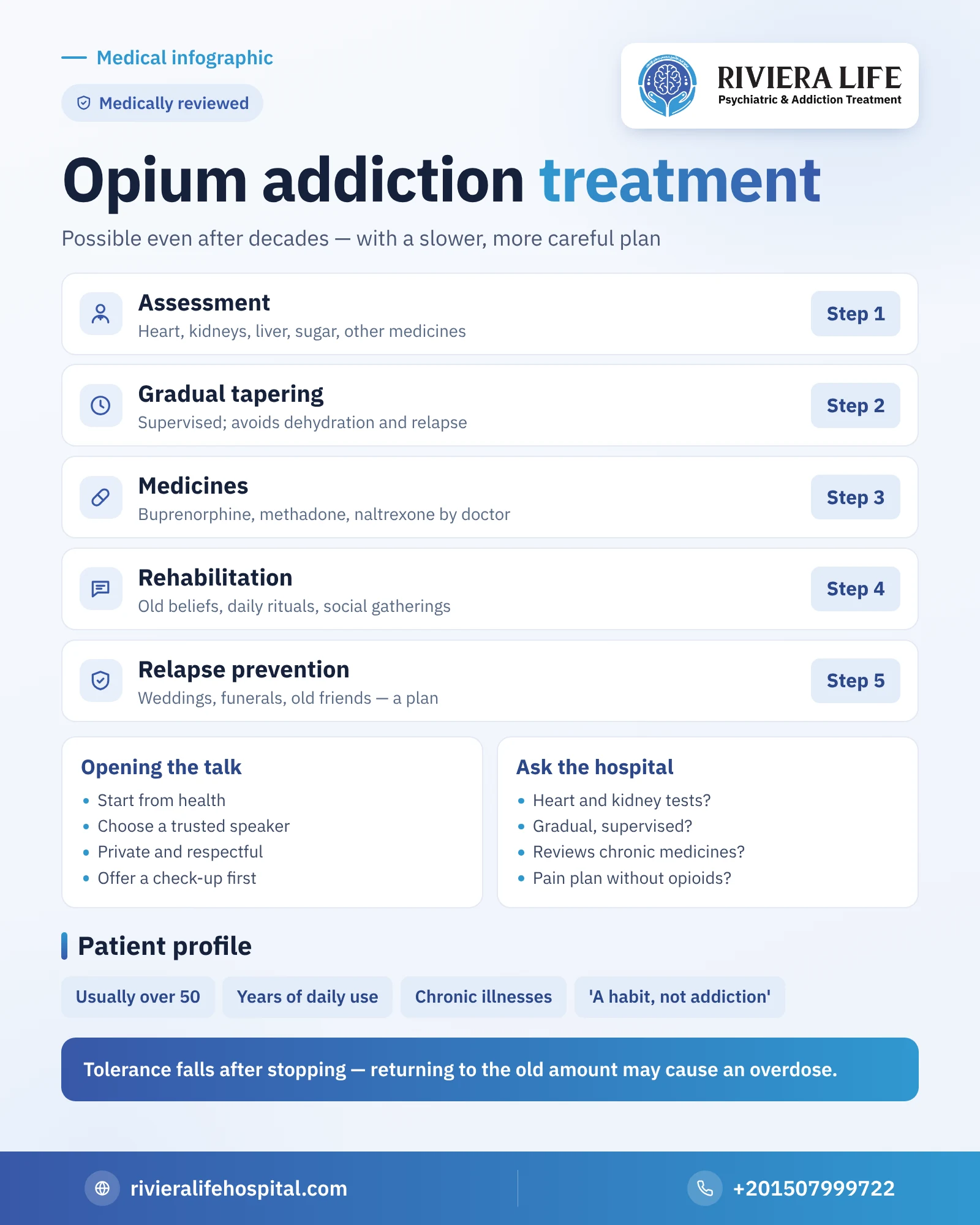
Treatment usually goes through five stages, their speed adjusted according to the patient’s age and condition:
- A comprehensive medical and psychological assessment.
- Gradual tapering of opium under medical supervision.
- Helping medication treatment the doctor chooses for the case.
- Psychological rehabilitation that addresses beliefs and habits linked to opium.
- Long follow-up and a relapse prevention plan with the family’s participation.
Assessment: what does the doctor examine in an opium patient?
The assessment here is wider than the question “how much do you take and since when”. The doctor needs a complete picture including an ECG, kidney and liver function, sugar and salts, a chest examination in those who smoke, and a direct question about urination problems and constipation. They review all the medicines the patient takes, because some blood pressure medicines, sleeping pills and painkillers may interact with what will be prescribed during tapering. They also ask about other substances, as it isn’t rare for an opium patient to combine it with tramadol or sleeping pills.
On the psychological side the doctor assesses mood, sleep and memory, as silent depression in the elderly may hide behind opium for years, and appear clearly after stopping. And if there is suspicion of adulterated opium, the doctor may request additional tests according to the symptoms.
Gradual tapering: why isn’t opium stopped suddenly?
Sudden stopping after years of daily use means an exhausting withdrawal: bone and muscle pains, diarrhea and dehydration, insomnia and irritability, and a rise in blood pressure and pulse. These symptoms usually aren’t dangerous for a healthy young man, but in a man of sixty with heart disease or diabetes they may cause dehydration or blood pressure disturbance, besides being the best-known reason for returning on the third or fourth day.
That is why gradual tapering under supervision is preferred, with monitoring of vital signs, fluids and sleep, and treating each symptom with what suits it. The details of the symptoms and their sequence are in the article on opioid withdrawal symptoms.
The medicines the doctor may use
There isn’t a single “opium medicine”, but options the doctor decides between according to the case, and none of them may be started or adjusted without their supervision:
- Buprenorphine: may be used to ease withdrawal and craving, and suits many elderly people because its effect on breathing has a limited ceiling. Its details are in the article on buprenorphine.
- Methadone: an option in cases of long, severe use, but it needs special caution with heart disease and careful follow-up. See the article on methadone.
- Naltrexone: isn’t started until the body is free of opium, and helps someone who wants extra protection from returning. It is explained in the article on naltrexone.
- Medicines for symptoms: for diarrhea, cramps, insomnia and anxiety, chosen to suit the patient’s other illnesses.
Chronic pain and the “energy” myth
Many opium patients started because of pain in the back or knees, or because of their belief that it gives them energy to work. Treatment that ignores these two matters leaves the patient facing a question without an answer: how will I work and move without it? That is why a good plan includes an assessment of the source of pain, non-opioid alternatives the doctor determines, and physiotherapy and exercises suited to age.
As for “energy”, the patient needs to understand that the exhaustion he feels in the first weeks is part of the body’s recovery, and that his real activity returns gradually with regular sleep, food and movement. Explaining this idea early protects from returning on the pretext of “I can’t work”.
Psychotherapy and rehabilitation
Rehabilitation for the opium patient focuses on specific matters: reviewing old beliefs about its benefits, dealing with the times of day linked to it such as after lunch or the evening gathering, and finding social alternatives to the gatherings it was the center of. Cognitive behavioral therapy and motivational interviewing are used, with treatment of any depression, anxiety or sleep disorder that appears after stopping. Individual sessions are usually more suitable at first for someone embarrassed to talk in front of a group younger than him.
The family’s role in opium addiction treatment
The wife and children are essential partners, especially as many of them have lived with opium for years and adapted to it without knowing. They need to understand that the irritability and insomnia they see after stopping are temporary, to arrange the house so that no “reserve” opium remains in it, and to reorganize visits and evenings in the first months. Family sessions help agree on one approach instead of one defending the patient while another holds him to account.
Preventing relapse after stopping
The most dangerous moments of relapse for an opium patient are social: a wedding, a funeral or a gathering with old friends where opium is offered as a greeting. That is why the patient needs a ready reply to say, a plan to leave the place early, and a person to call when craving comes. He and his family must know that his tolerance has dropped after stopping, so returning to the same old amount may cause an overdose, a danger that increases with age. Continuing the prescribed medicine and follow-up sessions for several months is the best prevention. To learn about the substance itself and its risks, see the article on opium.
The right hospital for opium addiction treatment: how to choose
The right hospital for opium addiction treatment is one that offers what an opium patient specifically needs: a physical assessment mindful of age and chronic illnesses, calm gradual tapering, and respectful treatment of a man who has been used to opium for decades. Ask before you decide:
- Does the hospital carry out heart, kidney and sugar tests before starting tapering?
- Does it rely on gradual tapering under round-the-clock medical supervision instead of sudden stopping?
- Does it review the patient’s chronic medicines and choose treatment medicines compatible with them?
- Does it offer a plan for treating chronic pain without returning to opioids?
- Does it provide individual sessions that respect the patient’s age and privacy, and a program for the family?
- Is it licensed, and does it offer clear follow-up after discharge?
And don’t trust any place that promises you a guaranteed recovery rate or that treatment will end in a few days.
How Riviera Life meets these standards in opium addiction treatment
Riviera Life applies these criteria as follows:
- Official license: a hospital licensed by the Ministry of Health.
- Long experience: fourteen years in addiction treatment and thousands of cases recovered from addiction.
- A specialized team: consultants in psychiatry and addiction treatment who set a tapering plan mindful of age and chronic illnesses.
- Continuous supervision: round-the-clock medical follow-up throughout the gradual tapering stage.
- Complete confidentiality: the patient’s privacy, standing and family data are protected.
- A family program: sessions that help the wife and children support and arrange the home after stopping.
- Aftercare: extended follow-up that protects from relapse at occasions and gatherings.
The first consultation is free, and you can get in touch around the clock on +201507999722; the hospital is based in Sheikh Zayed, Giza.
More from the opioids guide
- Opioids: the complete guide
- Opium: what it is and its risks
- Opioid addiction treatment
- Opioid withdrawal symptoms
- The difference between opium and hash: the chronic user, the body, withdrawal and treatment
- The difference between heroin and opium: from the poppy to the powder and the ladder of strength
Questions many people ask
Yes. The long duration makes the plan slower and more cautious, but doesn't prevent recovery. Many elderly people stop successfully with gradual tapering, treatment of accompanying illnesses and regular follow-up.
Acute withdrawal symptoms usually last from several days to about two weeks, and may be longer with gradual tapering for someone who used it for years. After that milder symptoms such as insomnia and tiredness remain for weeks and improve gradually.
Not always, but residence is preferred for the elderly with heart, diabetes or chest diseases, those who mix opium with other substances, or those with whom previous attempts failed. The medical assessment determines that.
Start from his health, not from opium, choose someone he trusts to talk with him in a calm private session, and offer him a doctor's visit to assess his general health. The family can also book a consultation for itself first to learn how to talk with him.
Choose a licensed hospital that offers gradual tapering under round-the-clock supervision mindful of age and chronic illness, with a family program and follow-up after discharge. Riviera Life in Sheikh Zayed, Giza, meets these criteria with fourteen years of experience.