Buprenorphine is a partial-effect opioid medicine used to treat dependence on heroin, morphine, tramadol and other opioids, and some of its forms are used for pain relief. Its main advantage is that it eases withdrawal and craving without giving the strong high that heroin gives, and that its effect on breathing has an upper limit it hardly exceeds. Even so, it is a controlled medicine, and starting it at the wrong time may cause acute withdrawal, so it is used only under the supervision of a specialist doctor, within a program that includes psychotherapy and follow-up. In this guide: how it works, its forms, the difference between Suboxone and Subutex, its side effects and its cautions.
What is buprenorphine?
Buprenorphine is a semi-synthetic substance derived from one of the compounds of the poppy plant, and belongs to the opioid family. But it differs from most members of this family in the way it binds to receptors, and this difference is what made it one of the most important medicines for treating opioid addiction in the world.
The doctor treats it as a therapeutic tool with conditions: assessment before starting, the right timing for the first dose, regular follow-up and accompanying psychotherapy. Without these conditions it may turn into a substance that is misused or mixed with others.
How does buprenorphine work? And what does the ceiling effect mean?
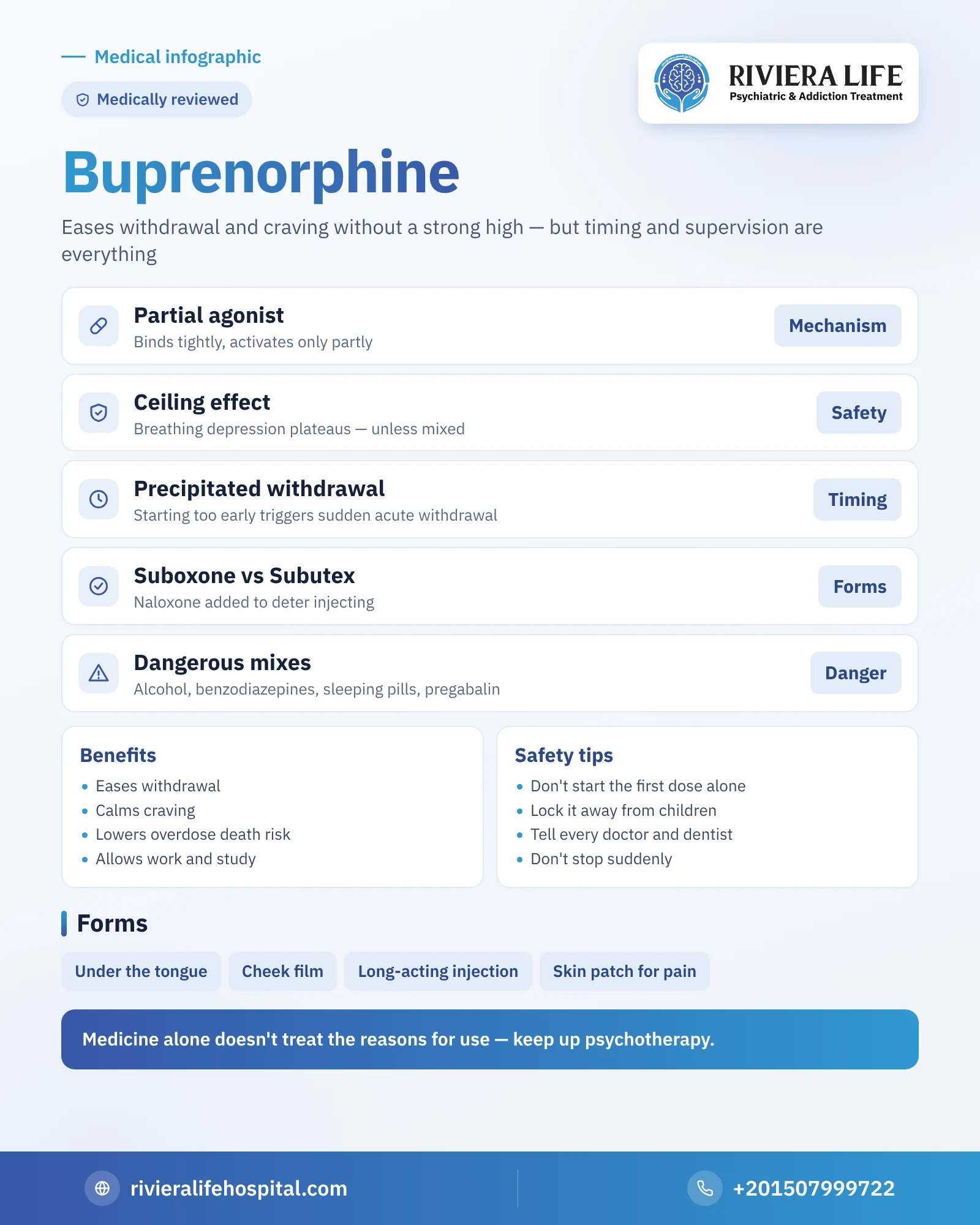
Buprenorphine binds to opioid receptors very strongly, more strongly than heroin and morphine, but only partially activates them. The result is that the patient feels enough to stop withdrawal and calm craving, without a sharp rise in effect.
The ceiling effect means that raising the amount beyond a certain limit doesn’t increase breathing depression to the same degree, which makes it safer than methadone and heroin in this respect. But this safety is relative: if it is mixed with alcohol or sedatives this barrier almost disappears and the risk of breathing stopping becomes real.
Because it binds so strongly to receptors, it reduces the effect of any other opioid the patient uses on top of it, which partially protects against relapse.
What are the uses of buprenorphine?
- Treating opioid use disorder: to ease withdrawal during the detox stage, or for long-term maintenance that prevents relapse.
- Pain relief: in forms and strengths different from those used in addiction treatment, such as some patches and injections.
- Inside hospitals: to start treatment for opioid patients who come to the emergency department or other departments for various reasons.
What forms of buprenorphine are available worldwide?
| Form | How it is used | What distinguishes it |
|---|---|---|
| Tablets or films under the tongue | Left to dissolve and not swallowed | The most used in addiction treatment |
| Films on the inside of the cheek | Stick inside the mouth | An alternative for those who don’t suit the under-the-tongue form |
| Long-acting injections | Given by a healthcare provider at intervals | Reduce missed doses and misuse |
| Skin patches | Stuck on the skin | Usually for pain relief, not addiction treatment |
The available forms and their brand names differ from country to country, and one form shouldn’t be swapped for another without the doctor.
Suboxone and Subutex: what is the difference?
Subutex is a brand name associated with buprenorphine alone, while Suboxone combines buprenorphine with naloxone. The naloxone here hardly works if the tablet is placed under the tongue as it should be, but it causes sudden withdrawal if someone tries to dissolve the tablet and inject it, so it is there to deter injection, not for treatment. The doctor chooses between them according to the case; the single-ingredient formulation may be preferred in certain circumstances, such as some pregnancies.
When does treatment start? And why is precipitated withdrawal feared?
This is the most important point for the patient and their family to understand. If buprenorphine is given while the patient’s body is still full of heroin or methadone, it pushes these substances off the receptors and takes their place with a weaker effect, so the patient suddenly falls into acute withdrawal within a short time: sweating, vomiting, diarrhea, pain and severe tension. This is called precipitated withdrawal.
That is why the doctor usually waits until the patient shows clear withdrawal symptoms before the first dose, measures them with clinical scales, and is more cautious with someone who was taking methadone or fentanyl. This is exactly what makes starting at home without supervision a painful experience that may push the patient back to using.
The benefits of buprenorphine in treating opioid addiction
- It eases withdrawal symptoms, making the detox stage more bearable.
- It calms the intense craving that leads to relapse.
- It reduces the risk of death from overdose compared with continuing to use.
- It allows the patient to work and study without the daily swing between high and withdrawal.
- It gives psychotherapy a real chance, because a stable patient is better able to concentrate in sessions.
What are the common side effects of buprenorphine?
The most common are headache, nausea, constipation, sweating, insomnia and dizziness. In the first days, symptoms resembling mild withdrawal may appear until the dose stabilizes. Dental problems such as decay and abscess have also been noted with the forms that dissolve in the mouth, so the patient is advised to drink water after the tablet has completely dissolved and to take care to visit the dentist. Any yellowing of the eyes, dark urine or abdominal pain calls for seeing the doctor, because the liver needs follow-up in some patients.
When does buprenorphine become dangerous?
The biggest danger is mixing. Alcohol, benzodiazepines, sleeping medicines and pregabalin all break the ceiling effect and multiply breathing depression. Patients with chronic lung disease or advanced liver problems, and older people, also need special caution. Our article on naloxone explains the signs of an overdose and what to do until the ambulance arrives on 123.
Does buprenorphine cause addiction?
A patient who takes it regularly develops expected physical dependence, and stopping it suddenly causes withdrawal that usually starts later and is milder than heroin withdrawal. Addiction appears in the form of misuse: buying it on the street, injecting it, storing and selling it, or mixing it with other substances seeking an effect. Signs that call for attention include asking for the dose before it is due, claiming to have lost the medicine more than once, or unusual drowsiness suggesting it is being mixed with another substance. When this happens it doesn’t mean treatment has failed, but the doctor needs to adjust the formulation, the level of supervision, or move to an alternative.
Buprenorphine during pregnancy and breastfeeding
Buprenorphine, alongside methadone, is one of the options many guidelines recommend for a pregnant woman dependent on opioids, because sudden withdrawal is more dangerous for the fetus than stable treatment. The newborn may need monitoring for withdrawal symptoms after birth. The decision at this stage is shared between the obstetrician and the addiction doctor.
How does it differ from methadone and naltrexone?
Buprenorphine sits in the middle: methadone fully activates the receptors and needs close monitoring of the heart and breathing, and naltrexone blocks them completely with no opioid effect at all. Choosing between them depends on the severity of dependence, the medical history and the patient’s preference.
Safety tips during treatment
- Don’t start the first dose yourself; its timing is the difference between a comfortable start and acute withdrawal.
- Keep the medicine in a locked place, as it is very dangerous for children.
- Tell any doctor, dentist or surgeon that you take buprenorphine, because it affects the choice of painkillers.
- Don’t stop the medicine suddenly, and agree with your doctor on a gradual reduction plan if you both decide to.
- Continue psychotherapy sessions, as the medicine alone doesn’t treat the reasons for using.
Treating buprenorphine addiction: when is it a problem and how is it managed?
Buprenorphine is a therapeutic medicine, and not everyone who takes it regularly is considered addicted to it. The problem begins when use departs from the medical plan: buying it from a non-pharmacy source, crushing and injecting it, taking more than agreed, or combining it with alcohol and sedatives.
Treatment starts with the doctor asking about the reason for the deviation: untreated pain? Uncontrolled craving? A plan that doesn’t suit the patient? Then he chooses one of these paths:
- Tightening supervision, organizing how the medicine is dispensed and reducing the amount of medicine in the patient’s hands.
- Moving to a form that is hard to misuse, depending on availability.
- A slow gradual reduction by agreement after the condition stabilizes.
- A hospital stay when it is combined with sedatives or alcohol.
Recovery here doesn’t necessarily mean stopping the medicine, as many patients benefit from staying on it for a long time. Stopping is a decision taken with the doctor at a suitable time. In all these paths the patient needs psychotherapy and family support that address the reason for using itself. For the general picture of treating opioid dependence see opioid addiction treatment.
Buprenorphine withdrawal and how long it stays in the body
Buprenorphine’s effect declines slowly, so it stays in the body longer than many opioids. That is why its withdrawal starts later, usually days after the last dose rather than hours as with heroin, and it may extend for weeks in some cases.
The symptoms resemble what anyone who has been through opioid withdrawal knows, but they are usually milder and longer: muscle aches, insomnia, yawning and a runny nose, nausea, anxiety and low mood. The most persistent are insomnia, mood swings and intense craving. A gradual reduction agreed with the doctor eases them. Details of the stages are in opioid withdrawal symptoms.
As for its appearance in tests, it depends on the type of test and the duration of use, and is usually estimated in days, and may be longer with long daily use. So always tell the doctor you take it before any test or operation. For a comparison between opioids see how long opioids stay in the body.
How can Riviera Life help you?
At Riviera Life treatment starts with a confidential assessment that determines whether buprenorphine suits the case at all, then it is started at the right time under round-the-clock medical supervision, within a plan that includes psychotherapy, the family and follow-up after discharge. If the patient uses heroin specifically, our article on heroin addiction treatment explains the full path. The first consultation is free.
Read also
- Methadone: uses and risks
- Naltrexone: the complete medicine guide
- Opioid addiction treatment
- Opioid withdrawal symptoms
Questions many people ask
Suboxone is a brand name for a combination of buprenorphine with naloxone, the naloxone being there to deter injecting the medicine. Buprenorphine alone is known by other brand names including Subutex.
The doctor sets the timing according to the appearance of clear withdrawal symptoms and the type of substance used, because starting early causes sudden acute withdrawal. That is why starting without supervision isn't advised.
Combining them without a doctor isn't advised; buprenorphine may weaken tramadol's effect or cause withdrawal, and combining opioids increases the risks, especially with sedatives.
Dental problems have been noted with the forms that dissolve in the mouth. The risk is reduced by drinking water after complete dissolving, daily mouth care and regular dental visits.
Yes, with a gradual reduction plan agreed between the patient and doctor after a period of stability, with increased psychological support because the risk of relapse rises at this stage.