The short answer
The OCD test at Riviera Life is ten questions about the past month, covering intrusive thoughts, repeated checking, washing, ordering and counting, then the time lost to them and their effect on your day. Each answer scores from 0 (never) to 4 (always), so the score is from 0 to 40: below 10 no clear signs, 10 to 19 mild symptoms, 20 to 29 moderate, and 30 or more severe. The test is for awareness and doesn’t diagnose, but a score of 20 or more deserves a visit to a psychiatrist.
- DurationAbout two minutes
- ScoreFrom 0 to 40
- 20 or moreAssessment by a psychiatrist
Most people have a strange or disturbing thought that then passes. In OCD the thought doesn’t pass; it sticks and brings with it an anxiety that only calms through an action that is repeated: washing, checking, counting or a particular prayer. And each time the action calms the anxiety, the thought returns stronger. We designed these questions to help you see this cycle clearly and measure its size in your life.
Start the OCD test
Obsessive-compulsive disorder test
Over the past month, how often has the following happened to you?
To discuss your result with a psychiatrist in confidence, the first consultation is free on +201507999722.
This is an awareness test prepared by the medical team at Riviera Life; it is not a research-standardized scale or a diagnosis. Your answers are not saved or sent to anyone; the calculation happens on your device only.
How do you read the OCD test result?
| Score | Meaning | Suitable step |
|---|---|---|
| 0 to 9 | No clear signs | Usually no action |
| 10 to 19 | Mild symptoms | Watch the symptoms and avoid giving in to rituals |
| 20 to 29 | Moderate symptoms | Assessment by a doctor or psychotherapist |
| 30 to 40 | Severe symptoms | See a psychiatrist soon |
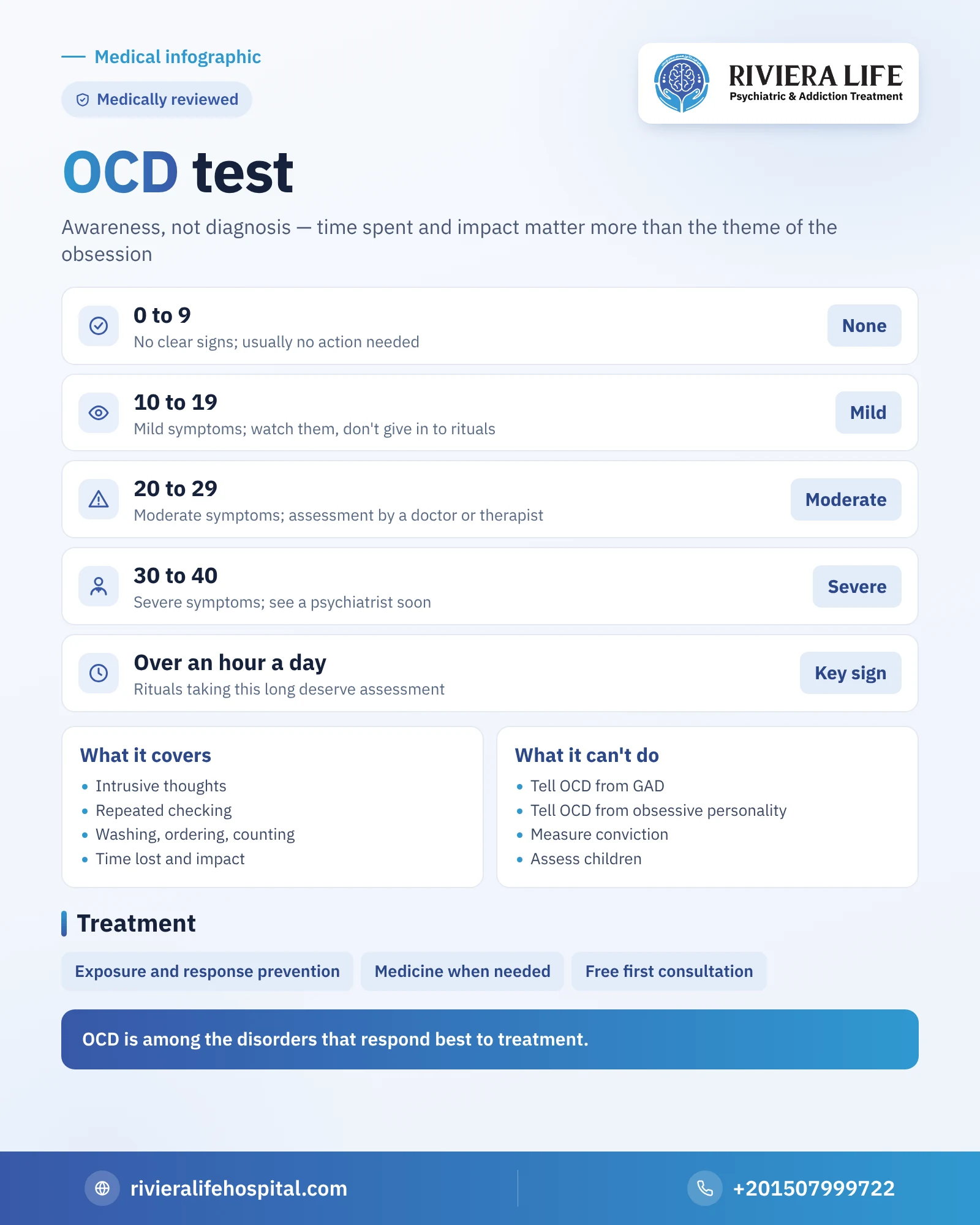
The time and impact questions matter more than the type of obsession
It doesn’t matter much whether your obsession is about cleanliness, doors, religion or intrusive sexual thoughts; the themes change, and the illness is the same. What determines severity are the last questions: do rituals take more than an hour a day? Do you avoid places and situations? Have your studies or work been disrupted? That is why someone with a single obsessional theme may get a higher score than someone with many mild types. You will find the common themes in types of OCD.
What doesn’t the test measure?
- It doesn’t distinguish between OCD and generalized anxiety or obsessive personality, conditions that look alike on the surface; the difference is explained in the difference between anxiety and OCD.
- It doesn’t measure how convinced you are by the thought, something the doctor cares about because it affects the treatment plan.
- It isn’t suitable for children, who have different signs and a different method of assessment.
About this test
The medical team at Riviera Life prepared these questions in simple language based on the description of OCD symptoms in the approved diagnostic manuals, as a first step for awareness. It isn’t a standardized research scale, and its score cut-offs are a guide. In the clinic, the doctor uses validated scales to measure severity and follow improvement after treatment.
How can Riviera Life help you?
OCD is among the disorders that respond best to treatment, especially exposure and response prevention therapy, with medicine when needed. Our team can assess your condition and set a plan suited to its severity; the details of the options are in OCD treatment. The first consultation is free and confidential on +201507999722.
Read also
Questions many people ask
No, it is an awareness test that helps you estimate the severity of symptoms; diagnosis comes from an interview with a psychiatrist who distinguishes OCD from anxiety and obsessive personality.
A score of 20 or more out of 40 points to moderate or severe symptoms that deserve assessment, especially if rituals take more than an hour a day.