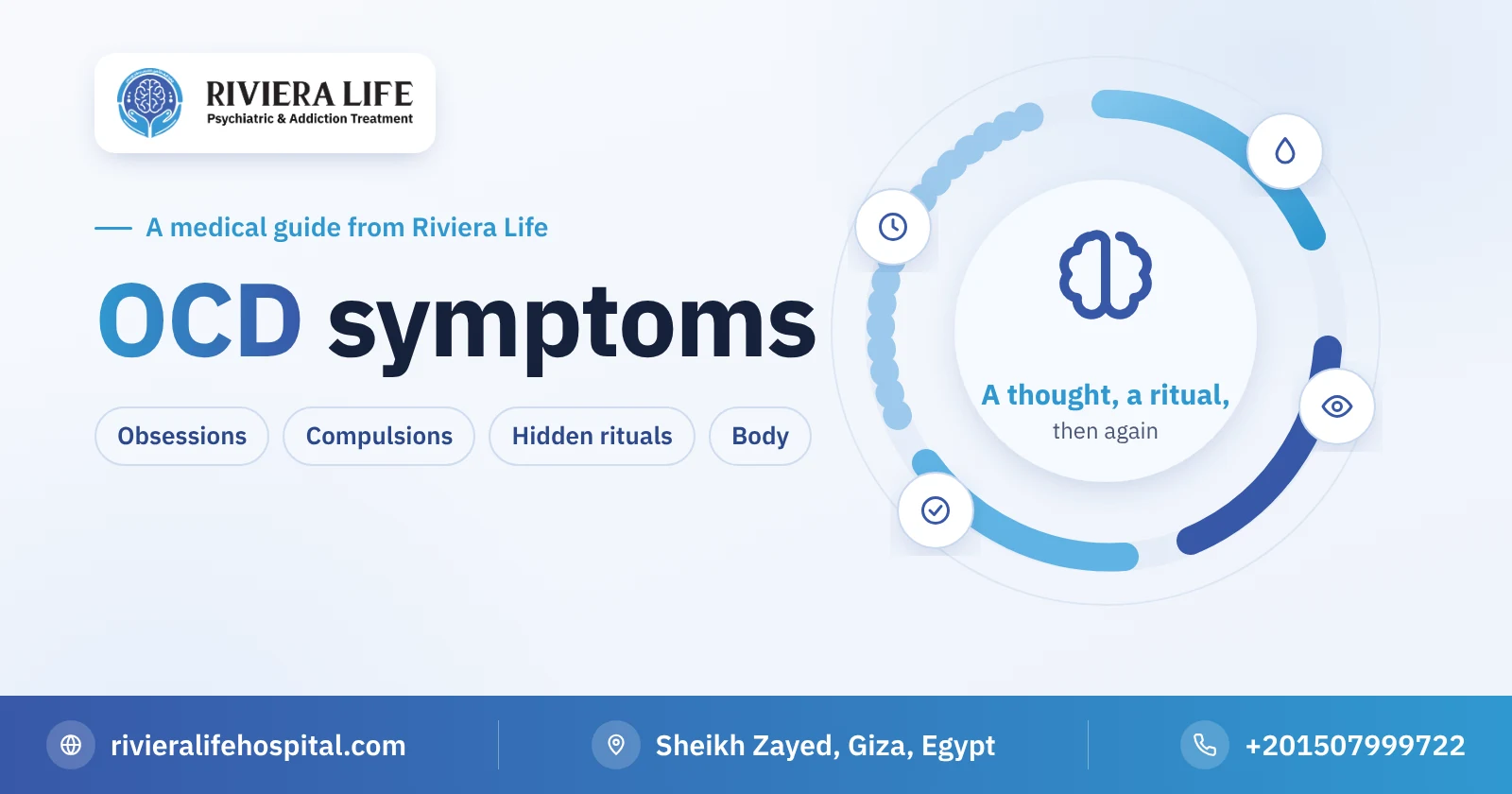
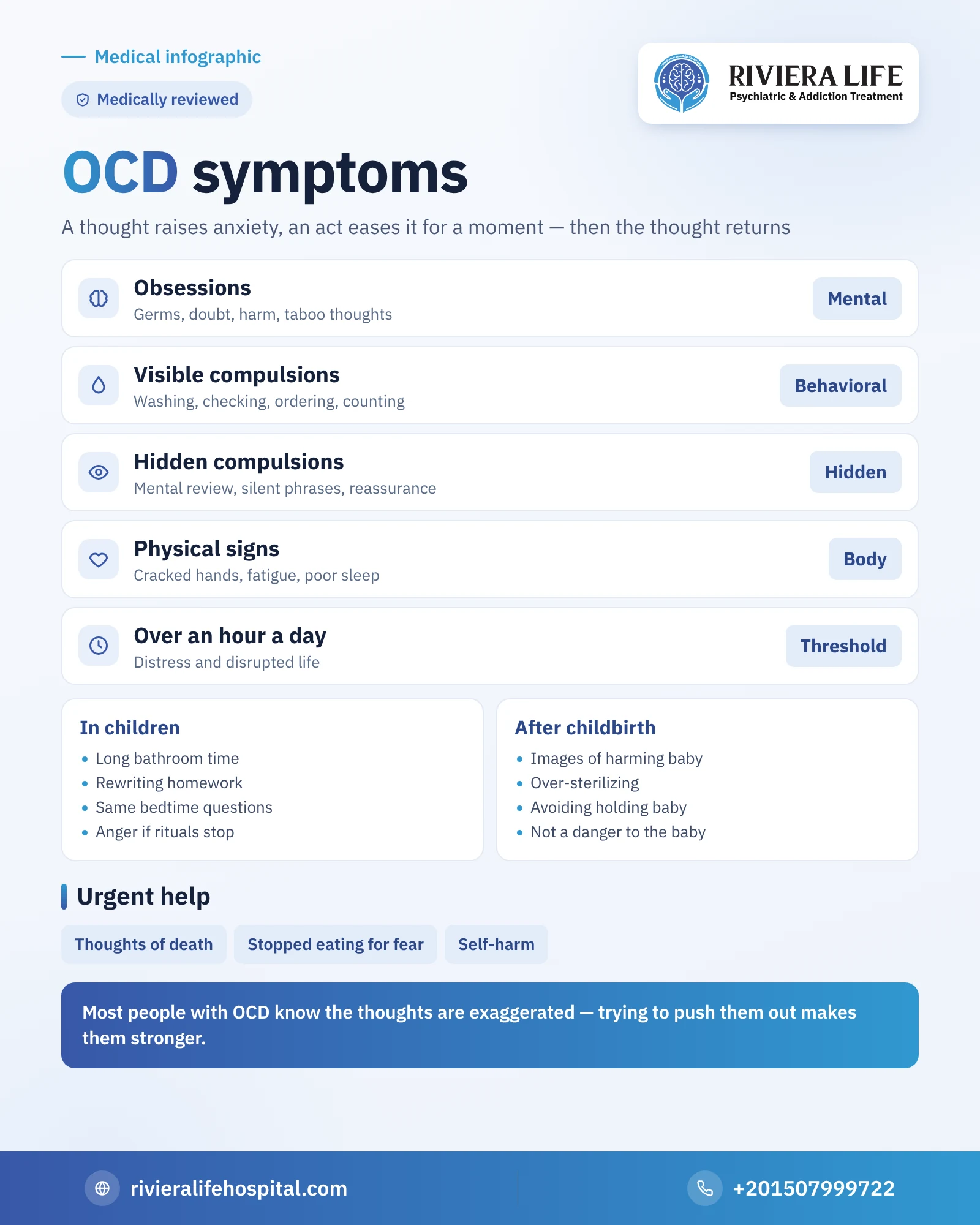
The symptoms of obsessive-compulsive disorder are two kinds that move together: disturbing intrusive thoughts their owner can’t stop, and actions they repeat to calm the anxiety those thoughts stir. Physical signs may appear with them, such as cracked hands from frequent washing or exhaustion from lack of sleep. What makes them symptoms rather than mere habits is that they consume a lot of time, cause distress and disrupt life. In this article you will learn each sign with examples from daily life, and questions that help you review what you are going through, with the reminder that diagnosis is only made by a psychiatrist or a specialist psychologist.
How do the symptoms of OCD work?
Imagine a young man who touched a door handle in a public place. A thought jumps into his mind: “maybe a dangerous infection has passed to me”. Anxiety rises quickly, so he goes to wash his hands. He calms a little, then the thought returns: “did I wash them well?”. So he washes them a second and a third time. This is the loop that repeats in all forms of OCD: a thought that raises anxiety, then an act that eases it temporarily, then the thought returning. And with each cycle the brain becomes more convinced that the act is necessary, so it takes longer and the situations that stir it widen.
Mental symptoms: obsessions
An obsession isn’t just worry about a real matter, but a thought, image or impulse that repeats against the person’s will and that they feel is foreign to them. Among its best-known forms:
- An exaggerated fear of germs, impurity, bodily fluids or chemicals.
- Constant doubt about having completed things: locking the door, turning off the stove, sending a message without a mistake.
- Sudden images of harming a loved one, or of jumping from a high place, with intense terror of them.
- Unwanted sexual or blasphemous thoughts that contradict the person’s values and religion.
- An urgent need for things to look symmetrical or completely “right”, and severe distress if they aren’t.
- Fear of losing something important or throwing it away by mistake.
Most of those affected realize that these thoughts are exaggerated, and try to push them out or ignore them, but the attempt to push them out itself often makes them more insistent.
Behavioral symptoms: visible compulsions
A compulsion is a behavior the person feels compelled to perform, usually according to strict rules, otherwise the anxiety will remain or something bad will happen. Among its examples:
- Washing hands or showering for long periods and in a specific order, or cleaning the house excessively.
- Repeatedly checking doors, windows, electrical appliances and gas valves.
- Arranging things and rearranging them until they are symmetrical.
- Counting while walking or repeating a certain movement a specific number of times.
- Repeating ablution, prayer or reading the same paragraph many times for fear of a mistake.
- Keeping worthless things for fear of needing them later.
Hidden compulsions that no one sees
Not all compulsions are visible. Some patients seem calm from the outside, while fighting a long battle in their heads:
- Repeated mental review of a past event to make sure they didn’t make a mistake.
- Repeating words, prayers or numbers silently to “cancel” a bad thought.
- Seeking reassurance from the family or searching constantly online for an answer that comforts them.
- Avoiding places, people or things that may stir the obsession, such as refusing to hold a knife or use a bathroom outside the home.
Seeking reassurance is among the most exhausting symptoms for the family, because the same question repeats dozens of times, and the answer only comforts for minutes. The article on OCD and doubt explains why answers don’t put out the fire of doubt but feed it.
Physical symptoms of OCD
OCD is a psychological disorder, but it leaves marks on the body that the doctor sometimes notices before the patient reveals their thoughts:
- Dryness, redness and cracking of the hands, and sometimes skin inflammation from frequent washing and disinfectants.
- General exhaustion and headache due to constant tension and the long time the rituals consume.
- Disturbed sleep, as some patients stay up checking or reviewing mentally.
- The usual signs of anxiety when the compulsion is prevented: palpitations, sweating and muscle tension.
- Weight change or avoidance of certain foods in those who fear contamination.
OCD symptoms in children and teenagers
A child may be unable to describe their thoughts, so the OCD appears in their behavior: they take a long time in the bathroom, rewrite their homework until they tear the paper, ask their parents the same questions before sleep every night, or get very angry if their things aren’t arranged in a certain way. They may anxiously ask whether one of their parents will die. Some parents confuse this with stubbornness or being spoiled, while the child needs a specialist assessment. And the sudden, severe appearance of symptoms after a throat infection calls for telling the doctor about it.
OCD in pregnancy and after childbirth
Many new mothers go through passing worrying thoughts, but some are haunted by repeated images of harming the baby unintentionally, or an intense fear of the baby being contaminated, so they over-sterilize everything, or avoid holding the baby or being alone with them. These thoughts terrify the mother because they are the complete opposite of what she wants, and they don’t mean she is a danger to her child. But they deserve talking to a doctor, because treatment is available and safe during this period if chosen carefully.
When is carefulness normal and when is it OCD?
We all check the door sometimes, and prefer our desks to be tidy. The difference isn’t in the type of behavior but in its size and effect:
| Comparison | Normal carefulness | Obsessive-compulsive disorder |
|---|---|---|
| Time | A few minutes | Usually more than an hour a day |
| Accompanying feeling | Satisfaction or relief | Anxiety, distress and a feeling of compulsion |
| Ability to stop | Easy if the situation requires | Very hard and causes severe tension |
| Effect on life | Doesn’t disrupt work or relationships | Delay, avoidance and problems with the family |
| The person’s view of what they do | Sees it as logical | Usually sees it as exaggerated but can’t stop it |
Questions that help you review what you are going through
These questions aren’t a diagnostic test, but a way to organize your observations before visiting the specialist:
- Do disturbing thoughts you don’t want repeat in your mind, and do you try to get rid of them in vain?
- Do you feel compelled to repeat an action until you “feel at ease”, even when you know it is excessive?
- How much of your daily time is lost in these thoughts and actions combined?
- Do you avoid places or activities you used to do because of these fears?
- Has someone in your family noticed this and expressed concern, or do you constantly ask them for reassurance?
If your answers are yes to a number of them, the next step is a specialist assessment that determines whether what you are going through is OCD or another condition resembling it, such as anxiety disorders.
When do you ask for help?
Ask for an assessment if the symptoms consume your time and pain you or affect your work, study and relationships, even if they aren’t yet “severe”, as early treatment is easier and faster acting. And don’t postpone if persistent sadness and loss of interest appear with them, as there may be accompanying depression as the article on OCD and depression explains. If thoughts of death or self-harm appear, or the person stops eating and drinking for fear of contamination, this is a condition needing urgent help at the nearest emergency department or by calling an ambulance on 123. You can learn what happens after diagnosis in the article on OCD treatment.
How does Riviera Life help you?
Many patients are ashamed to explain their thoughts, especially if they are aggressive, religious or sexual. At Riviera Life the consultant psychiatrists listen to these details without judgment, as for them they are familiar symptoms, not shameful secrets, and they all stay in complete confidentiality. The first consultation is free.
More from the OCD guide
- Obsessive-compulsive disorder: the complete guide
- The causes of OCD and risk factors
- OCD treatment and recovery steps
- The psychological, physical and social harms of OCD
- Sexual OCD: intrusive thoughts that don’t represent you and how they are treated
- Types of OCD: the most common themes and what each type looks like
- Contamination OCD: symptoms, skin damage and how the family can help without feeding it
- The difference between anxiety and OCD: a comparison table, examples and treatments
- OCD in children: signs by age and the family’s role
- OCD and marriage: when OCD enters the home and how treatment protects it
- Misophonia: when chewing and breathing sounds provoke you and how to deal with it
- Hoarding disorder: why someone can’t throw things away and how it is treated
- OCD test: instant result
Questions many people ask
Usually repeating a simple action more than necessary, such as washing or checking, with a feeling of anxiety if it isn't done. The person or their family notices that this repetition takes longer month after month.
The condition may seem so, but compulsions are usually hidden mental ones, such as reviewing in the head, repeating phrases silently or seeking reassurance. The specialist is the one who uncovers them during assessment.
In OCD these thoughts are rejected and frightening to their owner because they are the opposite of what they want, and don't indicate a desire to carry them out. Talking about them with a psychiatrist reassures you and starts their treatment.
No. Online tests may help you think about the symptoms, but diagnosis needs an interview with a psychiatrist who rules out similar conditions and measures severity.
The themes are similar, but a child may not realize they are exaggerated or be unable to describe them, so they appear as delays in the bathroom, redoing homework or anger outbursts when their rituals are interrupted.