The short answer
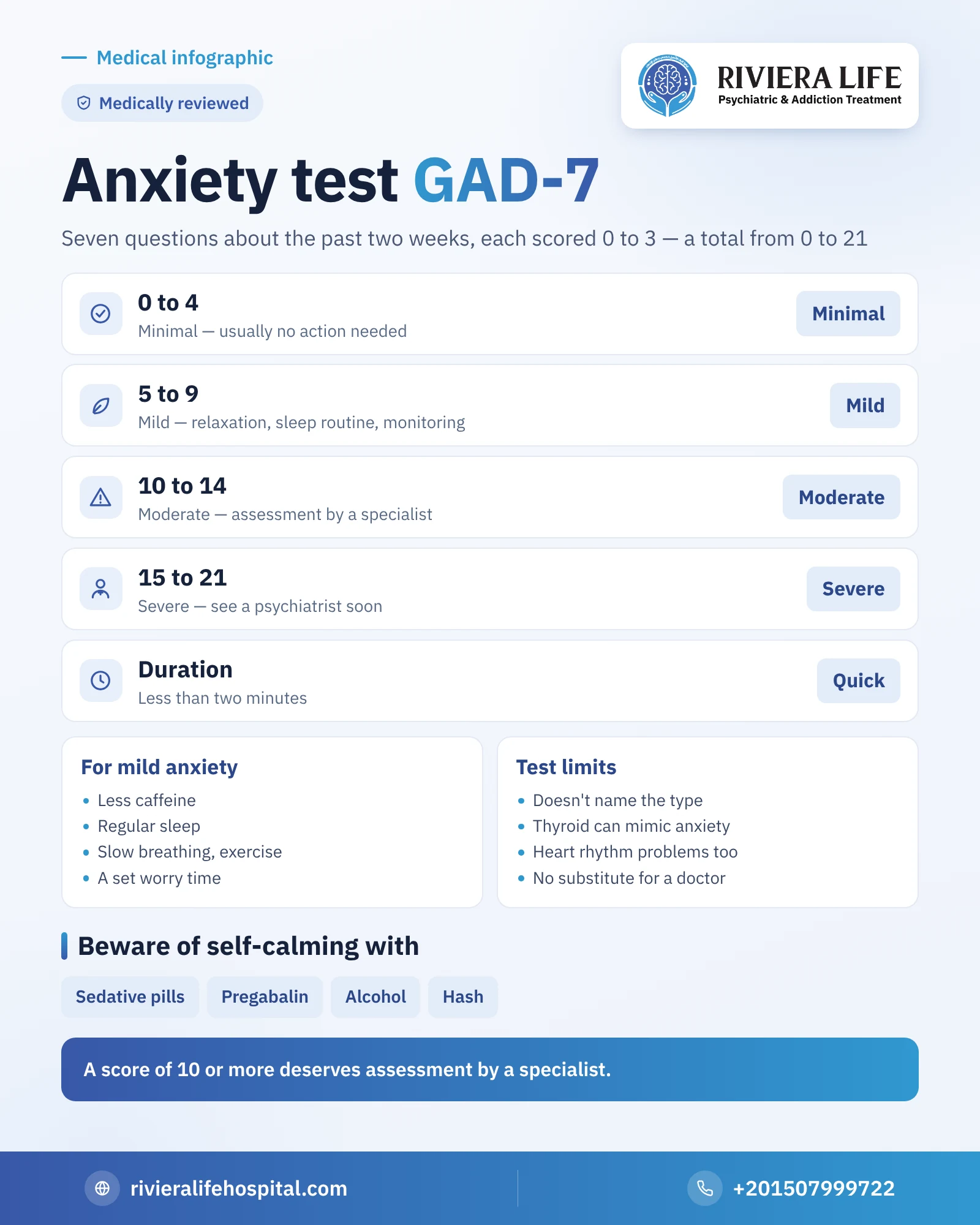
The GAD-7 anxiety test is seven questions about the past two weeks, measuring tension, difficulty stopping worry, restlessness, irritability and fear that something bad will happen. Each answer scores from 0 to 3, so the score runs from 0 to 21: 0 to 4 is minimal anxiety, 5 to 9 mild, 10 to 14 moderate, and 15 or more severe. A score of 10 or more deserves assessment by a specialist. The scale was originally designed for generalized anxiety disorder, but it also picks up symptoms common in panic attacks, social anxiety and post-traumatic stress disorder.
- TimeLess than two minutes
- ScoreFrom 0 to 21
- 10 or moreAssessment by a doctor or psychotherapist
Everyone worries, and worry before a job interview or an exam result is normal and sometimes even useful. The problem begins when anxiety becomes a permanent guest: a mind that won’t settle, broken sleep, tense muscles, and constantly expecting the worst for no clear reason. This short test helps you know where your anxiety falls on this spectrum.
Start the anxiety test
Anxiety test (GAD-7)
Over the last two weeks, how often have you been bothered by any of the following problems?
To discuss your result with a psychiatrist in confidence, the first consultation is free on +201507999722.
This is an initial screening test for awareness, not a diagnosis. Your answers are not saved or sent to anyone; the calculation happens on your device only.
How is the anxiety test result calculated?
| Score | Anxiety level | What suits you? |
|---|---|---|
| 0 to 4 | Minimal | Usually no action needed |
| 5 to 9 | Mild | Relaxation techniques, a regular sleep routine and monitoring |
| 10 to 14 | Moderate | Assessment by a specialist, and psychotherapy may help |
| 15 to 21 | Severe | See a psychiatrist soon |
What do you do after knowing your result?
In mild anxiety, it helps a lot to reduce caffeine and stimulants, keep regular sleep, practise slow breathing or regular physical activity, and set a specific time for thinking about your worries instead of letting them chase you all day. The article on overthinking explains practical techniques for this.
Moderate or severe anxiety, however, needs an assessment that determines its type, because the treatment of generalized anxiety disorder differs in its details from the treatment of panic or OCD. Cognitive behavioral therapy is among the most effective treatments, and the doctor may add a medicine when needed. The details are in anxiety treatment.
Anxiety and calming substances: an important warning
Many people try to silence anxiety themselves with sedative pills, pregabalin, alcohol or hash, so they feel relief temporarily, then the anxiety returns stronger and dependence on the substance begins. If you find yourself turning to any substance to calm down, read anxiety and addiction, and talk to a doctor before the cycle deepens.
The test’s limits
- It doesn’t determine the type of anxiety disorder; you will find the types and their differences in types of anxiety.
- Some physical causes resemble anxiety, such as an overactive thyroid, heart rhythm disturbances and too much caffeine.
- It doesn’t replace a medical interview if the symptoms are affecting your life.
About the GAD-7 scale
It was published by Robert Spitzer, Kurt Kroenke and colleagues in 2006, and their original study proved its ability to detect generalized anxiety disorder in clinics; it may be used and translated without permission or fee. The version here is a simplified translation for awareness.
How can Riviera Life help you?
The Riviera Life team can review your result with you within a full psychological assessment that determines the type of anxiety and its causes, and set a psychological and medication treatment plan when needed. The first consultation is free and confidential on +201507999722.
Read also
- Psychological and physical anxiety symptoms
- PHQ-9 depression test
- The difference between depression and anxiety
- Psychological tests: the complete guide
Questions many people ask
A score of 10 or more on the GAD-7 scale indicates moderate or severe anxiety that deserves assessment by a doctor or psychotherapist.
The scale was designed for generalized anxiety disorder, but it picks up symptoms common in panic and social anxiety, and doesn't determine the type of disorder on its own.