Opium is the dried sap of the poppy pod, and it is the origin from which morphine and codeine came, and later heroin. To some it seems an “old” or “traditional” substance lighter than modern drugs, but it contains the same morphine, causes tolerance, dependence and withdrawal, and may stop breathing if the amount increases or it is mixed with sedatives. This article explains what this substance specifically is, how it differs from the opioids derived from it, why it is still present in some rural areas, and what it does to the body in the near and long term.
What is opium?
Opium is a dark brown, sticky substance formed when the milky sap that comes out of the unripe poppy pod when it is scored dries. Although it seems a single substance, it is actually a natural mixture of dozens of compounds called alkaloids. The most important is morphine, which is primarily responsible for its painkilling and narcotic effect, followed by codeine and thebaine, as well as other compounds such as papaverine and noscapine that don’t cause a high but go into some medicines.
The proportion of morphine in opium varies greatly with the plant strain, soil, climate and drying method, and this alone is reason enough for its danger: whoever uses it never knows how much morphine enters his body each time. A piece of a certain size may be mild one month and much stronger the next.
From the poppy plant to medicine and drug
The poppy plant (Papaver somniferum) is an annual with white or purple flowers, whose dry seeds are used in baking in many countries, seeds that contain only tiny traces of alkaloids. The source of opium is the plant’s green pod before it ripens. From this pod three completely different paths branched out:
- A regulated medical path: pharmaceutical companies extract morphine, codeine and thebaine from plants grown under international license, to make painkillers medicine can’t do without.
- An illicit path: raw opium is collected and sold as it is, or turned into heroin in secret laboratories.
- A traditional local path: using raw opium itself, eaten or smoked, in communities that have been used to it for generations.
Raw opium and the opioids derived from it: what is the difference?
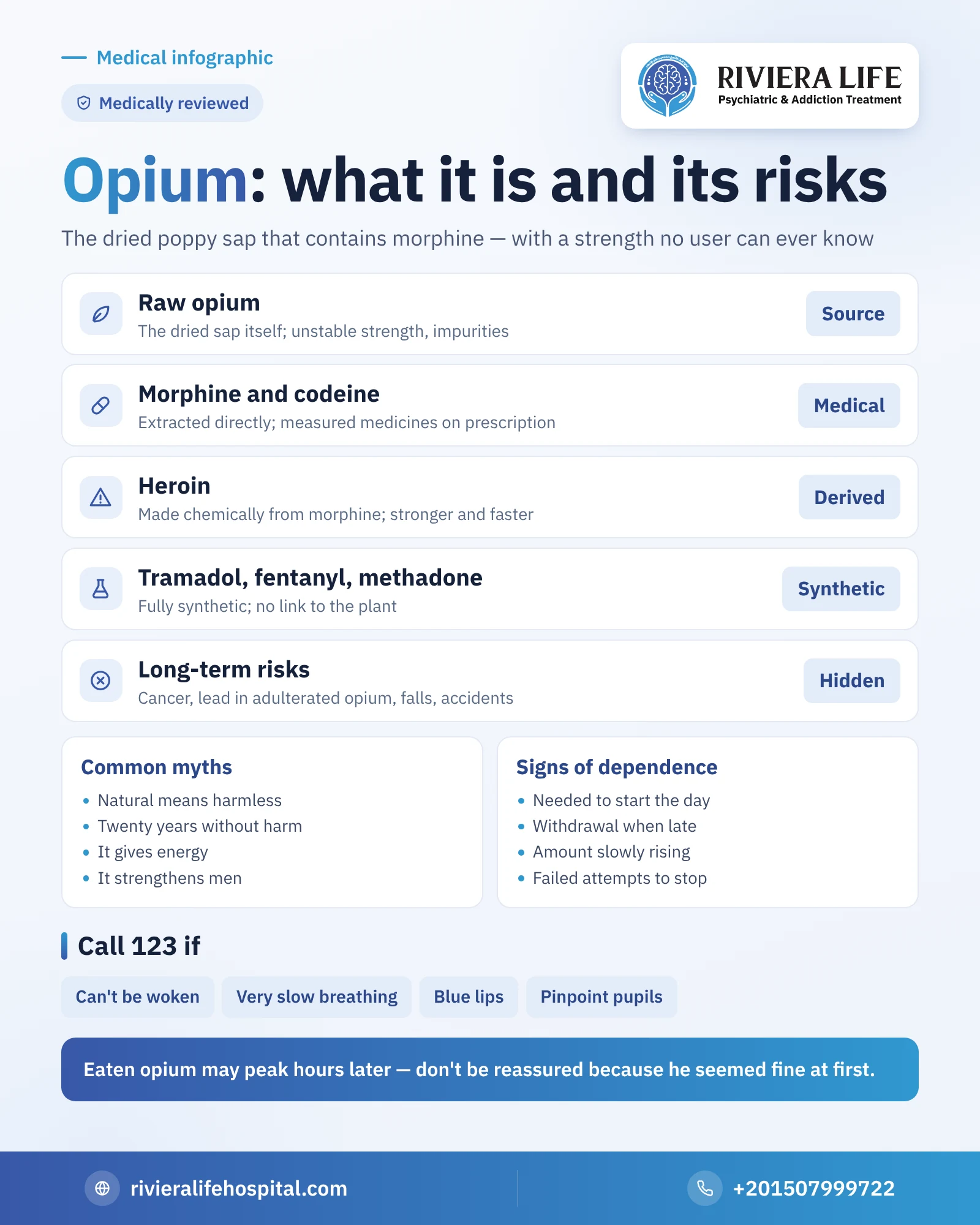
The word “opioids” is a collective name for everything that acts on opioid receptors, while “opium” is the raw substance alone. The following table shows its place among the rest of the family:
| Substance | Its relation to the poppy | Note |
|---|---|---|
| Raw opium | The dried sap itself | Unstable concentration and impurities |
| Morphine and codeine | Extracted from it directly | Medicines of measured concentration dispensed on prescription |
| Heroin | Made chemically from morphine | Stronger and reaches the brain faster |
| Tramadol, fentanyl and methadone | Made entirely in laboratories | No relation to the plant despite the similar effect |
For the full picture of this family and how it works in the brain, see our opioids page, and you will find the names of medicinal painkillers and their uses in our article on types of opioid painkillers.
Opium through history and in rural Egypt
The civilizations of the Mediterranean and the East knew the poppy for thousands of years, and it was used for long centuries to relieve pain and treat diarrhea, cough and insomnia, before morphine was isolated from it in the early nineteenth century. As use spread, addiction problems appeared on a large scale, until opium became one of the first substances for which international control conventions were drawn up.
In Egypt it has kept a limited but stubborn presence in some villages of Upper Egypt and rural areas, especially among men of older generations. Many of them don’t see it as a drug in the sense they see heroin, but as a “pleasure” they gather around in evening gatherings, a “tonic” that helps with hard work in the field and long travel, or a folk remedy for back and joint pain.
Some families pass down old stories of giving infants amounts of it to calm them, an extremely dangerous practice because a child’s body can’t tolerate any amount of morphine. This cultural view is what makes admitting the problem later for opium users than for others.
How is opium used?
The raw form is usually swallowed in small pieces or dissolved in a hot drink, the most common method among older people in the countryside, and it is also smoked in some settings. Eating is slower to reach the brain, so the effect only appears after a while, and here lies a trap: the person may think the amount had no effect and take more before the effect reaches its peak. Smoking delivers morphine faster, and adds to the harm smoke that affects the lungs and throat.
The effect of opium on the body and mood
After use, the person feels warmth, relaxation and lighter pain and anxiety, then drowsiness and heavy eyelids. With this comfortable feeling come changes he doesn’t notice but those around him do:
- Clear narrowing of the pupils.
- Slow breathing, speech and movement.
- Severe, chronic constipation that may reach bowel obstruction in older people.
- Dry mouth, itchy skin and nausea at first.
- Difficulty urinating, especially in men with an enlarged prostate.
- Lower sexual desire with continued use, because of opioids’ effect on hormones.
The idea that opium “gives energy” comes from its temporarily numbing the feeling of tiredness and pain, not from its giving the body real strength. Over time the opposite happens: sluggishness, weakness and declining performance, which increase whenever the usual amount is late.
Does opium cause addiction?
Yes. Its containing morphine makes it cause what all opioids cause: tolerance that pushes the person to increase the amount to get the same effect, then physical dependence that appears as withdrawal on stopping or being late. Someone who has taken it daily for years knows these symptoms well: yawning, runny nose and tears, bone and muscle pain, diarrhea and cramps, chills, insomnia and irritability. That is why many of them describe using it as a “treatment” they need to be able to work, without realizing they are treating a withdrawal that opium itself created. The details and stages of the symptoms are in our article on opioid withdrawal symptoms.
The risks of opium in the near and long term
The first danger is overdose, because the fluctuating concentration makes every piece a gamble, and the risk rises a lot if opium comes together with alcohol, sedatives, pregabalin or tramadol, or in older people and lung and heart patients. In the long term other risks accumulate:
- Cancer: the International Agency for Research on Cancer of the World Health Organization has classified opium consumption as carcinogenic to humans, with a clear link to cancers of the bladder, larynx and lung.
- Adulteration and impurities: illicit opium isn’t subject to any control, and cases of lead poisoning due to adulterated opium have been recorded.
- The lungs and heart: in those who smoke it, the effect of smoke combines with slowed breathing, so chronic chest diseases worsen.
- Accidents: drowsiness and slow reactions raise the risk of falls in the elderly and accidents while driving and operating farm machinery.
For the harms shared across the whole family, from hormones to bones and mental health, see our article on the harms of opioids.
Call an ambulance on 123 immediately if you see
Eaten opium may reach its peak effect hours later, so don't be reassured because the person was fine at first.
- Deep drowsiness from which he doesn’t wake when called or shaken
- Very slow or irregular breathing or unusual snoring
- Blue lips or nails
- Very small pupils with cold skin
Opium and the law
Raw opium is listed in the international drug schedules subject to the strictest degrees of control, and growing the poppy to extract it is only permitted for licensed medical purposes in a limited number of countries. In Egypt the anti-narcotics law treats it as a completely prohibited substance, so growing the poppy and possessing, using and trading opium are acts punishable by law, and the penalty grows harsher the more the act leans towards growing or trading. On the other hand, the law usually distinguishes between someone who is caught and someone who comes forward voluntarily seeking treatment, and medical treatment itself is carried out in confidentiality; legal questions about a specific case should be referred to a specialist lawyer.
Common myths about opium
The myth: opium is natural, and what is natural doesn’t harm. The truth is that morphine itself is a natural substance, and its coming from a plant doesn’t make it lighter in its effect on breathing or less addictive.
The myth: someone who has eaten opium for twenty years without a problem won’t have anything happen to him. The truth is that the body changes with age, the kidneys and liver slow down, and heart and chest diseases appear, so the same usual amount becomes more dangerous than it was.
The myth: opium strengthens a man and prolongs his ability. The truth is that continued use lowers the male hormone and weakens desire and fertility over time.
When should you seek help?
If opium has become a condition for starting the day or for sleeping, withdrawal symptoms appear when it is late, the amount has increased gradually, or the person has tried to stop and returned, these are signs of dependence that deserve a medical assessment. Because its users are usually older and have chronic illnesses and a long history of use, they need a carefully planned gradual withdrawal, not a sudden stop at home, which is what our article on opium addiction treatment explains in detail.
At Riviera Life it begins with a free, confidential first consultation with a consultant in psychiatry and addiction treatment, who assesses the state of the body and the other medicines the patient takes before proposing any plan, with round-the-clock medical supervision for those who need to stay.
More from our opioids guide
- Opioids: the complete guide
- Opium addiction treatment
- Types of opioid painkillers
- The harms of opioids
- The difference between opium and hashish: the chronic user, the body, withdrawal and treatment
- The difference between opium and tramadol: the natural and the medicine, and which is more dangerous?
Questions many people ask
Opium is the dried sap of the poppy pod as it is, while heroin is a substance made chemically from morphine extracted from opium, and it is stronger and reaches the brain faster. Both cause dependence and carry the risk of overdose.
Dry seeds contain only tiny traces of alkaloids, and opium comes from the green pod, not the seeds. But eating a very large amount of seed baked goods may sometimes give an initial positive result in an opiate test.
No. It temporarily numbs the feeling of tiredness and pain, and with continued use causes sluggishness and weakness; the energy a habitual user feels is usually the disappearance of withdrawal symptoms, not real strength.
It usually shows in a urine test for about one to three days after the last use, and the period may be longer with long daily use. The standard opiate strip detects it because it contains morphine.
This isn't advised, especially for someone who has used it for years or has heart, chest or diabetes problems. Stopping suddenly causes an exhausting withdrawal that may push a return, and gradual withdrawal under medical supervision is better.