The difference between opium and hash is that opium is an opioid that numbs pain, slows breathing and creates clear physical dependence, while hash is a cannabis product that alters perception, mood and memory, and its effect on breathing is limited. They are often mentioned together when talking about the traditional “kaif”, and some people think of them as two faces of one habit. This article compares them from the angle of the chronic user, as their family sees them: someone who uses every day for years, what changes in their body, sleep, appetite and work, and how getting out of each differs.
Opium vs hash in a table
| Point of comparison | Opium | Hash |
|---|---|---|
| Family | Opioid, from the poppy | Cannabinoid, from the cannabis plant |
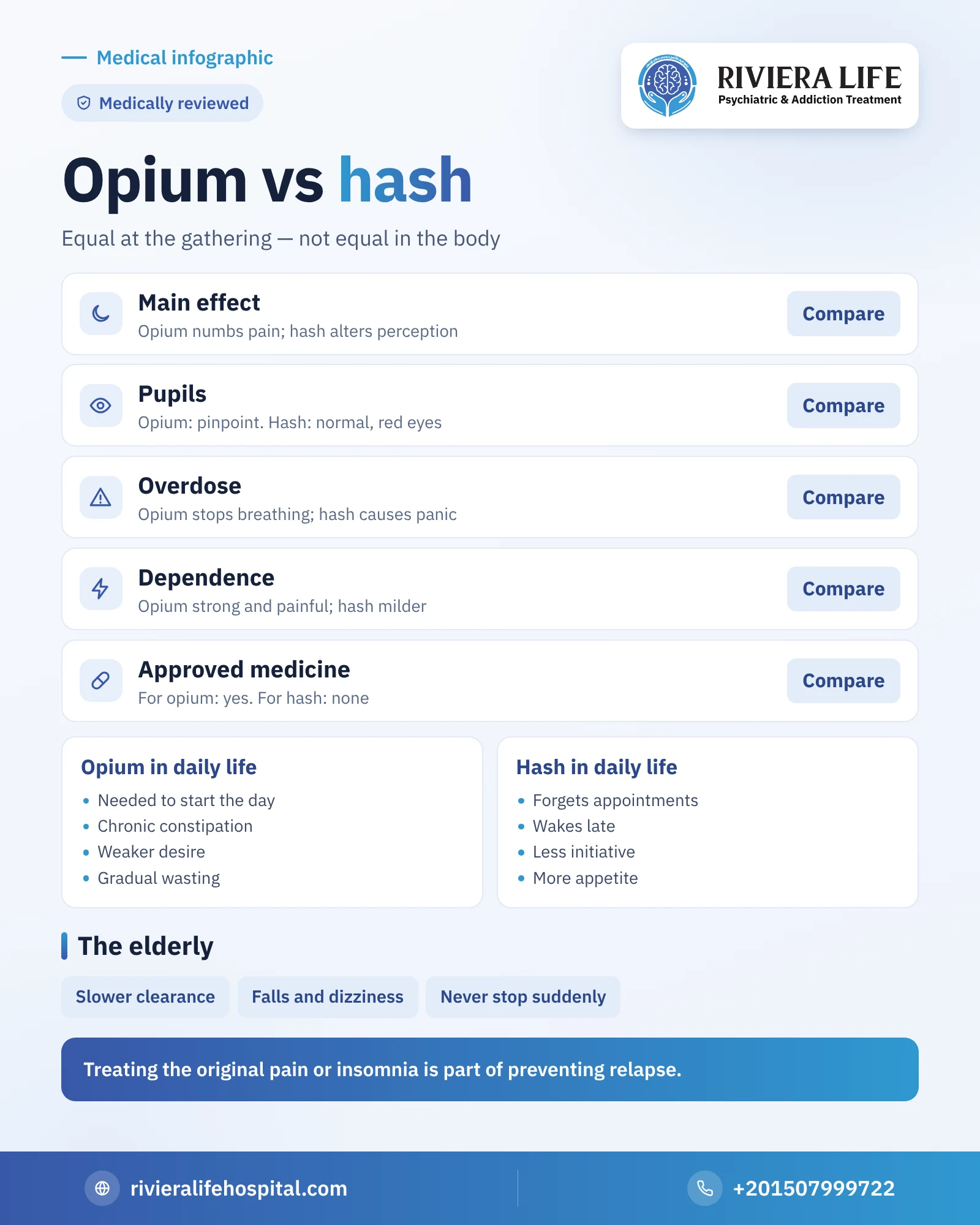
| Main effect | Numbing pain, drowsiness and relaxation | Changes in perception and time, laughter or absent-mindedness |
| Appetite | Falls, with chronic constipation | Usually rises |
| Sleep | Drowsiness and heavy naps | Late sleep, and insomnia on stopping |
| Pupils | Constricted | Normal, with red eyes |
| Overdose | Stopped breathing | Panic, anxiety and nausea; rarely a direct threat to life |
| Physical dependence | Strong, with painful withdrawal | Milder, with unpleasant withdrawal |
| Approved medicine for treatment | Exists | Doesn’t exist |
What brings them together in popular perception?
Opium and hash meet in the image of the old gathering: a quiet sitting, smoke and slow talk, and they are seen as a “mood”, not an illness. This is where leniency comes from. Medicine reveals that this image hides an essential difference: one affects the centers of breathing, pain and the digestive system, and the other affects memory, attention and the psychological state. Being equal at gatherings doesn’t mean being equal in the body. To go deeper into each: opioids and hash.
The “ordinary day” measure: how does life change?
With opium
The body gets used to the dose, so it needs it to start the day, not to enjoy it. If it is late, pains in the legs and back appear, along with cramping, yawning, sweating and insomnia. Appetite falls, constipation increases until it becomes a daily problem, sexual desire weakens, and the body gradually wastes. The user may say they “need it to work”, and this is actually the first announcement of dependence. You will find the details in the article on the harms of opioids.
With hash
The picture here is slower and less noisy: they forget appointments and repeat questions, wake late, their desire to take initiative decreases, and their appetite for sweets increases. They may keep doing their work, but with less efficiency and weaker patience. And in those with a psychological predisposition, anxiety and suspicion appear. This is explained in the article on the harms of hash.
Pain and painkillers: where do things get mixed up?
Many start opium to treat chronic pain in the back or joints or after an old injury, and the folk painkiller turns into dependence. Hash, on the other hand, is used to ease tension and insomnia more than pain. Here there is an important practical difference: someone using opium for pain needs, alongside treatment of the dependence, an alternative plan for the pain itself, otherwise they will return to it. And someone using hash for insomnia needs treatment for the sleep disorder and anxiety. Without treating the original cause, the chances of relapse rise.
The elderly and long-term use
In some settings use continues for decades. Here the user’s age becomes an important medical factor. With age the liver and kidneys weaken, clearance of opium slows, and the body becomes more sensitive to drowsiness, slowed breathing and falls. Sometimes the family hides the matter because the father or grandfather “is used to it”, so treatment of blood pressure, diabetes or the heart is delayed. Hash in the elderly increases dizziness and the risk of falls, and interacts with blood pressure and heart medicines. In both cases use isn’t stopped suddenly without medical supervision.
Among the signs the family shouldn’t ignore in this group: changes in sleep and appetite, repeated falls, sudden forgetfulness, worsening constipation, and declining interest in appearance. These symptoms are often attributed to old age alone and pass without assessment.
Overdose: silent or confusing?
An opium overdose is silent and dangerous: increasing drowsiness, slowing breathing, lips tending to turn blue, and no response. Hash poisoning is confusing, not silent: palpitations, panic, vomiting and passing hallucinations; it usually calms with time but needs assessment if it is severe or accompanied by chest pain.
Call an ambulance on 123 immediately if you see
Opium slows breathing and hash may disturb the heart and mind. If they are combined the danger increases. Stay with the person and don't let them sleep.
- Very slow or irregular breathing, or blue lips
- No response to calling, with pinpoint pupils
- Chest pain or severe irregular palpitations
- Hallucinations, agitation or panic that doesn’t calm
- Seizures or loss of consciousness
Withdrawal: what gets in the way of stopping?
Opium withdrawal combines pain in the bones and muscles, sweating, diarrhea, vomiting, insomnia and strong craving, and starts within hours of the last dose in a regular user. Hash withdrawal is less severe physically: irritability, anxiety, insomnia, loss of appetite and craving, and vivid dreams, and it may last weeks. That is why hash seems easier, so its user goes back to it to calm themselves. For details: opioid withdrawal symptoms and hash withdrawal symptoms.
Treatment: a medical track and a behavioral track
Opium is treated with an organized gradual withdrawal or with approved medicines for opioid addiction that the doctor determines, with assessment of the heart, liver and kidneys, treatment of the original pain, psychological sessions and a family program. Hash has no approved medicine, so treatment rests on cognitive and motivational sessions, treating insomnia and anxiety, and adjusting the pattern of the day. You will find the plan for the first in opium addiction treatment, and the second in hash addiction treatment.
Sexual desire and reproductive health
Many think both “strengthen” or “delay”, and this is among the most widespread illusions. Opium lowers male hormones with long use and weakens desire and erection, and may delay ejaculation because it dulls sensation, not because it improves performance. Hash seems relaxing at first, then weakens desire and fertility in some men with continued use. We have detailed this in opium and sex and hash and sex.
Combining opium and hash
Someone who uses both together exposes themselves to accumulated drowsiness, poor attention and slow reactions, and increases the risk of accidents and falls. Each also masks the signs of the other, making it hard for the family and the doctor to know which is causing the symptoms. And it shouldn’t be thought that one reduces the harm of the other.
The law in Egypt in brief
Egyptian law criminalizes possession and trading of narcotic substances outside the licensed medical framework, and opium and hash are the same in this. The prevalence of either in a particular setting doesn’t change its legal status. Seeking medical treatment is a different path that aims to protect the patient’s health.
How do you talk with an elderly parent or relative?
Stay away from blame; they see their habit as part of their life for decades. Start with worry for their health: “I’m afraid of the constipation, the tiredness and the falls”. Suggest a comprehensive check-up that includes the heart, liver and kidneys, then make talk about the substance part of the health plan, not a trial. And involve the doctor early, as their opinion carries more respect.
When should you seek help?
If use has become daily, or symptoms appear when it is late, or attempts to cut down have failed, or your relative’s work and health have been affected, don’t wait for things to get worse. Riviera Life offers you a free first consultation in complete confidentiality on +201507999722, with consultants in psychiatry and addiction treatment and round-the-clock medical supervision. The hospital is licensed by the Ministry of Health and located in Sheikh Zayed, Giza.
More from the opioids guide
- Opioids: the complete guide
- Opium: what it is and how it affects the body
- Hash vs marijuana
- Opioid addiction treatment
Questions many people ask
No. Opium is an opioid and affects pain and breathing, while hash comes from cannabis and affects perception, mood and memory.
Opium, as its withdrawal is physically painful, while hash withdrawal is physically milder but may cause irritability, insomnia and strong craving.
It isn't advised without medical supervision; dehydration, fatigue and heart disease, blood pressure and diabetes make an organized gradual withdrawal safer.
No. Replacing one substance with another treats neither the pain nor the dependence, and may add risks of anxiety, dizziness and poor concentration; a medical assessment for a suitable pain plan is better.
There are approved medicines for opioid addiction that the doctor determines, and no approved medicine for hash addiction, so its treatment relies on behavioral therapy and treating the symptoms.