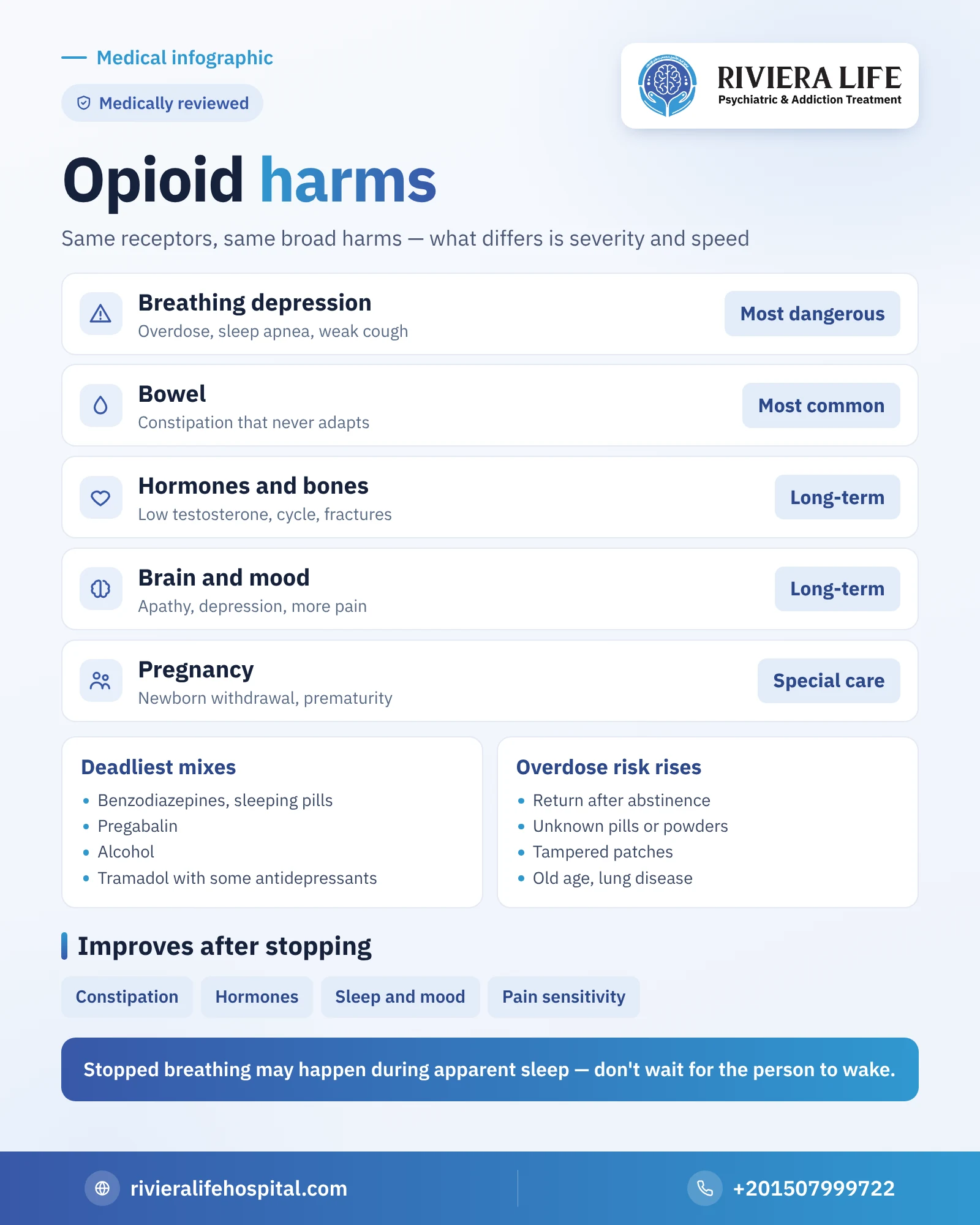
The most dangerous harm of opioids is breathing depression, as it is what turns a single overdose into death within minutes. But the harm isn’t limited to that moment; continued use of any member of the family, whether heroin, tramadol or a prescribed painkiller, leaves its mark on the bowel, hormones, bones, sleep and mood, and extends to work and family. Some of these harms appear from the first days, and some accumulate quietly over years. Here we present the harms that opioids share, those specific to some of them, when the dose becomes deadly, and what improves after stopping.
Why are the harms of opioids similar despite their different types?
All opioids work on the same receptors, which is why they share the broad lines of harm: breathing depression, constipation, drowsiness, hormonal disturbance and dependence. What differs is the severity and speed. A strong, short-acting substance creates sharp peaks followed by a quick drop, and a long-acting substance stays in the body longer so it accumulates if a new dose is taken before the previous one wears off. Added to this is what is linked to the method of use, such as infection with injection, and what is linked to a particular substance, such as seizures with tramadol.
The harms of medically prescribed opioid painkillers
Dispensing an opioid painkiller with a prescription doesn’t mean it has no harms, as the prescription controls the dose and duration but doesn’t change the nature of the medicine. What appears most in those taking these painkillers to treat real pain:
- Constipation, nausea and drowsiness in the first days, and constipation specifically usually doesn’t ease with continuation as the other symptoms do.
- Tolerance: the effect of the same dose decreases over time, so the patient tends to raise it without going back to the doctor.
- Physical dependence: withdrawal symptoms may appear on stopping suddenly after weeks of regular use, even when sticking to the prescribed dose.
- Dizziness and slow reactions, which raise the risk of falls in older people and the risk of accidents while driving.
- Interaction with other medicines, especially sleeping pills, sedatives and some antidepressants.
That is why the doctor sets the duration of use from the start, and plans to stop the medicine gradually instead of cutting it off suddenly. You will find the names of these painkillers and their uses in the article on types of opioid painkillers.
Overdose: the first danger
An overdose happens when the opioid’s effect on the brain stem reaches a level that slows breathing until it almost stops, so less oxygen reaches the brain and heart. The World Health Organization describes three signs together for it: loss of consciousness, very narrow pupils, and breathing depression. The risk rises in specific situations:
- Going back to using after a break, after leaving a hospital or prison or a period of stopping, because tolerance has fallen.
- Mixing the opioid with sedatives, pregabalin or alcohol.
- Using pills or powders of unknown origin that may contain a stronger opioid than expected.
- Tampering with extended-release tablets or patches in a way that releases the medicine all at once.
- Old age, lung disease, sleep apnea and weakness of the liver or kidneys.
Call an ambulance on 123 immediately if you see
Don't wait for the person to wake on their own, as stopped breathing may happen during apparent sleep.
- No response to calling or to strong touch
- Very slow or irregular breathing or a strange snoring sound
- Blue lips and fingertips
- Very narrow pupils with cold skin
- Seizures after taking tramadol
The harms of opioids on breathing and sleep
The effect of opioids on breathing isn’t limited to the moment of overdose. Regular use is linked to breathing disorders during sleep, including central sleep apnea, where the brain stops sending the breathing signal for repeated seconds during the night. The person wakes tired however long they sleep, and the risk of these disorders increases with high doses and mixing with sleeping pills. The cough reflex also weakens, so lung infections recur, especially if vomiting happens during deep drowsiness and leaks into the lungs.
The digestive system: the most common harms
Constipation is the harm that almost no regular user escapes. The reason is that the bowel has its own opioid receptors, so its movement slows and its contents dry out. Notably, the body gets used to many effects of opioids over time, such as drowsiness and nausea, but rarely gets used to constipation, so it stays bothersome throughout the period of use. In severe cases it may develop into a bowel obstruction needing medical intervention. Added to this are nausea, loss of appetite, bloating, and tooth decay due to a dry mouth.
And there is a hidden harm related to drug combinations. Some opioid painkillers are sold mixed with paracetamol, and someone who raises the dose seeking the opioid effect raises the paracetamol with it without noticing, and may reach amounts that harm the liver.
Hormones, fertility and bones
Long use of opioids affects the axis that links the brain with the sex glands. In men testosterone may fall, so desire, energy and muscle mass weaken. In women the menstrual cycle may be disturbed or stop, and fertility decreases. In the long term, hormone deficiency is linked to weaker bone density, and with drowsiness and dizziness the risk of falls and fractures rises, a doubled risk in older people. The immune system also weakens, so infections recur and last longer.
Opioids, the brain and mental health
Over time the reward system gets used to a stimulus much stronger than any natural pleasure, so food, relationships and work lose their appeal, and the person becomes apathetic, not enthusiastic about anything except the substance. Rates of depression, anxiety and sleep disorders rise, and despair increases in periods of withdrawal or relapse. Memory, concentration and reaction speed are also affected, so driving a car or operating machinery becomes a real danger. Among the strangest harms is that some patients feel more pain the more they raise the dose, because the nervous system has become more sensitive to pain due to the opioid itself.
Harms specific to some members of the family
Alongside the shared harms, some substances carry risks of their own:
- Tramadol: lowers the seizure threshold, and may cause serotonin syndrome if combined with some antidepressants. Its details are in the article on the harms of tramadol.
- Codeine: turns into morphine in the liver to degrees that differ genetically from person to person, so some people convert it very quickly and are poisoned by ordinary doses.
- Methadone: stays in the body for a long time, and may prolong the heart’s electrical interval with high doses.
- Fentanyl: its great strength makes the difference between effect and poisoning very small.
- Heroin: more linked to injection and the infections it transmits, which you will find in the article on the harms of heroin.
As for morphine, the mother substance of the family, you will find its effect on the brain and heart in the article on the harms of morphine.
The most dangerous things opioids are mixed with
| The mixed substance | What happens? |
|---|---|
| Benzodiazepines and sleeping pills | Doubled breathing depression and deep drowsiness that may end in death |
| Pregabalin | Increases depression and dizziness, and it is a widespread mix in Egypt |
| Alcohol | Combines breathing depression, vomiting and choking |
| Stimulants | Temporarily hide the opioid’s effect, then depression appears after they wear off |
| Some antidepressants with tramadol | Risk of serotonin syndrome and seizures |
Harms during pregnancy and to the newborn
Opioids cross the placenta, and their unregulated use during pregnancy is linked to premature birth and low birth weight. The child is often born dependent on them, so days after birth withdrawal symptoms appear such as sharp crying, trembling and difficulty feeding and sleeping, needing care in a neonatal unit. But the solution isn’t stopping suddenly, which may also harm the pregnancy, but early follow-up between the obstetrician and the addiction doctor to choose the safest plan for mother and fetus.
The harms on life, family and work
The story usually starts with a pill that hides a pain or tiredness, then arranging the next pill becomes part of the day. Money is spent in secret, excuses for lateness and absence repeat, and performance at work or study declines. Those at home live in constant tension between suspicion and fear, and children may be deeply affected by what they see. Getting the medicine from outside pharmacies or driving under its influence adds legal risks and accidents that may change the person’s whole life.
What improves after stopping?
Many of the harms of opioids can be reversed. Constipation improves within days to weeks of stopping, hormones, desire and the menstrual cycle return gradually within months, and excess pain sensitivity eases in many people after withdrawal ends. Sleep, mood and concentration improve with time and psychotherapy. But some harms may remain, such as brain damage from lack of oxygen in a previous overdose, or hepatitis acquired from injection, and this is reason enough not to postpone treatment. You will find its steps in the article on opioid addiction treatment, while the period immediately after stopping is explained in the article on opioid withdrawal symptoms.
At Riviera Life the assessment starts by examining what opioids have actually left on the body: hormones, liver, heart, sleep and the psychological state, because a good treatment plan treats the effect, not the substance alone.
The harms of raw opium and what it adds to others
Opium carries all the harms of morphine, but it has factors of its own that raise the risk. The first is that its concentration is unknown and changes from piece to piece, so the user can’t estimate what entered their body. The second is that it is usually used for many years, so its effects on the bowel, hormones and lungs accumulate.
Among the most prominent things linked to it:
- Chronic constipation that in the elderly may reach bowel obstruction.
- Difficulty urinating and urinary retention in those with an enlarged prostate.
- Chest diseases in those who smoke it, because of the smoke in addition to slowed breathing.
- A higher risk of some cancers, as the International Agency for Research on Cancer has classified it as carcinogenic to humans.
- Possible poisoning from impurities or adulterants in illicit opium.
Adulteration is a problem in itself: opium circulating outside official channels may carry impurities no one knows, which the family doesn’t expect when the matter seems “traditional” and safe to them. Older people are also slower to get rid of morphine, so its effect accumulates and drowsiness and the risk of falls intensify.
And the older the age and the more heart or kidney disease appears, the more dangerous the same old amount becomes. To learn about the substance and its methods of use read the article on opium and how it affects the body, and for the sexual side of the harm see the article on opium and sex.
More from the opioids guide
- Opioids: the complete guide
- Opioid addiction symptoms
- Types of opioid painkillers
- How long opioids stay in the body
- Krokodil: the truth behind the terrifying images, its harms and treatment
- Drug overdose: signs by substance and what to do until the ambulance comes
- Kratom addiction: is it safe? Dependence, withdrawal and contaminants
- The harms of injecting drugs: viruses, abscesses, the heart and veins
Questions many people ask
Depression of the breathing center, because it may develop within minutes into stopped breathing in an overdose. This risk increases with mixing with sedatives or alcohol or after a period of abstinence.
Long use may lower testosterone in men and disturb performance and desire with it, and the menstrual cycle may be disturbed in women. These changes usually improve within months after stopping.
Because the bowel has its own opioid receptors, and the body rarely gets used to this effect as it does to drowsiness or nausea, so constipation stays as long as use continues.
Yes, both substances increase depression of the nervous system and breathing and dizziness together, and this mix is among the known causes of poisoning cases in Egypt.
Most improve, such as constipation, hormones, sleep and mood, within weeks to months, but some harms such as brain damage after a previous overdose or acquired hepatitis may remain and need special treatment.