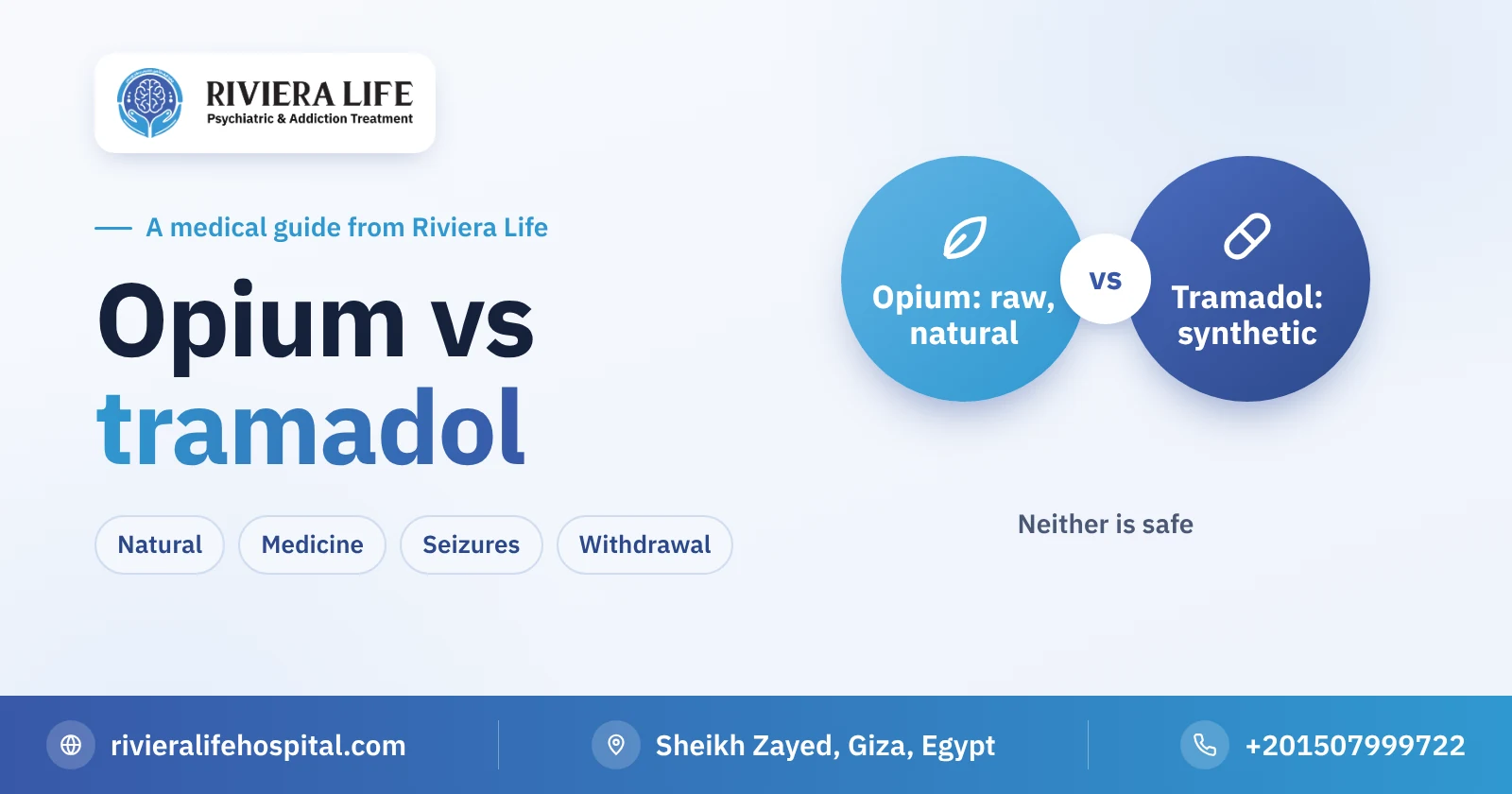
The difference between opium and tramadol is that opium is a raw natural opioid substance whose source is the poppy, while tramadol is a synthetic pharmaceutical opioid painkiller that acts on opioid receptors and on neurotransmitters together. The first is often seen as “an old habit”, and the second as “just a medicine”, and this view is the most dangerous thing about them. Both cause dependence and overdose, and each has its own particular danger: silent accumulation with opium, and seizures and serotonin disturbance with tramadol. Here we compare them from the angle of the “illusion”: is the natural safer, or the medicine?
The difference between opium and tramadol in a table
| Aspect | Opium | Tramadol |
|---|---|---|
| Origin | Raw and natural, from the poppy pod | A synthetic medicine for moderate to severe pain |
| Composition | A mixture of alkaloids including morphine | A single substance with opioid and neurotransmitter effects |
| Form | A dark paste or lumps | Tablets, capsules or injections |
| Knowledge of content | Varies by source | Known in licensed medicine, unknown in counterfeits |
| Characteristic danger | Strong dependence and slow-onset overdose | Seizures, serotonin toxicity and overdose |
| Withdrawal | Aches, diarrhea, vomiting and insomnia | Similar, and anxiety, panic and tingling may be added |
| How people see it | A traditional habit | A medicine thought safe because it is sold in a pharmacy |
| Treatment | Gradual withdrawal and approved medicines | Assessing the pain, gradual reduction, and medicines for dependence |
Opium: what is it, briefly?
Opium is the dried latex of the poppy pod, containing morphine, codeine and other alkaloids. It is swallowed or smoked, and its effect is relatively slow and lasting. We have explained it on the opium page, and you will find its broader context in the opioids guide.
Tramadol: why is it different from other opioids?
Tramadol is a painkiller prescribed for moderate to severe pain. It binds to opioid receptors less strongly than morphine, but at the same time raises the levels of serotonin and noradrenaline in the brain. This dual property is the reason for its particular danger, as it explains how easily seizures happen and its interactions with antidepressants. The tramadol page covers it at length.
The illusion that “natural is safer” and the illusion that “medicine is safer”
Some people believe opium is “from the earth” so it is gentler, and others believe tramadol is “sold in a pharmacy” so it is gentler. The two mistakes mirror each other. Natural opium contains morphine itself, and nature doesn’t guarantee safety. And tramadol taken without a prescription and in amounts beyond the medical is no longer a medicine but a drug in pill form. As for counterfeit pills circulating without a license, they may be completely different from what is written on the pack. You will find details about its types in our article on types of tramadol.
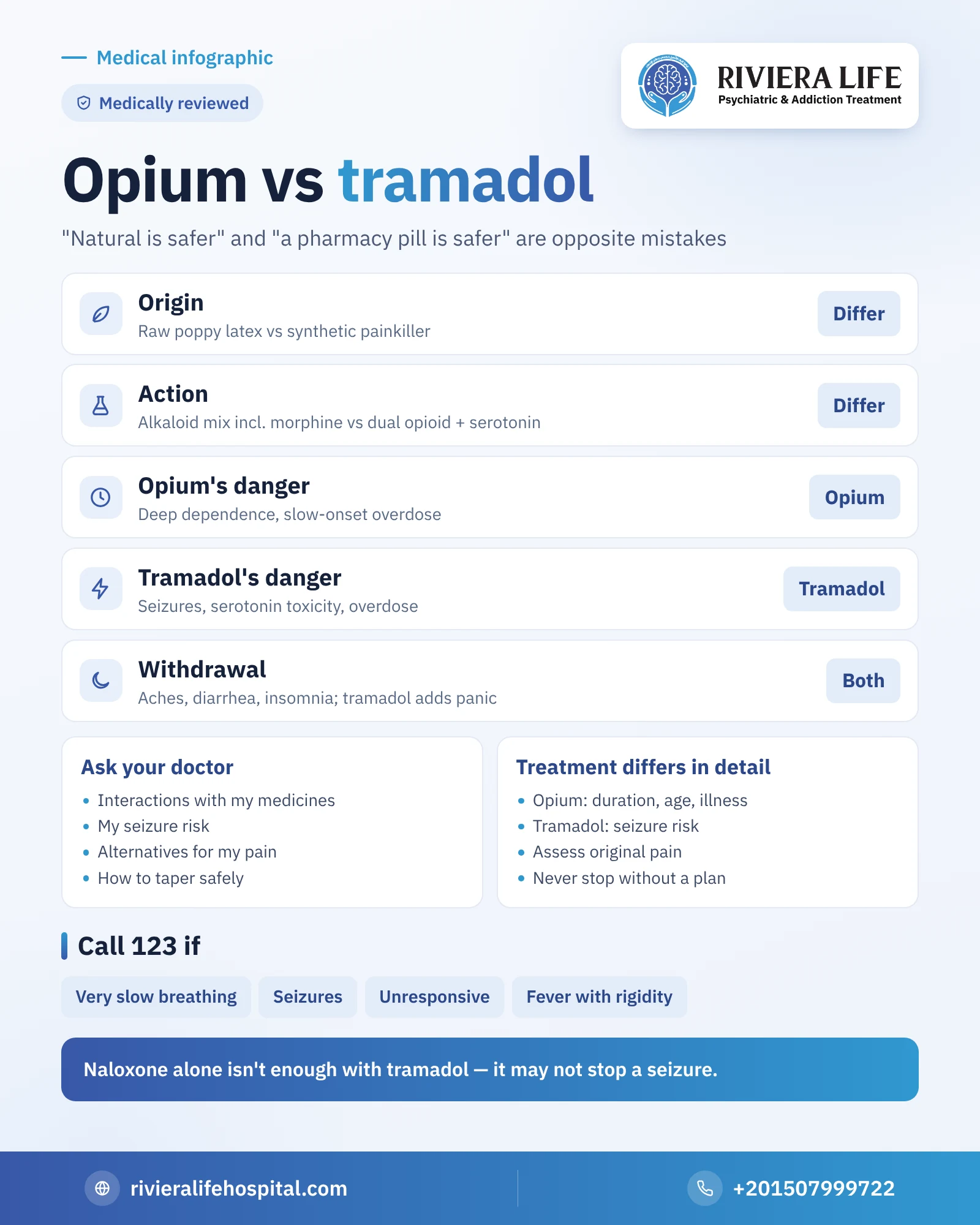
The particular danger of each
Opium: silent accumulation
Opium’s danger comes from continuation rather than a single incident: deep physical dependence, chronic constipation, wasting and hormonal disturbance, then an overdose when the source changes or sedatives are added. Its severity shows most in older people.
Tramadol: seizures and serotonin
Tramadol may cause seizures even in those without epilepsy, and their risk increases with large amounts and with some medicines. Serotonin toxicity may also occur when it is combined with antidepressants or some stimulants: high temperature, muscle stiffness, tremor, a racing pulse and confusion. For more, see the harms of tramadol.
Overdose
With opium, overdose tends towards deep drowsiness and slow breathing. With tramadol it may come with seizures that precede or accompany slow breathing, and the person may be confused or unusually excited and then collapse. It resembles opium in that relying on naloxone alone isn’t enough: it may not stop a seizure, so an ambulance is essential.
Call an ambulance on 123 immediately if you see
The signs may differ between opium and tramadol, and may combine if both are used together. Stay with the person and don't let them sleep.
- Very slow or interrupted breathing, or blue lips
- Seizures or repeated involuntary movements
- No response when called, or a coma
- A very high temperature with muscle stiffness and tremor
- Severe confusion, hallucinations or a very fast pulse
Withdrawal: where are they similar and where do they differ?
Both cause body aches, chills, diarrhea, vomiting, insomnia and sweating. But tramadol may add, in some people, symptoms unusual in opioid withdrawal: panic, severe anxiety, numbness and pins and needles, ringing in the ears, and sometimes hallucinations. That is why it may confuse the family, who think the problem is purely psychological. With opium, the classic physical symptoms dominate. Read tramadol withdrawal symptoms and opioid withdrawal symptoms.
Addiction: how does each begin?
Opium usually begins as a social habit or in search of relief from chronic pain. Tramadol in many cases begins with a legitimate prescription or a pill that “lifts the mood” or “boosts” performance, then the amount increases secretly. It is hard for the family to discover in both cases because the pills are small and the habit is old. In both cases the person thinks they are in control, then discovers the body no longer works without the substance. See also the causes of tramadol addiction.
Treatment: similar medicines, different details
Treatment of dependence on opioids, including tramadol, relies on approved medicines from which the doctor chooses the most suitable, combined with psychological and behavioral therapy. The detail differs: with opium, the length of use, age and chronic illnesses are taken into account, and withdrawal is gradual. With tramadol, the risk of seizures is taken into account, accompanying medicines and history of seizures are asked about, and the original pain for which the medicine was started is assessed. Neither is stopped or reduced except with a medical plan. You will find the stages in opium addiction treatment and tramadol addiction treatment.
Driving, work and daily life
Both substances delay reaction, slow concentration and increase drowsiness, and neither has a so-called “safe dose for driving” for someone using without supervision. Tramadol carries an additional danger: a seizure may come without warning behind the wheel, on a ladder or at a work site. Opium’s danger to driving comes from heavy drowsiness and weak attention, especially in older people or when sedatives are added.
Questions to ask the doctor
- Does what I take interact with blood pressure, heart or depression medicines?
- Do I have factors that increase seizure risk, such as a previous head injury or an old seizure?
- What are the safe alternatives for treating my original pain if it was the reason I started?
- How is stopping arranged gradually without severe pain or relapse?
- What danger signs call for going to the emergency department?
Write the answers down and keep them, bring the packs or names of everything you take, and don’t hide anything from the doctor, as medical confidentiality protects this information.
Related comparisons
If your question is about tramadol and another pharmaceutical opioid, read tramadol vs morphine. And if you are comparing two substances that are sometimes used together, see tramadol vs hashish.
When should you ask for help?
Ask for help if the amount has gone beyond the prescription, the pill or dose has become a condition for starting the day, withdrawal appears when it is late, or a seizure has happened. Your first consultation at Riviera Life is free and completely confidential on +201507999722, with consultants in psychiatry and addiction treatment and round-the-clock medical supervision. The hospital is licensed by the Ministry of Health and located in Sheikh Zayed, Giza.
More from our opioids guide
- Opioids: the complete guide
- Tramadol: the complete guide
- Types of opioid painkillers
- Opioid addiction treatment
Questions many people ask
Yes, it binds to opioid receptors, but it is a synthetic medicine that adds an effect on serotonin and noradrenaline, so its risks differ.
It can't be settled in a sentence; opium's danger lies in long-term dependence and overdose, and tramadol's in seizures, serotonin toxicity and overdose.
Because it lowers the brain's seizure threshold, and the risk increases with large amounts or with medicines that affect serotonin, which is why a seizure is a reason to call an ambulance immediately.
It resembles it in aches, diarrhea and insomnia, and may add panic, tingling and severe anxiety in some people.
This isn't done on a personal decision, as substitution doesn't treat dependence and may add seizure risks; the doctor decides the plan and suitable medicines.