Pethidine, known in America as meperidine, is a synthetic opioid painkiller that for decades was one of the best-known painkillers in hospitals, usually given by injection for surgical pain, renal colic and labor. Today its use has declined greatly in many countries, not because it is weak, but because the human body converts it into a substance that accumulates and may cause tremor and seizures, and because it may interact dangerously with some antidepressants. Pethidine is also linked to stories of misuse among some health workers because of how easy it is to access. This article explains its uses, why doctors have come to avoid it, how dependence on it develops, and how it is treated.
What is pethidine?
Pethidine is a chemically manufactured opioid, discovered in the late 1930s, which works on opioid receptors in the brain and spinal cord to relieve pain and cause drowsiness and a sense of ease. It is classified among the strong opioids, but it is weaker than morphine when the same amount is compared, and its effect is shorter. In most countries, including Egypt, it is dispensed within the schedules of narcotic medicines under strict control, and is used only on prescription and under medical supervision.
For pethidine’s place among the other opioid painkillers, and its comparison with morphine, fentanyl and codeine, see our article on types of opioid painkillers.
The medical uses of pethidine
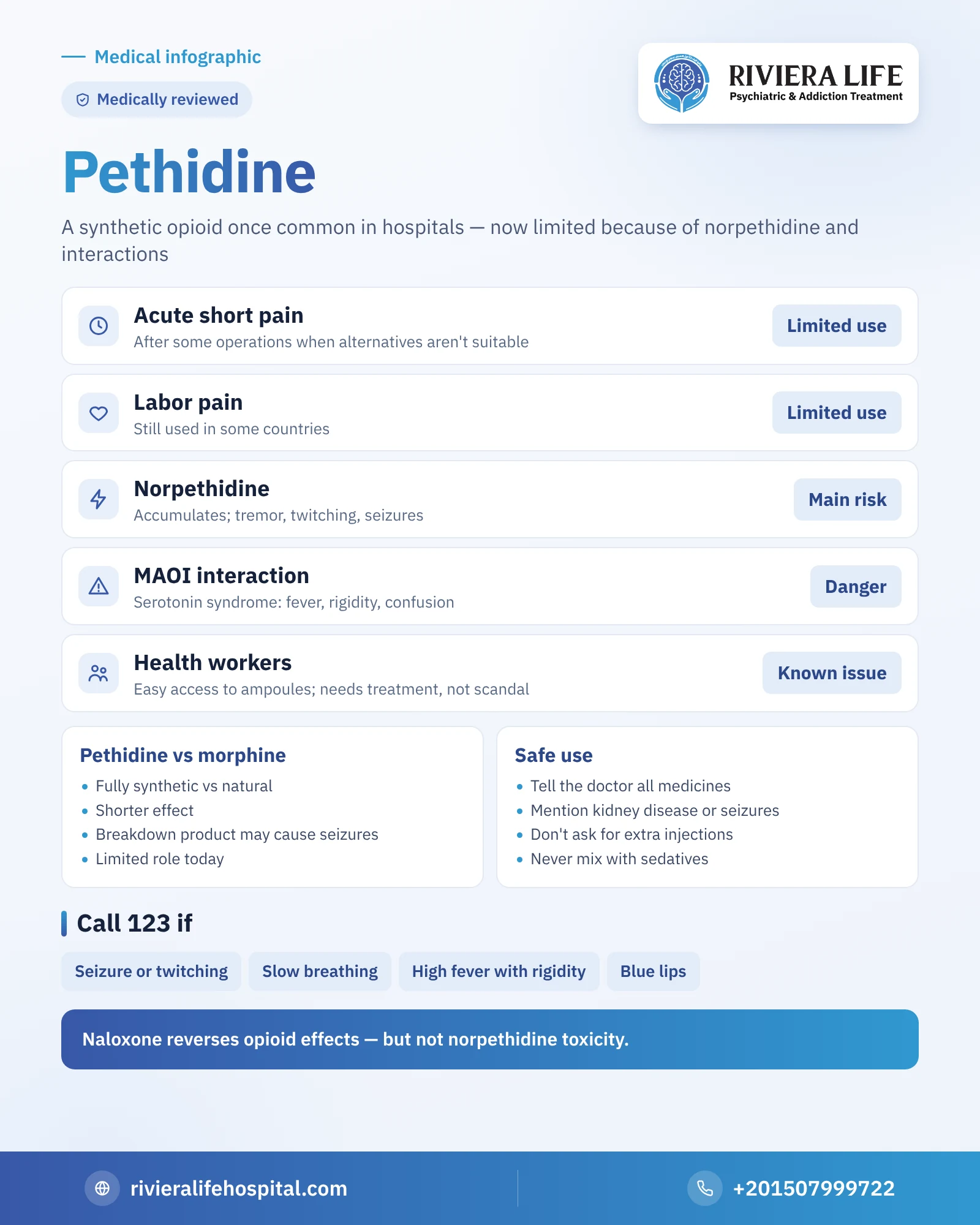
Pethidine still has a limited place in medicine, which differs from country to country and hospital to hospital:
- Short-term acute pain: such as pain after some operations, when suitable alternatives aren’t available.
- Labor pain: it is still used in some countries, although alternatives are more widespread today.
- Shivering after anesthesia: anesthesiologists sometimes use it to stop the shivering that affects some patients after operations.
Most modern guidelines don’t recommend using it for chronic pain or for long periods, nor in older people or kidney patients, for the reasons we explain in the next section.
Why is pethidine used less today?
Norpethidine: the substance that accumulates
When the liver breaks down pethidine, it produces a substance called norpethidine. This substance doesn’t relieve pain, but it stimulates the nervous system, and stays in the body much longer than pethidine itself. With repeated injections, weak kidneys or old age it accumulates, so nervousness, tremor and muscle twitching appear, and it may reach seizures. Worse, naloxone, which reverses the effect of opioids, doesn’t reverse this toxicity, and may not help with it.
The interaction with antidepressants
Pethidine is one of the few opioids that affect serotonin. When combined with monoamine oxidase inhibitors, a class of antidepressants and some other medicines, a dangerous interaction may occur that includes serotonin syndrome: a very high temperature, muscle rigidity and twitching, and disturbed consciousness, blood pressure and pulse. The risk may also increase with other medicines that raise serotonin. That is why the doctor always asks about all medicines before prescribing it.
A short effect and a clearer high
Its short effect means repeated doses to relieve pain, and some doctors see that it gives a clearer feeling of euphoria than some alternatives, which raises the risk of misuse.
Side effects and risks you should know
Pethidine shares with other opioids drowsiness, dizziness, nausea, constipation and sweating, and the risk of slowed breathing with excess or when mixed with sedatives. It differs from them in the possibility of nervous excitation and seizures because of norpethidine. Repeated injection into the muscle may also cause fibrosis and tissue damage in those who use it for long periods.
Call an ambulance on 123 immediately if you see
After using pethidine, especially with repeated injections, antidepressants or sedatives.
- A seizure or repeated muscle twitching
- Slow or weak breathing, or difficulty waking
- A very high temperature with muscle rigidity
- Severe confusion or unusual agitation
- Blue lips
Pethidine misuse among health workers
Addiction to opioid medicines among doctors, nurses and pharmacists is a problem known worldwide, and pethidine is one of the medicines historically linked with it. The reasons are understandable: easy access to ampoules, work pressure and long shifts, exhaustion, and the belief that medical knowledge protects against addiction, a belief that isn’t true.
Signs colleagues or family may notice include: unusual eagerness to work shifts where narcotic medicines are available, sudden absences, frequent trips to the bathroom, always wearing long sleeves, mood swings, and professional errors that weren’t usual. Most importantly, this person needs treatment, not scandal, and early intervention protects their life, their professional future and their patients together.
If you are a colleague or a family member and have noticed these signs, it is best to talk to them privately, calmly and without accusation, and offer them a confidential consultation with a doctor specializing in addiction treatment. Ignoring it out of courtesy lets the danger grow, and public confrontation pushes them to denial and hiding.
Pethidine and morphine: what is the difference?
| Point of comparison | Pethidine | Morphine |
|---|---|---|
| Source | Entirely chemically manufactured | Natural, from the poppy plant |
| Duration of effect | Shorter | Relatively longer |
| Breakdown products | Norpethidine, which may cause seizures | Doesn’t usually cause this type of excitation |
| Interaction with some antidepressants | Risk of serotonin syndrome | Less associated with this risk |
| Its place today | Limited and short-term | One of the main options for severe pain |
That is why many hospitals prefer morphine or other alternatives, and keep pethidine for specific situations. Morphine itself remains a medicine with its own risks, detailed in our article on the harms of morphine.
Does pethidine cause addiction?
Yes. Repeated use causes tolerance and physical dependence, then withdrawal on stopping that includes anxiety, insomnia, sweating, muscle pain, diarrhea and intense craving, and usually starts faster than morphine withdrawal because of its short effect. Someone who misuses it in large repeated doses combines the risk of dependence with the risk of norpethidine accumulating. As for a patient who received it for a few days after an operation, their risk of addiction is low if they follow the doctor’s instructions. To learn the factors that make one person more vulnerable than another see our article on the causes of opioid addiction.
Treating dependence on pethidine
Treatment starts with a comprehensive assessment that asks about the amount, duration of use and other substances, examines kidney function because it affects norpethidine accumulation, and assesses any history of seizures. Then comes medically managed withdrawal, not a sudden stop; the doctor may replace pethidine with another longer-acting, safer opioid during the withdrawal period, or use dependence treatment medicines such as buprenorphine depending on the case.
After that comes psychological rehabilitation that addresses the reasons for use, such as professional burnout, depression or pain. For health workers, treatment needs complete confidentiality, a clear plan for returning to work safely, and extended follow-up. For the detailed steps of treating the opioid family see opioid addiction treatment.
How do you use prescribed pethidine safely?
- Tell the doctor about all your medicines, especially antidepressants, migraine medicines and any medicine for Parkinson’s disease.
- Tell him if you have kidney disease or a history of seizures.
- Don’t ask for injections to be repeated or increased on your own, and don’t combine it with sedatives or alcohol.
- Changing the dose or stopping the medicine is done only with the doctor who prescribed it.
How can Riviera Life help you?
Whether it started with an injection after an operation or with ampoules at the workplace, dependence on pethidine is a medical condition treated confidentially. The psychiatry and addiction treatment consultants at Riviera Life provide a private assessment and a safe withdrawal plan under round-the-clock supervision, with a free first consultation on +201507999722.
More from our opioids guide
Questions many people ask
Yes, the two names refer to one substance. The name pethidine is used in Egypt and Europe, while meperidine is common in the United States.
No, it is weaker than morphine when the same amount is compared, and its effect is shorter. But it carries risks of its own such as seizures and drug interactions.
Because the liver converts it to norpethidine, a substance that stimulates the nervous system and accumulates with repeated injections, weak kidneys or old age, and may cause tremor and seizures.
Some antidepressants, especially monoamine oxidase inhibitors, may cause a dangerous interaction with it. That is why the doctor must be told about all medicines before it is used.
Yes, confidentiality is an essential part of addiction treatment. A health worker needs a treatment and follow-up plan that protects their health, their professional future and their patients' safety.