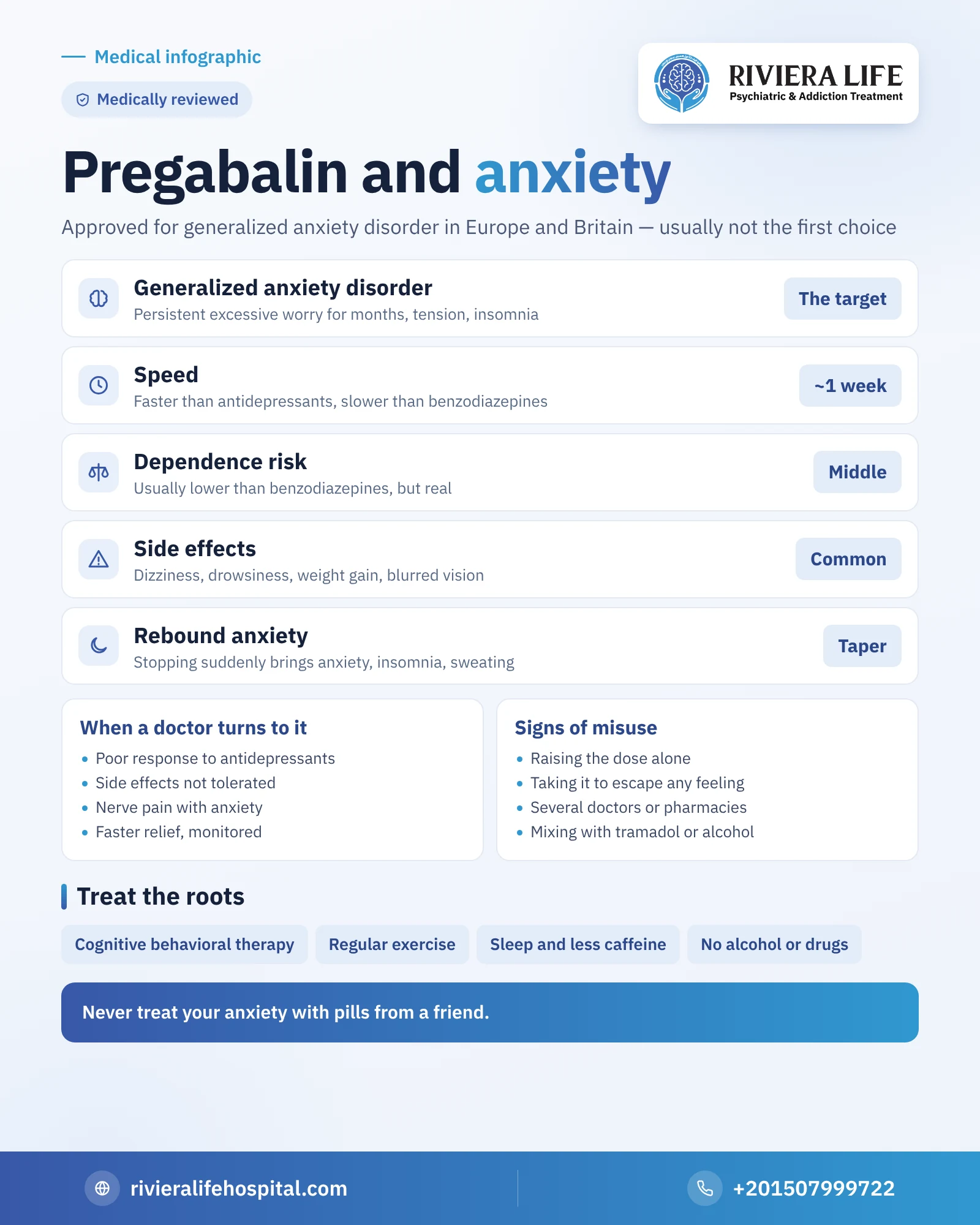
On the question of pregabalin and anxiety, the short answer is yes: the medicine is used to treat generalized anxiety disorder in Europe and a number of countries, but it usually isn’t considered the first choice, and it doesn’t “cure” anxiety in the full sense. It eases the symptoms as long as the patient is taking it, while psychotherapy and lifestyle changes treat the roots of the problem. Its effect begins faster than antidepressants, which is what makes it attractive, and also what makes some people go beyond the prescription. This article explains when a doctor prescribes it for anxiety, what to expect from it, and where the risk of dependence begins, without any doses, since setting them is your doctor’s decision.
Pregabalin and anxiety: is it really a medicine for anxiety?
Pregabalin is basically a medicine for nerve pain and epilepsy. But studies showed it eases the symptoms of generalized anxiety disorder, so the European and British authorities approved it for this use, while the US Food and Drug Administration has not approved it for anxiety. This means it has a place in treating anxiety, but a specific place within a wider plan, not a general medicine for every tension.
Generalized anxiety disorder differs from normal daily anxiety. It is persistent, excessive worry about many things, lasting months, accompanied by muscle tension, insomnia, irritability and difficulty concentrating, and it disrupts life and work. Anxiety before an exam or interview, on the other hand, usually doesn’t need pregabalin or any other medicine.
When does a doctor prescribe it for generalized anxiety disorder?
Medical guidelines usually start with psychotherapy, especially cognitive behavioral therapy, or with antidepressants from the serotonin and serotonin-noradrenaline families. The doctor may turn to pregabalin in certain situations, including:
- Insufficient response to antidepressants after an adequate trial.
- Not tolerating their side effects, such as nausea or sexual dysfunction.
- Nerve pain alongside the anxiety, so the medicine serves both goals.
- The need for faster relief of the physical symptoms of anxiety, under follow-up.
On the other hand, the doctor often hesitates to prescribe it for someone with a history of addiction, who uses sedatives or opioids, or who has weak kidneys. And the evidence for its benefit in other types of anxiety, such as panic disorder or OCD, is weaker than its evidence in generalized anxiety.
Does pregabalin treat anxiety or ease it?
More precisely, it eases it. Many patients notice within about a week that physical tension is lower, sleep is better, and anxious thoughts are less insistent. But the causes that feed the anxiety, such as the way of thinking about bad possibilities, avoiding situations and ongoing pressures, aren’t changed by the medicine. That is why anxiety may return on stopping if the medicine wasn’t accompanied by psychotherapy. And the most successful approach is usually for the medicine to give the patient space in which to learn skills for dealing with anxiety, not to replace them.
How does it differ from antidepressants and sedatives?
Antidepressants usually need weeks for their effect on anxiety to appear, they don’t cause a high, and people rarely seek to misuse them, though stopping them suddenly may cause unpleasant symptoms. Sedatives from the benzodiazepine family, such as Xanax, work within minutes or hours, but carry a clear risk of dependence, which is why they are recommended only for short periods. Pregabalin stands in a middle zone: faster than antidepressants and slower than sedatives, and the risk of dependence on it is usually lower than benzodiazepines but real, especially for those who are susceptible. And if a person uses both together, the combination increases drowsiness and breathing problems.
The side effects anxiety patients complain of
The most common complaints are dizziness and drowsiness, then weight gain, blurred vision, difficulty concentrating and swollen feet. Some people may notice a feeling of detachment or a “light head”. And there is a general warning for medicines in this class: the possibility of sad or self-harming thoughts appearing in a small number of patients, which requires telling the doctor immediately if it happens. The more severe effects are detailed in our article on the harms of pregabalin.
The risk of misuse: where does it begin?
An anxious person is more exposed than others to falling into this trap, because the medicine gives them what they lack: quick calm. The slide may begin with small steps that seem justified, such as an extra pill before a difficult situation, then another for sleep, then looking for the medicine without a prescription when the box runs out. Among the signs that deserve attention:
- Increasing the amount without going back to the doctor.
- Taking it to escape any uncomfortable feeling, not only for the symptoms of anxiety disorder.
- Getting it from more than one doctor or pharmacy.
- Mixing it with tramadol, hashish or alcohol to strengthen the effect.
- Intense anxiety at the thought of it running out.
These and other signs are explained in our article on pregabalin addiction symptoms, and why some people fall into addiction while others don’t is covered in the causes of pregabalin addiction.
Rebound anxiety when stopping
When pregabalin is stopped suddenly after regular use, anxiety may return more strongly than before, accompanied by insomnia, sweating, nausea and headache. Many confuse this with “the illness returning”, and conclude that they can’t live without the medicine. In reality, a large part of these symptoms is temporary withdrawal that can be avoided by tapering. So stopping is always done with a plan with the doctor, and the details are in our article on pregabalin withdrawal symptoms.
Don’t treat your anxiety with pills from a friend
A familiar story: a colleague gives another a strip of pregabalin and says “try it, it calms you down”. The problem is that someone who takes it this way doesn’t know whether what they suffer from is anxiety disorder at all, or depression, a thyroid problem or the effect of another substance. Nor do they know whether their kidneys are healthy, or what among the things they take interacts with the medicine. The correct diagnosis may lead them to a simpler and safer treatment.
Treating anxiety without relying on a single medicine
Cognitive behavioral therapy is one of the most effective treatments for generalized anxiety, teaching the patient how to notice their anxious thoughts, test them and stop avoiding what frightens them. Added to it are regular physical activity, organizing sleep, reducing caffeine and stimulants, and keeping away from alcohol and substances that seem calming and then raise anxiety later. And the medication plan, if the patient needs one, is chosen according to their condition and history, not according to what someone else has tried.
Questions worth asking your doctor
If the doctor suggests pregabalin for your anxiety, it is fine to ask before you start, as a patient who understands their plan sticks to it more:
- Why did you choose this medicine for me specifically, and not an antidepressant or psychotherapy first?
- What is the expected length of treatment? And when do we review the need for it?
- Does it conflict with any medicine I take, especially painkillers and sleeping pills?
- How will we stop it when the time comes?
- What signs should make me call you immediately if they appear?
And it is important in this conversation to mention frankly any history you or your family have with addiction or overuse of sedatives, as this information may change the doctor’s choice in your favor.
When anxiety and addiction come together
Many of those who reach treatment for pregabalin addiction began with real anxiety that wasn’t treated as it should have been. Their successful treatment deals with both together: safe withdrawal of the medicine, and treatment of the anxiety itself, otherwise the patient returns to the pill at the first crisis. At Riviera Life, consultants in psychiatry and addiction treatment work on this dual diagnosis in complete confidentiality, and the first consultation is free on +201507999722. You can learn about the steps of the plan in our article on pregabalin addiction treatment.
More from our pregabalin guide
- Pregabalin: the complete guide
- Pregabalin and gabapentin: the difference and which suits
- Pregabalin and alcohol: the risks of combining them
- Pregabalin and pregnancy
- Anxiety: the complete guide
Questions many people ask
It is approved for generalized anxiety disorder in Europe, Britain and a number of countries, but the US Food and Drug Administration has not approved it for this use.
Many patients notice an improvement within about a week, which is faster than antidepressants, which usually need weeks.
It doesn't belong to the benzodiazepines and works by a different mechanism, and the risk of dependence on it is usually lower but real, especially for those with a history of addiction.
It may return if the medicine wasn't accompanied by psychotherapy, and stopping suddenly causes temporary rebound anxiety, so stopping is gradual.
It usually starts with cognitive behavioral therapy or antidepressants, and pregabalin is turned to in specific cases; the doctor chooses according to the case.