Emotional trauma is the collapse that follows the loss of a relationship that carried part of your identity and safety: a breakup, betrayal, sudden abandonment, or a broken engagement. It isn’t trauma in the medical sense of “post-traumatic stress disorder”, but its pain is real and shows in sleep, appetite, concentration and even the body. Most people get through it with time and support, and a few slide into depression, adjustment disorder or reliance on a substance that numbs the pain. Here we explain what is happening inside you, how to get through the first weeks, what prolongs the pain, and when it becomes a condition that needs a specialist.
Why does emotional loss hurt this much?
A close relationship creates a routine, an identity and a sense of safety. When it ends suddenly, a person loses the person, their future plans and their image of themselves all at once. And because social and physical feelings share some pathways in the brain, many describe the pain as truly physical: heaviness in the chest, a lump in the throat, and loss of energy. It resembles mourning, which is what Britain’s NHS guidance on grief after a loss addresses: grieving isn’t limited to death.
In the first weeks a person may go through several states in the same day: denial, anger, bargaining through calls and attempts to get back together, and deep sadness. None of this follows a fixed order, and swinging emotions are completely normal.
How does emotional trauma show itself?
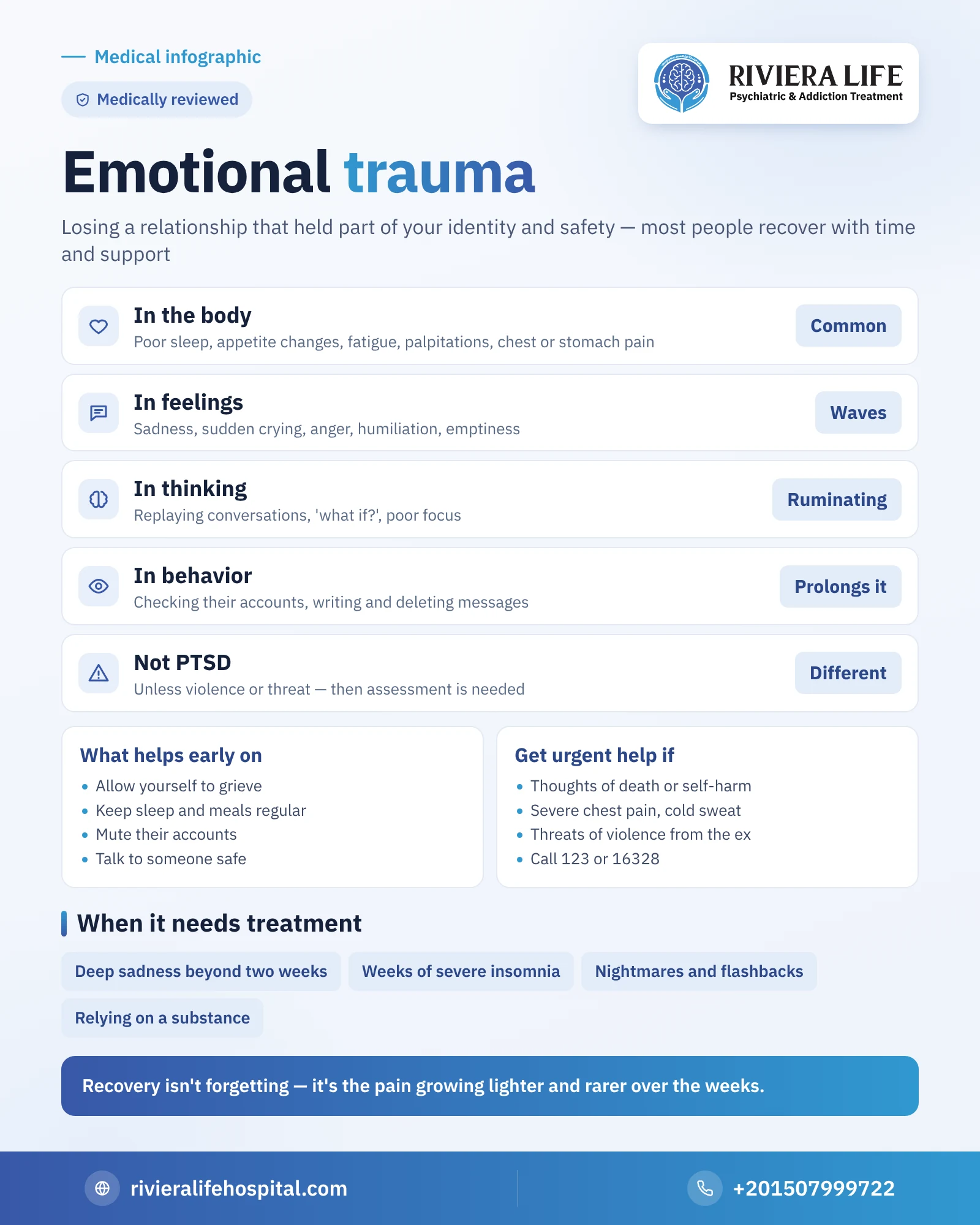
- In the body: disturbed sleep, loss of appetite or overeating, tiredness, palpitations, and pain in the chest or stomach.
- In the feelings: sadness and sudden crying, anger, a sense of being let down or humiliated, and emptiness.
- In thinking: replaying conversations, the repeated question “what if?”, difficulty concentrating, and analyzing every old message.
- In behavior: checking the other person’s accounts, writing messages and then deleting them, avoiding shared places, and withdrawing from friends.
If severe chest pain with shortness of breath appears after an emotional shock, don’t assume it is necessarily psychological. There is a rare condition called broken heart syndrome (takotsubo cardiomyopathy) that can occur after intense emotional stress, and it requires urgent medical assessment.
How it differs from major psychological trauma
| Point of comparison | Emotional trauma after losing a relationship | Post-traumatic stress disorder |
|---|---|---|
| Cause of the pain | Loss and a wound to attachment | Exposure to severe danger, a threat to life or violence |
| Main symptoms | Sadness, anger, rumination and longing | Intrusive memories, nightmares, avoidance and constant alertness |
| Usual course | Eases gradually over weeks to months | May persist and need specialist treatment |
But abusive relationships, including violence, threats and constant humiliation, can leave an effect close to post-traumatic symptoms. You will find the detailed differences in psychological trauma and the symptoms of post-traumatic stress disorder.
What helps in the first weeks?
- Allow yourself to grieve: suppressing it prolongs it. Set aside a short time to cry or write, then return to your day.
- Keep the basics: sleep at fixed times, small regular meals, and going out every day, even for a short walk.
- Reduce the triggers: unfollow or hide their accounts, remove what wakes the pain from your phone for a while, and it is better to reduce contact until things calm down.
- Talk to a safe person: a friend or relative who listens without judging or urging you to take revenge.
- Write down what you feel: writing puts inner chaos in order and eases rumination.
- Don’t make big decisions now: leaving your job, travelling suddenly or a quick new relationship are decisions better postponed.
- Move your body: walking and light exercise improve mood and sleep. Our article on happiness hormones explains why movement, sunlight and connection help.
What prolongs the pain?
Digitally monitoring your ex, repeatedly getting back together without solving the problem, thinking about revenge, endless self-blame, and complete isolation. And also turning the loss into a verdict on your worth: “I’m not fit to be loved”. This idea in particular feeds depression. If thoughts of rumination take hold of you, our article on overthinking offers practical tools.
When attachment turns into addiction
Some people can’t cut contact however hurt they are: calls, messages and attempts to get back together repeat despite humiliation, as if they need a dose. This pattern resembles compulsive behavior in its structure, and our article on love addiction explains it. The distinction matters because the treatment differs from that of ordinary grief.
Betrayal and a broken engagement: a special kind of wound
When the cause of the collapse is betrayal, the pain gains another layer: loss of trust in the partner and in your own judgment. The betrayed person may ask themselves how they didn’t notice, and review the whole past as if it had been an illusion. This self-blame is unfair; trusting a partner isn’t stupidity. With a broken engagement, the weight is sometimes doubled by what people say, returning gifts and arrangements, and how those around look at you. It may help to choose just one or two people to tell the truth to, and settle for a short, calm sentence with everyone else.
What does healthy recovery look like?
Recovery doesn’t mean forgetting the person or feeling nothing. It means the pain becomes lighter and less frequent, you gradually return to sleep, work and interests, and you can mention the past without collapsing. Sudden setbacks may appear with an anniversary or a song, and that doesn’t mean you are back to square one. What matters is the overall direction across the weeks, not how one particular day goes.
Escaping into a substance
Emotional pain pushes some people towards alcohol, hashish, tramadol, or sleeping pills and sedatives, to sleep or to forget. Numbing the pain postpones it without solving it, adds the risk of dependence, and reduces your ability to process the loss. If you start to find yourself turning to a substance every night after a breakup, ask for help early; our article on depression and addiction explains how each feeds the other.
When does emotional trauma become a condition that needs treatment?
- Intense sadness and loss of interest in everything lasting more than two weeks, with a clear decline at work or study — in which case see the symptoms of depression.
- Severe anxiety or insomnia that prevents daily functioning for weeks after the event.
- Nightmares, intrusive memories and panic, especially after a relationship involving violence or threats.
- Growing reliance on alcohol, sedatives or a drug.
- Thoughts of self-harm, or that life has no meaning.
Psychotherapy, especially cognitive behavioral therapy, helps dismantle harsh thoughts about yourself and builds recovery skills. And if depression or anxiety is severe, the doctor may add medication according to their assessment, without the patient starting or stopping anything on their own.
Get urgent help immediately if you see
Call an ambulance on 123 or the mental health hotline on 16328, or go to the nearest emergency department.
- Thoughts of death, self-harm or ending life
- Severe chest pain with shortness of breath or a cold sweat
- Danger of violence or threats from the other person
If the pain has reached thoughts of death, our article on suicidal thoughts was written to help you. Tell someone you trust today, and don’t stay alone with these thoughts.
How can you help a friend who has been through emotional trauma?
Listen more than you advise. Avoid “they don’t deserve you” and “you’ll forget in a month”, which minimize their pain. Offer simple company: a coffee, a walk or lunch. Watch for the danger signs mentioned above, and don’t hesitate to go with them to a specialist if their symptoms deepen.
How can Riviera Life help you?
At Riviera Life you will meet a consultant psychiatrist who distinguishes between normal grief, depression, the effect of trauma and reliance on a substance, then sets a suitable plan with you. The first consultation is free and confidentiality is complete.
More from our mental health guide
- Psychological trauma
- Love addiction
- The difference between sadness and depression
- Depression: the complete guide
- Difficulty expressing emotions: alexithymia and how to deal with it
- Defense mechanisms: their types, examples and when they become an obstacle
Questions many people ask
It varies from person to person, and usually eases gradually over weeks to months. Intense sadness and loss of interest lasting more than two weeks, with declining performance, call for an assessment.
Usually not. PTSD arises after a severe threat to life or violence. But an abusive relationship can leave symptoms close to it that need assessment.
Intense emotional pressure raises stress and affects sleep, appetite and muscles. Chest pain with shortness of breath calls for an urgent medical check and isn't automatically psychological.
Many people find that reducing contact and not checking their accounts helps recovery. If that is hard for you and keeps happening, you may need a specialist's help.
When sadness, insomnia and loss of pleasure persist, when you rely on alcohol or sedatives, when nightmares appear — and for any thoughts of self-harm, call an ambulance on 123 immediately.