The difference between psychosis and schizophrenia starts with the fact that psychosis isn’t one illness but a state or group of symptoms, in which a person partly loses contact with reality so hallucinations, delusions or disorganized thinking appear. Schizophrenia is one of the disorders in which psychosis is a main symptom, but it is a chronic illness with a specific course and diagnosis. Put simply: all schizophrenia involves psychosis, but not all psychosis is schizophrenia. Psychosis may be the result of drugs, a mood disorder, a physical illness or severe stress. In this article we clarify the difference with a table, and explain how the doctor determines the cause, and what that means for treatment and expectations.
Psychosis vs schizophrenia: the rule that resolves the confusion
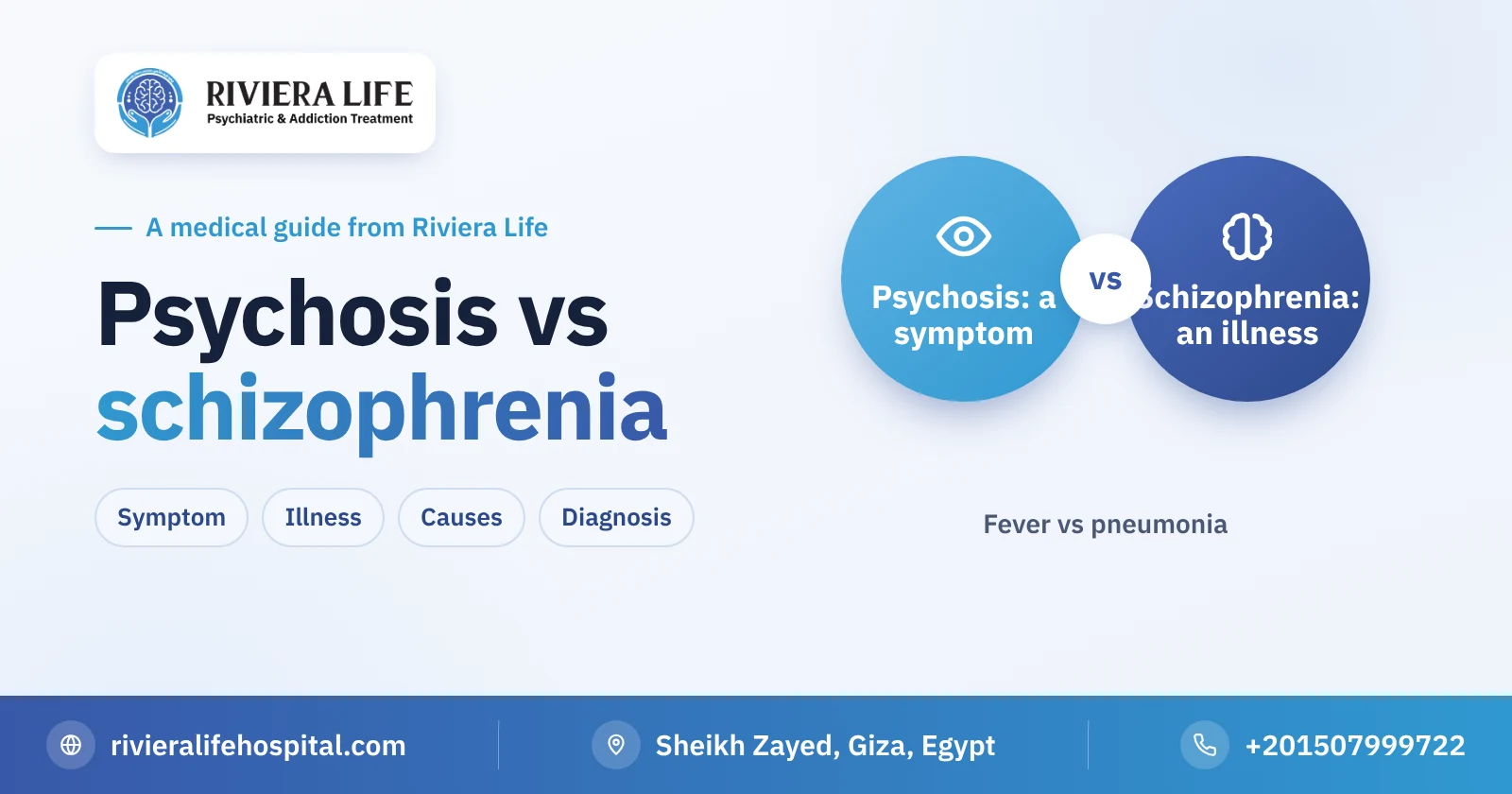
Imagine that psychosis is a “fever” and schizophrenia is “pneumonia”. A fever is a symptom that appears in many illnesses, and we don’t treat it without looking for its cause. Likewise psychosis is a symptom with many causes, and schizophrenia is one of them. That is why the doctor usually doesn’t give the label of schizophrenia to a first psychotic episode, but observes and rules out other causes first.
Psychosis: a symptom that appears in many illnesses
Psychosis is a state in which reality mixes with imagination. Its most prominent signs are hallucinations, meaning perceiving things that don’t exist such as hearing voices, delusions, meaning fixed false convictions that don’t change with evidence, and disorganized thinking in which speech is hard to understand. It may be passing for days, as happens after severe sleep loss or using a substance, or it may be part of a chronic illness. Its causes are explained in our article on the causes of psychosis.
And what is schizophrenia?
Schizophrenia is a chronic psychiatric disorder characterized by psychotic symptoms, namely hallucinations, delusions and disorganization, with negative symptoms such as blunted emotion, withdrawal and lack of motivation, and a decline in academic, occupational or social functioning. Diagnosis requires the symptoms to last long enough, which international references put at roughly six months including prodromal periods, and other causes such as drugs or physical illnesses to be ruled out.
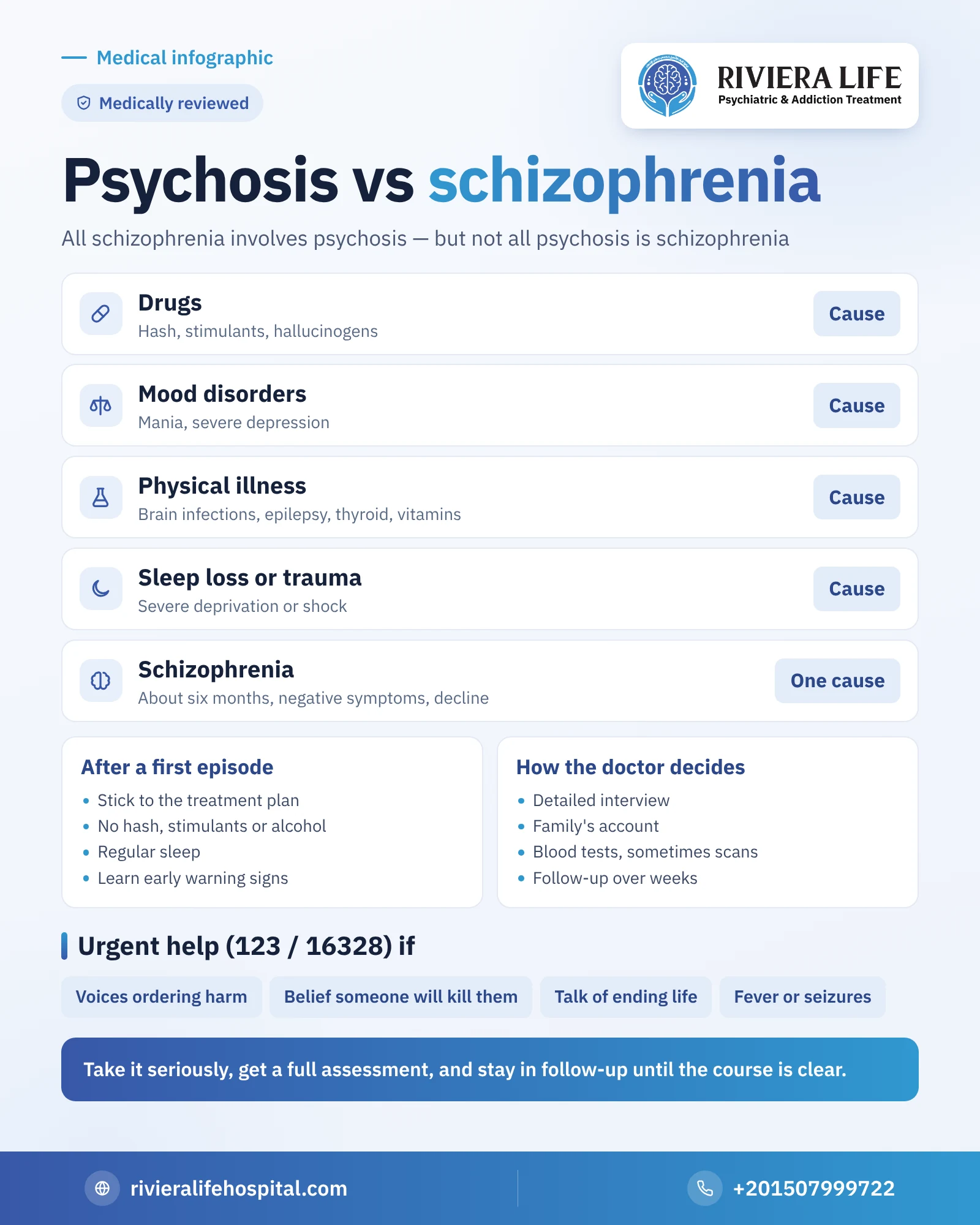
The difference between them in a table
| Point of comparison | Psychosis | Schizophrenia |
|---|---|---|
| Nature | A group of symptoms or a general state | A specific, chronic psychiatric disorder |
| Duration | May be days, weeks or longer | Symptoms last months with a clear effect on life |
| Causes | Drugs, mood, physical illnesses, stress, childbirth, schizophrenia and others | Genetic predisposition, brain development factors, environment and stress |
| Negative symptoms | Not required | Common and affect functioning |
| Chance of symptoms disappearing | May disappear completely if the cause is treated | Needs long treatment with a possibility of relapse |
| Treatment | Treating the cause, usually with antipsychotics | Long-term antipsychotics with rehabilitation and support |
What other causes produce psychosis without schizophrenia?
- Drugs: hash, stimulants and hallucinogens may trigger temporary psychosis or reveal a hidden predisposition. Details are in our article on drug-induced psychosis.
- Mood disorders: mania in bipolar disorder and severe depression. On the latter see psychotic depression.
- Physical illnesses: brain infections, epilepsy, brain tumors, thyroid disorders, some immune diseases and some vitamin deficiencies.
- Medicines: some medicines may cause psychosis in some people, including some stimulants and steroids.
- Severe sleep deprivation or severe trauma.
- After childbirth: a rare psychosis that needs urgent intervention.
- Delusional disorder: fixed delusions without the other symptoms of schizophrenia.
Does psychosis turn into schizophrenia?
Sometimes. After a first psychotic episode some people recover completely and the symptoms don’t return, and others move to a chronic diagnosis such as schizophrenia or bipolar disorder. The likelihood of this rises with persistent symptoms, poor functioning, family history and hash use. That is why doctors follow anyone who has had psychosis for a long time, and aren’t reassured only by the first symptoms disappearing.
How does the doctor reach the diagnosis?
He starts with a detailed interview covering the onset and duration of symptoms, history of substance use, sleep, medicines and family, while listening to those around the patient. Then he requests tests to rule out physical causes, such as blood and thyroid tests and sometimes a brain scan. The conclusion may be reviewed after weeks, as the diagnosis becomes clear with follow-up. Neither the patient nor their family can diagnose the condition from the internet; this article is for understanding only. Hallucinations themselves are covered in hallucination symptoms.
The difference in treatment
In psychosis in general, treatment is determined by the cause: stopping the substance responsible in drug-induced psychosis, treating the physical illness, and stabilizing mood in bipolar disorder. Antipsychotics are usually used to calm symptoms in almost all cases. In schizophrenia, medicine continues for a long time alongside psychotherapy and rehabilitation; the length of continuation is decided by the doctor alone, and sudden stopping isn’t allowed. Treatment details are in our articles on psychosis treatment and schizophrenia treatment.
Why does the distinction matter to the family?
Because a family that hears the word “schizophrenia” at the first episode sometimes collapses, and may stop looking for treatment of the real cause. On the other hand, someone who hears “temporary psychosis” may become lax and stop the medicine early, so the episode returns. Accurate understanding balances the two: take the matter seriously, ask for a full assessment, and stay in follow-up until the course becomes clear.
Seek urgent help immediately if you see
Call an ambulance on 123 or go to the nearest emergency department if the person shows:
- Voices ordering them to harm themselves or others
- A belief that someone wants to kill them, with defensive or aggressive behavior
- Talk of ending life; you can also call the mental health hotline on 16328
- Sudden severe confusion, fever or seizures
Passing psychosis and drug-related psychosis: a practical example
A young man in his early twenties stayed up for a week preparing for an exam and took a lot of stimulants, so he began to suspect his colleagues and hear whispers. His family took him to the doctor, and after days of sleep, treatment and stopping the stimulants, the symptoms calmed. This was psychosis that wasn’t schizophrenia. But if the symptoms had continued for weeks after the trigger was gone, or returned without a clear reason, the likelihood of a deeper disorder would increase. That is why the family shouldn’t be reassured too quickly, nor become pessimistic too quickly: what is needed is regular follow-up and an assessment after weeks.
What after the first episode?
- Sticking to the treatment plan the doctor sets, even if the symptoms disappear quickly.
- Staying completely away from hash, stimulants and alcohol, as they are among the strongest triggers of return.
- Regular sleep and reducing acute stress as far as possible.
- Learning the early signs of return, such as disturbed sleep and new suspicion, and discussing them with the doctor.
- Continuing follow-up for a period set by the doctor, not shortened by the patient themselves.
For more detail on preventing later episodes you can see our article on psychosis treatment.
Questions families often ask
Does psychosis mean the person is “mad”? No. The word madness is a stigma with no medical value, and psychosis is a treatable medical condition, after which many return to their lives. Can there be a single psychosis that never returns? Yes, this happens especially if the cause was temporary, was treated, and risk factors are absent. Does a single voice mean schizophrenia? No; hearing a passing voice when falling asleep or waking may happen to healthy people, and what counts is persistence and the effect on life. In all cases only the doctor judges, and the family shouldn’t give medicine on its own or delay showing the person to a specialist.
How can Riviera Life help you?
At Riviera Life in Sheikh Zayed, consultants in psychiatry and addiction carry out an assessment to determine the cause of the symptoms, including the role of drugs, in complete confidentiality and with round-the-clock medical supervision when needed. The first consultation is free on +201507999722.
More from our psychosis guide
- Psychosis: the complete guide
- The causes of psychosis
- Psychosis treatment
- Schizophrenia: the complete guide
Questions many people ask
No. Psychosis is a symptom that may come from drugs, a mood disorder, a physical illness or severe stress, and schizophrenia is only one of its causes.
It may go away if its cause is temporary and is treated, but some cases need long treatment and follow-up. The doctor determines the outlook.
International references use a period of roughly six months with a clear effect on functioning, after ruling out drugs and physical illnesses.
Yes, it may cause psychosis in some people, and the risk increases with high potency, early onset of use and genetic predisposition.
There is no test that settles the diagnosis, but tests and scans are done to rule out physical causes, and diagnosis relies on clinical assessment.