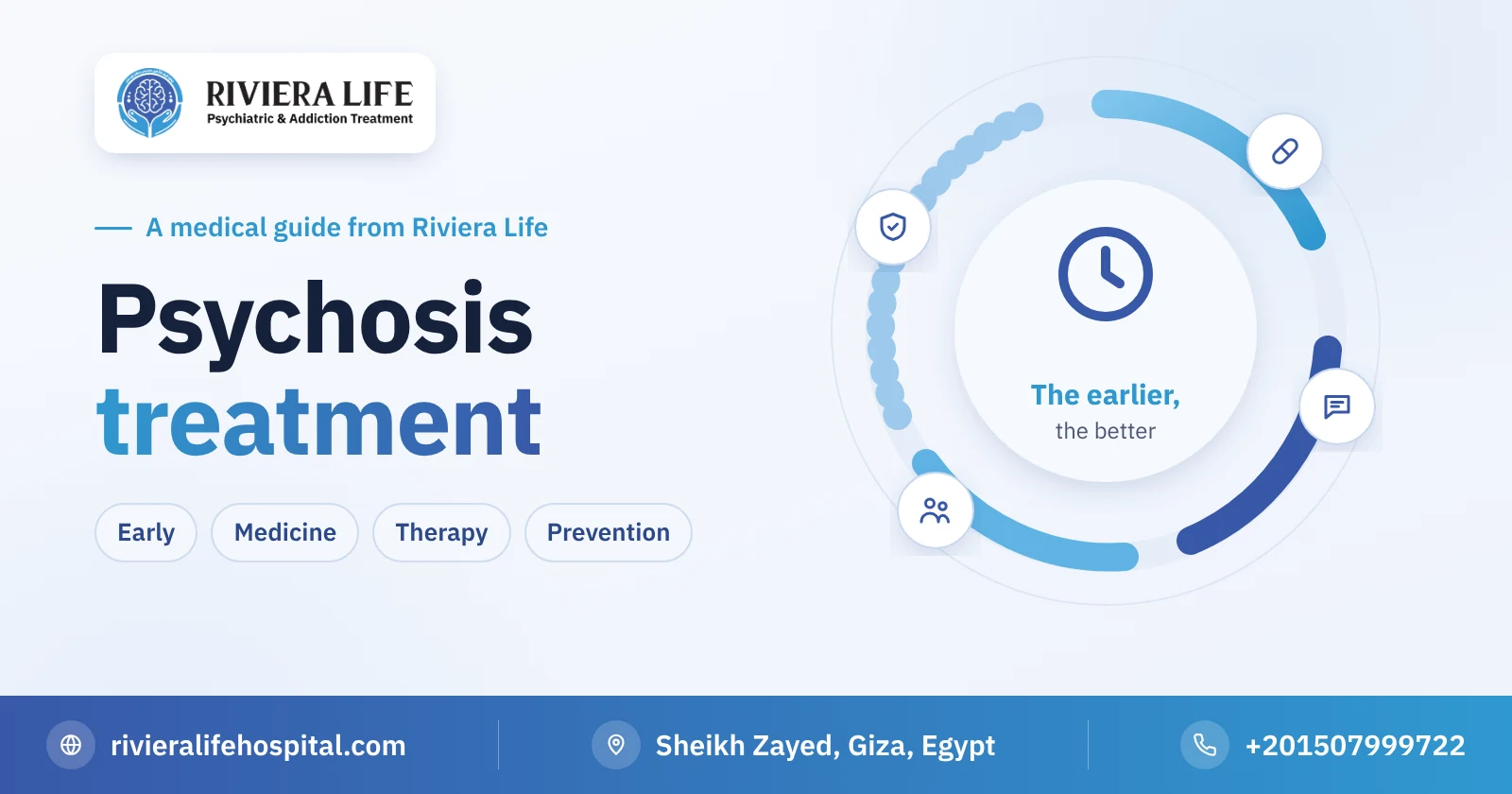
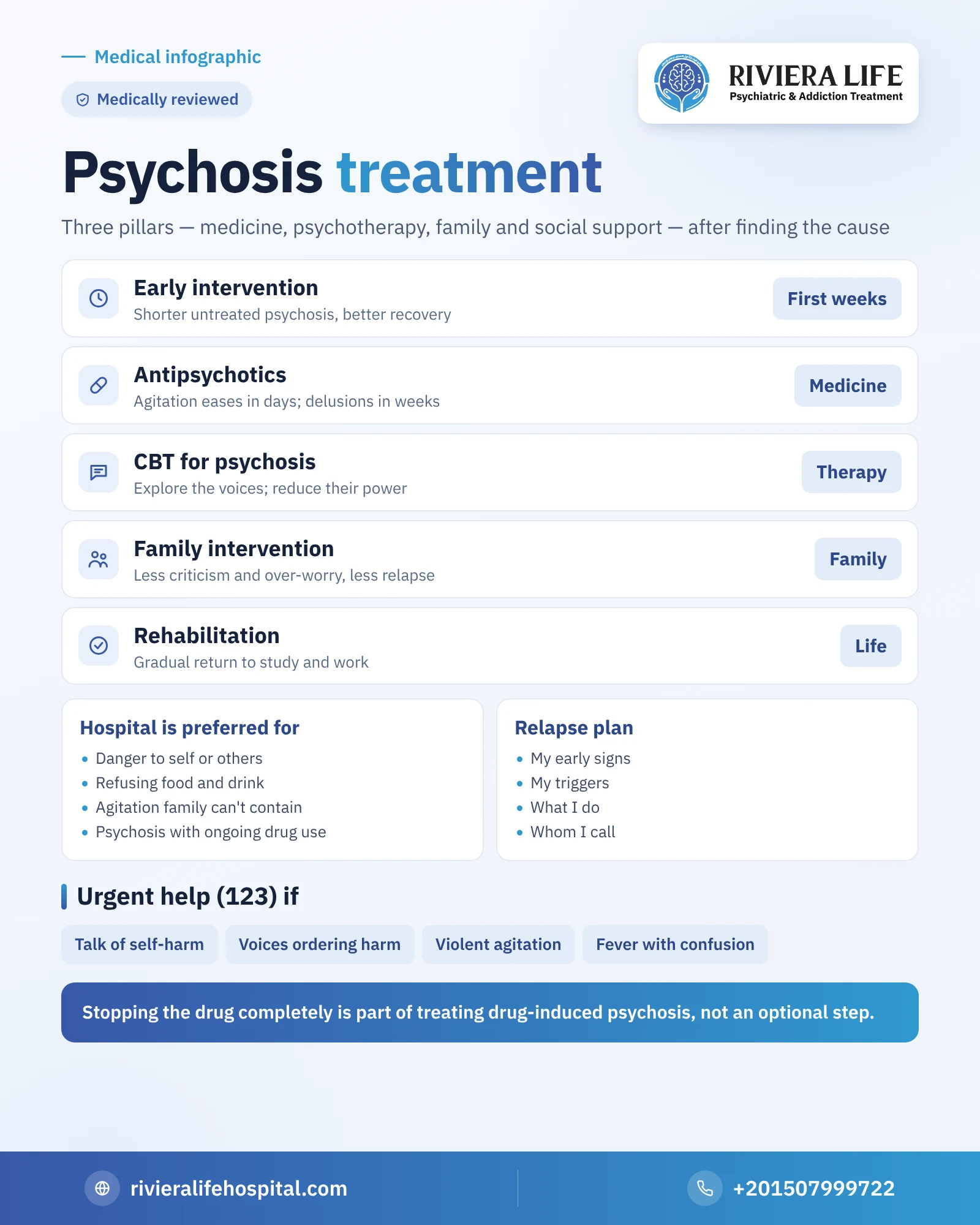
Psychosis treatment is possible, and its results are better the earlier it starts. Treatment rests on three pillars working together: an antipsychotic medicine that calms delusions and hallucinations, psychotherapy that helps the patient understand his experience and deal with it, and family and social support that returns him to his studies or work. Before all that comes an assessment that determines the cause of the episode, because drug-induced psychosis is treated differently from the psychosis of schizophrenia, mania or organic illness. In this article we explain early intervention, when hospital admission is needed, what the family needs to know about medicine, cognitive behavioral therapy for psychosis, family intervention, the relapse prevention plan, and realistic chances of recovery.
What does psychosis treatment aim for?
The disappearance of the voices isn’t the only goal. The treatment team works on successive goals: first the safety of the patient and those around him, then easing acute symptoms and restoring sleep and eating, then treating the cause, then what really matters to the patient in the long term: returning to university or work, keeping his relationships, and knowing how to catch the signs of relapse before they grow. This order explains why treatment doesn’t end when the patient leaves hospital.
Early intervention: why do the first weeks make the difference?
Doctors call the period between the start of symptoms and the start of treatment the “duration of untreated psychosis”. The longer this period, the slower recovery and the more residual symptoms on average. That is why many health systems have set up specialist first-episode services, which offer in one team the psychiatrist, therapist, social worker, family support and help returning to study, and research indicates this model improves outcomes compared with usual care.
Intervention begins with a comprehensive assessment: a detailed interview with the patient and family, a physical examination, blood tests and thyroid function, a drug test, and sometimes a brain scan or EEG if the onset was sudden or neurological signs appeared. We explain the causes the doctor looks for in our article on causes of psychosis.
Treatment in hospital or at home?
Many patients are treated in the outpatient clinic with their families, but some situations make a stay safer:
| A hospital stay is preferred when | Outpatient treatment may be enough when |
|---|---|
| There is danger to oneself or others, or voices ordering harm | There is no clear danger and the patient cooperates |
| Food and drink are refused or there is severe self-neglect | He can eat, sleep and care for himself |
| Agitation the family can’t contain | A family free to follow up daily |
| Psychosis with ongoing use or withdrawal needing supervision | He has stopped using and the home environment is safe |
| A careful assessment or fast medicine adjustment is needed | Good response to treatment in the first weeks |
A stay isn’t a punishment or a permanent “commitment”, but usually a temporary stage lasting until the condition stabilizes, after which the patient continues his treatment as an outpatient.
Seek urgent help immediately if you see
Call an ambulance on 123 or go to the nearest emergency department, and don't leave the patient alone.
- Talk of self-harm or ending life
- Responding to voices ordering him to harm himself or others
- Violent agitation or threats to family members
- Complete refusal of food and drink for more than a day
- Psychosis with fever, clouded consciousness or severe muscle stiffness
Guidance can also be sought from the General Secretariat of Mental Health hotline on 16328.
Antipsychotics: what should the family know?
Antipsychotics are the medical foundation in most cases. They are divided into first and second generation, and the doctor chooses between them according to symptoms, age, physical condition and the side effects the patient tolerates, and we explain the difference between them in our article on antipsychotics. It is important for the family to know:
- Agitation and insomnia usually calm within days, but delusions and hallucinations may need weeks to ease clearly.
- The doctor usually starts with the lowest effective dose, especially in the first episode, because new patients are more sensitive to side effects.
- Some medicines need monitoring of weight, sugar and fats, and some need monitoring for muscle stiffness, tremor or a feeling of being unable to sit still.
- Long-acting injections are available, given every few weeks, and suit those who forget the medicine or refuse tablets.
- If the patient doesn’t improve after trying two suitable medicines, there is a special medicine for resistant cases that needs periodic follow-up with blood tests.
How long does the medicine continue after the first episode?
There is no single answer. Many guidelines advise continuing for a period usually of not less than one or two years after improvement, because early stopping is one of the most common causes of relapse. In drug-induced psychosis the period may be shorter if use stops completely. The decision in all cases is the doctor’s, and any reduction is gradual and under his follow-up, not by decision of the patient or the family.
Cognitive behavioral therapy for psychosis
It is a version of cognitive behavioral therapy designed specifically for those going through psychosis, and British guidelines recommend offering it to people with psychosis, including the first episode. The therapist doesn’t try to convince the patient that he is “wrong”, but explores his experience with him with curiosity: what does the voice say? When does it get louder? What evidence supports the idea of being watched and what weakens it? Over time the patient learns alternative explanations, and practical ways to reduce the distress of the voices, such as shifting attention or answering them calmly instead of giving in to them. The aim is for the symptoms to lose their power over his life, even if they don’t disappear completely.
Family intervention: the family is part of the plan
Family intervention sessions aren’t about blaming the family, but structured training usually lasting several months. In it family members learn the nature of psychosis and its early signs, ways of speaking in short, calm sentences, and how to resolve daily disagreements without explosions. Researchers have noticed that homes with a lot of harsh criticism or excessive worry around the patient are linked to more relapse, and that easing this tension clearly reduces relapse. For those caring for a patient at home, our article on how the family deals with a psychiatric patient offers additional practical advice.
Rehabilitation and returning to life
After the symptoms calm, the patient’s biggest question remains: will I go back to how I was? Here comes the role of rehabilitation: a gradual return to study with a lighter schedule, or to work with fewer hours at first, training in social skills that may have declined during the illness, and treatment for weak concentration and memory if present. Studies indicate that a supported return to work is more successful than waiting until “fully better” before trying.
Treating psychosis accompanying addiction
If psychosis appeared with hashish, shabu or strox, stopping the drug completely is an essential part of treatment, not an optional step; continued use weakens the medicine’s effect and doubles the risk of future episodes. The team here combines treating the psychosis and treating the addiction in one plan, as in our dual diagnosis program. You will find the details, signs and duration of this type in our article on drug-induced psychosis.
The relapse prevention plan
Relapse rarely comes suddenly. It is usually preceded by days or weeks of signs specific to each patient, and a good plan is written with the patient and family before discharge:
- My early signs: such as less sleep, returning to isolation, new suspicion towards the neighbors, or neglecting the medicine.
- My triggers: staying up late, drugs and alcohol, major stresses, and changing the medicine without consultation.
- What I do: contact the doctor the same week, reduce stresses, and keep regular sleep.
- Whom I call: the doctor’s name and number, and a family member who knows the plan.
Dealing quickly with these signs prevents many relapses, or makes them milder and shorter.
Chances of recovery: what to expect?
Outcomes vary from person to person, but the general picture is brighter than many think. A large proportion of those who go through a first episode and receive early treatment improve clearly, and some never have a second episode. And of those who have repeated episodes, many can live stable and productive lives with treatment and follow-up. The chances improve with a short duration of untreated psychosis, abstaining from drugs, sticking to medicine and family support. And if the final diagnosis is schizophrenia, our article on schizophrenia treatment covers the stages of long-term treatment.
The right hospital for psychosis treatment: how to choose
The right hospital for psychosis treatment is the one that offers what a psychosis patient specifically needs: a serious search for the cause, safety during the acute episode, and a plan that extends after discharge. Ask before you choose:
- Is the assessment done by a consultant psychiatrist, with tests that rule out organic causes and drugs?
- Is a stay with round-the-clock medical supervision available for cases that carry danger?
- Is psychotherapy for psychosis and family sessions offered, not just medicine?
- Can the team treat psychosis and addiction together if they come together?
- Does the doctor explain side effects and regularly follow weight, sugar and movement?
- Is there follow-up after discharge and a written relapse prevention plan?
Beware of any party that promises you a guaranteed cure or the disappearance of psychosis in days without follow-up.
How Riviera Life meets these standards
Riviera Life applies these standards as follows:
- Psychiatry and addiction consultants: an assessment that looks for the cause of the episode before choosing treatment.
- Round-the-clock medical supervision: complete safety during the acute phase and careful adjustment of medicines.
- Dual diagnosis treatment: for psychosis accompanying hashish, shabu, strox and others.
- A family program: sessions that teach the family how to deal with the illness and the signs of relapse.
- Aftercare: follow-up after discharge and a written relapse prevention plan.
- Fourteen years of experience: and thousands of cases that have recovered.
- Ministry of Health license and complete confidentiality: regulated medical work that respects the privacy of the patient and his family.
The first consultation is free, and you can get in touch around the clock on +201507999722, and our premises are in Sheikh Zayed, Giza.
More from our psychosis guide
- Psychosis: the complete guide
- Causes of psychosis: predisposition and triggers
- Antipsychotics: types and side effects
- Schizophrenia treatment
- Psychosis relapse: early warning signs, causes and a prevention plan
- How to deal with a psychosis patient: what to say, what to avoid and safety steps
- The difference between neurosis and psychosis: insight, reality and modern terms
Questions many people ask
Many patients improve clearly, especially with early treatment and abstaining from drugs, and some never have a second episode.
Agitation and insomnia usually calm within days, while delusions and hallucinations may need weeks to ease clearly.
No, many are treated in the outpatient clinic, and a stay is preferred when there is danger, refusal of food, ongoing substance use, or follow-up at home isn't possible.
The medicine is only stopped by the doctor's decision and with gradual reduction, because early stopping is one of the most common causes of relapse.
Look for an assessment by a consultant psychiatrist that rules out organic causes and drugs, round-the-clock supervision for risky cases, psychotherapy and family sessions, and follow-up after discharge. Riviera Life in Sheikh Zayed meets these criteria.