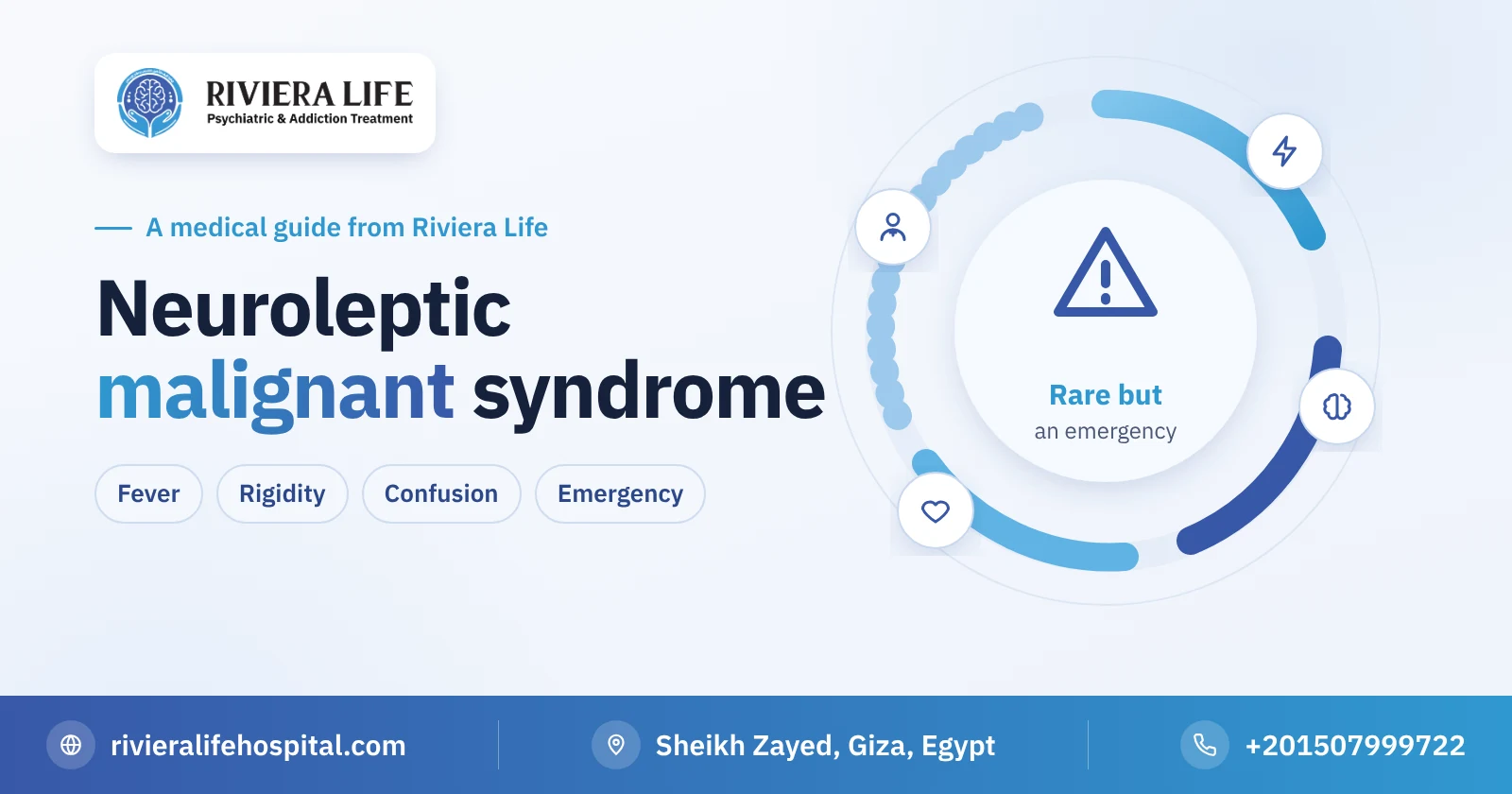
Neuroleptic malignant syndrome is a rare and serious reaction to antipsychotic medicines, marked by a sharp rise in temperature, clear muscle rigidity, a change in consciousness and disturbed pulse and blood pressure. It is an emergency that needs a hospital, and may develop over one to three days. Most people who take antipsychotics will never develop it, and the medicines are safe and necessary for most patients with psychosis and schizophrenia. What matters is that the patient and their family know the first signs, because early diagnosis is what changes the outcome.
Call an ambulance on 123 immediately if you see
In someone taking an antipsychotic, especially after starting the medicine, changing its amount or after a long-acting injection:
- High fever with severe muscle stiffness
- Confusion, deep drowsiness or difficulty waking
- Heavy sweating with a racing pulse or fluctuating blood pressure
- Severe tremor, or difficulty swallowing or speaking
- Dark urine or passing little urine
What is neuroleptic malignant syndrome?
The syndrome usually occurs when the brain is exposed to strong blocking of dopamine receptors, a messenger that controls movement, temperature and the balance of the autonomic nervous system. So the body stiffens and burns with fever, and muscle fibers break down, flooding the blood with their products and straining the kidneys. It may be linked to almost any antipsychotic, but is best known with medicines that act strongly on dopamine receptors, and with long-acting injections. It isn’t limited to psychiatric medicines, as some anti-nausea medicines may cause a similar picture, as may the sudden withdrawal of Parkinson’s medicines.
How common is it?
It is rare today, with cases estimated at less than one percent of those taking these medicines, and its rate has fallen with increased awareness and improved prescribing. The reason for caution is that its occurrence is unpredictable, and it is impossible to be sure who will develop it. It occurs in men and women, and tends to appear in young people and patients with acute agitation more than others.
The symptoms: the main four
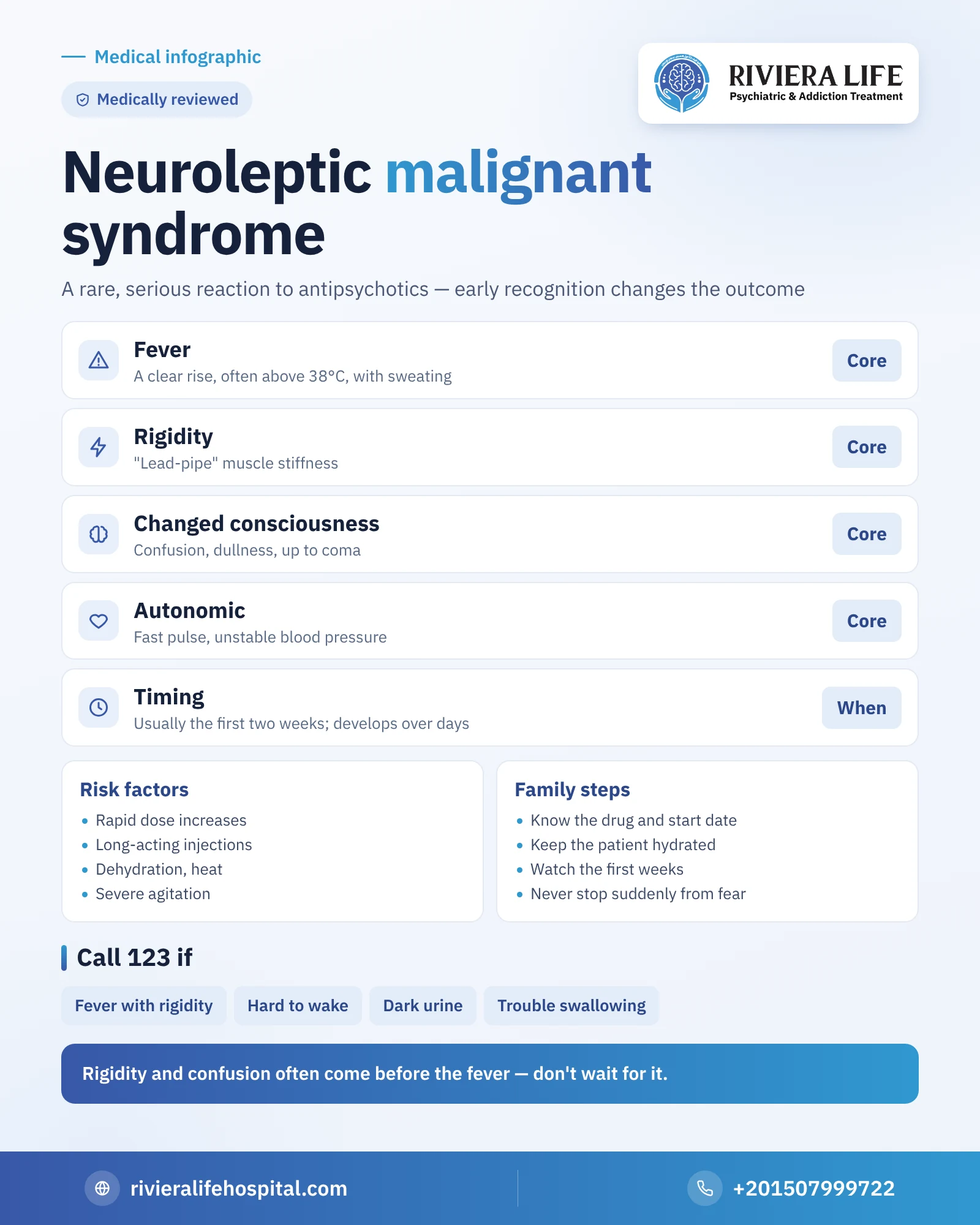
- Fever: a clear rise that may quickly exceed 38 degrees, with chills and sweating.
- Rigidity: severe muscle stiffness, described as “as if the body were a lead pipe”, resisting movement of the limbs.
- Changed consciousness: confusion, dullness, silence and reduced responsiveness, possibly reaching coma.
- Autonomic disturbance: a fast pulse, fluctuating blood pressure, heavy sweating and rapid breathing.
Tremor, difficulty swallowing or broken speech may appear with them. The signs often start with rigidity and confusion before the temperature rises, so don’t wait for high fever to act if you notice rigidity and a change in consciousness after the medicine was started.
When does it occur?
Most cases occur within the first two weeks of starting the medicine, raising its amount, or a long-acting injection. But it may occur later, especially when the medicine is changed, a second antipsychotic is added, or with dehydration or extreme heat. It usually develops over days, not within an hour, which gives the family a chance to notice it if they are paying attention.
Factors that increase the risk
- Raising the amount of the medicine quickly or changing the medicine after a short period.
- Long-acting injections and medicines that act strongly on dopamine receptors.
- Dehydration, malnutrition and physical exhaustion.
- Severe agitation, especially after physical restraint or repeated calming injections.
- Hot weather and high temperatures with too little fluid.
- Combining more than one antipsychotic, or with lithium in some cases, as the doctor judges.
- A previous episode of the syndrome, an organic brain disease, or catatonia.
These factors don’t mean the patient will develop it; they are signals that make the doctor more careful in follow-up.
Neuroleptic malignant syndrome and serotonin syndrome: what is the difference?
The two conditions resemble each other in fever and confusion, but their causes and treatment differ:
| Aspect | Neuroleptic malignant syndrome | Serotonin syndrome |
|---|---|---|
| Cause | Dopamine blocking by antipsychotics | Excess serotonin from medicines or supplements |
| Speed of development | Days | Hours, usually within a day |
| Muscles | Severe, stiff rigidity | Rapid tremors, muscle jerks and exaggerated reflexes |
| Bowel | Not marked by digestive disturbance | Diarrhea and nausea are common |
| Eyes and movement | Slow movement and dullness | Dilated pupils, agitation and restlessness |
| Causative medicine | An antipsychotic or withdrawal of a dopamine medicine | Antidepressants, tramadol or others |
The two pictures sometimes overlap, which is why doctors rely on the medication history and examination, and the patient’s family shouldn’t rely on appearance alone. You will find the second explained in serotonin syndrome.
What may resemble it?
Not every rise in temperature with rigidity is this syndrome. The doctor considers other possibilities, including infection of the brain or blood, heatstroke, malignant catatonia, acute muscle spasms that occur with antipsychotics without fever (which are distressing but less dangerous and easily treated), and poisoning with some stimulant substances. That is why the syndrome isn’t left to the family’s judgment, as telling them apart needs examination and tests.
How does the hospital deal with it?
Treatment takes place in hospital, and the patient may need intensive care. It usually includes:
- Stopping the antipsychotic immediately: the most important step, decided by the medical team.
- Comprehensive support: intravenous fluids, cooling the body, and monitoring the heart, blood pressure and breathing.
- Monitoring the kidneys and muscles: with tests, because muscle breakdown may strain the kidneys.
- Supporting medicines in more severe cases: chosen by the doctor according to the picture, including muscle relaxants and sedatives from the benzodiazepine family.
- Preventing complications: such as clots and pneumonia.
The condition usually improves within days to two weeks after stopping and support, and recovery may take longer after long-acting injections. The death rate was high in the past, but has fallen greatly with early diagnosis and modern care. The later the arrival at hospital, the greater the risks of kidney failure and complications.
What happens after recovery?
Having had the syndrome once doesn’t mean the patient will never take antipsychotics again, but it requires a careful plan. The psychiatrist decides when medicines are resumed, preferably waiting weeks after the symptoms have gone, may choose a medicine less inclined to block dopamine and start it gradually with close monitoring, and avoids long-acting injections at first. What happened is recorded in the patient’s file so that every doctor who deals with them knows. The family shouldn’t decide to stop all psychiatric treatment for fear of it recurring, as relapse of psychosis has its own dangers. Read schizophrenia treatment to understand the importance of continuing.
How can the family reduce the risk?
- Know the name of the medicine, when it was started and any change in its amount, and write it down.
- Make sure the patient drinks enough fluids, especially in the heat.
- In the first weeks, watch for any new rigidity, fever or confusion.
- Tell the doctor about every new medicine added, even if it seems simple, like an anti-nausea medicine.
- Don’t stop the medicine suddenly out of fear; contact the doctor with your questions.
- Keep the emergency numbers: ambulance 123, and the mental health hotline 16328.
To learn about the medicines and their follow-up, read antipsychotics, and about specific medicines olanzapine and risperidone.
What should the family do if they suspect the syndrome?
- Call an ambulance on 123 and don’t wait through the night to see whether things improve.
- Tell the paramedics the name of the antipsychotic, when it was started and any recent change in medication.
- Bring the medicine box or a photo of the prescription with you.
- Don’t give the patient other medicines yourself, and don’t force them to eat or drink if they are confused, as they may choke.
- Remove extra covers and keep the patient in a well-ventilated place until the ambulance arrives.
Fever, rigidity and confusion after an antipsychotic aren’t “a chill” or “exhaustion”, and any delay in calling may cost the patient their kidneys.
How can Riviera Life help you?
At Riviera Life, licensed by the Ministry of Health, psychiatric consultants follow up psychosis treatment and adjust medicines carefully with regular follow-up in complete confidentiality, with round-the-clock medical supervision for those who need inpatient care, and a family education program. In emergencies, go immediately to the nearest hospital. For a free first consultation, call +201507999722.
More from our psychosis guide
Questions many people ask
A rare and serious reaction to antipsychotics marked by high fever, severe muscle rigidity, a change in consciousness and disturbed pulse and blood pressure, and it needs a hospital immediately.
No, it is very rare, and most people taking these medicines don't develop it, but knowing its signs is important for the family.
Usually in the first two weeks of starting the medicine, raising its amount, or long-acting injections, and it may occur later; it develops over days.
The first develops over days with stiff rigidity after an antipsychotic, and the second develops over hours with tremors and diarrhea after serotonin medicines.
Usually yes, with a cautious plan set by the psychiatrist after full recovery and waiting weeks, with close follow-up.