Quetiapine is a second-generation antipsychotic, best known by the brand name Seroquel and available in Egypt under many equivalent names. A psychiatrist prescribes it to treat schizophrenia and both phases of bipolar disorder, and sometimes as an add-on to treat severe depression.
Because it causes clear sleepiness, its use has spread among the public as if it were a “sleep pill”, which is exactly why it needs to be discussed: it is a medicine with effects on weight, sugar and the heart, not a light sleeping pill. In this article we explain when quetiapine is a suitable treatment, why doctors are cautious about using it for insomnia, and what is known about its misuse. No doses here; starting, adjusting and stopping is with the treating doctor only.
What is quetiapine?
Quetiapine belongs to the atypical antipsychotics, and stands out from many of them in rarely causing stiffness and tremor, and in having little effect on the hormone prolactin. That is why doctors sometimes turn to it with patients who couldn’t tolerate the movement effects of other medicines, or with older people with Parkinson’s disease if psychotic symptoms appear. It is available as immediate-release tablets and extended-release tablets that are swallowed whole without breaking.
If you want to compare it with the rest of its family, see our article on antipsychotics; a comparison with a close relative is in our article on risperidone, which has a stronger effect on prolactin and movement, while quetiapine causes more sleepiness.
Approved uses of quetiapine
- Schizophrenia: to ease hallucinations, delusions and disordered thinking within an integrated treatment plan.
- Bipolar disorder: one of the few medicines used for both manic episodes and bipolar depression, and it may be continued to prevent relapse. The details are in our article on bipolar disorder treatment.
- Severe depression: the extended-release form is used in some countries as an add-on to an antidepressant when it isn’t enough on its own.
How does quetiapine work, and why does it cause sleepiness?
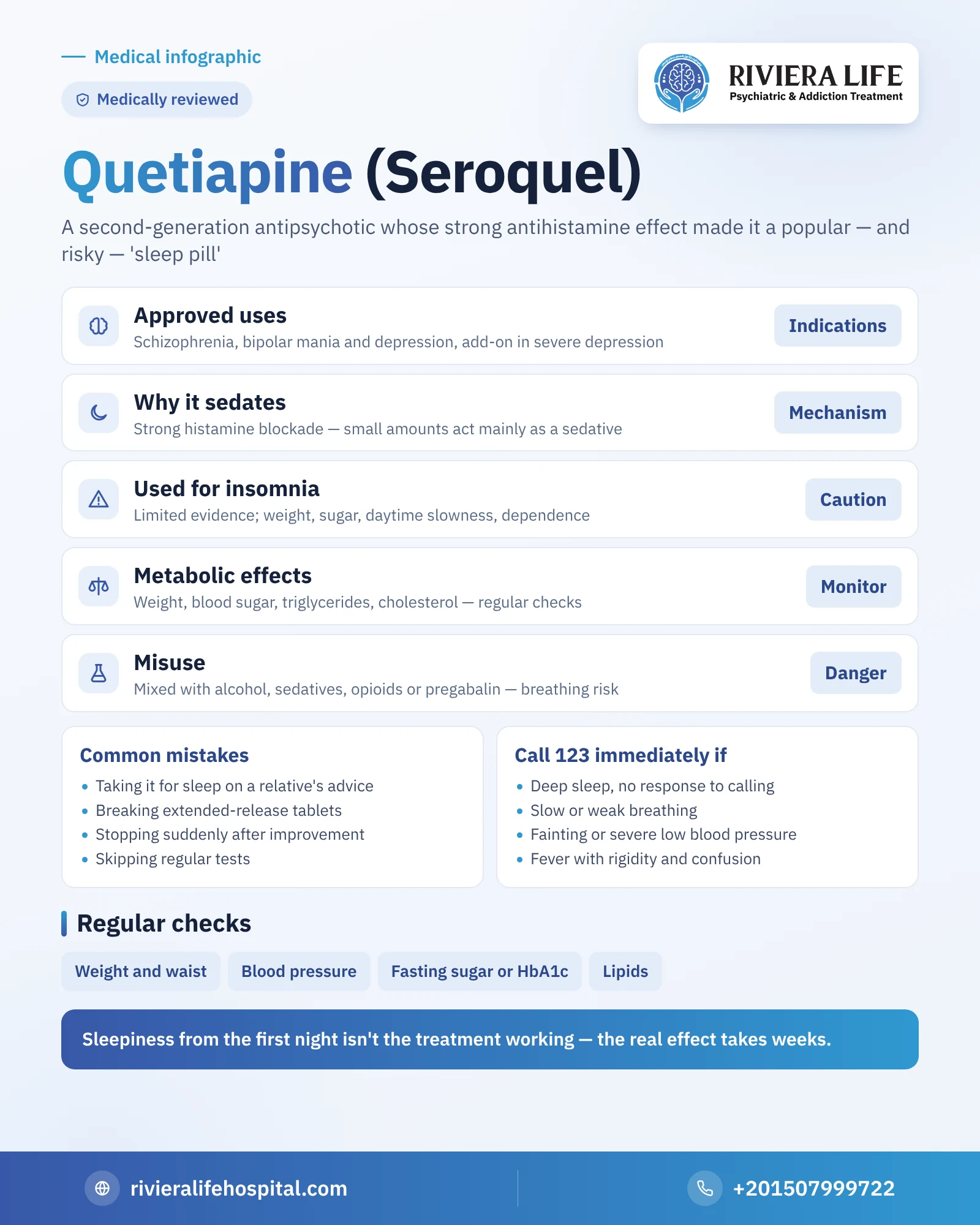
Quetiapine blocks dopamine and serotonin receptors, which explains its antipsychotic effect. But it also strongly blocks histamine receptors, the same receptors targeted by older allergy medicines that cause drowsiness. The result is that small amounts of it act mainly as a sedative, while the antipsychotic effect needs larger amounts set by the doctor. This paradox is what opened the door to its common use outside its indications for insomnia.
When does quetiapine’s effect appear?
Sleepiness appears almost from the first night, which deceives some patients into thinking the medicine has “worked”. But the real therapeutic effect takes longer. In a manic episode, insomnia and agitation may settle within days, while the receding of delusional ideas and hallucinations in schizophrenia takes weeks, as does improvement in mood in bipolar depression. That is why the doctor raises the medicine and assesses the response in stages, asking the family about sleep, speech and behavior, not about sleepiness alone. Someone who stops the medicine after a week because they “didn’t feel a difference” deprives themselves of the chance of treatment.
Sleepiness and dizziness: what patients notice most
In the first weeks, many patients complain of heaviness in the morning, difficulty waking up, and dizziness on getting up quickly from bed because of low blood pressure. This usually eases with time, but it calls for simple precautions: getting up slowly, not driving or operating machinery until the medicine’s effect is clear, and taking care with older people, because dizziness increases the risk of falls and fractures. Other common effects include dry mouth, constipation and increased appetite.
Is quetiapine a sleeping pill? The risks of using it for insomnia
Some doctors sometimes prescribe it for sleep disorders outside its official indications, but the evidence for its benefit in insomnia alone is limited, and medical references warn against long-term use for this purpose because its harms may outweigh its benefits. The bigger problem in Egypt is that it is passed around among relatives and friends as a “safe sleeping pill”, so someone without a psychotic or mood illness takes it without tests or follow-up.
What may happen in that case?
- Weight gain and raised sugar and lipids, even with small amounts if use is prolonged.
- Daytime heaviness and slowed thinking that affect work and driving.
- Becoming psychologically used to it, so sleeping without it becomes hard, and rebound insomnia appears on stopping suddenly.
- Hiding the real cause of the insomnia, such as depression, anxiety, sleep apnea or substance use.
Chronic insomnia has better treatment that starts with finding its cause, and includes cognitive behavioral therapy for insomnia, as we explain in our guide to insomnia. If a doctor prescribes quetiapine for your sleep, you have the right to ask about the reason, the duration and the alternatives.
Misuse of quetiapine
Although quetiapine isn’t one of the substances that cause a traditional high, medical reports have recorded cases of its misuse, especially among people with a history of substance use. Some seek its sedating effect to ease anxiety or to come down after stimulants, or combine it with other substances to increase sedation.
The danger here is doubled: combining it with alcohol, sedatives, opioids or pregabalin increases suppression of consciousness and breathing, and large amounts of it alone may cause a severe drop in blood pressure and a heart rhythm disturbance. If you notice your relative asking for the medicine from more than one doctor or taking it without a prescription, this is a sign that deserves a specialist assessment.
Metabolic effects: weight, sugar and lipids
Quetiapine is classed among antipsychotics with a moderate to high metabolic effect. This means it may raise weight, blood sugar, triglycerides and cholesterol, and over time increase the risk of diabetes and heart disease. That is why baseline measurements are requested before starting, then repeated at intervals:
- Weight, waist circumference and blood pressure.
- Fasting blood sugar or HbA1c.
- Triglycerides and cholesterol.
- An eye examination when needed, as the leaflets mention monitoring the lens of the eye.
Daily movement, cutting down on sweets and night-time meals, and follow-up with a dietitian all help. If the indicators rise, the doctor may change the plan, but this isn’t done by individual decision.
Important warnings
- Suicidal thoughts in young people: because it is used to treat depression, it carries a warning of increased suicidal thoughts in children and young people at the start of treatment or when the dose changes, so any worrying change calls for contacting the doctor immediately.
- Older people with dementia: an increased risk of death when antipsychotics are used for behavioral disturbances accompanying dementia.
- The heart: it may affect heart rhythm, especially with other medicines that have the same effect.
- Heat and dehydration: it weakens the body’s ability to regulate its temperature.
- Stopping suddenly: may cause insomnia, nausea and tension, and raises the risk of the illness returning.
Call an ambulance on 123 immediately if you see
After taking a large amount of quetiapine, or when mixing it with alcohol, sedatives or opioids:
- Deep sleepiness or no response to being called
- Slow or weak breathing
- Fainting or a severe drop in blood pressure
- A fast or irregular heartbeat
- Seizures
- A high temperature with muscle rigidity and confusion
Common mistakes with quetiapine
- Taking it for sleep on a relative’s advice because it “helped them”.
- Breaking or chewing the extended-release tablet.
- Stopping it suddenly after mood improves.
- Ignoring regular tests because the patient “doesn’t feel anything”.
- Combining it with alcohol, pregabalin or tramadol.
How can Riviera Life help you?
If you can no longer sleep without quetiapine, or your relative takes it without a prescription or in increasing amounts, don’t try to stop it alone. Book a free first consultation at Riviera Life in Sheikh Zayed; a consultant psychiatrist assesses the cause of the insomnia or substance use and sets a safe reduction plan and a suitable treatment alternative, with round-the-clock medical supervision and complete confidentiality.
More from our psychiatric medicines guide
- Psychiatric medicines: a guide to types and uses
- Antipsychotics: types and side effects
- Risperidone (Risperdal)
- Insomnia: the complete guide
Questions many people ask
It isn't classified as a traditional addictive substance, but misuse has been recorded, especially in those with a history of substance use, and some who take it for sleep may become used to it. Any change in its use is made with the doctor.
It isn't advised to take it without a prescription even once, as it may cause severe dizziness and a drop in blood pressure, especially with other medicines. Insomnia needs its cause assessed.
Because it increases appetite and affects sugar and fat metabolism. Tell your doctor; there are dietary and medical steps that help, without stopping suddenly.
The substance is the same, but the extended-release form is released slowly and swallowed whole without breaking or chewing. The doctor chooses the form according to the case.
Yes. It may cause sleepiness and slowed reactions, especially at first. Avoid driving until you know how it affects you.