Tension headache, which many call the “psychological headache”, is the most common type of headache: a feeling of pressure or tightness as if a band were wrapped around the head, usually on both sides, of mild to moderate intensity, not made worse by movement and not accompanied by vomiting. It is linked to stress, lack of sleep and tension in the neck and shoulder muscles, and is usually not dangerous. But there is another headache that resembles it at first and is a warning of an emergency, which is why we devote an important part of this article to warning signs, then explain the difference from migraine and the ways of prevention and treatment.
What is tension headache and why is it called psychological?
The medical name is “tension-type headache”. People gave it the nickname “psychological” because stress and anxiety are among its most prominent triggers. But the exact mechanism is still under research, and is thought to be a mix of sensitivity in pain pathways within the nervous system and tension in the scalp and neck muscles. Calling it “psychological” is less accurate than it should be; many who suffer from it don’t have a psychiatric disorder, and some of it comes after long hours in front of a screen in a bad sitting position.
It is real pain caused by nervous and muscular changes, not imaginary. It may be acute and end within hours, recurrent, or chronic, occurring fifteen days or more a month for several months.
What does it look like? A description to help you recognize it
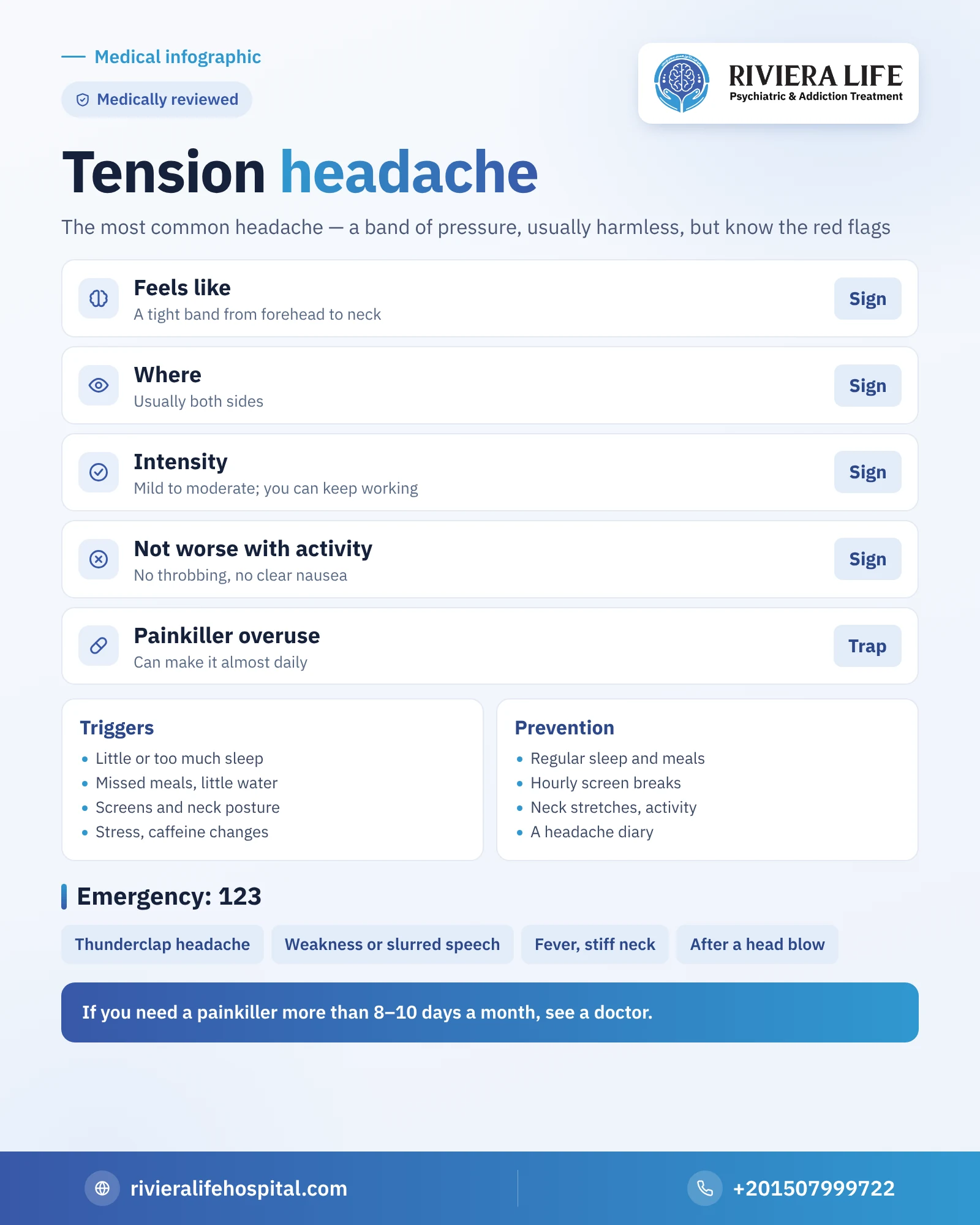
- Pressure or tightening like a band tied around the head, or from the forehead to the back of the neck.
- It usually affects both sides of the head, not one side.
- Its intensity is mild to moderate, and you can usually carry on working despite it.
- It doesn’t throb, and isn’t made worse by physical activity such as climbing stairs.
- It may be accompanied by mild sensitivity to light or sound, but not both strongly, and no clear nausea.
- It is often accompanied by tenderness when touching the neck and shoulder muscles.
Tension headache or migraine?
Many count every recurrent headache as “tension”, and some discover years later that they have a migraine that wasn’t treated properly. This is a simplified comparison, and the final criteria remain in the doctor’s hands:
| Feature | Tension headache | Migraine |
|---|---|---|
| Nature of the pain | Pressure and tightness | Usually throbbing and pounding |
| Location | Usually both sides | Usually one side |
| Intensity | Mild to moderate | Moderate to severe |
| Effect of movement | Usually not worse | Worse with activity |
| Nausea and vomiting | Unusual | Common |
| Light and sound | Slight sensitivity to one of them | Clear sensitivity to both |
| Visual aura | None | May occur before the pain |
The two types may coexist in the same person, and stress may make migraine worse. Telling them apart matters because the treatment of each differs.
Warning signs not to attribute to stress
Most headaches are simple, but some are a symptom of a serious problem in the brain, its vessels or its membranes. Don’t present it to yourself as “stress” before making sure these signs are absent:
Go to the emergency department or call an ambulance on 123 if the headache comes with
These signs may indicate a condition that needs urgent examination.
- The worst headache of your life, peaking within seconds or minutes (thunderclap headache)
- Weakness or numbness on one side of the body, or a drooping face
- Sudden difficulty speaking, seeing or keeping balance when walking
- Fever with a stiff neck or a skin rash
- A seizure, confusion or unusual drowsiness
- Headache after a blow to the head
There are other signs that call for a quick visit to the doctor even if not an emergency: a new headache after the age of fifty, a pattern different from usual, a headache that gets worse week after week, wakes you from sleep, or worsens with coughing and bending, or that accompanies pregnancy, an immune disease or cancer.
What triggers it?
Nothing specific for everyone, but these factors recur: too little or too much sleep, hunger and delayed meals, not drinking enough water, screen hours and a bent neck, stress and suppressed anger, anxiety, and sometimes too much caffeine or stopping it suddenly, and overusing painkillers themselves. You can read the details of caffeine’s effect in caffeine and energy drink addiction, and about the link between stress and the body in psychological stress.
Medication-overuse headache
This is a point many overlook: taking painkillers frequently, several days a week for months, may turn an intermittent headache into an almost daily headache, known as “medication-overuse headache”. The paradox is that the painkiller that relieves you today contributes to tomorrow’s pain. If you turn to painkillers most days of the week, consult a doctor to set an alternative plan, and don’t stop a medicine they prescribed or change its schedule without their supervision. And if the painkillers you take contain narcotic or sedative substances, read are psychiatric medicines addictive? to distinguish dependence from addiction.
Prevention and treatment
Daily steps
- Regular sleep at a fixed time and in sufficient amount.
- Regular meals and enough water throughout the day.
- Short breaks every hour at the screen to move the neck and shoulders.
- Moderate physical activity, and neck stretching exercises.
- Slow breathing and muscle relaxation at the first feeling of tightness.
- A headache diary recording times and triggers, the best thing you can bring to your doctor.
What the doctor may prescribe
The doctor may prescribe simple painkillers for a limited number of times a month, and for recurrent cases daily preventive medicines that they decide, including classes of antidepressants used here not to treat depression but for their effect on pain pathways. They may recommend physiotherapy for the neck. Cognitive behavioral therapy and biofeedback help in chronic cases, especially when anxiety is present. Doses and types of medicine are the doctor’s decision alone.
Tension headache in daily life: familiar pictures
The student in exam week sits for hours with a bent back and sleeps less, so the pain starts at noon and intensifies in the evening. The employee juggling work and home tasks notices her head is “tied up” from the morning, and it settles on holiday. The driver who grips the steering wheel and suppresses his anger in traffic ends his day with stiff shoulders and a headache. These pictures aren’t rare illnesses, but the result of a body working in emergency mode for longer than necessary. Recognizing your personal pattern gives you a starting point for change.
When should you see the doctor even without warning signs?
See the doctor if you need a painkiller on more than eight or ten days a month, if the headache stops you working or studying, if its shape or intensity changes from usual, or if it doesn’t improve after adjusting sleep, food and screens. Early assessment saves you months of trial and error, and determines whether the matter needs a neurologist, psychological support, or both.
Headache, anxiety and depression
The relationship runs in both directions: chronic headache wears down the mind, and anxiety and depression increase the frequency and severity of headache. If you have recurrent headache with persistent sadness, dominating anxiety or sleep disturbance, let psychological assessment be part of the treatment. See anxiety symptoms to recognize its physical signs, and psychosomatic disorders to understand the wider picture.
How can Riviera Life help you?
After organic causes have been ruled out by a neurologist, Riviera Life’s consultant psychiatrists assess the anxiety, depression and sleep disorders linked to headache, and set a psychotherapy plan that supports medical treatment. The first consultation is free and confidential on +201507999722.
More from the psychosomatic disorders guide
- Psychosomatic disorders: when the body speaks
- Psychological stress and its effect on the body
- Anxiety symptoms
- Anxiety: the complete guide
Questions many people ask
Yes, tension headache is real pain caused by nervous changes and muscle tension, affected by anxiety and stress; it isn't imaginary.
Tension headache is pressure on both sides of mild to moderate intensity without vomiting, while migraine is usually throbbing on one side with nausea and sensitivity to light and sound.
With the worst sudden headache of your life, or with weakness, slurred speech, fever and a stiff neck, or after a blow to the head, go to the emergency department.
Overusing them may turn an intermittent headache into an almost daily one, so if you need them most days of the week, consult the doctor.
If recurrent headache is accompanied by anxiety, persistent sadness or sleep disturbance, or doesn't improve with prevention and medical treatment.