Caffeine and energy drink addiction is closer to our lives than we think: a headache that starts mid-morning if the cup of coffee is late, two cans of energy drink to stay up before an exam, then a sleepless night that needs more caffeine the next day. Caffeine causes real physical dependence and medically recognized withdrawal symptoms, but most people can control it. This article explains when the daily stimulant turns into a problem, the specific harms of energy drinks on the heart, sleep and anxiety, the danger of mixing them with alcohol, and how to cut down your intake without hard days.
Does caffeine really cause addiction?
Caffeine is a stimulant of the nervous system that works by blocking adenosine, a substance that builds up in the brain during the day and makes us feel tired. With daily use, the brain adds more adenosine receptors, so it needs more caffeine for the same effect, and feels doubly tired when it is absent. This is physical dependence.
The diagnostic manual of mental disorders recognizes caffeine withdrawal as a diagnosis in its own right, while placing caffeine use disorder among conditions that need further research. In other words, dependence is certain, while addiction in its full meaning, loss of control and clear harm, happens in a smaller proportion of people.
How much caffeine is in your drink?
| Drink | Approximate caffeine | Note |
|---|---|---|
| A medium cup of filter coffee | About 80 to 100 milligrams | Varies a lot with the type of coffee and preparation |
| A cup of tea | About 30 to 50 milligrams | Strong tea is higher |
| A small can of energy drink | About 80 milligrams or more | Large cans may contain twice that or more |
| A can of cola | About 30 to 40 milligrams | With a large amount of sugar |
The US Food and Drug Administration notes that about four to five cups of coffee a day aren’t usually linked to harm in most healthy adults, with big differences in sensitivity from person to person, and lower limits for pregnant women and heart patients.
Signs of caffeine dependence
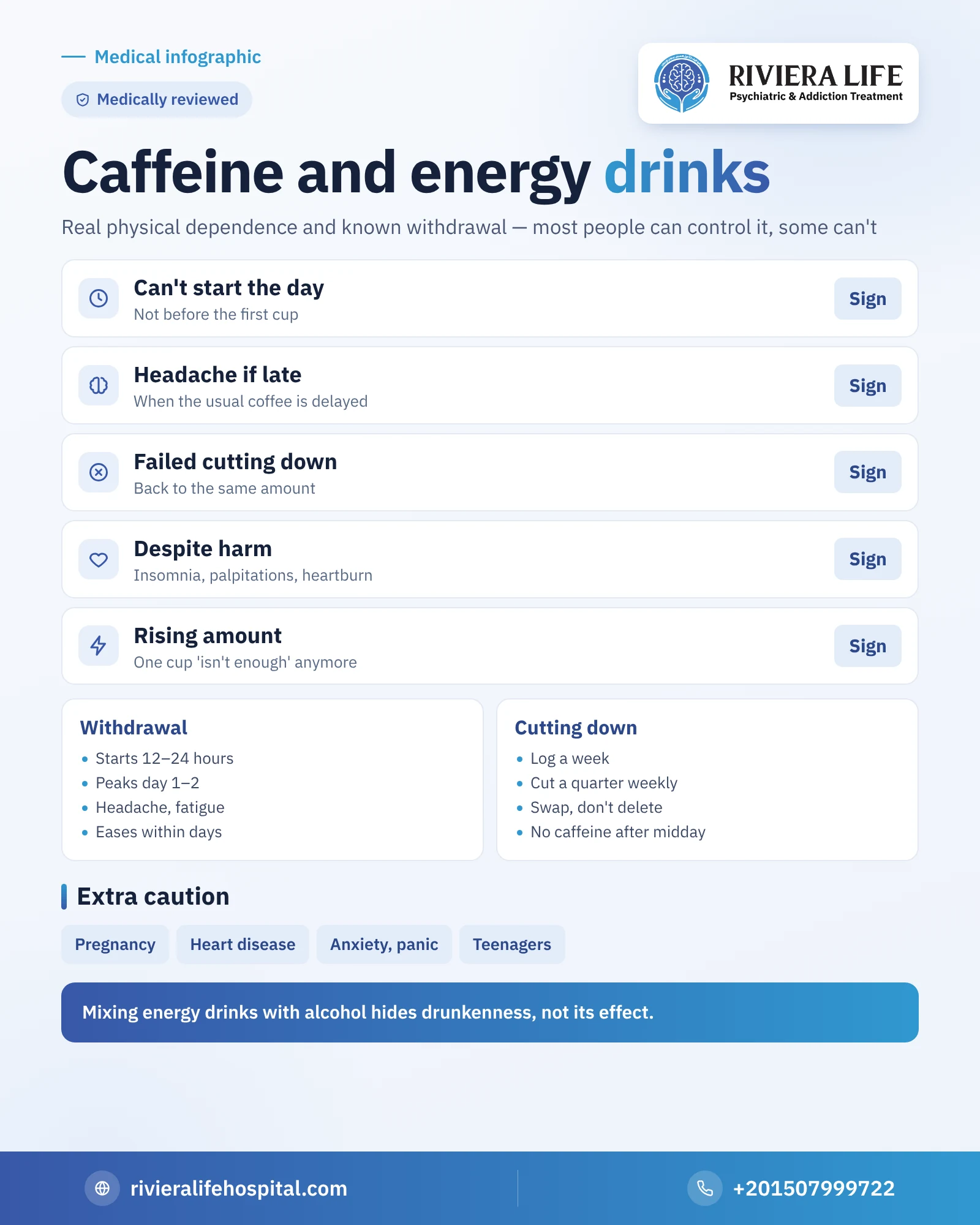
- You can’t start your day or concentrate before the first cup.
- A headache or clear sluggishness if your usual coffee time is delayed.
- You try repeatedly to cut down, then go back to the same amount.
- You continue despite insomnia, palpitations or heartburn.
- The amount rises gradually because one cup “isn’t enough anymore”.
- You carry cans of energy drink with you as a backup and feel anxious if they run out.
Caffeine withdrawal symptoms and how long they last
Symptoms usually begin about 12 to 24 hours after the last dose, peak on the first or second day, then ease gradually within a few days, sometimes extending to a week or a little more.
- Headache: the best-known symptom, often throbbing and widespread.
- Tiredness and drowsiness: a feeling of heaviness in the body and slow movement.
- Poor concentration: difficulty completing mental tasks.
- Mood swings: irritability, low mood or anxiety.
- Flu-like symptoms: nausea or muscle aches in some people.
These symptoms are annoying but not dangerous, which is what distinguishes caffeine from substances whose withdrawal needs medical supervision.
The harms of energy drinks: why are they different from coffee?
The problem isn’t caffeine alone, but the way of drinking. Hot coffee is drunk slowly, while a cold, sweetened energy drink is drunk quickly, often followed by a second and third can. Guarana, a plant source of extra caffeine, is sometimes added, along with large amounts of sugar.
The heart and blood pressure
Large amounts of energy drinks are linked to palpitations, a racing heart and raised blood pressure, and emergency visits for heart rhythm disturbance have been recorded, especially in those with an undiscovered heart problem.
Sleep
Caffeine’s effect stays in the body for many hours, so a can in the evening may steal half your night. And poor sleep pushes towards more caffeine in the morning, so the cycle turns. For those suffering from ongoing poor sleep, the insomnia guide explains the causes and treatment.
Anxiety and panic attacks
Caffeine in large amounts mimics anxiety symptoms: tremor, tension, sweating and palpitations. In those with anxiety or panic attacks it may be the spark.
Energy drinks with alcohol: a mix that fools the mind
The stimulant doesn’t cancel alcohol’s effect, but hides the feeling of drunkenness. The person feels alert and capable, so they drink more and drive or make reckless decisions, while their actual ability to judge and react remains weak. That is why this mixture is linked to heavier drinking and more accidents and injuries. And if alcohol itself is a problem, the alcohol guide will help you.
Teenagers and energy drinks
Pediatric bodies recommend that children and teenagers don’t consume energy drinks. Their bodies are smaller, their sensitivity to caffeine is higher, and their sleep is already disturbed at this age. Marketing links these drinks with sport, adventure and excellence, so consuming several cans a day seems normal. Watch for many cans in your son’s room, constant staying up, or repeated palpitations and headaches.
Caffeine tablets and powders: a different kind of danger
Concentrated caffeine products in the form of powders or tablets are sold online and in supplement shops, marketed to athletes or for weight loss. Their danger is that a very small amount may equal dozens of cups of coffee, and measuring errors are easy. The US Food and Drug Administration has warned about these products after cases of poisoning and death. Caffeine in a cup isn’t like pure caffeine in a spoon.
Who needs greater caution?
- Pregnant and breastfeeding women: reducing caffeine is usually advised, and the doctor decides what suits each case.
- Heart and blood pressure patients: especially those with a heart rhythm disturbance.
- People with anxiety, panic and insomnia: because caffeine directly increases the symptoms.
- Those taking certain medicines: some medicines interact with caffeine, so ask the doctor or pharmacist.
Call an ambulance on 123 immediately if you see
After large amounts of energy drinks or caffeine tablets and powders.
- Chest pain or an irregular heartbeat
- A very fast heartbeat with dizziness or fainting
- Seizures
- Repeated vomiting that doesn’t stop
- Severe confusion or unusual agitation
When is caffeine a sign of a deeper problem?
Sometimes excessive caffeine is an attempt to treat something else: chronic insomnia, depression that steals energy, or undiagnosed attention deficit that the person tries to compensate for with stimulants. And sometimes it may be a step before stronger stimulants; a student who starts with energy drinks for studying may later hear about “focus” pills. If you feel this resembles you, the ADHD guide may help.
A practical plan to cut caffeine without headaches
- Log a week: every cup and can, including tea, soft drinks and dark chocolate.
- Cut down gradually: reduce about a quarter of the amount each week instead of stopping suddenly.
- Swap, don’t delete: half a cup of regular coffee and half decaf, or light tea instead of strong.
- Set a last time: no caffeine after about midday.
- Treat tiredness at its roots: regular sleep, enough water, balanced meals and daily movement.
- Stop energy drinks first: they are the highest risk and the easiest to replace.
If a headache appears in the first days, know that it is a sign your body is resetting itself, and that it usually eases within days. Slow the pace if it is very troublesome rather than going back to the old amount.
How can Riviera Life help you?
Caffeine alone rarely needs hospital admission, but what stands behind it may need assessment: insomnia, anxiety or depression, or a move to other stimulants. You can start with a free consultation with Riviera Life’s consultant psychiatrists in complete confidentiality: +201507999722, Sheikh Zayed, Giza.
Read also
- Nicotine addiction: symptoms and ways to quit
- Food addiction and its link to the reward system
- Teen addiction: causes and how parents can talk
- The complete insomnia guide
Questions many people ask
Large amounts may cause palpitations, raised blood pressure, insomnia and anxiety, and are linked to heart rhythm disturbance in some people, with the risk rising with excess or mixing them with alcohol.
They usually start within a day of stopping and peak in a day or two, then ease within a few days and may extend to about a week.
Pediatric bodies recommend that children and teenagers don't consume them, because of their greater sensitivity to caffeine and its effect on sleep and the heart.
Because the stimulant hides the feeling of drunkenness without reducing alcohol's effect, so the person drinks more and risks dangerous decisions such as driving.
Gradual reduction over weeks eases the headache and tiredness, and makes sticking to it easier than stopping suddenly.