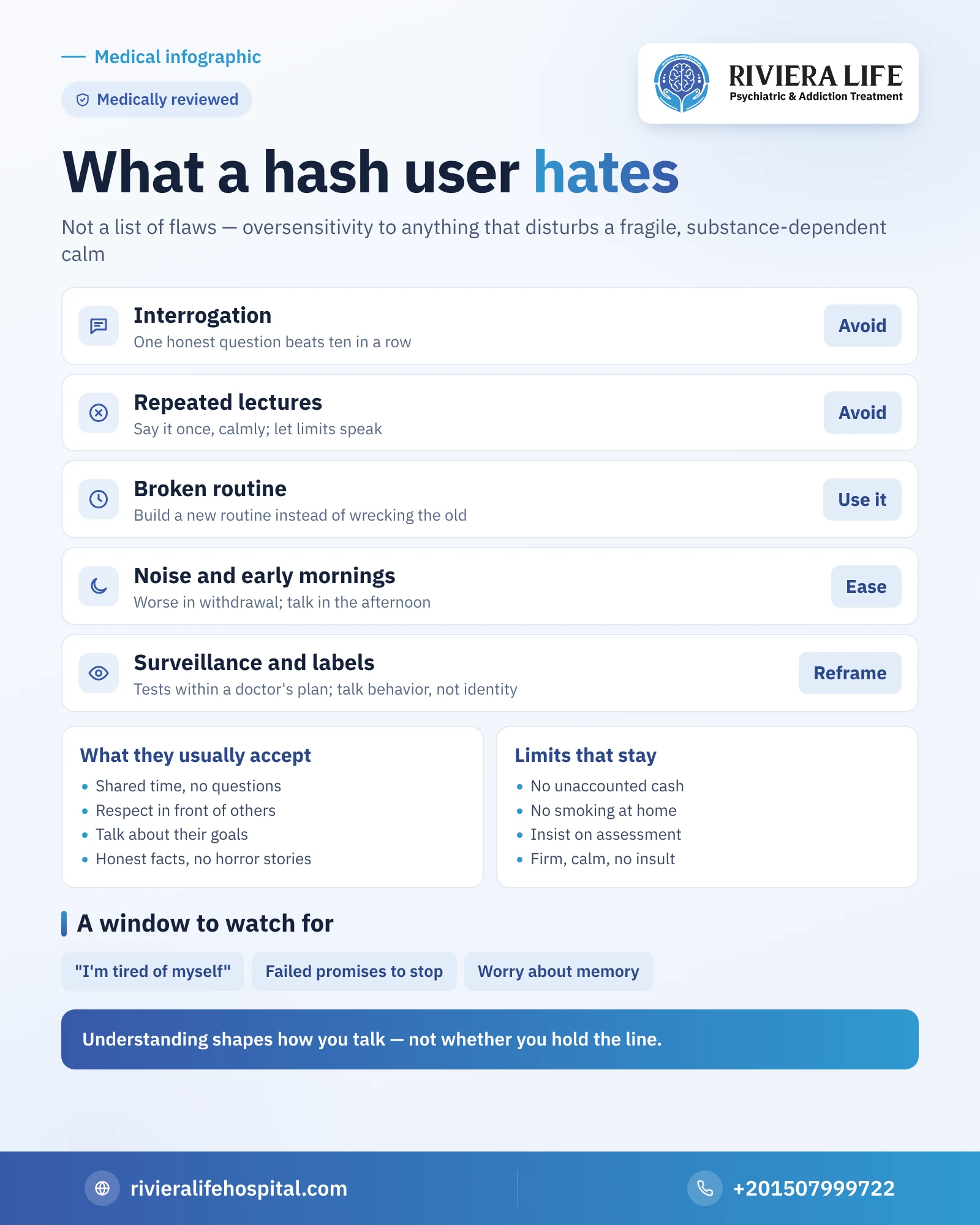
What does a hash user hate? They usually hate being confronted or interrogated, hearing the same lecture every night, having their daily routine broken, and being watched or searched, and they are bothered by noise, crowds and strong light, especially on days without the substance. This isn’t a list of flaws in their character, but a reflection of what the substance does to their nervous system and of the shame and fear they feel.
Understanding these points with empathy doesn’t mean flattering them or staying silent about use, but knowing where to approach them from without them shutting the door in your face. This article explains each point and its psychological reason, then how the family can use it constructively.
Does a hash user really hate particular things?
At first hash gives a sense of calm and detachment from pressures. With regular use this calm becomes conditional on the substance, so the person’s tolerance for anything that threatens their state decreases: a sudden question, a loud sound, or a change in their day’s plan. So what you see as hatred is really an oversensitivity to anything that disturbs a fragile balance. Most importantly, much of this sensitivity eases gradually after stopping and treatment, and isn’t a fixed trait in them.
It differs from person to person according to the duration and amount of use, the presence of previous anxiety or depression, and the nature of relationships at home. A young man who smokes at weekends doesn’t behave like someone who has smoked from morning till night for years, so take what follows as common patterns, not rules that apply to everyone.
They hate confrontation and interrogation
Successive questions such as “where were you? With whom? Why are your eyes red?” put them in the position of the accused, so they respond with denial, attack or silence. The reason is that confrontation touches an inner feeling of guilt they try to avoid, and that hash, especially with heavy use, may make some users more anxious and suspicious of the intentions of those around them, so they interpret a simple question as a trap.
How to make use of this: replace interrogation with one clear observation and a sentence about your feelings, then leave them space to reply. One honest question is better than ten successive questions.
They hate repeated lectures
Long talk about the harms of drugs and their lost future turns, after the third time, into noise they know by heart. They usually know the harms, or think they do, and each new lecture makes them feel like a child being punished. The result is that they avoid sitting with you at all, so you lose chances for real conversation.
How to make use of this: make the message short, rare and clear. Say it once calmly, then let your actions and limits speak. And if you want them to hear the medical information, it lands better from a neutral doctor than from the father or mother.
They hate having their routine broken
A regular user builds their day around smoking times: after work, before sleep, with particular friends. This routine gives them a sense of control, so if it changes suddenly with a family trip, guests staying overnight or a plan they weren’t consulted on, they feel clear tension and look for a way out.
How to make use of this: don’t use breaking their routine as a punishment, but make use of the need for routine itself. When treatment starts they need an organized day with fixed times for sleep, exercise and food, filling the gap the cigarette used to fill. Help them build this alternative routine instead of tearing down their old one without a substitute.
They are bothered by noise, light and crowds
On days without the substance, many users complain of irritability, insomnia and restlessness, so the loud TV, children shouting or strong morning light becomes annoying to a degree that seems exaggerated. On the other hand, crowds or large family gatherings may trigger anxiety in some while under the influence, because they fear being found out or feel all eyes are on them. Details of this stage are in our article on hash withdrawal symptoms.
How to make use of this: provide a quiet corner at home during the first days of stopping, and ease social pressure on them without isolating them. This reduces the intensity of withdrawal and makes them feel home is a safe place to recover.
They hate waking early and sudden demands
Disturbed sleep is one of the most common companions of use; many smoke at night to sleep, then wake with difficulty and in a heavy mood. Any sudden demand in the morning, such as an errand or a responsibility they weren’t told about, is met with sharp refusal.
How to make use of this: choose the afternoon for important conversations, not early morning, and agree on responsibilities with them in advance. Don’t make the battle over waking up the main battle, as sleep improves with treatment, not with shouting.
They hate surveillance, searching and tests
Secret searching followed by confrontation with what was found makes them feel humiliated and that trust is over, so they learn to hide more. A sudden demand for a test is met with intense anger because they know the result may expose them. This is what makes many families ask about how long hash stays in the body before any step.
How to make use of this: make testing part of a clear treatment agreement supervised by a doctor, not a home ambush. When the test is a way to prove their progress and regain your trust, its meaning for them changes.
They hate the word “addict” and comparison
The label hurts them more than anything else, because it puts them in a stereotype they don’t see themselves in. Likewise comparison with the neighbors’ successful son or the older brother. Stigma pushes them to defend their identity instead of thinking about their behavior.
How to make use of this: talk about the behavior, not the identity. Say “smoking has started taking from your sleep and studies” instead of “you’re an addict”. When they feel you see the person before the problem, they become more ready to admit it.
What do they hate in themselves?
Behind the visible stubbornness, many users carry a distress with themselves they don’t admit: at failing to stop after repeated promises, at the decline in their memory and concentration, and at postponed dreams. This distress is the strongest motive for change, and a wise family doesn’t press on it but picks it up. If one day they say “I’m tired of myself”, this isn’t a moment for reproach, but a moment to say: “What do you think about us talking to a doctor together?”
And what do they usually accept?
Just as there are things that put them off, there are approaches most users accept more easily, which the family can build on:
- Shared time without questions: a match watched together, a drive, or a meal they love. These moments restore warmth and make talking easier later.
- Respect in front of others: not being embarrassed in front of siblings or guests, even if reproach is deserved.
- Talking about their own goals: a job they want or a trip they dream of, then calmly asking what stands between them and it.
- Honesty without exaggeration: accurate information about hash’s effect on sleep and memory convinces them more than terrifying stories they don’t believe.
Between understanding and leniency
Understanding what they hate doesn’t mean avoiding everything that bothers them. There are things they will certainly hate that must happen: stopping giving them money without accounting, banning smoking at home, and insisting on a medical assessment. The difference is to do it calmly and firmly, without insult or interrogation. You will find the full plan for talking and limits in our article on how to deal with a hash addict, and the behaviors that reveal use in our article on hash user behavior.
How can Riviera Life help you?
At Riviera Life we work with the family and the patient together, because the family’s understanding of what their son is going through cuts half the road. The team of psychiatrists in Sheikh Zayed offers a free, confidential first consultation, then a hash addiction treatment plan that includes a family program and follow-up after discharge. Contact us around the clock: +201507999722.
More from our hash guide
- Hash: the complete guide
- Hash addiction and suspicion
- The causes of hash addiction
- The stages of the body’s recovery after quitting hash
Questions many people ask
Because successive questions make them feel accused and touch their sense of guilt, and heavy use may increase their anxiety and suspicion of others' intentions.
On days without the substance, irritability, insomnia and restlessness increase, so sound or strong light becomes more annoying than usual, and this eases with time.
No, understanding shapes how you talk, not what you say. Limits remain, such as not smoking at home and insisting on an assessment, but calmly and without insult.
Yes, at first; talking about the behavior and its effects on their sleep and studies reduces their defensiveness, while the label pushes them to denial.
In most cases it eases gradually after stopping and once sleep and mood stabilize, because it is linked to the substance's effect, not a fixed trait in them.