The short answer
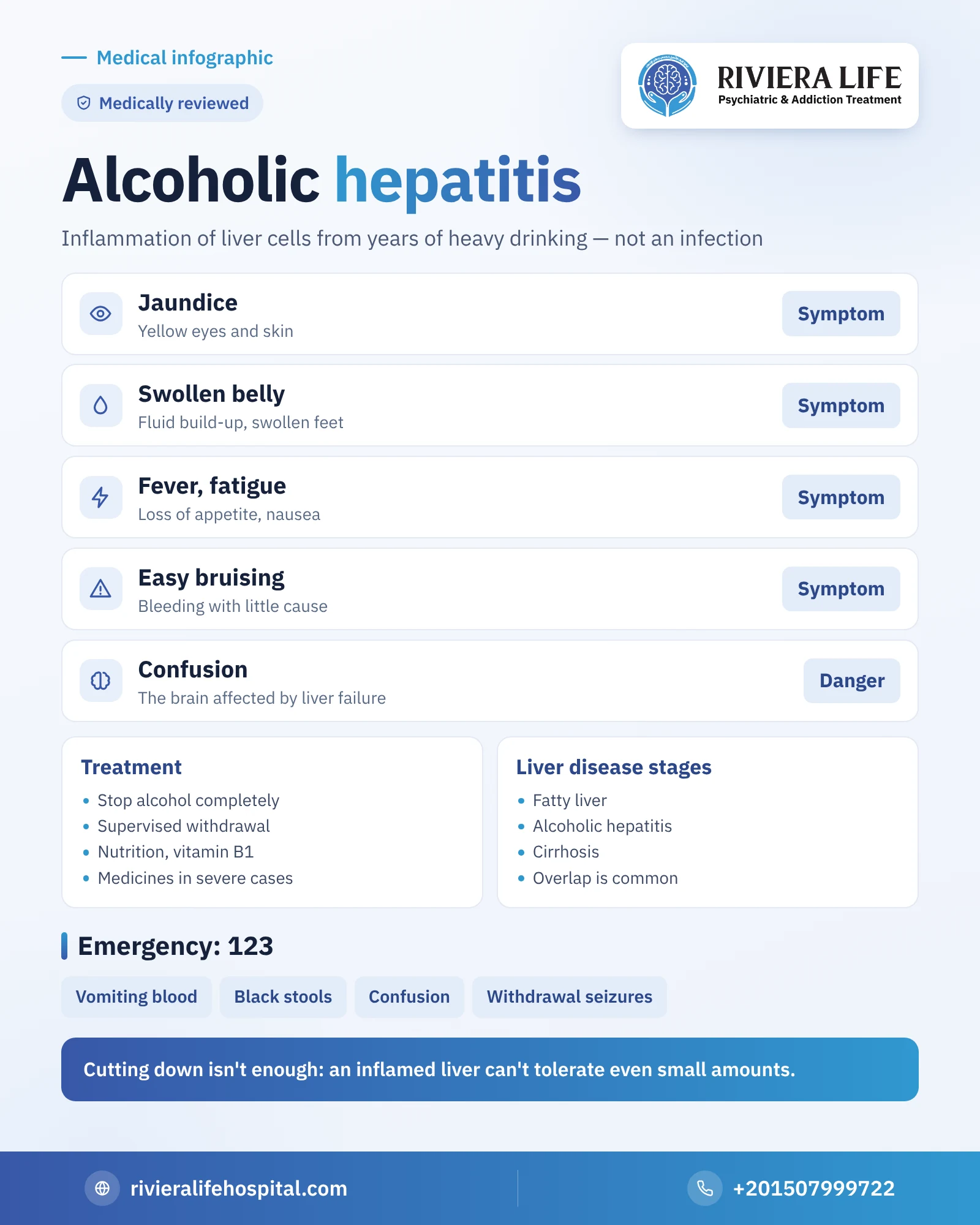
Alcoholic hepatitis is inflammation affecting liver cells because of excessive alcohol drinking over a long period; it isn’t an infection and doesn’t pass from one person to another. It may be mild and show only in tests, or severe and life-threatening, with symptoms such as yellowing of the eyes and skin, a swollen abdomen, fever and confusion. The main treatment is stopping alcohol completely, with therapeutic nutrition, and medicines in severe cases decided by a liver doctor. Stopping must be done under medical supervision, because alcohol withdrawal itself may be dangerous for a liver patient.
- CauseExcessive alcohol for years
- Is it contagious?No, it isn’t viral
- Main treatmentStopping alcohol completely under medical supervision
The word “hepatitis” is linked in many minds with the C or B virus, so the patient fears they may have passed the infection to their family, or thinks the treatment is injections and antivirals. Alcoholic hepatitis is completely different: it has one known cause, and its treatment begins with one hard decision. This article explains what it is, what its symptoms look like, when it is serious, and why stopping alcohol here needs a hospital, not just willpower.
What is alcoholic hepatitis?
The liver is the organ that breaks down alcohol. With repeated heavy drinking, harmful substances produced by this breakdown accumulate, fat collects in the cells, and then inflammation begins. Alcohol-related liver disease usually passes through three forms that may overlap: alcoholic fatty liver, which is the most common, usually has no symptoms and reverses on stopping; then alcoholic hepatitis; then cirrhosis, in which liver tissue turns into permanent scars. Not everyone who drinks heavily develops the inflammation; genes, sex, nutrition and the presence of liver viruses or obesity all affect the risk.
Symptoms of alcoholic hepatitis
In mild cases there may be no clear symptoms, and the inflammation is discovered by chance from raised liver enzymes. With severity there appear:
- Yellowing of the whites of the eyes and the skin.
- Loss of appetite, nausea and vomiting.
- Pain or heaviness in the upper right side of the abdomen.
- Mild fever and severe tiredness.
- A swollen abdomen from fluid build-up, and swollen feet.
- Bruising or bleeding easily.
- Loss of weight and muscle because of malnutrition.
- Unusual confusion or drowsiness, a sign that the brain is affected by liver failure.
Symptoms often appear or worsen after a period of heavier drinking than usual, and may continue or increase in the first weeks even after stopping.
Is alcoholic hepatitis contagious?
No. It is a chemical inflammation caused by alcohol, not a virus, and doesn’t pass through contact, food or marital relations. But the doctor usually orders tests for liver viruses, because a virus together with alcohol multiplies the damage, especially in those who have injected drugs, as the article on the harms of injecting drugs explains.
How is it diagnosed?
- An honest history of the amount and duration of drinking, which is more important than any test.
- Blood tests for liver function, bilirubin level, clotting time and blood count.
- Ultrasound or CT of the abdomen, and sometimes a test to measure liver stiffness.
- A liver biopsy in a few cases if the diagnosis isn’t clear.
Liver doctors use scores calculated from test results to estimate the severity of the case and decide who needs drug treatment and hospital admission.
When is alcoholic hepatitis serious?
Severe alcoholic hepatitis is a medical condition that may threaten life, and needs immediate hospital admission. Go to the emergency department or call the ambulance on 123 if there appears:
- Vomiting blood or black, tar-like stools.
- Confusion, severe drowsiness or a change in consciousness.
- Jaundice that increases quickly with fever.
- Rapid swelling of the abdomen with breathlessness.
- Severe tremor, hallucinations or seizures after stopping drinking, which are signs of dangerous withdrawal.
Treatment of alcoholic hepatitis
Stopping alcohol completely
This is the treatment no medicine can replace. Cutting down isn’t enough; an inflamed liver can’t tolerate even small amounts. With stopping, mild and moderate cases can improve greatly within weeks to months, while cirrhosis, if it has occurred, doesn’t disappear, but stopping slows its progress and improves the chances of survival.
Why does stopping need medical supervision?
Alcohol withdrawal after long drinking may cause seizures and delirium tremens, and is more dangerous in a liver patient. The medicines usually used in withdrawal need special choice and doses when the liver is weak. That is why withdrawal is done in hospital in coordination between the addiction doctor and the liver doctor. The details of withdrawal are in alcohol withdrawal symptoms.
Therapeutic nutrition
Most patients suffer from malnutrition and vitamin deficiencies, especially vitamin B1. So supplements and nutrition rich in calories and protein are given, and sometimes through a feeding tube in severe cases.
Medicines
In severe inflammation the liver doctor may prescribe medicines to reduce the inflammation after ruling out infection and bleeding, deciding this according to severity scores and the patient’s response. There are no “liver-cleansing” herbs or supplements that have proven useful, and some may harm the diseased liver itself.
Preventing a return to alcohol
After the liver stabilizes, the part that decides the future begins: treating the alcohol addiction itself with psychological rehabilitation, and the doctor may prescribe medicines that reduce craving from among those suitable for the state of the liver. Read alcohol addiction treatment and medicines for alcohol addiction.
Does the liver recover after stopping alcohol?
The liver is one of the body’s organs most capable of regeneration. Fatty liver usually reverses within weeks of stopping, and mild and moderate inflammation improves a lot with abstinence and nutrition. But the scars formed in the cirrhosis stage remain, and what is needed then is to protect what remains healthy and follow up complications. In very advanced cases a liver transplant may be raised, which usually requires stable abstinence from alcohol.
How can Riviera Life help you?
Riviera Life receives alcohol addiction patients and assesses their physical condition before withdrawal, coordinates with internal medicine and liver doctors when there is inflammation or cirrhosis, then completes rehabilitation and relapse prevention. The first consultation is free and confidential on +201507999722.
More from the alcohol guide
- The harms of alcohol on body and mind
- Quitting alcohol: what happens from withdrawal to recovery?
- How to deal with an alcoholic
- Alcohol: the complete guide
Questions many people ask
Hepatitis is active injury to liver cells that may improve on stopping alcohol, while cirrhosis is permanent scarring that replaces healthy tissue, and both may occur together in the same patient.
There is no guaranteed safe amount; the risk rises with heavy drinking for years, and varies a lot between people according to genes, sex, nutrition and the presence of other liver diseases.
Symptoms may appear or worsen in the first weeks after stopping because the inflammation began before, which is why medical follow-up continues after quitting alcohol.
There is no evidence of their benefit, and some herbal preparations may harm a diseased liver. The proven treatment is abstaining from alcohol, nutrition and the treatment the doctor decides.
Severe cases need immediate admission, and most patients need alcohol withdrawal under medical supervision because withdrawal may be dangerous with a weak liver.