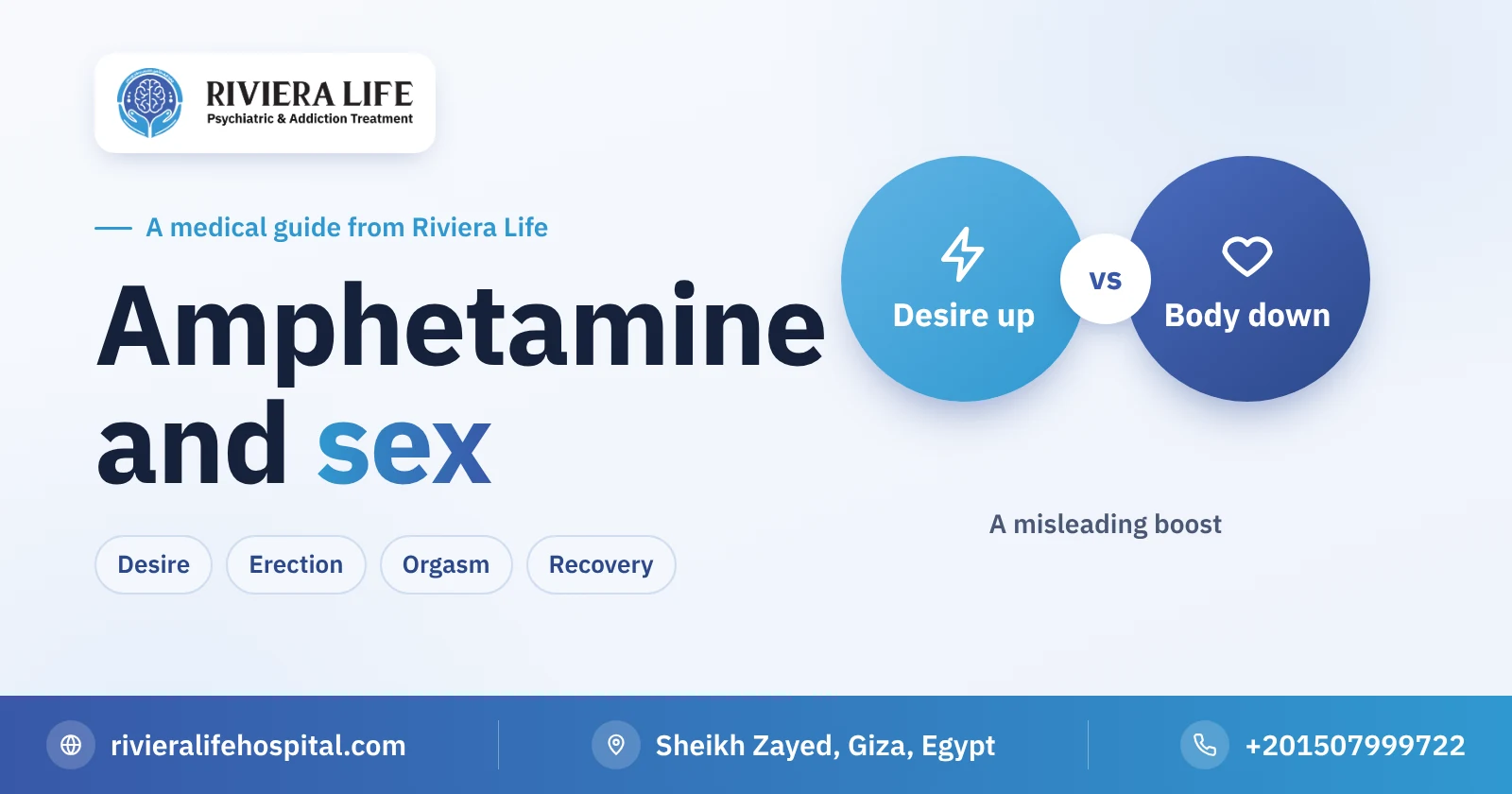
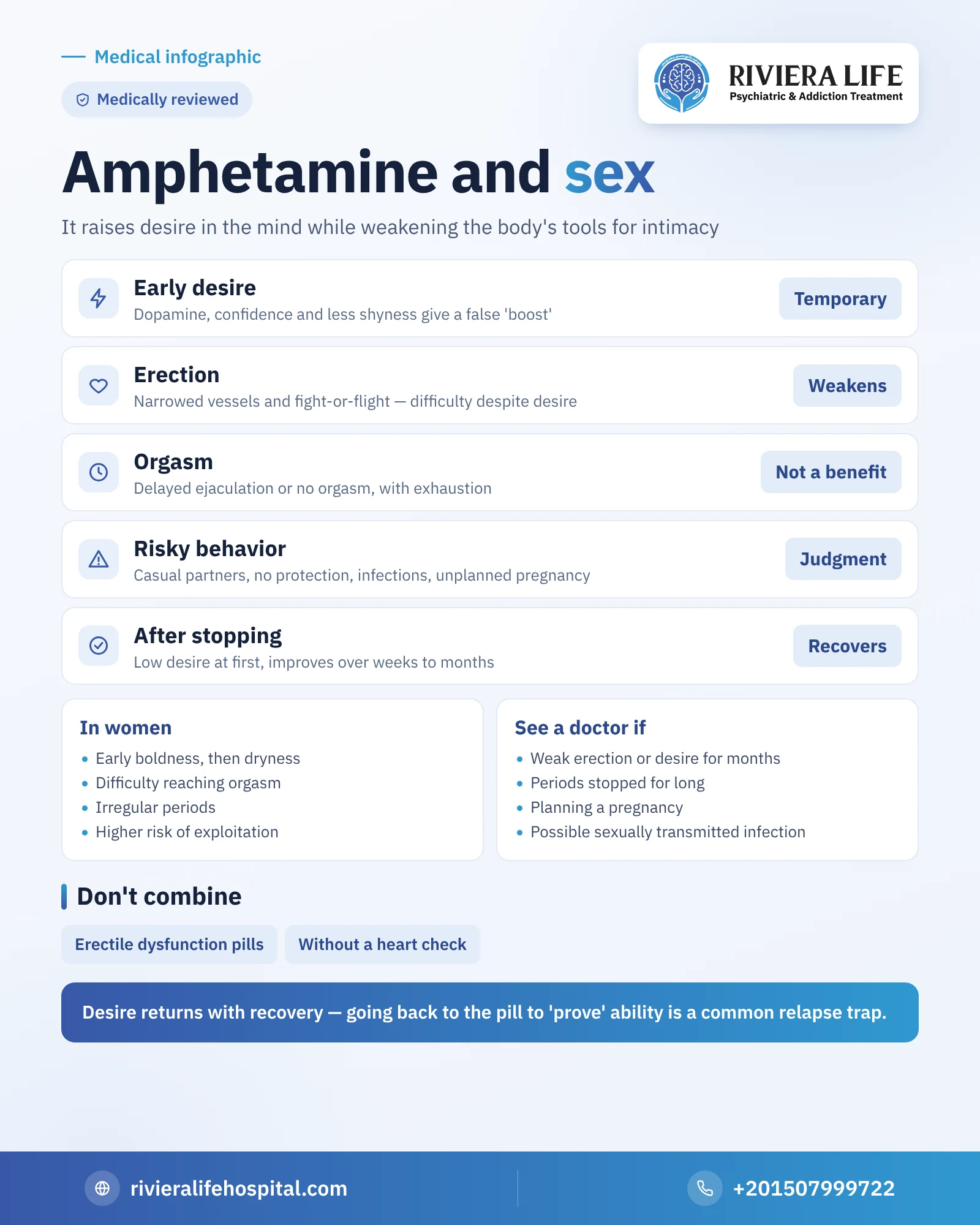
When the talk turns to amphetamine and sex, many young people link the substance with boldness and sexual desire, and this picture isn’t entirely imaginary: in the first hours some feel an increase in desire and more boldness. But the picture reverses with repetition. The substance itself narrows the blood vessels, delays ejaculation or prevents reaching orgasm, and pushes toward unsafe sex, and with long use both erection and desire decline. This article explains what actually happens to desire and performance in men and women, the effect of prescribed medicines, and what returns after stopping.
Why does amphetamine seem at first to increase desire?
Amphetamine raises dopamine, the same substance linked to desire and motivation in the brain. It increases self-confidence and reduces shyness and hesitation, so the person feels more attractive and bolder. It prolongs wakefulness and delays the feeling of tiredness. Together these effects give the impression that the pill “improves” intimacy. But in reality it raises mental desire, while at the same time weakening the physical tools that intimacy needs, and this is where the problem begins.
Many people confuse amphetamine with ice or shabu, although ice is crystal methamphetamine and its effect is stronger and longer. This article is about amphetamine itself; ice has a separate article: ice and sex.
How does amphetamine affect erection?
An erection needs abundant blood flow and relaxed blood vessels. Amphetamine activates the sympathetic nervous system, the “fight or flight” system, narrowing the vessels, raising blood pressure and putting the body on alert. That is why many men find it hard to get an erection while under the influence despite strong desire, a well-known paradox with stimulants. With repeated use, and the lack of sleep, poor nutrition and constantly raised blood pressure that come with it, the problem may become persistent even on days without use.
Delayed ejaculation and difficulty reaching orgasm
Some users notice that intercourse lasts longer under the influence of amphetamine, and think it is an advantage. But what usually happens is difficulty reaching orgasm, or not reaching it at all, with strain, friction and exhaustion. This may lead to long, exhausting encounters, or to increasing the dose in search of a result that doesn’t come. This disturbance is linked to the substance and usually improves after stopping.
Amphetamine and sex in men
- High desire at first that declines with long use.
- Difficulty getting an erection while under the influence, which may persist later.
- Delayed ejaculation or difficulty reaching orgasm.
- A clear decline in desire and performance during comedown and withdrawal days.
- Chronic exhaustion and performance anxiety that affect the relationship even after stopping for a while.
Amphetamine and sex in women
A woman may also feel more desire and boldness at first, then over time problems appear such as vaginal dryness and difficulty reaching orgasm. Weight loss, poor nutrition and exhaustion lead to irregular periods in some. A woman who uses is more vulnerable to exploitation in relationships or to unsafe sex under the influence. Pregnancy during use carries particular risks for mother and baby, which we covered in our article on the harms of amphetamine.
Recklessness and risky sexual behavior
One of the most dangerous things amphetamine does is weaken judgment of consequences. Under its influence a person is more inclined toward casual encounters, not using protection and multiple partners. This raises the risk of sexually transmitted infections, including HIV and hepatitis B and C, and the likelihood of unplanned pregnancy. The risk is higher for those who inject and share equipment. That is why doctors advise anyone who has been in these situations to be tested for these infections even if no symptoms appear.
What about prescribed medicines from the amphetamine family?
Patients taking ADHD medicines from this family at prescribed doses may sometimes notice a change in sexual desire or ability; it is a side effect listed in these medicines’ leaflets, but it doesn’t affect everyone. If it appears, the solution is to talk with the doctor, who may adjust the dose or timing or suggest an alternative, not to stop or increase the medicine on your own. This is completely different from the effect of large non-medical doses.
Do sexual stimulants solve the problem?
Some users turn to erectile dysfunction tablets to make up for amphetamine’s effect, and this combination carries a risk to the heart, especially for those with raised blood pressure or a rhythm disturbance caused by the stimulant. These tablets also don’t treat the cause of the problem. Any medicine for erectile dysfunction should be prescribed after a heart assessment, and after telling the doctor everything the person uses.
The marital relationship under the shadow of use
Beyond physical performance, amphetamine changes the nature of the relationship itself. Staying out at night, irritability, lying about money and time, and emotional withdrawal on comedown days all shake trust between spouses. Pathological jealousy and suspicion may appear in the user because of the paranoia the substance causes. The other partner needs support too, and family sessions are an essential part of any serious treatment program.
Does amphetamine affect fertility?
Research on this side is less clear than on erection and desire, but what is known is enough for caution. Poor nutrition, weight loss, lack of sleep and hormonal disturbances linked to chronic use can affect the regularity of a woman’s cycle, and some studies suggest stimulants affect sperm quality in men. Most importantly, amphetamine use during pregnancy carries risks to the baby. That is why doctors advise couples planning to have children to stop completely and wait until the body settles, and to have the appropriate tests if pregnancy is delayed.
What happens to sexual life after stopping?
In the first weeks after stopping, desire is usually low. The reason is that the brain is still recovering its ability to produce dopamine, so everything seems dull, including sexual desire. Many worry this is permanent, so they go back to the pill to prove to themselves that they “can still do it”. The truth is that desire and performance improve gradually in most people over weeks to months, as sleep, nutrition and mood improve. The details of this stage are in our article on amphetamine withdrawal symptoms.
How do you talk with your partner?
Calm frankness is better than silence or accusation. Choose a calm time, and talk about your feelings and what you have noticed, not about their “failure”. Avoid making the sexual relationship a pressure card or a punishment. And if your partner has started treatment, know that patience at this stage matters, and that improvement in the relationship is part of recovery, not a condition for it. If you feel that conversation between you always turns into a fight, a joint session with a specialist therapist may open a door you couldn’t open alone, and help each of you understand what the other went through during the period of use.
When do you need a doctor?
Ask for medical advice if weak erection or desire continues for months after stopping, if periods have stopped for a long time, if you are planning to have children, or if there is a possibility of exposure to a sexually transmitted infection. Don’t hesitate to mention these complaints to the addiction treatment team; they are a normal part of the assessment and are discussed in complete confidentiality. You’ll find the full recovery plan in our article on amphetamine addiction treatment, and a useful comparison with the effect of the stronger stimulant in our article on methamphetamine and sex.
More from our amphetamines guide
- Amphetamines: the complete guide
- The harms of amphetamine on the heart, brain and body
- Amphetamine addiction symptoms
- Amphetamine addiction treatment
- Khat and sex: what happens to desire, erection, sleep and the marriage
Questions many people ask
It may increase desire and boldness temporarily, but it narrows blood vessels, weakening erections and delaying orgasm, and with long use both desire and performance decline.
Because the stimulant puts the body on alert and narrows the vessels, while an erection needs relaxed vessels and blood flow.
They may change desire or ability in some patients as a side effect; the solution is to discuss adjusting the dose or an alternative with the doctor, not to stop the medicine yourself.
Yes, in most people, although it is low in the first weeks, and improves gradually over weeks to months as sleep and mood improve.
Combining them can strain the heart, especially with raised blood pressure, and doesn't treat the cause. Any erectile dysfunction medicine needs a medical assessment and telling the doctor everything the person uses.