Methadone is a long-acting synthetic opioid medicine, used mainly to treat dependence on heroin and other opioids, and used in some countries to relieve severe pain. It is therefore an internationally approved treatment, not a random substitute for the drug, but at the same time it is a controlled substance that can be fatal if taken outside medical supervision. This guide explains how methadone works, when it is used, its benefits, risks and interactions, and why it is only started and stopped under the supervision of a specialist doctor.
What is methadone? A drug or a treatment?
Methadone belongs to the opioid family, so it binds to the same receptors as heroin and morphine. The essential difference is in speed and duration: heroin raises the effect quickly then drops within hours, so the user enters a cycle of highs then withdrawal, while methadone starts slowly and stays in the body for a long time, preventing this fluctuation.
So the question “drug or treatment?” depends on how it is used. Within a medical program, at a dose set by the doctor with regular follow-up, it becomes a therapeutic tool. But buying it on the street or mixing it with other substances turns it into one of the most dangerous opioids, because its long action means its danger continues after the person thinks the effect is over.
How does methadone work in the brain?
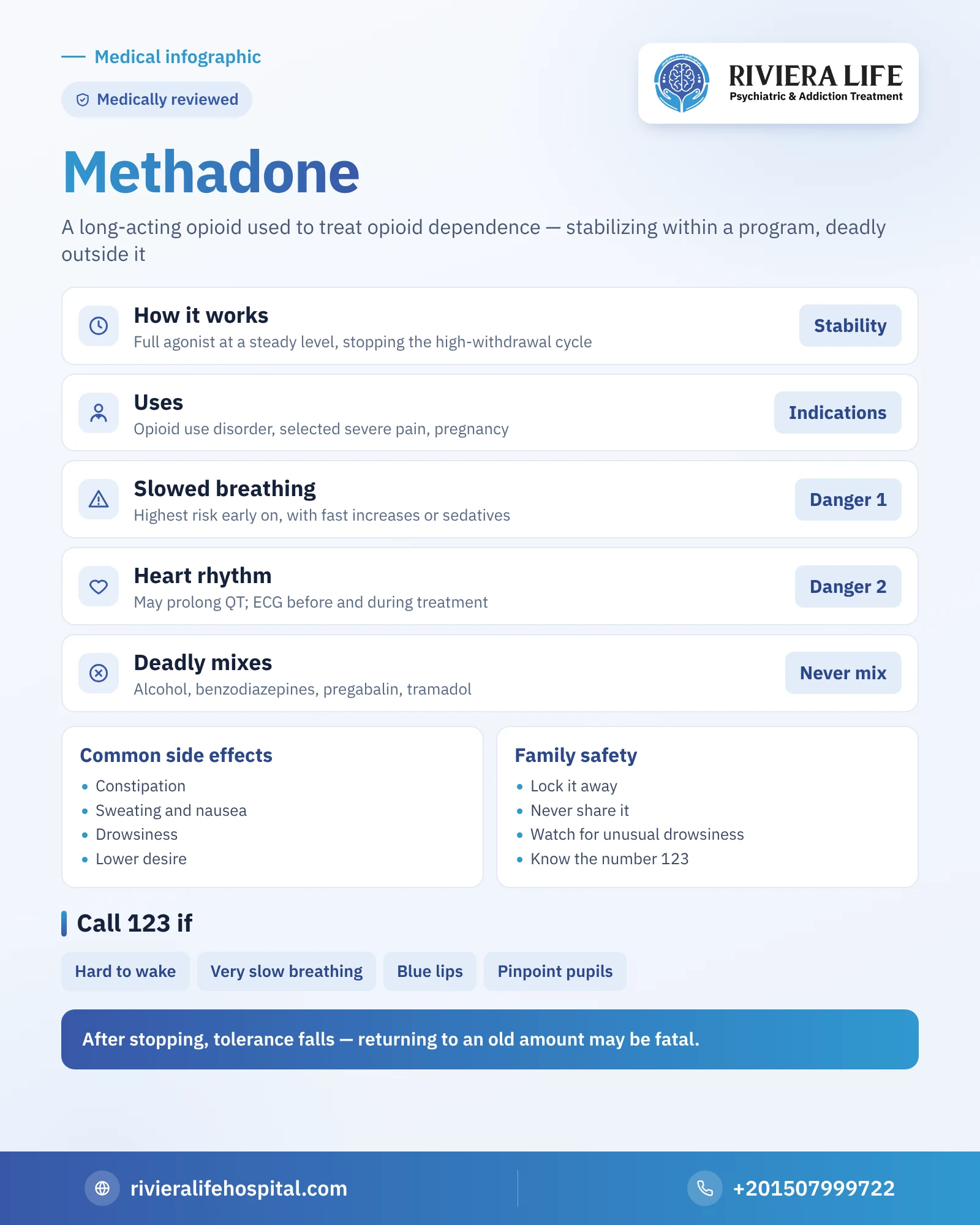
Methadone is a full agonist at opioid receptors, meaning it activates them fully as heroin does, but at a roughly steady level throughout the day. This steadiness achieves three things: it prevents withdrawal symptoms, eases the urgent craving to use, and reduces the feeling of a high if the patient uses another opioid, because the receptors are already occupied.
Thanks to this stability, the patient stops spending his day looking for the substance, so he becomes able to keep to work and psychotherapy sessions. This is the real aim: the medicine buys time and calm, and psychological and social treatment builds the new life.
What is methadone used for medically?
- Treating opioid use disorder: the best-known use, whether for long-term maintenance or a planned gradual withdrawal depending on the case.
- Relieving severe or chronic pain: in selected cases that don’t respond to others, with close monitoring because its accumulation in the body may cause poisoning.
- Pregnant women dependent on opioids: where stable drug treatment is usually preferred over sudden withdrawal, as we will explain later.
The availability of methadone varies from country to country according to the regulations, and it is usually dispensed through specialized programs or clinics, not from ordinary pharmacies.
What does methadone treatment look like within an integrated program?
Methadone treatment isn’t a prescription that is written and then the patient leaves. Serious programs usually go through the following stages:
- A comprehensive assessment: history of use, other medicines, the health of the heart, liver and lungs, and the psychological state.
- A cautious start: a low dose that rises slowly, because methadone accumulates in the body during the first days, the period most sensitive to the risk of poisoning.
- The stabilization phase: reaching a level that prevents withdrawal and craving without drowsiness or heaviness.
- Psychotherapy and rehabilitation: individual and family sessions and relapse prevention skills.
- Maintenance or gradual reduction: a shared decision between doctor and patient according to stability, with no fixed date in advance.
Our article on opioid addiction treatment explains where methadone sits among the other treatment options and how the right path is chosen.
Does methadone cause addiction or a high?
A patient who takes methadone regularly develops physical dependence, meaning stopping it suddenly causes withdrawal. But controlled physical dependence isn’t addiction. Addiction is compulsive behavior: lying, raising the dose without the doctor’s knowledge, mixing substances, and a deteriorating life. A patient stable on methadone usually works and runs his life normally.
As for a high, someone with opioid tolerance taking his set dose doesn’t usually feel one. The real danger is in someone without tolerance, such as a child or a relative who takes a tablet out of curiosity, or a user who increases the amount looking for an effect; in these cases the same amount may be fatal.
What are the common side effects of methadone?
Most patients notice some effects at the start, and many of them ease with stability:
- Constipation, one of the most persistent, needing early management with fluids, fiber and the doctor’s advice.
- Excessive sweating, nausea, and dizziness on standing up quickly.
- Drowsiness or fatigue, especially in the weeks of adjusting the dose.
- Dry mouth, which may affect the teeth over time.
- Lower sexual desire or menstrual disturbance because of its effect on hormones.
- Weight gain in some patients.
What are the most dangerous complications of methadone?
Slowed breathing
This is the first danger, and it increases at the start of treatment, when the dose is raised quickly, or when it is mixed with sedatives. It may happen hours after taking the dose, not immediately, because methadone reaches its peak slowly.
Heart rhythm disturbance
Methadone may prolong what is known as the QT interval on the ECG, raising the chance of a dangerous rhythm disturbance in some patients, especially at high doses, with other medicines that do the same, or with low potassium. That is why many doctors request an ECG before starting and during follow-up.
Low blood pressure and the effect on driving
Dizziness and drowsiness may cause falls, especially in older people. Driving or operating machinery isn’t advised until the doctor is sure the condition is stable.
Which substances should never be mixed with methadone?
Most methadone deaths don’t happen because of it alone, but because of mixing. The most dangerous mixes:
- Alcohol and benzodiazepines such as Xanax, and sleeping pills and sedatives.
- Pregabalin and gabapentin, a mix common in Egypt that multiplies slowed breathing.
- Tramadol and any other opioid without a prescription.
- Medicines that slow methadone’s breakdown in the liver so its level rises, such as some antibiotics and antifungals, or medicines that speed its breakdown so sudden withdrawal appears, such as some epilepsy medicines and St. John’s wort.
The simple rule: the patient doesn’t start any new medicine, even an ordinary painkiller or a herbal supplement, before telling the doctor he is on methadone.
Call an ambulance on 123 immediately if you see
Signs may appear hours after the dose, so don't let the person sleep alone.
- Severe drowsiness or difficulty waking him
- Very slow breathing or unusual snoring
- Blue lips or nails
- Very small pupils with a limp body
Our article on naloxone explains how the opioid antidote saves the person in an emergency, and why the person needs hospital even after he wakes.
What happens when methadone is stopped?
Because methadone is long-acting, its withdrawal starts later compared with heroin and lasts longer, though it is sometimes less intense. Its symptoms resemble opioid withdrawal in general: anxiety, insomnia, muscle aches, sweating, diarrhea and urgent craving, and their details are in our article on opioid withdrawal symptoms.
Safe stopping is through a slow gradual reduction set by the doctor, with increased psychological support at this stage. Most importantly, the family should know that the risk of overdose rises after stopping, because the body’s tolerance falls, so if the person returns to the amount he used before, it may be fatal.
Methadone: withdrawal and how long it stays in the body
Methadone stays in the body longer than most opioids; its half-life usually extends to about a day or a day and a half, and varies a lot between people depending on the liver and accompanying medicines. This explains why withdrawal appears late on stopping, and also why the medicine needs close follow-up even after the patient seems stable.
- Onset: symptoms usually appear one to three days after the last dose, not hours as with heroin.
- Duration: the acute phase may last weeks, and in many cases it is less intense than heroin withdrawal but longer.
- Late symptoms: insomnia, fatigue, mood swings and urgent craving, which may persist for months in some.
That is why methadone isn’t stopped suddenly, but reduced gradually according to a plan set by the doctor. Returning to opioids after a period without them may be especially dangerous because tolerance falls. You will find the general tables in our article on opioid withdrawal symptoms. As for testing, the usual opiate panel doesn’t always detect methadone and a specific test is needed; how long opioids stay in the body covers the details of detection windows.
Methadone during pregnancy and breastfeeding
For a pregnant woman dependent on opioids, many guidelines consider stable treatment with methadone or buprenorphine safer for the fetus than sudden withdrawal or continuing irregular use. The newborn may show withdrawal symptoms after birth that need follow-up in the pediatric department, which is expected and managed medically. Breastfeeding is decided by the doctor according to the mother’s stability and the absence of other substances.
How does methadone differ from buprenorphine and naltrexone?
Methadone activates the receptors fully, while buprenorphine activates them partially and has a ceiling on its effect on breathing, and naltrexone blocks them completely and is only started after the body is clear of opioids. Each has a patient it suits, and the doctor is the one who chooses after the assessment. You will find the order of the medicines used in this whole field in our article on heroin addiction treatment: stages and approved medicines.
How does the family keep the patient safe?
- Keep the medicine in a locked place away from children and visitors, as a small dose may kill a child.
- Never share the medicine with anyone else, even if they have the same symptoms.
- Watch for any unusual drowsiness, especially in the first weeks or after a dose change.
- Encourage the patient to attend follow-up sessions and not to double the dose if he forgets it.
- Know the signs of overdose and the ambulance number 123.
How can Riviera Life help you?
If you are considering drug treatment for opioid dependence, or are taking methadone and need an assessment of a gradual reduction plan or of an interaction problem with other substances, the first step is a free, confidential consultation with a psychiatry and addiction consultant at Riviera Life. The team assesses the whole condition, then suggests the most suitable path, whether methadone or an alternative, within a program that includes psychotherapy, the family and follow-up.
Read also
- Buprenorphine: uses, benefits and harms
- Naloxone and rescue from overdose
- Heroin addiction treatment
- Opioids guide
Questions many people ask
Methadone doesn't erase addiction, but it stops the cycle of highs and withdrawal and gives the patient stability that allows psychotherapy and rehabilitation to work. Real recovery comes from the full program, not the medicine alone.
The comparison is less about strength than about duration; methadone stays in the body much longer, so it may accumulate and cause delayed poisoning if taken without supervision or with sedatives.
It isn't advised, because alcohol multiplies methadone's effect on breathing and consciousness and greatly raises the risk of overdose.
It usually doesn't show in standard opiate tests, and needs a test specific to it. That is why treatment programs usually request specific tests to confirm adherence.
Treat it as an emergency and call an ambulance on 123 immediately even if the child seems normal, as symptoms may be delayed for hours and a small amount may be very dangerous.